Gemology Books Bibliography

Gemology Books Bibliography

Explore books on gems, gemology, jewelry and mineralogy in Four Treasures, the Lotus Gemology reference database. This bibliography brings together matching book records from the collection, with publication details, abstracts and cover images where available.

Gemology Book References

The list below matches books concerning gemology and related subjects in the database's searchable fields. Some works cover several branches of gems, jewelry or mineralogy.
2,041–2,060 of 3,681 matching references

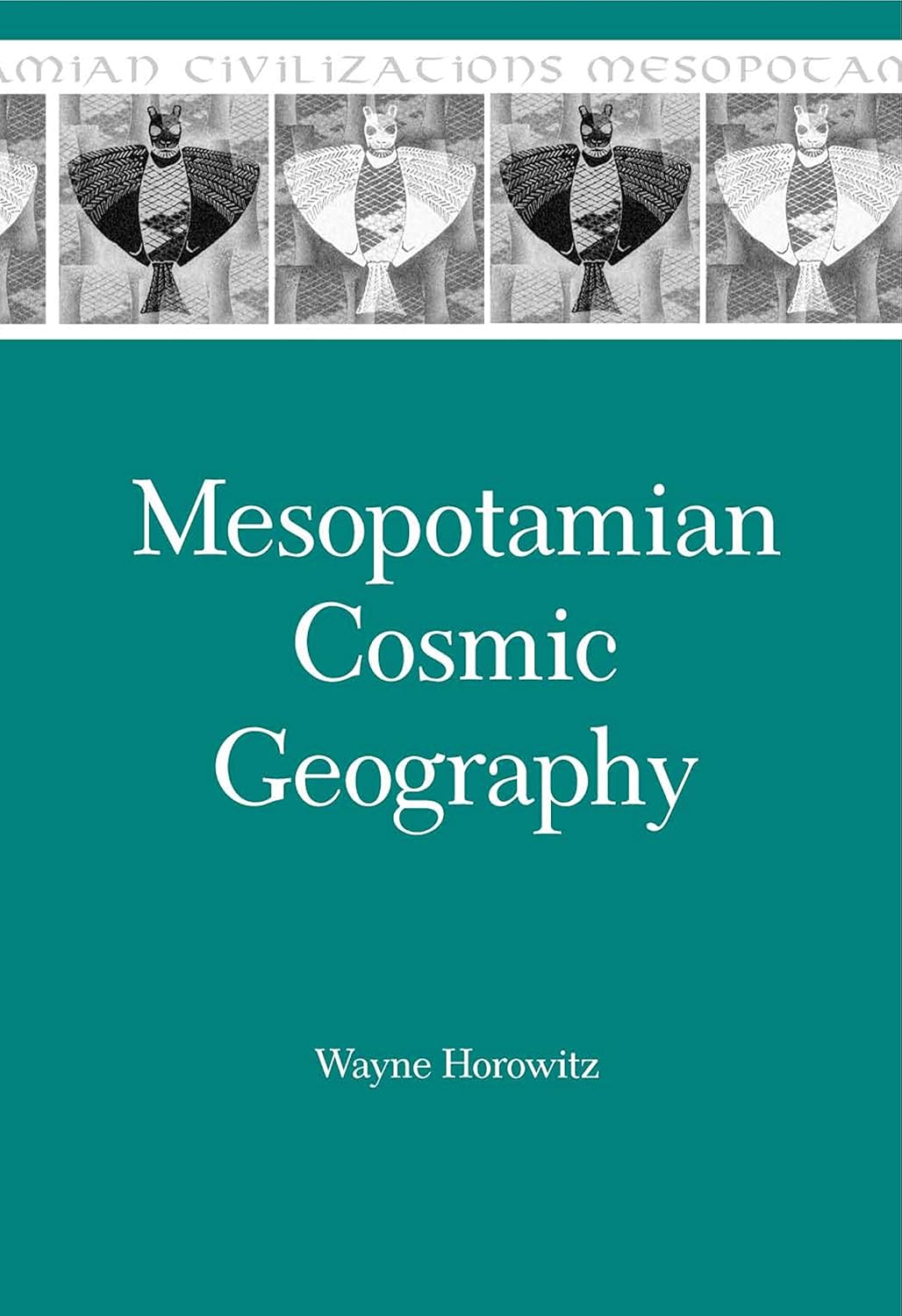
Mesopotamian Cosmic Geography

Book
Horowitz, W. (1998) Mesopotamian Cosmic Geography. Winona Lake, IN, Eisenbrauns, 296 pp.
Record No. 27745  |  ISBN/ISSN: 931464994  |  Sinkankas/Born No.: NIS / NIB  |  RWHL
View Individual Record ↗
Mesopotamian Cosmic Geography represents the main part of my first decade of study as an Assyriologist. The book began its life as a Ph.D. thesis of the same name under the supervision of Professor W. G. Lambert of the University of Birmingham. After completion of the Ph.D. thesis in 1986, I continued to collect materials relevant to the study of Mesopotamian views of cosmography with the intention of revising the thesis as a book in the early 1990s. The book Mesopotamian Cosmic Geography presents this revised, more mature examination of the topic.

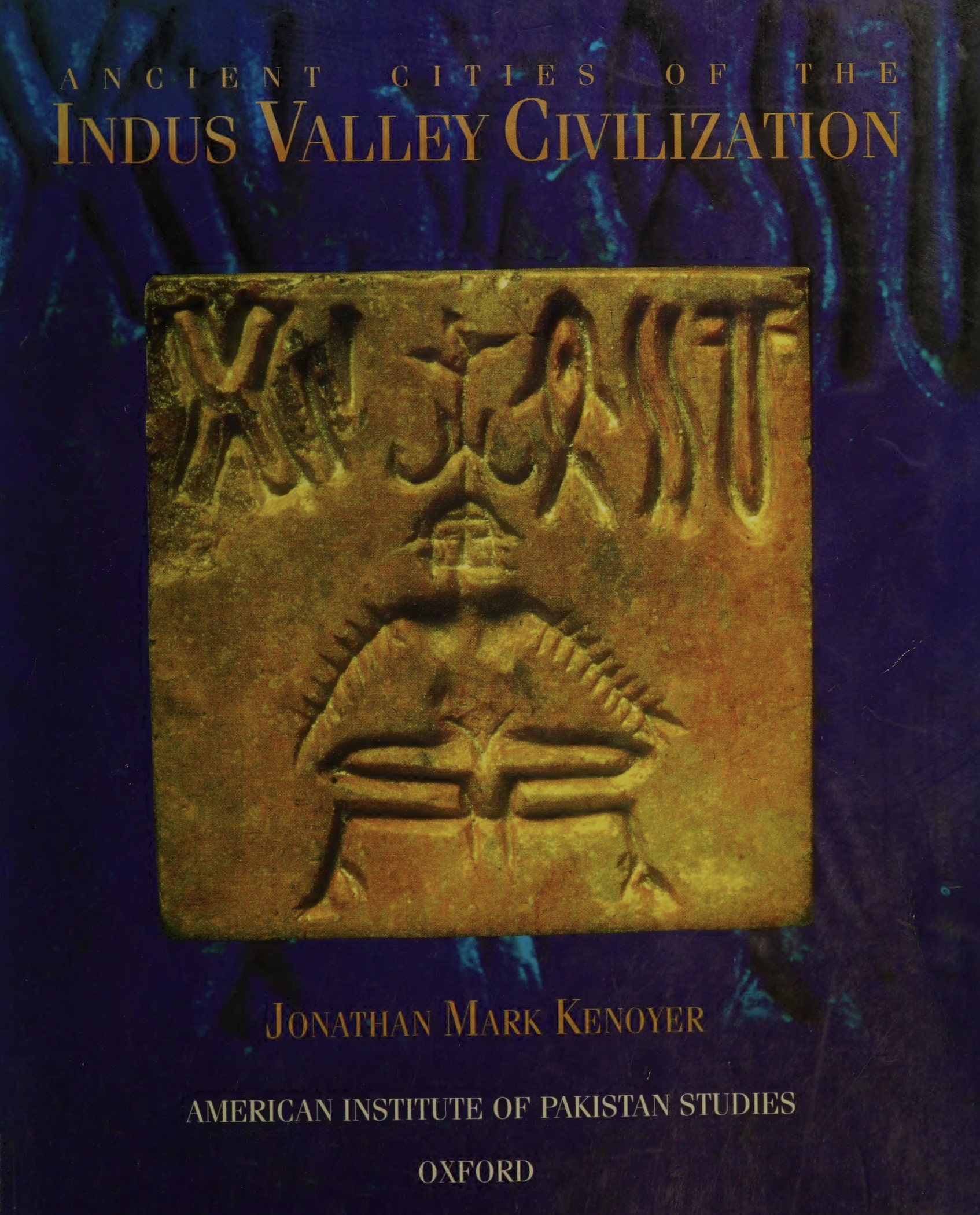
Ancient Cities of the Indus Valley Civilization
Book
Kenoyer, J.M. (1998) Ancient Cities of the Indus Valley Civilization. Oxford, Oxford University Press, 260 pp.
Record No. 27681  |  ISBN/ISSN: 9780200000000  |  Sinkankas/Born No.: NIS / NIB  |  RWHL
View Individual Record ↗
The book is written as an introductory text on the Indus civilization, alongwith a catalogue section that illustrates some of the most important objects recovered during the most recent excavations at Harappa, as well as earlier finds from excavations in the 1920s and 1930s. The abundunt maps and line drawings, alongwith illustrations in colour and black and white, make this an optimal teaching tool for high school and college teachers.

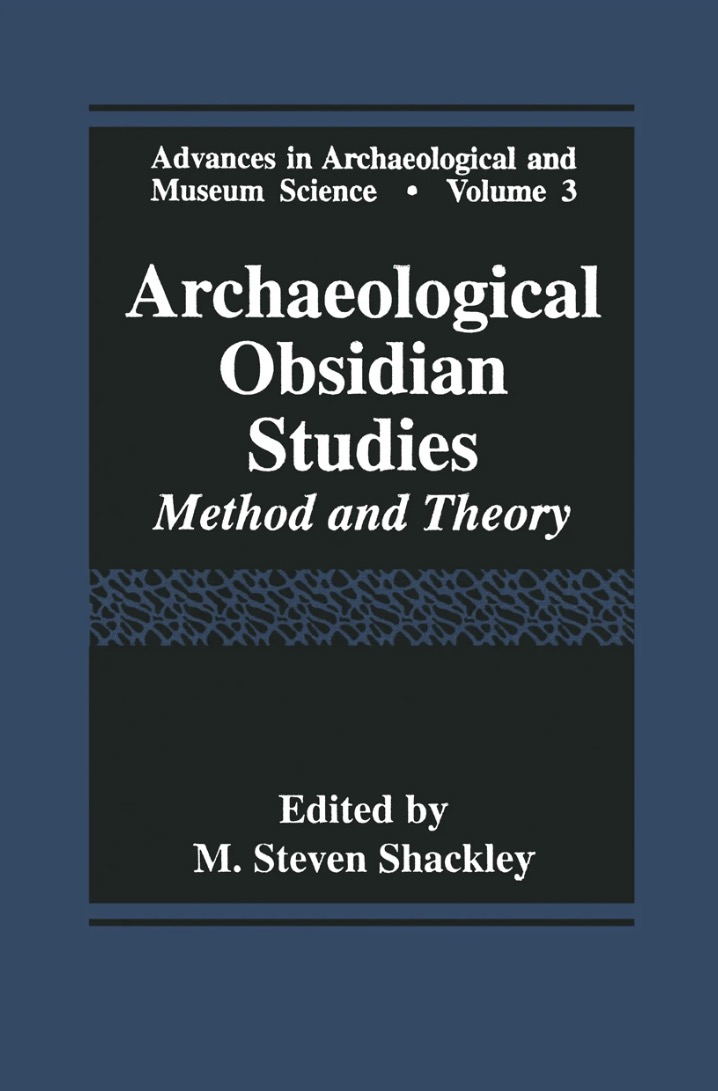
Archaeological Obsidian Studies: Method and Theory
Edited Book
Shackley, M.S., editor (1998) Archaeological Obsidian Studies: Method and Theory.. New York, Springer, Vol. 3 , 244 pp..
Record No. 27447  |  ISBN/ISSN: 9780310000000  |  DOI: https://doi.org/10.1007/978-1-4757-9276-8  |  Sinkankas/Born No.: NIS / NIB  |  RWHL
View Individual Record ↗
This volume is the third in the Advances in Archaeological and Museum Science series sponsored by the Society for Archaeological Sciences (SAS). The purpose of this series is to provide summaries of advances in various topics in ar­ chaeometry, archaeological science, environmental archaeology, preservation technology, and museum conservation. The SAS exists to encourage interdisciplinary collaboration between archaeologists and colleagues in the natural and physical sciences. SAS mem­ bers are drawn from many disciplinary fields. However, they all share a common belief that physical science techniques and methods constitute an essential component of contemporary archaeological field and laboratory studies. The series editors wish to thank the reviewers of each of the chapters in this volume for their excellent comments and suggestions. We also wish to thank Chriss jones for her invaluable assistance in the preparation of the texts for submission to the publisher. xi Preface As noted in the introductory chapter, this volume is the second major review of research progress in the study of archaeological obsidian. An earlier book, Advances in Obsidian Glass Studies: Archaeological and Geochemical Perspectives, appeared in 1976. A comparison of the treatment of topics reflected in this earlier work and that contained in this volume not only highlights important advances in the quality and depth of research on archaeological obsidian over more than a quarter of a century but also illustrates more generally some characteristics of developments in the archaeological science field in general.

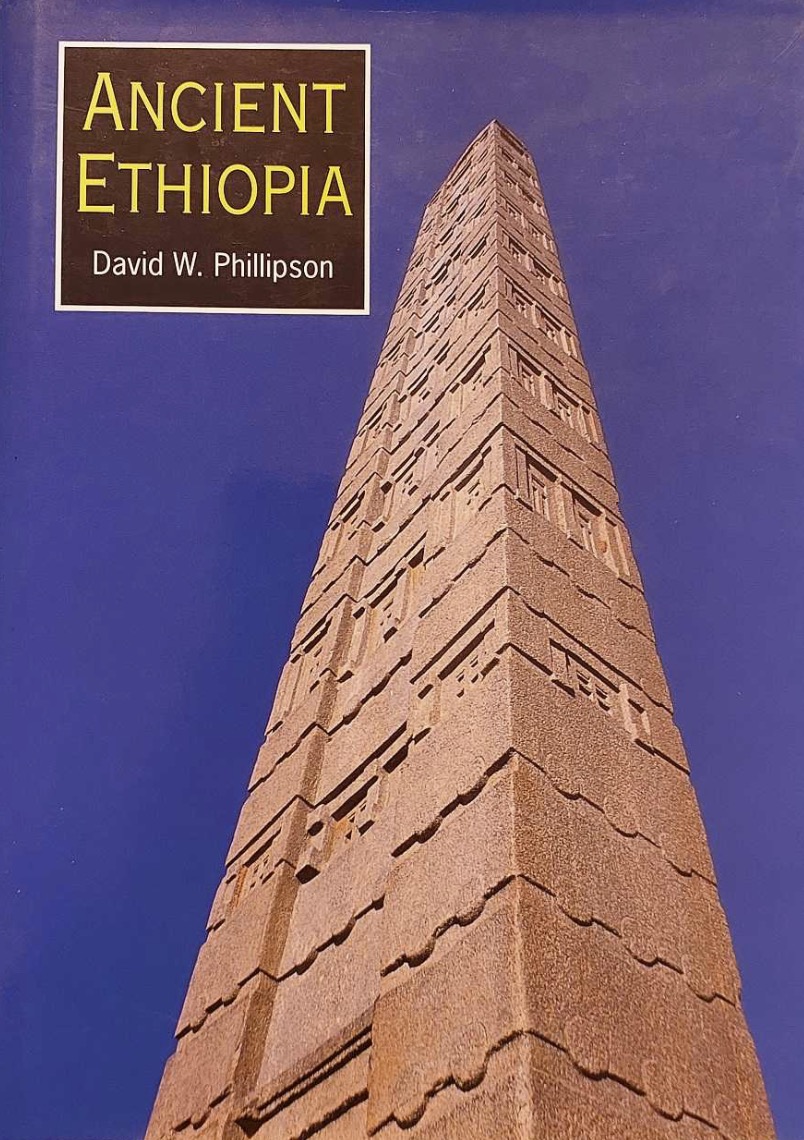
Ancient Ethiopia: Aksum, Its Antecedents and Successors
Book
Phillipson, D.W. (1998) Ancient Ethiopia: Aksum, Its Antecedents and Successors. London, British Museum Press, 176 pp.
Record No. 27304  |  ISBN/ISSN: 9780710000000  |  Sinkankas/Born No.: NIS / NIB  |  RWHL
View Individual Record ↗
During the first seven centuries AD there arose at Aksum in the highlands of northern Ethiopia, a unique African culture which has been described as the last of the great civilizations of antiquity to be revealed to modern knowledge". Although its monuments have long been known, their full significance has only recently been recognized. Ancient Aksum maintained a wide-ranging international trade and produced unparalleled coinage in gold, silver and copper. Its kings adopted Christianity in the 4th century AD and the Christian civilization of the Ethiopian highlands traces its origins to Aksumite roots. This text, based on the author's field research, presents an illustrated account of Aksumite civilization of the Ethiopian highlands, tracing its origins to Aksumite roots."

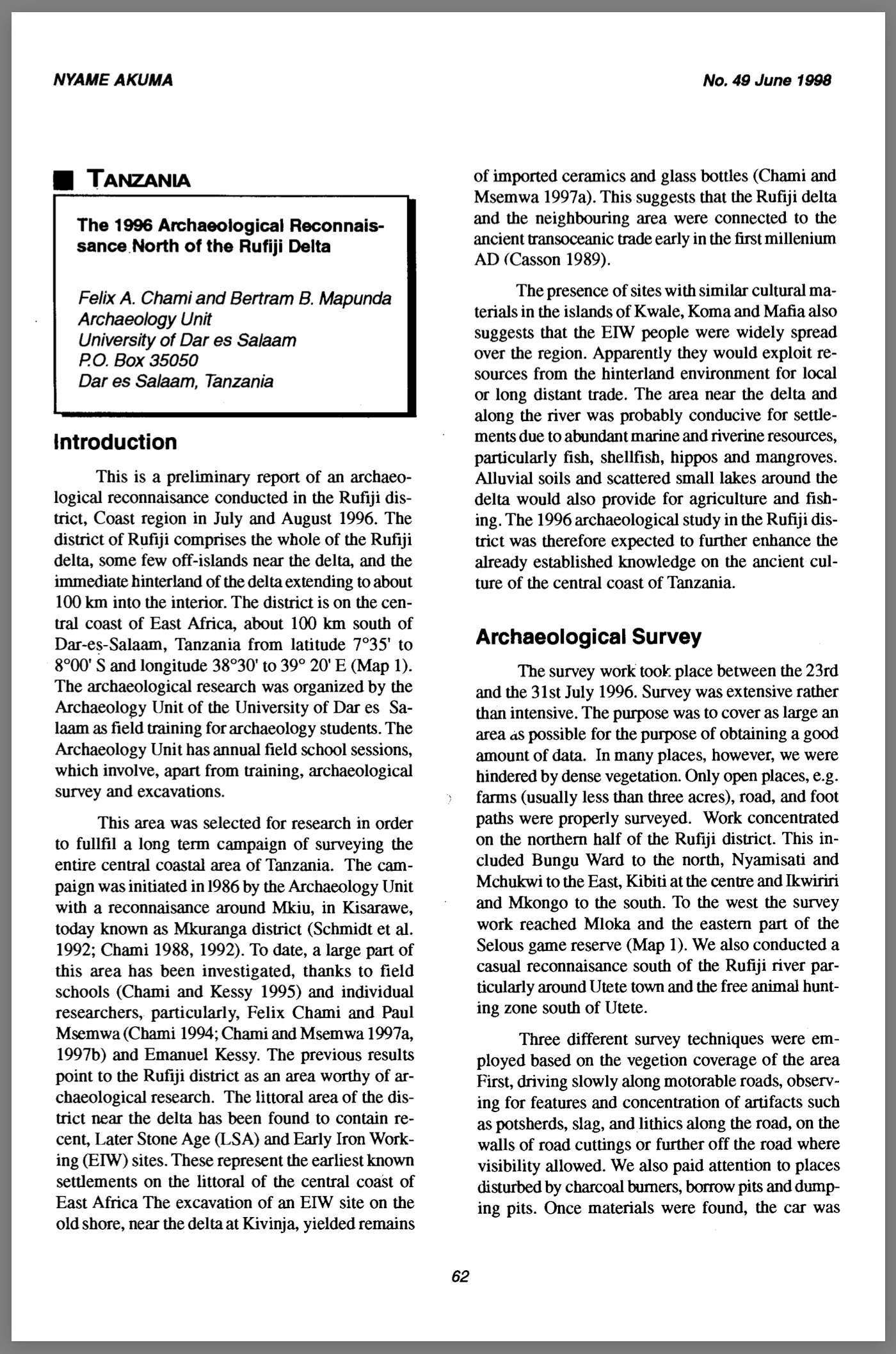
The 1996 archaeological reconnaissance north of the Rufiji delta
Journal Article
Chami, F.A. and Mapunda, B.B. (1998) The 1996 archaeological reconnaissance north of the Rufiji delta. Nyame Akuma, Vol.  49, pp. 62–78.
Record No. 27238  |  Sinkankas/Born No.: NIS / NIB  |  RWHL
View Individual Record ↗
This is a preliminary report of an archaeological reconnaissance conducted in the Rufiji District, Coast region in July and August 1996. The district of Rufiji comprises the whole of the Rufiji delta, some few off-islands near the delta, and the immediate hinterland of the delta extending to about 100 km into the interior. The district is on the central coast of East Africa, about 100 km south of Dar-es-Salaam, Tanzania from latitude 7°35’ to 8°00’ S and longitude 38°30’ to 39°20’ E (Map 1). The archaeological research was organized by the Archaeology Unit of the University of Dar es Salaam as field training for archaeology students. The Archaeology Unit has annual field school sessions, which involve, apart from training, archaeological survey and excavations.

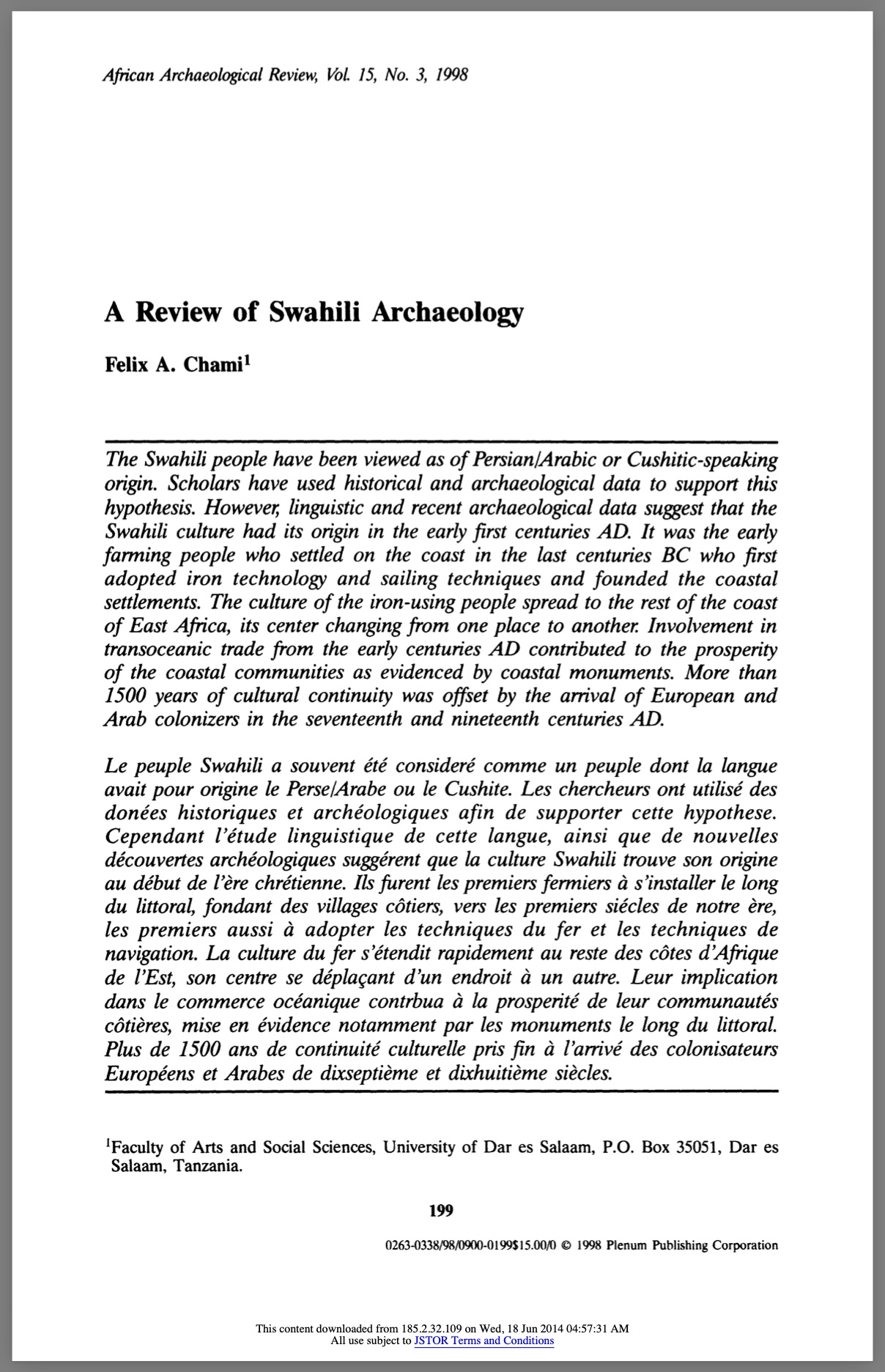
A review of Swahili archaeology

Journal Article
Chami, F.A. (1998) A review of Swahili archaeology. African Archaeological Review, Vol. 15, No. 3, pp. 199–221.
Record No. 27237  |  Sinkankas/Born No.: NIS / NIB  |  RWHL
View Individual Record ↗
The Swahili people have been viewed as of Persian/Arabic or Cushitic-speaking origin. Scholars have used historical and archaeological data to support this hypothesis. However, linguistic and recent archaeological data suggest that the Swahili culture had its origin in the early first centuries AD. It was the early farming people who settled on the coast in the last centuries BC who first adopted iron technology and sailing techniques and founded the coastal settlements. The culture of the iron-using people spread to the rest of the coast of East Africa, its center changing from one place to another. Involvement in transoceanic trade from the early centuries AD contributed to the prosperity of the coastal communities as evidenced by coastal monuments. More than 1500 years of cultural continuity was offset by the arrival of European and Arab colonizers in the seventeenth and nineteenth centuries AD.

Gem minerals from the Saranovskoye chromite deposit, western Urals
Journal Article
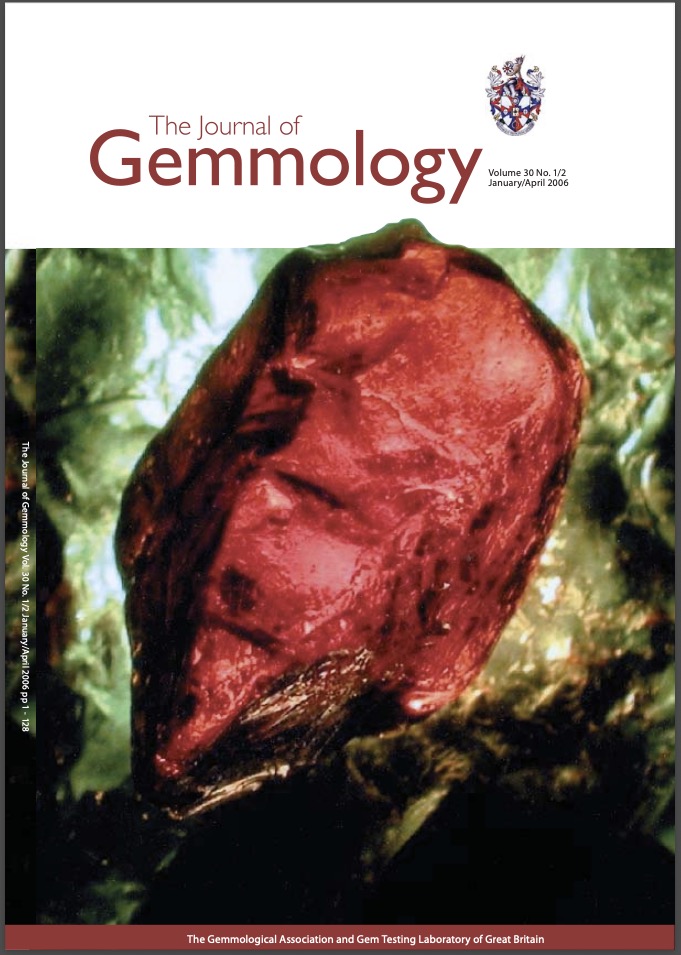
Spiridonov, E.M., Alferova, M.S. and Fattykhov, T.G. (1998) Gem minerals from the Saranovskoye chromite deposit, western Urals. Journal of Gemmology, Vol. 30, Nos. 1–2, January–April, pp. 91–102.
Record No. 26709  |  ISBN/ISSN: 221252  |  Sinkankas/Born No.: NIS / NIB  |  RWHL
View Individual Record ↗
Gem-quality minerals, including uvarovite, Cr-grossular and Cr-titanite, associated with the Saranovskoye chromite deposit, northern Urals, are described. The geology and mineralogy of the deposit indicates its formation following a well-known cycle of low-grade metamorphic processes and hydrothermal activity.

Gem deposits of the former Soviet Union
Journal Article
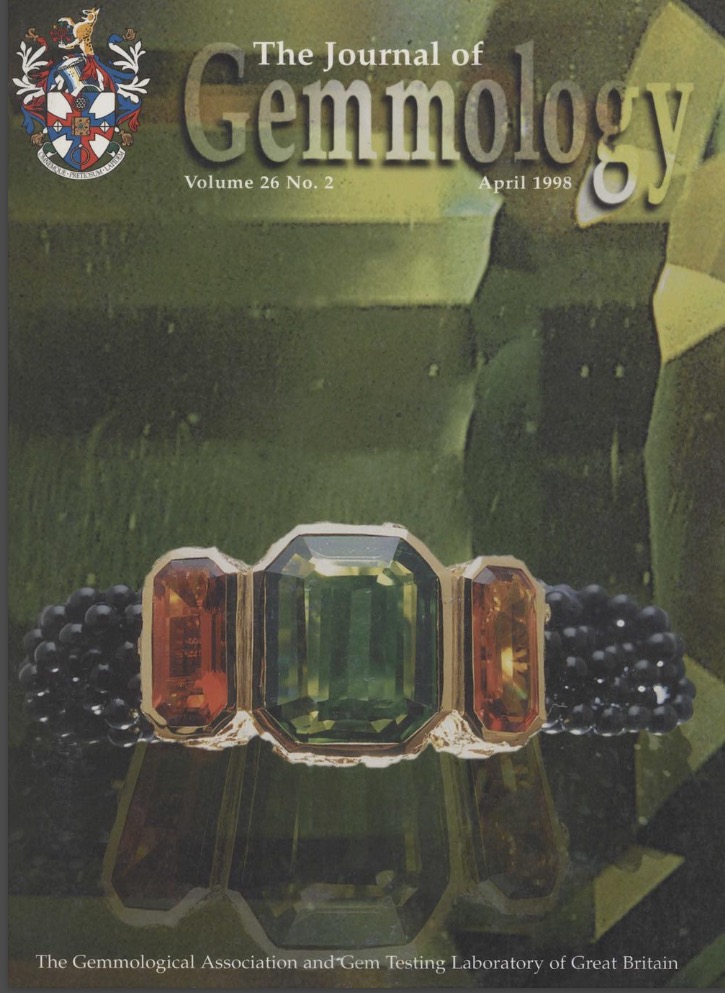
Spiridonov, E.M. (1998) Gem deposits of the former Soviet Union. Journal of Gemmology, Vol. 26, No. 2, April, pp. 111–125.
Record No. 26708  |  ISBN/ISSN: 221252  |  Sinkankas/Born No.: NIS / NIB  |  RWHL
View Individual Record ↗
The most important gemstone deposits of the former Soviet Union are described. The deposits range from diamond and ruby to amber and pearl. Some genetic features of gemstones are reported. Gem-quality minerals, including uvarovite, Cr-grossular and Cr-titanite, associated with the Saranovskoye chromite deposit, northern Urals, are described. The geology and mineralogy of the deposit indicates its formation following a well-known cycle of low-grade metamorphic processes and hydrothermal activity.

The Paleolithic of Siberia | New Discoveries and Interpretations
Edited Book
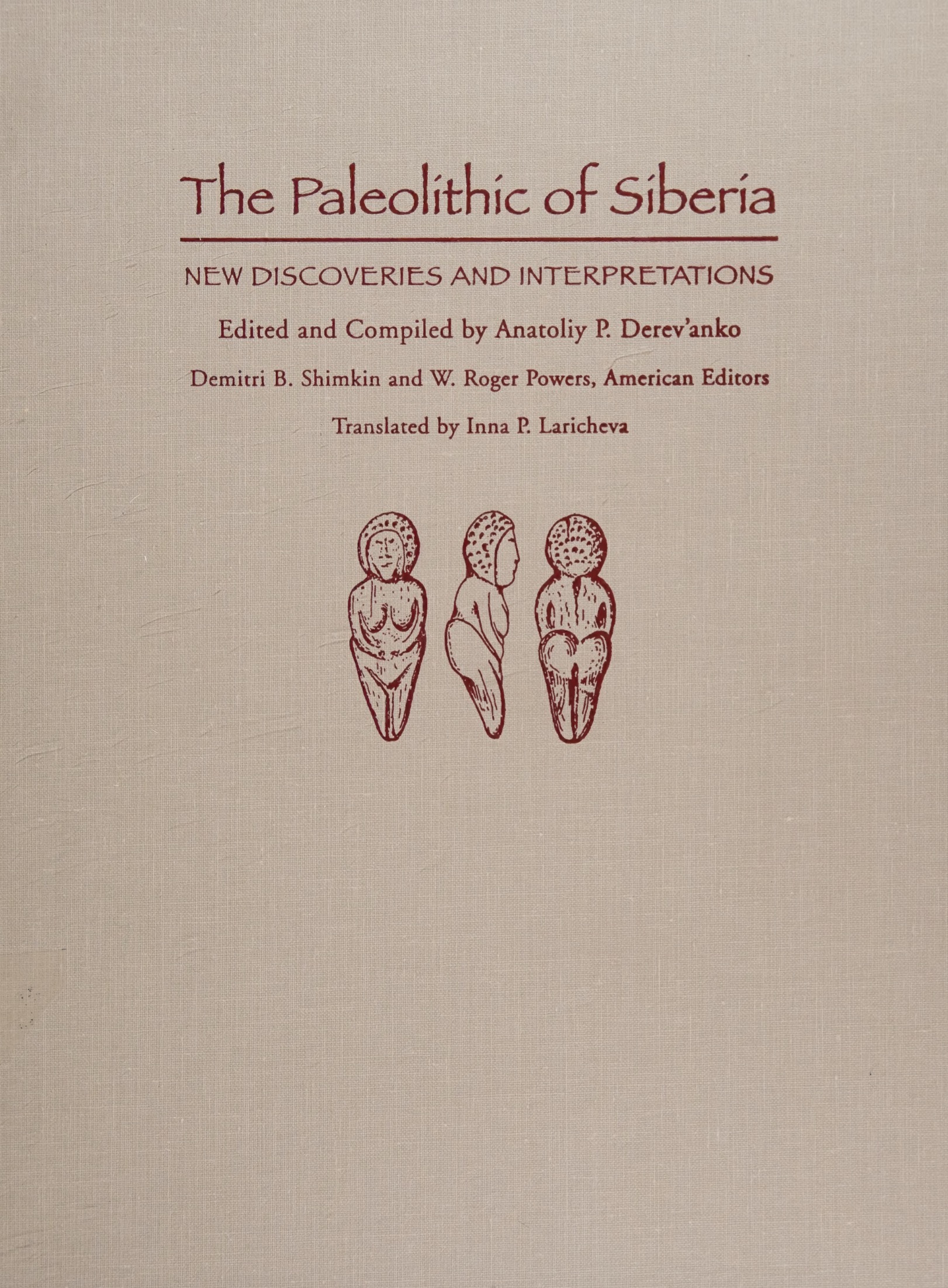
Derevyanko, A.P., Shimkin, D.B. and Powers, W.R., editor (1998) The Paleolithic of Siberia | New Discoveries and Interpretations.. Urbana, University of Illinois Press, 406 pp..
Record No. 7910  |  ISBN/ISSN: 9780250000000  |  Sinkankas/Born No.: NIS / NIB  |  RWHL
View Individual Record ↗
This major work, the result of collaboration among scholars who worked at dozens of sites from the Ural Mountains to the Pacific Ocean, is the first volume in English to summarize the massive quantity of archaeological data on the Paleolithic occupation of Siberia. Written by leading Russian experts and edited by scholars including the late Demitri Shimkin, the book presents the results of field studies conducted over some twenty-five years. It traces the routes of human migration throughout Eurasia, shows Siberian lithic industries as they evolved from the Early through the Middle and Late Paleolithic, and correlates them with reports from Mongolia, China, Japan, and America.

Identification of polystyrene in impregnated jadeite
Journal Article
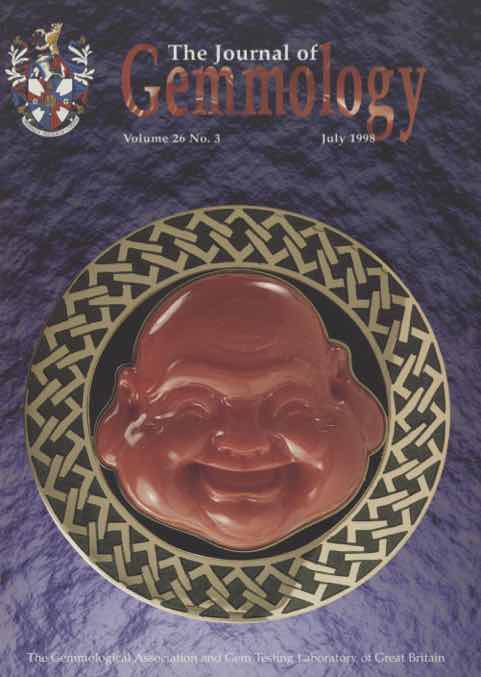
Quek, P.L. and Tan, T.L. (1998) Identification of polystyrene in impregnated jadeite. Journal of Gemmology, Vol. 26, No. 3, pp. 168–173.
Record No. 6158  |  ISBN/ISSN: 221252  |  Sinkankas/Born No.: NIS / NIB  |  RWHL
View Individual Record ↗
Fourier transform infrared transmission and X-ray photoelectron spectroscopy have proven to be useful spectroscopic techniques used to detect the presence of wax and polymers in jadeites, thus enabling the discrimination between A and B jades. This paper reports the results of Fourier transform infrared transmission and X-ray photoelectron spectroscopic studies done on a sample of polymer- impregnated jadeite. The polymer used for the impregnation of this sample has been previously reported (e.g. Fritsch and McClure, 1993) to be present in impregnated jadeite. Using the above two spectroscopic techniques, this polymer has been identified as polystyrene.

The chemical signature of emeralds from the Campos Verdes-Santa Terezinha Mining District, Goiás, Brazil
Journal Article
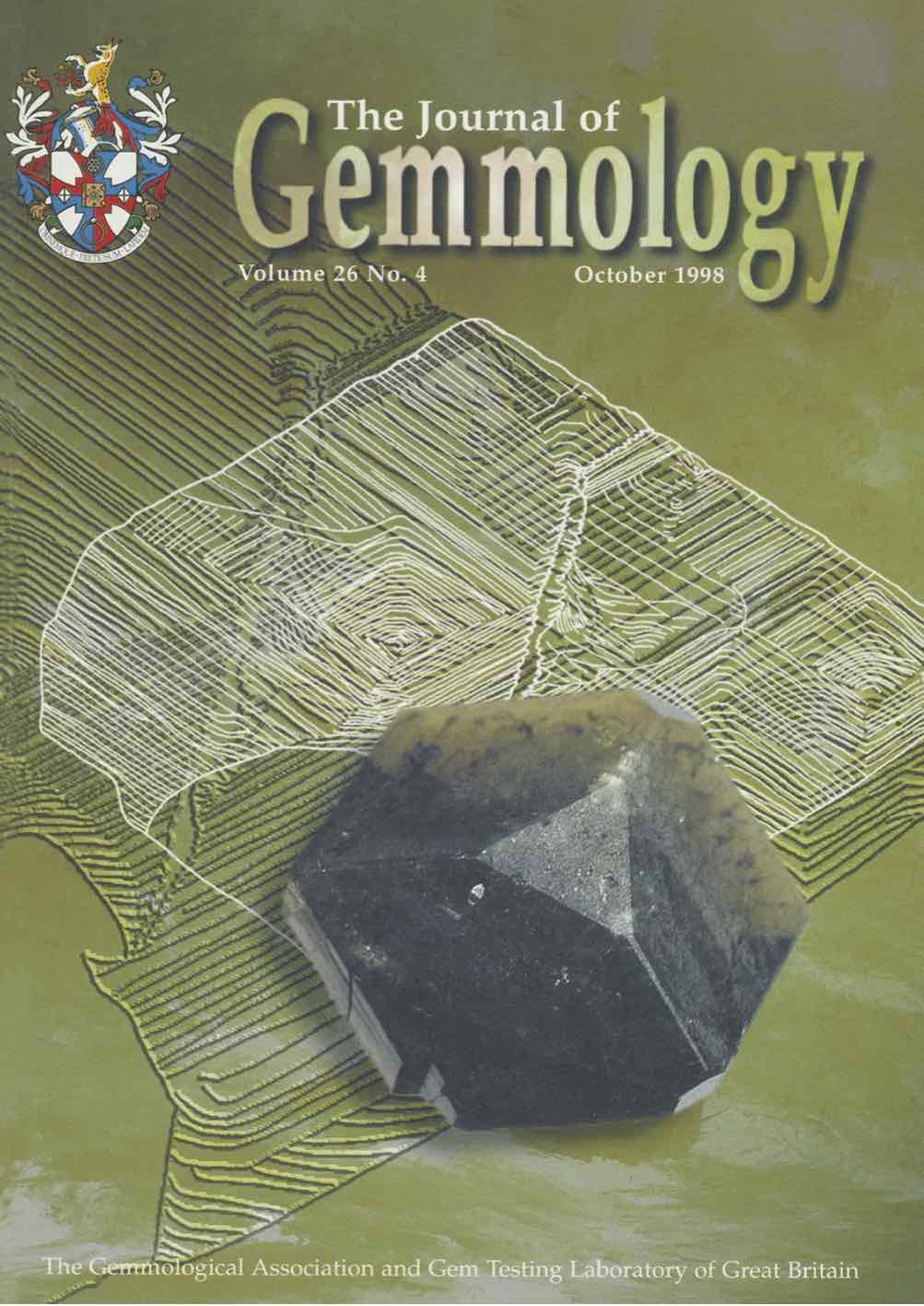
Pulz, G.M., Silva, L.J.H.d.e.-R., Neto, L.S.B., Brum, T.M.M., Juchem, P.L., Santos, C.A., Pereira, V.P. and Silva, J.J. (1998) The chemical signature of emeralds from the Campos Verdes-Santa Terezinha Mining District, Goiás, Brazil. Journal of Gemmology, Vol. 26, No. 4, October, pp. 252–261.
Record No. 6063  |  ISBN/ISSN: 221252  |  Sinkankas/Born No.: NIS / NIB  |  RWHL
View Individual Record ↗
Emerald crystals from the Campos Verdes mining district have been analysed by inductively coupled plasma mass spectrometry (ICP-MS), Fourier transform infrared spectroscopy and Mössbauer 2+ 3+ spectroscopy. These gems contain measurable amounts of Fe , Fe , Cr, V, Sc, Ni and Zn; large-ion lithophile element (LILE, Ba, Sr, Rb, Pb) and high field strength element (HFSE, Zr, Y, Ti) contents are near or below the limit of detection. This chemical signature reflects the metasomatic reactions between the mineralizing fluids and the ultrabasic host-rocks of this gem deposit.

Lab Notes: Jadeite with inclusions of zircon
Journal Article
Koivula, J.I. and Moses, T. (1998) Lab Notes: Jadeite with inclusions of zircon. Gems & Gemology, Vol. 34, No. 1, Spring, p. 45.
Record No. 5496  |  ISBN/ISSN: 0016626X  |  Sinkankas/Born No.: NIS / NIB  |  RWHL
View Individual Record ↗
As the practice of bleaching and impregnating jadeite has become more common over the last few years, the amount of jadeite we test in the laboratory has increased signifi-cantly. During the microscopic exam-ination of one variegated green jadeite cabochon for possible evidence of treatment, we noted that the stone contained a number of small crystal inclusions, some of which reached the surface (figure 4). These surface-reaching crystals appeared to be somewhat harder than the surround-ing jadeite, and in reflected light they had a higher surface luster. With the recent acquisition of GIA’s Renishaw Raman Imaging Microscope System, we were able to examine two of these crystals nondestructively. By focusing the argon laser through the 50 x objective of the Leica targeting microscope and run-ning several continuous scans, we obtained clear spectra of the two “inclusions.” A computer search of our data base revealed that these spec-tra matched the spectrum for zircon. Visible characteristics of the inclu-sions (e.g., crystal form, color, trans-parency, and relative hardness) were consistent with this identification. This is the first time that we have encountered zircon crystals as inclu-sions in jadeite. Coincidentally, about a month prior to our discovery, a zir-con inclusion in a jadeite cabochon was also identified by means of the same technique at the Center for Gemstone Testing in Bangkok (Ken-neth Scarratt, pers. comm.).

An interdisciplinary approach to identifying solid inclusions in corundum: Thorite in a ‘Sri Lanka’ sapphire
Journal Article
Carbonin, S., Sbrignadello, G. and Ajo, D. (1998) An interdisciplinary approach to identifying solid inclusions in corundum: Thorite in a ‘Sri Lanka’ sapphire. Journal of Gemmology, Vol. 26, No. 4, October, pp. 262–264.
Record No. 4732  |  ISBN/ISSN: 221252  |  Sinkankas/Born No.: NIS / NIB  |  RWHL
View Individual Record ↗
Carbonin, Sbrignadello, and Ajò demonstrate the value of combining independent analytical techniques to identify solid inclusions in corundum through a study of a commercially obtained blue sapphire containing thorite. The stone was provisionally assigned to a Sri Lanka type on the basis of an experienced supplier’s assessment, but reliable information establishing its geographical provenance was unavailable. Transmitted-light microscopy revealed at least two visually distinct inclusion types. A red, well-formed octahedral crystal associated with fingerprint inclusions was considered to be chromium-bearing spinel, a feature previously described in Sri Lankan sapphire. Photoluminescence measurements were undertaken with helium–neon laser excitation and subsequently with a more intense argon laser because the initial chromium-related emission from the host sapphire was weak and noisy. The principal identification problem concerned a second inclusion, approximately 45 µm long, whose habit, surrounding tension haloes, and fissures initially suggested metamict zircon. Because this grain lay close to the sapphire’s surface, the host was polished until the inclusion was exposed for electron microprobe examination. Energy-dispersive analysis unexpectedly detected no characteristic zirconium radiation. Instead, silicon and several diagnostic thorium emissions dominated the spectrum, supporting identification as thorite, ThSiO₄, whose crystal habit closely resembles that of zircon. The grain’s extremely small size prompted confirmation by an independent method. Low-background gamma spectrometry using an intrinsic germanium detector established the presence of natural thorium-232 through characteristic emissions from its radioactive daughter products, lead-212 and thallium-208, at 238.6 and 583.1 keV, respectively. The agreement between elemental microanalysis and nuclear spectrometry strengthened the thorite identification beyond what could be inferred from optical appearance alone. The authors emphasize that their complementary methods probe different physical processes, involving electronic and nuclear energy levels, and therefore provide independent support when a microscopic identification is uncertain. The study cautions against assigning zircon solely from crystal morphology and associated stress features, since another radioactive silicate can present a similar appearance. It also suggests that thorite should be considered among the inclusion species potentially relevant to sapphire provenance investigations, while the uncertain source of the specimen prevents its use as firm evidence of a Sri Lankan occurrence.

Spinel and garnet star networks: An interesting asterism in gems from Sri Lanka
Journal Article
Kumaratilake, W.L.D.R.A. (1998) Spinel and garnet star networks: An interesting asterism in gems from Sri Lanka. Journal of Gemmology, Vol. 26, No. 1, January, pp. 24–28.
Record No. 4144  |  ISBN/ISSN: 221252  |  Sinkankas/Born No.: NIS / NIB  |  RWHL
View Individual Record ↗
Four-ray and six-ray star networks are reported in spinel and garnet from Sri Lanka. Details of their arrangement and orientations are discussed.

Rubies and pink sapphires from the Pamir Range in Tajikistan, former USSR
Journal Article
Smith, C.P. (1998) Rubies and pink sapphires from the Pamir Range in Tajikistan, former USSR. Journal of Gemmology, Vol. 26, No. 2, April, pp. 103–109.
Record No. 2550  |  ISBN/ISSN: 221252  |  Sinkankas/Born No.: NIS / NIB  |  RWHL
View Individual Record ↗
Smith characterizes rubies and pink sapphires from marble-type deposits in the Turakuloma region of Tajikistan’s Pamir Mountains through examination of eight gemstones weighing 0.30–1.48 ct. Discovered in the early 1980s, these deposits had supplied only limited quantities to the international market. The best-known mine, Snejnaya, lies at approximately 3500 m, where severe weather restricts mining largely to June–August. The investigation combines standard gemological testing, immersion microscopy, identification of mineral inclusions by scanning electron microscopy with energy-dispersive analysis, optical and infrared spectroscopy, and semiquantitative X-ray fluorescence analysis. Samples are transparent, with saturated purplish-pink to purplish-red colours. Refractive indices of 1.761–1.762 and 1.770, birefringence of 0.008–0.009, specific gravity of 3.99–4.02 and uniaxial negative optic character are consistent with ruby and pink sapphire generally. Long-wave ultraviolet fluorescence is strong to very strong orange-red to red, while short-wave reactions are weaker. Internal growth structures indicate predominantly dipyramidal habits, with subordinate basal and rhombohedral faces; occasional colour zoning and rhombohedral twin lamellae are also recorded. Particularly useful microscopic features include columnar concentrations of short rutile needles and particles, highly resorbed calcite crystals arranged in roughly parallel rows, and small mineral or negative crystals accompanied by oriented equatorial thin films. Additional inclusions comprise titanite, zircon, rutile and plagioclase feldspar, together with healed fractures and negative crystals containing multiple fluid phases. Visible absorption is dominated by chromium, with broad bands near 405 and 550 nm and characteristic sharp lines. Infrared spectra show the expected corundum lattice absorptions but no detected mid-infrared features attributable to foreign minerals or structural hydroxyl groups. Analyses of five specimens identify chromium as the principal minor element responsible for colour, accompanied by titanium, vanadium, iron and gallium. Although the stones most closely resemble material from Quy Chau, Vietnam, their combined inclusion patterns appear distinctive and differ from features commonly encountered in several other ruby sources. Smith emphasizes the small sample population and the limited information available on production and reserves. At the time of writing, civil conflict, financial constraints and difficult access restricted exploitation, while fine faceted stones were generally 1.5 ct or smaller.

Birds and Beasts of Ancient Latin America
Book
Benson, E.P. (1997) Birds and Beasts of Ancient Latin America. Gainesville, FL, University Press of Florida, 162 pp.
Record No. 28853  |  Sinkankas/Born No.: NIS / NIB  |  RWHL
View Individual Record ↗
In this book Elizabeth P. Benson explores Pre-Columbian zoology and the important role of animals as companions to humans in this world and in the afterlife. She is widely acknowledged as one of the leading authorities on animal imagery in Pre-Columbian America. Although trained as an art historian, her extensive study of Latin American zoology, both past and present, lends a new dimension to the interpretation of artistic imagery. As director of the Dumbarton Oaks Center for Pre-Columbian Studies, she organized many conferences on Pre-Columbian art and archaeology and edited numerous volumes published by Dumbarton Oaks. As curator of the Pre-Columbian Collection there, she worked with some of the finest ancient artworks from Latin America. In addition to many exhibition catalogues, she authored books on the Maya of Mesoamerica and the Moche of Peru, as well as numerous articles on animal imagery in Pre-Columbian America. Most recently, she served as coeditor and coauthor of the catalogue for the exhibition “Olmec Art of Ancient Mexico” at the National Gallery of Art. She remains one of the best-known and most respected scholars in the field of Pre-Columbian art. This book serves as a companion text to the traveling exhibition “Birds and Beasts of Ancient Latin America.” Many of the artworks published here appeared in print for the first time and represent a substantial selection of the objects included in the exhibition. They were drawn from four collections: the University of Pennsylvania Museum of Archaeology and Anthropology; the Carnegie Museum of Natural History; and both the Samuel P. Harn Museum of Art and the Florida Museum of Natural History, which are part of the University of Florida. The exhibition was funded by a consortium formed by the Florida Museum of Natural History, the Carnegie Museum of Archaeology and Anthropology, the University of Pennsylvania Museum, and the California Academy of Sciences.

New Locality and a New Kind of Jadeite Jade from Guatemala: Rutile-Quartz-Jadeite
Conference Paper
Smith, D.C. and Gendron, F. (1997) New Locality and a New Kind of Jadeite Jade from Guatemala: Rutile-Quartz-Jadeite. Fifth International Eclogite Conference, Terra Nova 9, p. 35.
Record No. 28500  |  Sinkankas/Born No.: NIS / NIB  |  RWHL
View Individual Record ↗
Jadeitite occurs along with albitite (ex-jadeitite) in blocks in tectonised serpentinite, or more often in river pebbles, along the Motagua River Valley and its tributaries (MRV) in Guatemala (e.g. McBirney et al., 1967; Harlow, 1994). The MRV is generally considered to be the source area for most, if not all, of the jade used widely in the prehispanic civilisations ranging from the Olmecs through the Mayas to the Aztecs (e.g. Hargett, 1990; Harlow, 1991). Harlow (1994) mentioned the evident spatial relationships of known jadeitite or eclogite occurrences with the major suture contact of the North American and Caribbean Plates (which runs W.S.W.-E.N.E. precisely along the MRV), and he emphasised that jadeitite and eclogite are respectively restricted to the North and South sides of the MRV. Raman Microprobe (RMP) analysis on the unprepared small (~4×2×2 cm) green river pebble n° FG96/27, collected from the South side of the MRV, showed it to be a near monomineralic jadeitite with a composition of 90 ± 10 mol% Jd, with a characteristic T-O-T vibration at 697–701 cm⁻¹ (cf. Smith & Boyer, 1985; Smith & Gendron, 1997). Both macro- and micro-mode RMP also revealed local enrichments of rutile, a mineral not listed in the comprehensive study of MRV jadeitites by Harlow (1994). A subsequently manufactured thin section revealed: an irregular granular microcrystalline texture with the pyroxene (~97 vol%, i.e. true jadeite jade) sometimes showing optically-zoned grain boundaries; abundant rutile (~2 vol%); rare titanite and zircon; and more importantly numerous micron-sized inclusions in the cores of a few of the larger equant to elongate jadeite grains. EMP analysis then proved 77 to 97 mol% Jd. All analysed microinclusions are quartz (also not listed by Harlow, 1994), thus indicating a trapped core assemblage on the higher P side of the Ab = Jd + Qz reaction for the given compositions. No other mineral species have been found, in particular no albite, nepheline nor analcime, and hence no retrogression at all. Jadeitite n° FG96/27 is thus very different from all the varieties of jadeitite from the North side of the MRV described by Harlow (1994). Therefore it seems that its occurrence on the South side is a geological reality, rather than a human-caused anomaly (e.g. prehispanic commerce). Hence it represents a new locality and a new kind of jadeitite with a higher-P different P-T-X-t trajectory, but most probably one formed by the same overall petrogenetical process and geodynamical event. It thus also presents an extra possibility for the geological provenancing of Mesoamerican artefacts in jade which, in fact, collectively reveal several distinct kinds of jade.

Archaeometric application of the Raman microprobe to the non‐destructive identification of two pre‐Columbian ceremonial polished ‘greenstone’ axe‐heads from Mesoamerica
Journal Article
Smith, D. and Gendron, F. (1997) Archaeometric application of the Raman microprobe to the non‐destructive identification of two pre‐Columbian ceremonial polished ‘greenstone’ axe‐heads from Mesoamerica. Journal of Raman Spectroscopy, Vol. 28, pp. 731–738.
Record No. 28305  |  DOI: https://doi.org/10.1002/(SICI)1097-4555(199709)28:9<731::AID-JRS170>3.0.CO;2-9  |  Sinkankas/Born No.: NIS / NIB  |  RWHL
View Individual Record ↗
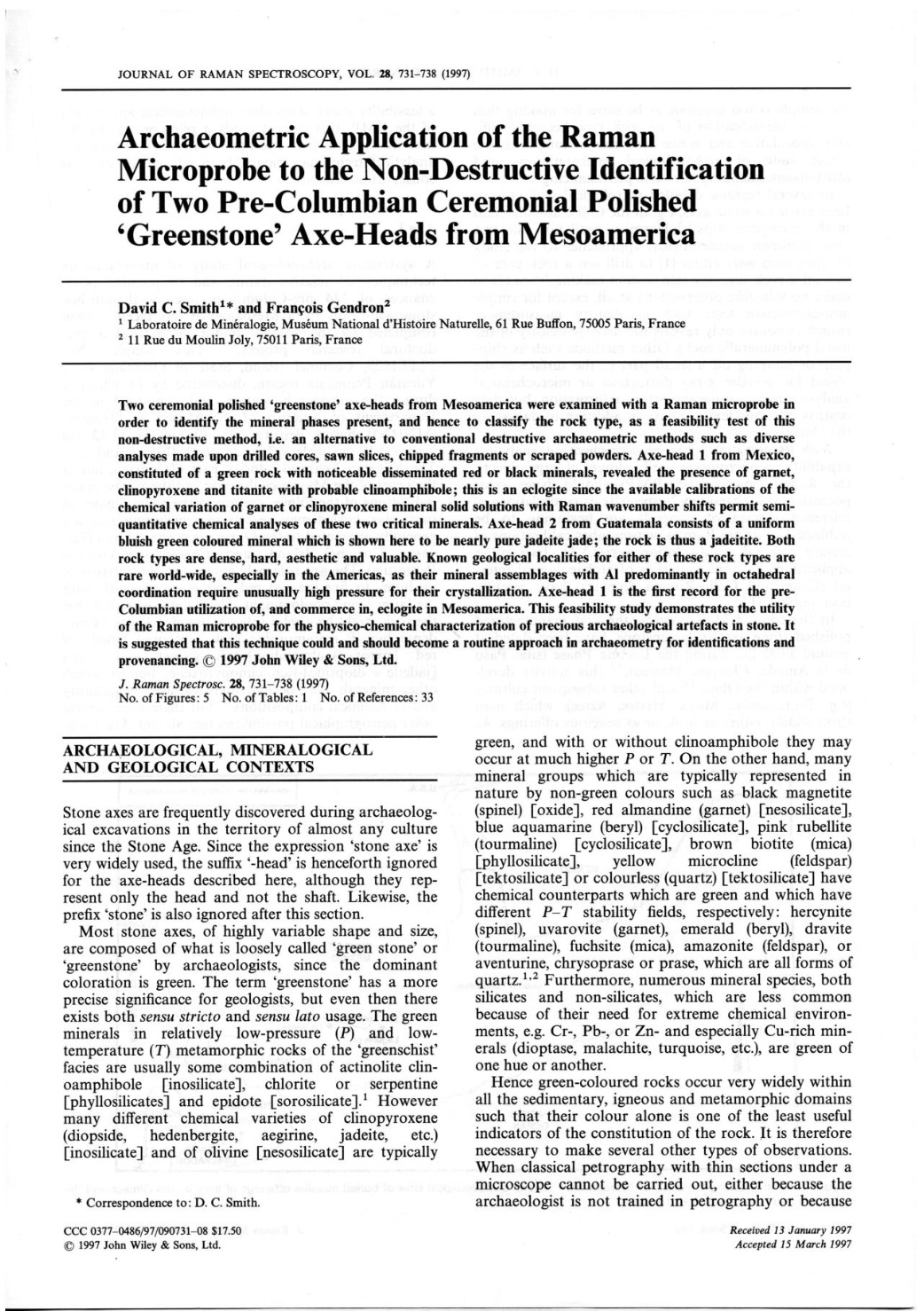
Two ceremonial polished ‘greenstone’ axe-heads from Mesoamerica were examined with a Raman microprobe in order to identify the mineral phases present, and hence to classify the rock type, as a feasibility test of this non-destructive method, i.e. an alternative to conventional destructive archaeometric methods such as diverse analyses made upon drilled cores, sawn slices, chipped fragments or scraped powders. Axe-head 1 from Mexico, constituted of a green rock with noticeable disseminated red or black minerals, revealed the presence of garnet, clinopyroxene and titanite with probable clinoamphibole; this is an eclogite since the available calibrations of the chemical variation of garnet or clinopyroxene mineral solid solutions with Raman wavenumber shifts permit semi-quantitative chemical analyses of these two critical minerals. Axe-head 2 from Guatemala consists of a uniform bluish green coloured mineral which is shown here to be nearly pure jadeite jade; the rock is thus a jadeitite. Both rock types are dense, hard, aesthetic and valuable. Known geological localities for either of these rock types are rare world-wide, especially in the Americas, as their mineral assemblages with Al predominantly in octahedral coordination require unusually high pressure for their crystallization. Axe-head 1 is the first record for the pre-Columbian utilization of, and commerce in, eclogite in Mesoamerica. This feasibility study demonstrates the utility of the Raman microprobe for the physico-chemical characterization of precious archaeological artefacts in stone. It is suggested that this technique could and should become a routine approach in archaeometry for identifications and provenancing. © 1997 John Wiley & Sons, Ltd.

Gem Trade Lab Notes: Dyed impregnated bangle without a dye band" spectrum"
Journal Article
Crowningshield, G.R. (1997) Gem Trade Lab Notes: Dyed impregnated bangle without a dye band" spectrum". Gems & Gemology, Vol. 33, No. 2, Summer, pp. 138–139.
Record No. 28109  |  Sinkankas/Born No.: NIS / NIB  |  RWHL
View Individual Record ↗
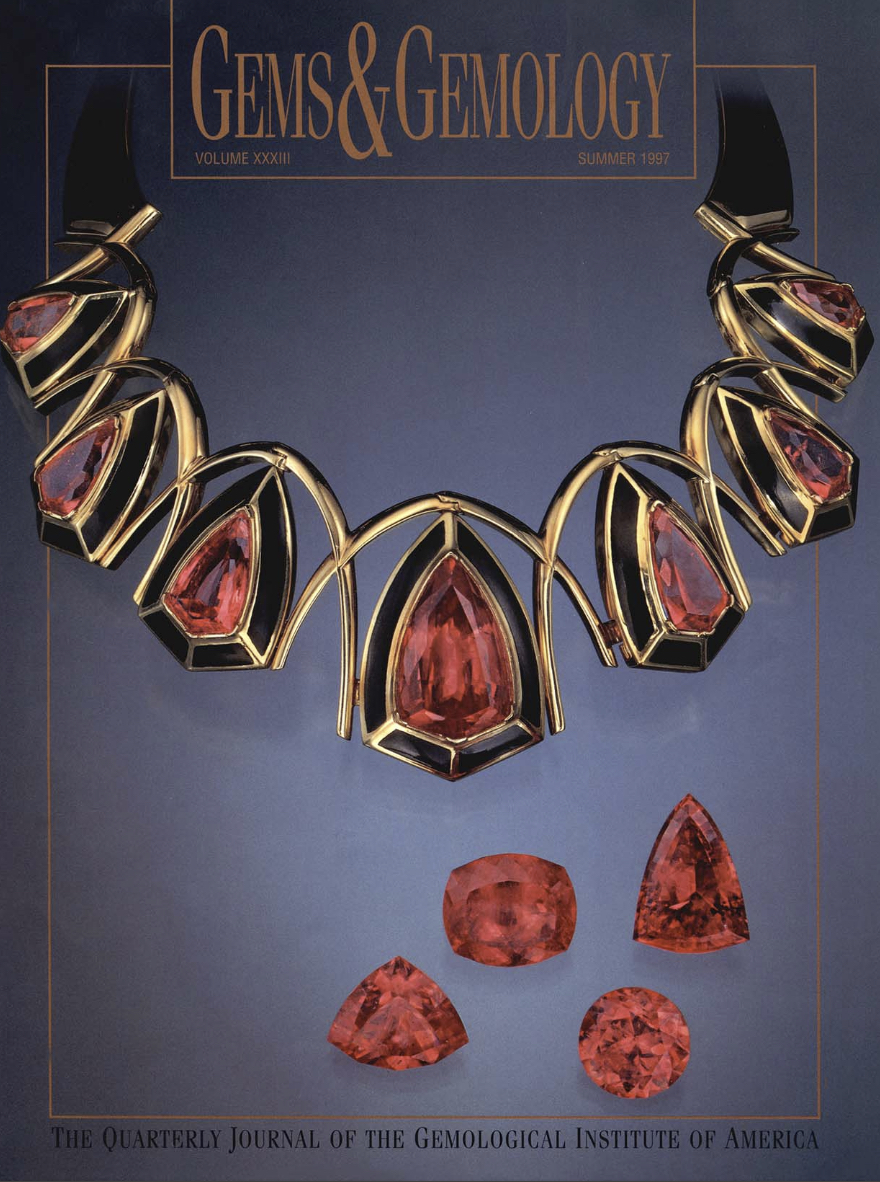
JADEITE JADE — Beads of an unusual color: An attractive necklace of predominantly brown-and-white (with lesser amounts of green) variegated beads (figure 10), which a client purchased recently in Tucson, was submitted to the East Coast lab for identification. We identified the beads as jadeite on the basis of standard gemological testing. Although many jadeite boulders have a brown outer layer (or “skin”; see, e.g., figure 6 of Winter 1995 Gem News, p. 278), where the color is due to staining by an iron compound, we do not recall ever having seen beads with this agate-like appearance. Some years ago, we encountered solid-color brown jadeite cabochons that we believed were the result of such natural staining. More recently we have seen jade of a fairly uniform brown color that appeared to be the result of some type of dyeing process. However, the variegated color of these beads indicates natural color. The fact that a number of the beads in the necklace were banded with grayish green jadeite further supports the conclusion that the color was probably natural and that the beads were cut from near the outside layer of a naturally stained jadeite boulder. Of the beads that we tested, all exhibited a 437 nm iron line and spot refractive index values within the normal published range for jadeite (about 1.66). For the most part, the beads were inert to both long- and short-wave ultraviolet radiation. The attractive brown-and-white variegated color suggests that these beads had not been subjected to bleaching and impregnation, since the brown veining would most likely be removed during such treatment. Infrared spectroscopy on a few of the beads confirmed that they were not polymer impregnated. [Figure 11. The green spherules in this polymer-filled cavity in a jadeite bangle make the filler much less conspicuous. Note also the many gas bubbles in the polymer. Magnified 25×.]

A new look at culture and trade on the Azanian coast

Journal Article
Chami, F.A. and Msemwa, P.J. (1997) A new look at culture and trade on the Azanian coast. Current Anthropology, Vol. 38, pp. 673–677.
Record No. 27239  |  DOI: https://doi.org/10.1086/204654  |  Sinkankas/Born No.: NIS / NIB  |  RWHL
View Individual Record ↗
Recent archaeological survey and excavation on the central coast of East Africa have provided valuable new information on the culture of the early-1st-millennium inhabitants of this region, known to the ancient Greeks and Romans as Azania. According to the Periplus of the Erythrean Sea (A.D. 40–70), Ptolemy (2d–3d centuries A.D.), and Indicopleustes (6th century A.D.), the settlements of this region obtained iron objects and glassware from northern traders in exchange for ivory, tortoise shell, and spices. The region is alleged to have been under the control of the Homeritae of Arabia Felix (Casson 1989) and to have been visited by Indonesians (Miller 1969). Pliny reports that the Indonesians brought spices from South and East Asia to be ferried to the Mediterranean through the Horn or the interior and, if they survived the five-year return journey, carried back glassware and bronzework, clothing, brooches, armlets, and necklaces (Miller 1969:156). The documents mention Rhapta, located on a promontory and a bay of the same name, as the region’s major emporium and the Roman Empire’s southernmost market. Scholars have pointed to various possible locations for Rhapta, among them the Rufiji Delta, the Dar-es-Salaam Bay, and the mouth of the Pangani River (for discussion see Datoo 1970, Kirwan 1986, Casson 1989); Horton (1990:98–99) has recently placed it in the Lamu Archipelago or the area north of the Zanzibar Channel.

Building a Gemological Library

Gemological books range from general identification manuals and textbooks to specialized works on individual gems, mineralogy, jewelry, treatments, synthesis, history and gem-producing regions.

For a curated selection of particularly useful books, read The Gemologist's Core Library — Classic Books on Gemology, Jewelry and Mineralogy.

About Four Treasures

Four Treasures is Lotus Gemology's freely accessible gemological reference database. Use the full database to search by author, title or keyword and explore literature on gemology, mineralogy, jewelry and related fields. Where available, hyperlinks on titles may lead directly to the full publication.

Search the Complete Four Treasures Database