Gemology Books Bibliography

Gemology Books Bibliography

Explore books on gems, gemology, jewelry and mineralogy in Four Treasures, the Lotus Gemology reference database. This bibliography brings together matching book records from the collection, with publication details, abstracts and cover images where available.

Gemology Book References

The list below matches books concerning gemology and related subjects in the database's searchable fields. Some works cover several branches of gems, jewelry or mineralogy.
2,061–2,080 of 3,681 matching references

New emerald deposits from Southern India
Journal Article
Panjikar, J., Ramchandran, K.T. and Balu, K. (1997) New emerald deposits from Southern India. Australian Gemmologist, Vol. 19, No. 10, April–June, pp. 427–432.
Record No. 26923  |  Sinkankas/Born No.: NIS / NIB  |  RWHL
View Individual Record ↗
In the mid-1990s, emeralds were discovered embedded in the wall of a well at the village of Sankari Taluka, in southern India’s state of Tamil Nadu. Gemmological research into the chemistry, properties, and characteristic inclusions of these emeralds has revealed similarities between the properties of Sankari emerald and those of emerald from several previously described locations on the island of Madagascar. This finding suggests that Sankari emeralds may have been emplaced into the ancient supercontinent of Gondwanaland before India rifted from it some 200 million years ago.

Gem News: Heat treatment of garnets

Journal Article
Johnson, M.L. and Koivula, J.I. (1997) Gem News: Heat treatment of garnets. Gems & Gemology, Vol. 33, No. 4, Winter, p. 308.
Record No. 26785  |  Sinkankas/Born No.: NIS / NIB  |  RWHL
View Individual Record ↗
Although garnets are generally believed to be unaffected by treatments like heating or irradiation and thus are typically considered untreated, Gerhard F. A. Becker of Idar-Oberstein challenged this assumption with heat-treatment experiments on uncut Brazilian rhodolite garnets. Using a standard muffle furnace in air, he incrementally heated the purple garnets in 50°C steps, observing the first visible color change at 700°C, with continued alteration through 900°C. At higher temperatures, a metallic, hematite-like coating formed on the stones, which could be polished off. Becker’s findings confirm earlier preliminary work by Dr. Kurt Nassau, who, following an observation by G.V. Rogers, altered purplish rhodolite to a hessonite-like brown at around 600°C. The metallic coating was likely due to iron oxidation from heating in air and may resemble a similar phenomenon reported in Gems & Gemology (Fall 1975), where an almandine garnet was mistaken for cuprite—though at that time, the effect was believed to result from sputter coating rather than heat treatment.

A new colour-change effect

Journal Article
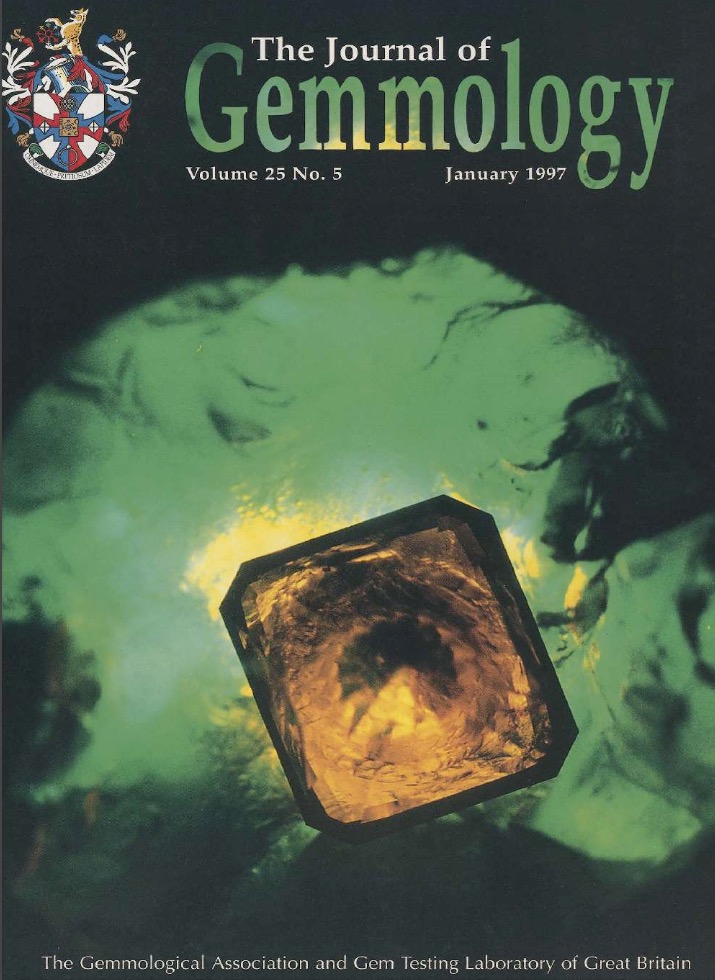
Halvorsen, A. and Jensen, B.B. (1997) A new colour-change effect. Journal of Gemmology, Vol. 25, No. 5, pp. 325–330.
Record No. 26734  |  ISBN/ISSN: 221252  |  Sinkankas/Born No.: NIS / NIB  |  RWHL
View Individual Record ↗
Crystals of green chrome tourmaline from the Umba Valley (Tanzania) may show a wine-red colour when viewed in certain directions. This is neither pleochroism, nor a colour-change of alexandrite type. The change from green to red depends primarily on the path length of light through the stone and probably also on the content of Cr and V; in the samples tested the stones appear red when more than 15 mm thick. It is suggested that this new type of colour change be called the ‘Usambara effect’.

India and the Hellenistic World

Book
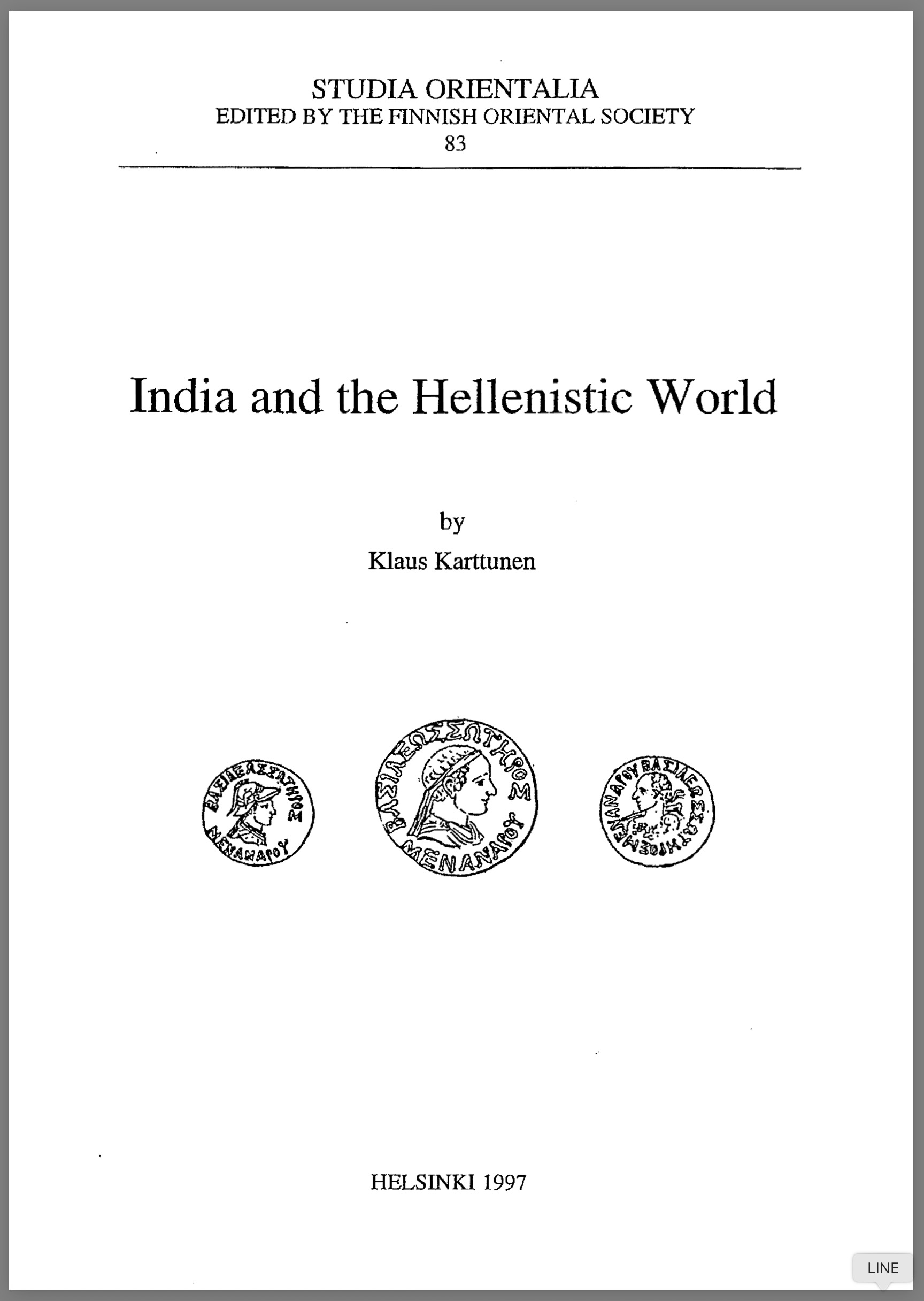
Karttunen, K. (1997) India and the Hellenistic World. Helsinki, Finnish Oriental Society, 439 pp.
Record No. 26442  |  ISBN/ISSN: 9788120000000  |  Sinkankas/Born No.: NIS / NIB  |  RWHL
View Individual Record ↗
The author has planned Graeco-Indian relations throughout their history in three volumes. According to this India in Early Greek Literature is the first volume, and present volume, India and the Hellenistic World is second, while third volume is India and the Roman West . In the first volume the author has discussed the Greek accounts of India and the relations between India and Greece until Alexander s Indian campaign. Later authors, like Megasthenes, were mentioned only when their information was relevant for this purpose. In present volume focus is on the Hellenistic period in the narrow sense of the word, from Alexander to the rise of Roman Imperial hegemony. The main object is to collect, explain and discuss the relevant passage in Greek and Latin literature in their relation to Greek and Roman society and literary traditions as well as to then existing information about India and other Asian countries, in some cases Africa too. The methods are philological, but author has also made an earnest attempt to find out and utilize the new evidence offered by such disciplines as archaeology, epigraphy, and numismatics.

Chapter IV: India, Indian Ocean Lands and the Mediterreanean: Archaeology of Sea Routes, Harbours and Long Distance Contact. Roman Egypt to Peninsular India: Archaeological Patterns of Trade 1st Century B C To 3rd Century AD
Thesis
Gupta, S. (1997) Chapter IV: India, Indian Ocean Lands and the Mediterreanean: Archaeology of Sea Routes, Harbours and Long Distance Contact. Roman Egypt to Peninsular India: Archaeological Patterns of Trade 1st Century B C To 3rd Century AD. University of Pune, pp. 120–246.
Record No. 17217  |  Sinkankas/Born No.: NIS / NIB  |  RWHL
View Individual Record ↗
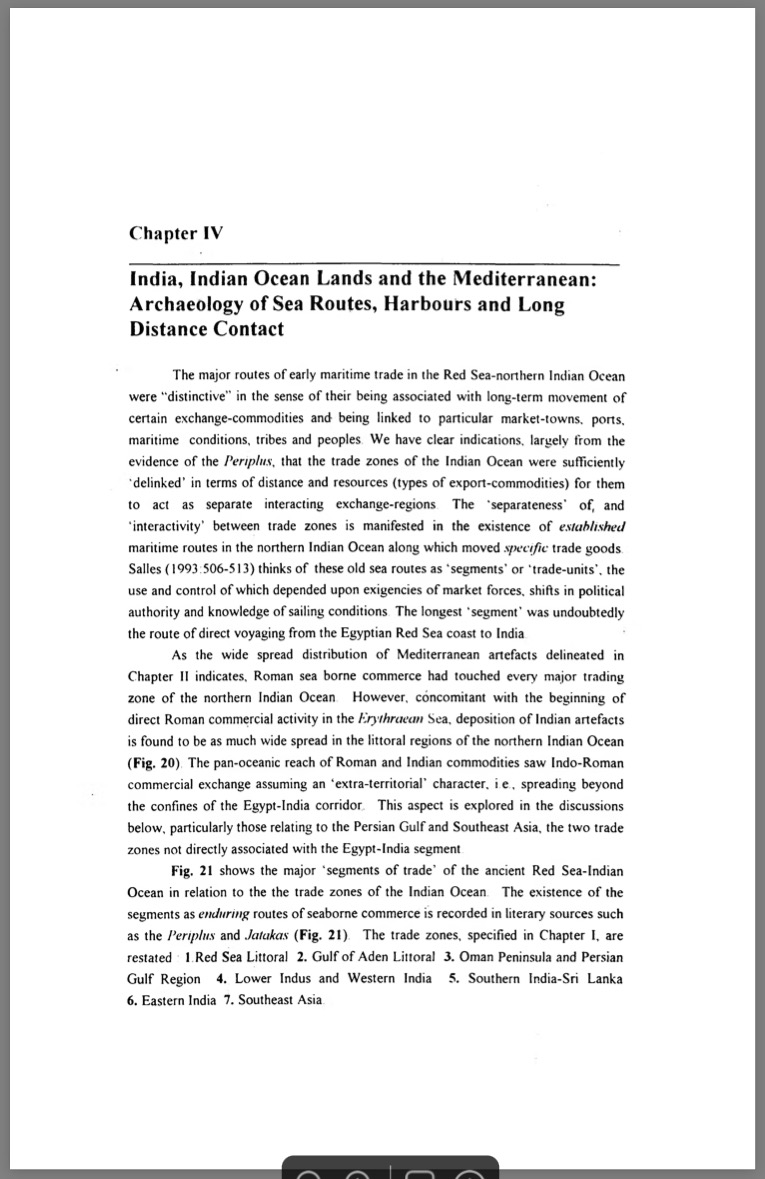
The major routes of early maritime trade in the Red Sea and northern Indian Ocean were distinctive, characterized by the long-term movement of specific exchange commodities and their connection to particular market towns, ports, maritime conditions, tribes, and peoples. Evidence from the Periplus Maris Erythraei suggests that these trade zones were sufficiently separated by distance and resources—especially in terms of export commodities—to function as distinct but interacting exchange regions. This dual nature of separation and interactivity is reflected in the presence of well-established maritime routes along which specific trade goods circulated. Salles (1993: 506–513) describes these ancient sea routes as ‘segments’ or ‘trade units,’ whose use and control were shaped by market demands, shifts in political power, and navigational knowledge. Among these, the longest and most significant was the direct sea route from the Egyptian Red Sea coast to India.

Characterization of alexandrite, emerald and phenakite from Franqueira (NW Spain)
Journal Article
Marcos-Pascual, C. and Moreiras, D.B. (1997) Characterization of alexandrite, emerald and phenakite from Franqueira (NW Spain). Journal of Gemmology, Vol. 25, No. 7, pp. 340–357.
Record No. 8041  |  ISBN/ISSN: 221252  |  Sinkankas/Born No.: NIS / NIB  |  RWHL
View Individual Record ↗
Marcos-Pascual and Moreiras examine the structural, chemical, physical and microscopic characteristics of emerald, alexandrite and phenakite from Franqueira in northwestern Spain, documenting an unusual beryllium-mineral association and assessing its gemological potential. Mineralization occurs in phlogopite-rich metasomatic rock developed where fluid-rich granitic pegmatites interacted with dunite. Beryllium supplied by the pegmatites combined with chromium derived from the ultramafic rock to produce emerald and alexandrite. The study employs single-crystal X-ray diffraction, electron microprobe analysis, refractometry, hydrostatic weighing, infrared spectroscopy and microscopy, supplemented by determinations of lithium, beryllium and water in emerald. Emerald is the most abundant beryllium mineral, forming light to medium green prismatic crystals up to 10 cm long. Most material is translucent and unevenly coloured, although distinct growth-related colour zoning was not observed. Chemical and structural data indicate predominantly octahedral substitution in the beryl structure, with channel alkalis contributing to charge compensation. Infrared spectra show that alkali-associated Type II water predominates over Type I water. Common inclusions comprise brown iron-rich phlogopite, negative crystals containing fluid phases, and healed fractures; less frequent mineral inclusions include quartz, pyrite, phenakite, alexandrite, ilmenite and anthophyllite. Previously reported fluid studies distinguish methane-bearing, carbon-dioxide-bearing and secondary saline aqueous inclusions. Alexandrite forms twinned crystals and skeletal inclusions in emerald, displaying a pronounced change from green or bluish-green in daylight to purplish-red under incandescent illumination, together with strong pleochroism. Abundant phlogopite inclusions and fractures limit the availability of good-quality cut stones. Phenakite is less abundant but can be transparent, colourless and suitable for faceting; its inclusions also include phlogopite and fluid-bearing healed fractures. Comparison with the genetically similar Tokovaja deposits in the Ural Mountains reveals broadly comparable alexandrite and phenakite properties, but differences in emerald colour, chemistry, infrared band intensities and inclusion morphology. Franqueira emeralds are generally paler because of lower chromium contents and lack several channel-like inclusion structures described in Uralian material. The authors relate these differences partly to the much smaller exposed extent and narrower geological diversity of Franqueira, while allowing that mineralization may continue underground. The study establishes a reference for identifying and understanding material from a locality vulnerable to depletion by collecting.

Gem News: Sapphires from northern Madagascar
Journal Article
Johnson, M.L. and Koivula, J.I. (1997) Gem News: Sapphires from northern Madagascar. Gems & Gemology, Vol. 33, No. 4, Winter, p. 305.
Record No. 6005  |  ISBN/ISSN: 0016626X  |  Sinkankas/Born No.: NIS / NIB  |  RWHL
View Individual Record ↗
Sapphires from northern Madagascar. In the past few years, several new and important sapphire deposits have been discovered in Madagascar. Dr. Margherita Superchi, of CISGEM, Milan, Italy, described a new occurrence at Ambondromifehy, in Antsiranana Province, in the northern part of the island. The sapphires found to date were alluvial, having been weathered from basaltic rocks that were emplaced intermittently during the period from the Upper Oligocene to the Pleistocene. The sapphires are thought to be xenocryts; that is, they did not crystallize from the basaltic magma, but simply were transported by it. They are associated with zircon, spinel, pyroxene, and olivine. Dr. Superchi and her colleagues (A. Donini, D. Muzzioli, and E. Roman) obtained detailed gemological data, chemical compositions, and optical and Raman spectra for 74 crystals (the largest being 182.59 ct) and 13 cut stones. Among the more interesting discoveries were inclusions of pyrochlore, zircon, and sodic plagioclase, which, with the chemical data (e.g., high gallium contents) confirm the “basaltic” association of these sapphires (see the earlier abstract on gem corundum).

Identification of B jade by diffuse reflectance infrared Fourier transform (DRIFT) spectroscopy
Journal Article
Quek, P.L. and Tan, T.L. (1997) Identification of B jade by diffuse reflectance infrared Fourier transform (DRIFT) spectroscopy. Journal of Gemmology, Vol. 25, No. 6, April, pp. 417–427.
Record No. 5803  |  ISBN/ISSN: 221252  |  Sinkankas/Born No.: NIS / NIB  |  RWHL
View Individual Record ↗
Diffuse reflectance infrared Fourier transform (DRIFT) spectroscopy has been found to be a useful and non-destructive tool for providing evidence of bleached and wax-or polymer-impregnated jadeites (Grade B jade). Therefore, the natural and untreated jadeites and those which are wax-buffed (Grade A jade) can be reliably discriminated. The strong absorption peaks shown on the DRIFT spectra can be used to test for the presence of polymers and wax. Results of a systematic DRIFT study done on 10 jadeite samples show that some of them have been bleached and wax-or polymer-impregnated. The DRIFT results, which were backed by basic gemmological tests and X-ray photoelectron spectroscopy (XPS), were compared to similar studies by Fourier transform infrared (FTIR) transmission spectroscopy. In comparison, DRIFT spectroscopy has advantages limited to the testing of very thick (greater than 12 mm) jadeite samples and of relatively thin pieces of Grade A jadeite which may not be very transparent to infrared radiation. It also has an advantage for jadeite jewellery with completely closed mountings, which is rare.

Gems News: Orange sapphire and other gems from the Tunduru region
Journal Article
Johnson, M.L. and Koivula, J.I. (1997) Gems News: Orange sapphire and other gems from the Tunduru region. Gems & Gemology, Vol. 33, No. 1, Spring, p. 66.
Record No. 5478  |  ISBN/ISSN: 0016626X  |  Sinkankas/Born No.: NIS / NIB  |  RWHL
View Individual Record ↗
East Africa continues to produce astounding gems. One example is shown in figure 17: a 2.28 ct bright slightly reddish orange natural sapphire from the Tunduru region of Tanzania, shown by Malhotra Inc., New York City. Mr. Malhotra said that he had not seen a stone of such color in his 40 years in the trade. The stone had been cut in Bangkok and may have been heat treated. Other unusual materials from Tanzania (seen at the booths of New Era Gems, Grass Valley, California) included: peridot and mint" (light green) and "honey" (brownish yellow) grossular from Mcrelani; and light-pink and light-purple to "rose pink" spinel from Pokot, near Tunduru. According to Bill Vance of New Era Gems, some blue-to-purple spinels from Tunduru look pink when viewed through the Chelsea filter, so he suspects that they contain cobalt."

Gem News: Non-phenomenal vanadium-bearing chrysoberyl
Journal Article
Johnson, M.L. and Koivula, J.I. (1997) Gem News: Non-phenomenal vanadium-bearing chrysoberyl. Gems & Gemology, Vol. 32, No. 3, Fall, pp. 215–216.
Record No. 5376  |  ISBN/ISSN: 0016626X  |  Sinkankas/Born No.: NIS / NIB  |  RWHL
View Individual Record ↗
This note describes natural green vanadium-bearing chrysoberyl that lacks a perceptible alexandrite colour change, together with comparative observations on Russian synthetic material. Green chrysoberyls, some marketed as “mint” chrysoberyl, appeared at the February 1996 Tucson gem shows. Six months earlier, the editors had examined a saturated green, 3.48 ct cushion-shaped modified brilliant whose gemmological properties established its identity as natural chrysoberyl. Despite its strong colour, it showed no perceptible change between incandescent and fluorescent illumination. Microscopy revealed growth zoning and a small brownish red crystal in the pavilion, while energy-dispersive X-ray fluorescence spectroscopy detected aluminium, iron, vanadium, titanium, gallium and tin. Four additional faceted green chrysoberyls, weighing 1.47–13.52 ct and reportedly mined in Tanzania, provided comparative material. Three had properties similar to those of the initial stone: biaxial positive optic character, refractive indices of 1.742 and 1.750–1.751, birefringence of 0.008–0.009 and specific gravity of 3.71–3.72. Their trichroism ranged through bluish green or blue-green, yellow-green or green, and near-colourless or yellow. Ultraviolet fluorescence was absent to faint, and no luminescence occurred under visible light. Spectroscopic examination showed an absorption band at 440–445 nm, ultraviolet–visible absorption bands at 415 and 608 nm, and characteristic infrared features. Chemical analysis again detected vanadium with iron, gallium and tin. The fourth stone, a 1.47 ct bluish green specimen, also contained chromium and exhibited a red Chelsea filter reaction, moderate red luminescence under visible light and chromium-related spectral features, yet still showed no perceptible colour change. Separate electron microprobe analyses compared an intense bluish green, 11.14 ct natural chrysoberyl reportedly from Tunduru, Tanzania, with two Russian hydrothermal synthetic nonphenomenal chrysoberyls. The natural specimen contained 0.4 wt.% V₂O₃, 0.2 wt.% Fe₂O₃ and traces of chromium, tin and gallium. The synthetic specimens contained more vanadium and chromium, approximately 1.8 wt.% V₂O₃ and 0.2 wt.% Cr₂O₃, with no appreciable iron, tin or gallium. These observations document natural vanadium-bearing green chrysoberyl without alexandrite behaviour and identify compositional differences from the synthetic samples examined.

Gem News: Tunduru-Songea gem fieIds in southern Tanzania
Journal Article
Johnson, M.L. and Koivula, J.I. (1997) Gem News: Tunduru-Songea gem fieIds in southern Tanzania. Gems & Gemology, Vol. 33, No. 4, Winter, p. 305.
Record No. 5375  |  ISBN/ISSN: 0016626X  |  Sinkankas/Born No.: NIS / NIB  |  RWHL
View Individual Record ↗
Tunduru-Songea gem fields in southern Tanzania.. Dr. Claudio Milisenda of the German Gemmological Association, using research done with Dr. Ulrich Henn and Dr. Hermann Bank, discussed the spectacular new gem occurrences that were discovered in late 1993 and early 1994 in the Tunduru-Songea area of extreme southern Tanzania. These alluvial deposits are located along tributaries of the Ruvuma River, which forms Tanzania’s. southern border with Mozambique. The area produces a large variety of gem materials, in particular blue and fancy-colored sapphire (including “padparadscha” and color-change stones), ruby, many colors of spinel, garnet (such as rhodolite, hessonite, and color-change), chrysoberyl (including cat’s-eye, alexandrite, and cat’s eye alexandrite), various quartz and beryl varieties, tourmaline, zircon, kyanite, scapolite, peridot, and diamond... The first gem rough appeared on the market in 1994, and included sapphire, spinel, garnet, chrysoberyl, and zircon, reportedly from an area east of Songea, where the Muhuwesi and Mtetesi rivers converge. Shortly afterwards, an even richer alluvial deposit was discovered near Tunduru, a remote area in southeast Tanzania. Because thousands of people were involved in mining and trading gemstones at the outset, it is almost impossible now to tell if some rough gems are from the Songea or the Tunduru area. With the exception of the diamondiferous Mwadui pipe within the Tanzanian craton, all of Tanzania’s known gemstone occurrences (including the Tunduru-Songea gem fields) are situated within the Proterozoic Ubendian-Usagaran System, a medium-to predominantly high-grade metamorphic unit that includes gneiss, marble, metapelite, and quartzite, which are intruded by numerous pegmatites. The Ubendian-Usagaran System forms the Tanzanian part of the Mozambique Belt. This gem-bearing complex experienced its main thermo-tectonic evolution during the Pan-African orogeny (approximately 600 million years ago), which affected the entire eastern part of the African continent as well as southern India and Sri Lanka. Dr. Milisenda also reported on the gemological characteristics of corundum, spinel, chrysoberyl, garnet, and tourmaline from the Tunduru-Songea region, which were based on the study of hundreds of carats of rough and cut stones. A visit to the localities yielded information on the geology and recovery techniques. Iron-and titanium-oxide contents of the corundum were compared with similar gem materials from Sri Lanka and India. With the exception of the occurrence of diamond and an unusual mint-green, vanadium-colored chrysoberyl, the gem gravels of the Tunduru-Songea region strongly resemble the gem concentrates of Sri Lanka, and the two areas may be genetically related. However, the large variety of gems of contrasting genetic type suggests that the gems themselves were derived from different geologic sources in both locales.

A Raman microscope in the gemmological laboratory: First experiences of application
Journal Article
Hänni, H.A., Kiefert, L. and Chalain, J.P. (1997) A Raman microscope in the gemmological laboratory: First experiences of application. Journal of Gemmology, Vol. 25, No. 6, April, pp. 394–406.
Record No. 5371  |  ISBN/ISSN: 221252  |  Sinkankas/Born No.: NIS / NIB  |  RWHL
View Individual Record ↗
CMS: The Swiss Gemmological Institute (SSEF) in Basel has found its recent acquisition of a Raman microscope well worth the investment, to judge by this excellent account of its initial applications at this laboratory. Much more accurate, easier to use, and considerably less expensive than its predecessors, the Renishaw Raman microscope at SSEF easily fits on a desktop. It has enabled SSEF staff members to identify CO₂ inclusions in sapphire that are diagnostic of heat treatment, detect and identify fracture fillings in emerald, easily identify mounted gemstones, and characterize specimens with irregular surfaces. It can also distinguish component minerals in many aggregates. The method is nondestructive in all but a few well-documented conditions and works on all types of materials, except those having simple compositions and high symmetry, such as metals and alloys. Raman spectroscopy does require that the user be aware of its limitations and parameters; also, the lack of a large, published database means that each laboratory must obtain many of its own reference spectra from known samples. However, Raman spectroscopy clearly has earned a place of respect among the few high-tech laboratory techniques that have proved indispensable to gemological testing today.

Inclusions in synthetic rubies and synthetic sapphires produced by hydrothermal methods (TAIRUS, Novosibirsk, Russia)
Journal Article
Peretti, A., Mullis, J., Mouawad, F. and Guggenheim, R. (1997) Inclusions in synthetic rubies and synthetic sapphires produced by hydrothermal methods (TAIRUS, Novosibirsk, Russia). Journal of Gemmology, Vol. 25, No. 8, October, pp. 540–561.
Record No. 5367  |  ISBN/ISSN: 221252  |  Sinkankas/Born No.: NIS / NIB  |  RWHL
View Individual Record ↗
This well-illustrated article examines (by SEM-EDX analysis) the inclusions in Russian hydrothermal ruby and sapphire manufactured by Tairus. Coatings on rough samples were found to be either boehmite or an unknown noncrystalline gel-like material. The following inclusions were observed in both rough and cut samples: solid inclusions of corroded copper (probably remnants of wire), isometric crystals and hexagonal platelets of copper, clouds and linear series of pinpoints of whitish reflective particles, tiny needles, and whitish particles (possibly alkali or calcium carbonates from the mineralizers). In pinkish red to red samples, the authors found fluid inclusion “fingerprints” or feathers, among which occur large three-phase (liquid-gas-mineral) inclusions associated with large tube-like negative crystals. The daughter minerals in the inclusions were identified (by crossed polarizers and heating/freezing [H/F] experiments) as carbonates. H/F experiments also revealed that the liquid phase is predominantly H₂O. By contrast, three-phase inclusions in natural rubies are often CO₂-rich with daughter minerals of diaspore, graphite, or mica. Of perhaps greatest interest to the practicing gemologist, the authors describe a simple gemological H/F test to distinguish between natural and synthetic hydrothermal rubies on the basis of three-phase inclusions. The copper inclusions also are indicative of synthetic origin.

Gemmological features of rubies and sapphires from the Barrington volcano, Eastern Australia
Journal Article
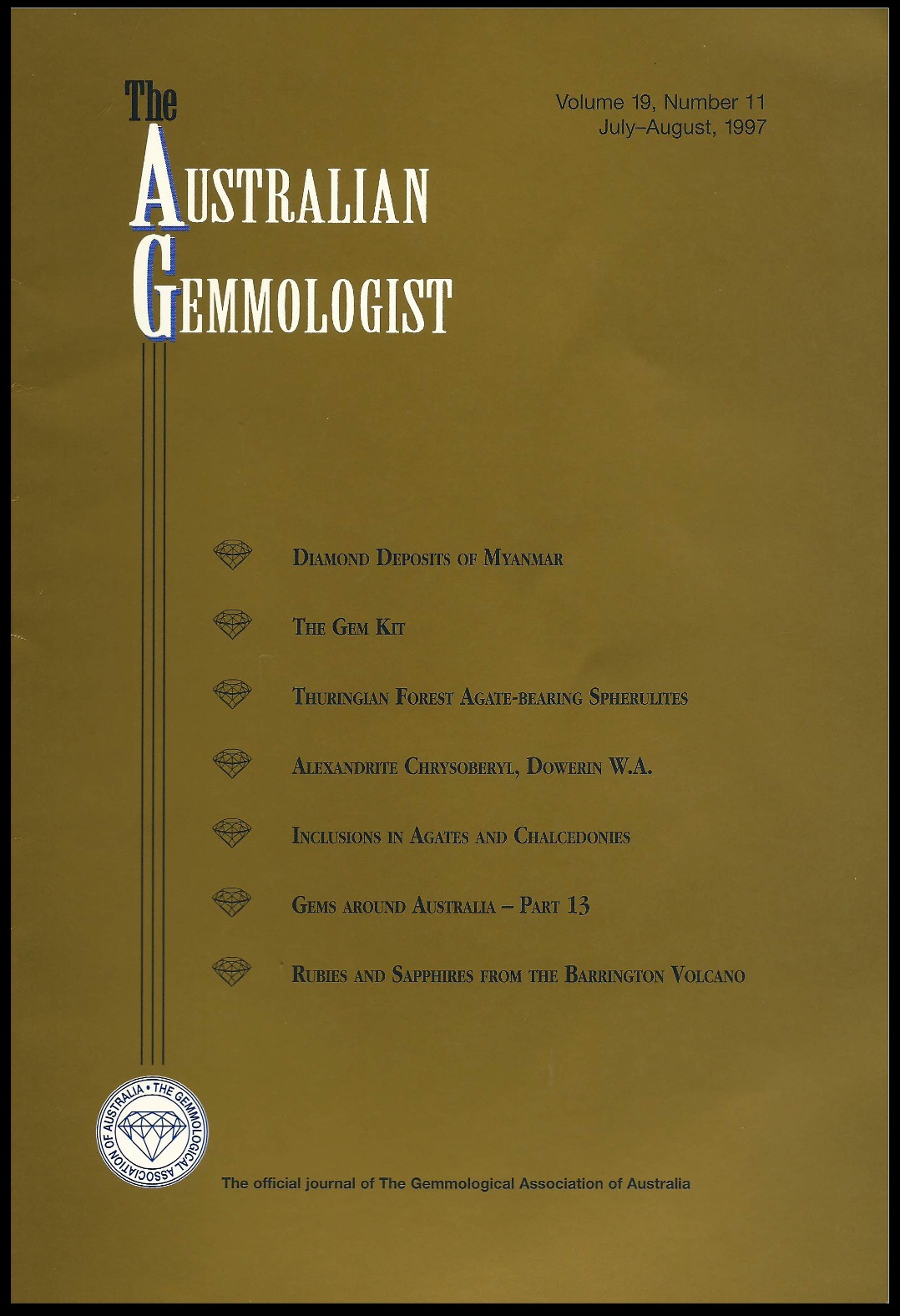
Webb, G. (1997) Gemmological features of rubies and sapphires from the Barrington volcano, Eastern Australia. Australian Gemmologist, Vol. 19, No. 11, pp. 471–475.
Record No. 2955  |  Sinkankas/Born No.: NIS / NIB  |  RWHL
View Individual Record ↗
Ruby is rare in Australia, but in the Barrington area of New South Wales, ruby and pink sapphire form up to 50% by weight of the gem corundum concentrate. These stones have Cr₂O₃ contents of 0.60–1.42 wt.% and FeO contents of 0.44–0.75 wt.%. They typically range from 2 to 6 mm in size and contain inclusions of spinel and liquid-filled fractures. Polysynthetic twinning is common and is often associated with inclusions of boehmite needles. On the basis of trace-element content, the Barrington corundum is divided into two distinct suites: one related to ruby and the other typical of eastern Australian sapphires. The ruby-containing corundum suite originated in a metamorphic environment, whereas the non-ruby suite has a magmatic origin. Both suites were brought to the surface by basaltic volcanism.

Le Bestiare Marial Tiré du Rosarius

The Marian Bestiary Drawn from the Rosarius
Thesis
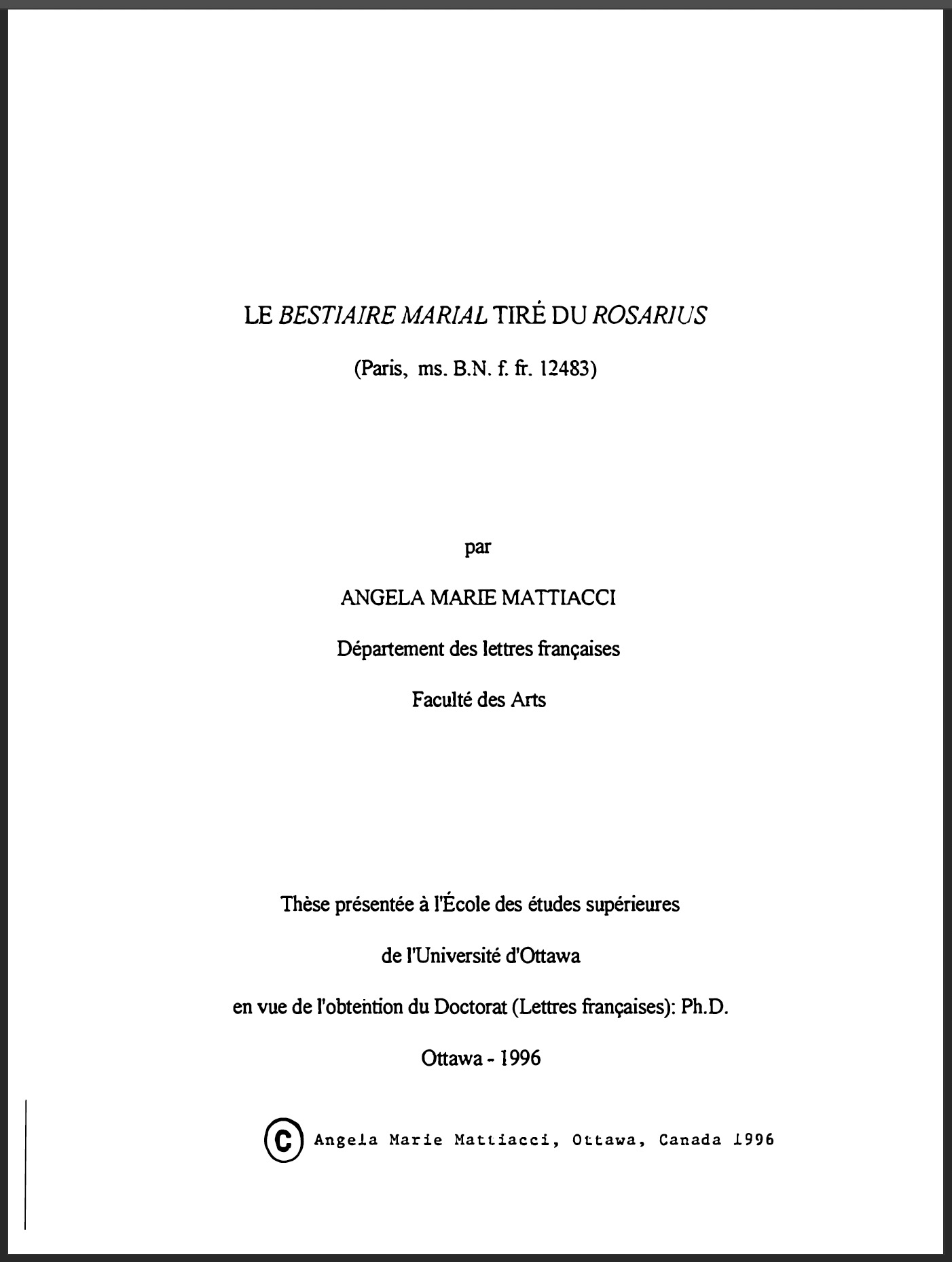
Mattiacci, A.M. (1996) Le Bestiare Marial Tiré du Rosarius. [The Marian Bestiary Drawn from the Rosarius]., Ottawa: University of Ottawa, 387 pp.
Record No. 29709  |  Sinkankas/Born No.: NIS / NIB  |  Language: in French  |  RWHL
View Individual Record ↗
This French doctoral dissertation presents the first critical edition of the Marian bestiary embedded in the Rosarius, an anonymous medieval devotional compilation preserved in the unique manuscript Paris, Bibliothèque nationale, fonds français 12483. Mattiacci situates its fourteen surviving animal sections within a larger collection of natural descriptions, Marian allegories, miracles, pious tales and songs, which also includes a plant book and a four-stone lapidary. The introduction examines the manuscript’s provenance, damaged condition, arrangement and previous scholarship, and argues for composition between 1328 and 1337 against proposals for a later fourteenth-century date. The anonymous compiler is identified as a Dominican associated with the Soissons region. Contrary to the view that his audience consisted exclusively of nuns, Mattiacci interprets his direct addresses to both men and women as evidence for a mixed religious community. Comparative study places the work in the tradition of the Greek and Latin Physiologus and the French bestiaries, examining parallels with Pliny, Isidore of Seville, the compilation attributed to Hugh of Saint Victor, and vernacular predecessors including Richard de Fournival. Its distinctive feature is the systematic application of animal properties to the Virgin Mary rather than principally to Christ. Brief accounts of animal nature introduce substantially longer moral and devotional interpretations, sometimes interrupted by songs, a sermon or a pious tale. The edited sections concern the panther, swallow, stork, sheep, whale, caladrius, salamander, bee, swan, nightingale, dove, tortoise, camel and falcon. Their allegories celebrate Mary’s purity, humility, obedience, protective power and intercession, while supporting exhortations and criticism of contemporary conduct among clergy and laity. Of particular interest to the history of stones is the swallow’s traditional association with two precious stones, one whitish and the other reddish, said to occur within its body. A linguistic study considers phonetics, morphology, syntax, wordplay and versification, noting Picard features and irregular syllable counts. Editorial procedures include expanding abbreviations, evaluating later manuscript corrections and restoring recoverable letters lost through trimming, with interventions documented in the apparatus. Critical notes, explanatory commentary, an index of proper names, an extensive glossary and a bibliography accompany the text, making the dissertation a resource for studying medieval animal lore, Marian devotion and the transmission of vernacular religious literature.

A new account of the diamond mines of the Deccan
Book Section
Souza, T.R., de (1996) A new account of the diamond mines of the Deccan. In: Medieval Deccan History: Commemoration Volume in Honour of P.M. Joshi, Bombay: Popular Prakashan, pp. 124–134.
Record No. 29007  |  ISBN/ISSN: 8171545793  |  Sinkankas/Born No.: NIS / NIB  |  RWHL
View Individual Record ↗
If India was the jewel of the crown of England, we know that the actual world-famous jewel of that crown came from a diamond mine of the Deccan. The Kohinoor has been the subject-matter of several historical controversies, many of them with political imperial flavour. This article does not seek to add to such controversies but it is aimed at bringing to light a new, unpublished source of information about the diamond mines of the Deccan in the early seventeenth century. It needs to be acknowledged that diamonds have played an important role in the history of the Deccan and of India, as well as in the fortunes of many who ruled over this country or traded with it from near and far. A testimony to this importance and interest in diamonds are many accounts that have been left behind in the course of centuries. The very early accounts, like the one of the Venetian Polo, are more fascinating than reliable. Perhaps the earliest and most reliable account of the diamond mines of the Deccan is found in the Colloquios dos Simples e Drogas published in Goa by the Portuguese Garcia da Orta in 1563. It is to be noted that while he is better known for his contribution to the knowledge of Indian flora, his observations and information about diamonds and other matters have come through Linschoten’s Itinerario. Linschoten borrowed his information on this subject, and on several other matters, extensively and almost textually from Orta’s Colloquios.

The shaman's stance: Integration of body, spirit and cosmos in Olmec sculpture
Book Section
Tate, C.E. (1996) The shaman's stance: Integration of body, spirit and cosmos in Olmec sculpture. In: Eighth Palenque Round Table, 1993, San Francisco: Pre-Columbian Art Research Institute, pp. 425–439.
Record No. 28715  |  ISBN/ISSN: 093405102X  |  Sinkankas/Born No.: NIS / NIB  |  RWHL
View Individual Record ↗
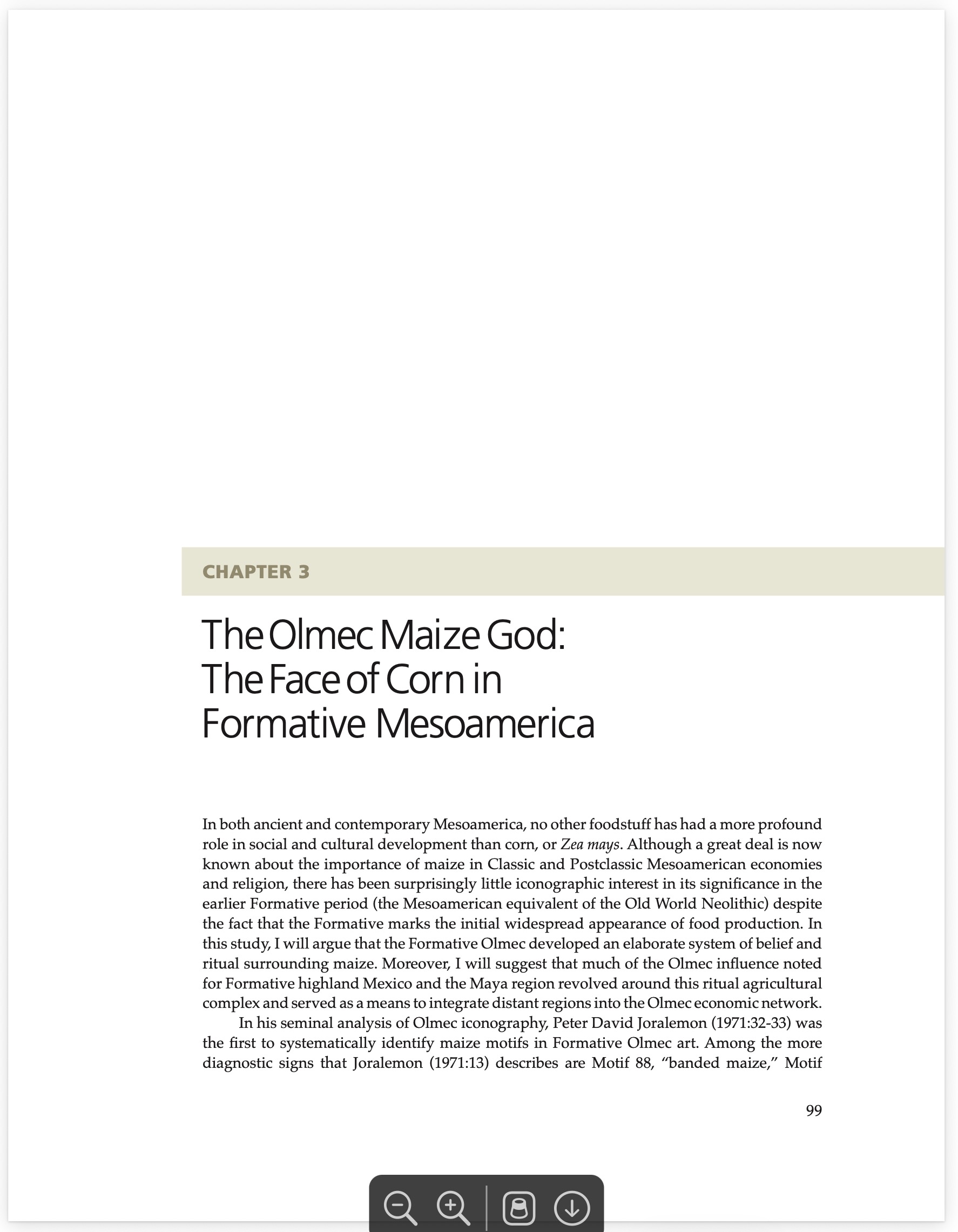
For the back cover of the recent catalogue, Tesoros Artisticos del Museo Nacional de Antropologia, author Felipe Solis selected as an appropriately important image the well-known yet enigmatic group of stone figures standing in what is obviously a ritual situation (fig. 1).1 The group of sixteen figures and six halved celts was discovered in 1955 by Smithsonian archaeologists at the heartland Olmec site of La Venta, Tabasco, Mexico, and was dated between 750 and 650 B.C. It was designated Offering 4. The Offering (minus three figures presented to the Smithsonian) was brought to the Museo Nacional for its inauguration in 1964, and is now considered one of the most precious of its many treasures, having rarely-if ever-been allowed to leave on loan (fig. 2). This paper focuses on Offering 4 and its archaeological context as the best means for interpreting the original significance of a ubiquitous genre of Olmec portable sculpture, the Standing Figure.

The Olmec Maize God: The face of corn in Formative Mesoamerica
Journal Article
Taube, K.A. (1996) The Olmec Maize God: The face of corn in Formative Mesoamerica. Res: Anthropology and Aesthetics, Vol. 29–30, pp. 39–81.
Record No. 28691  |  Sinkankas/Born No.: NIS / NIB  |  RWHL
View Individual Record ↗
In both ancient and contemporary Mesoamerica, no other foodstuff has played a more profound role in social and cultural development than maize (Zea mays). Although a great deal is now known about the importance of maize in Classic and Postclassic Mesoamerican economies and religion, there has been surprisingly little iconographic interest in its significance during the earlier Formative period (the Mesoamerican equivalent of the Old World Neolithic), despite the fact that the Formative marks the initial widespread appearance of food production. In this study, I argue that the Formative Olmec developed an elaborate system of belief and ritual surrounding maize. Moreover, I suggest that much of the Olmec influence noted in Formative highland Mexico and the Maya region revolved around this ritual agricultural complex and served as a means of integrating distant regions into the Olmec economic network.

The Cleveland Plaque: Cloudy places of the Maya realm
Book Section
Stone, A. (1996) The Cleveland Plaque: Cloudy places of the Maya realm. In: Eighth Palenque Round Table, San Francisco: Pre-Columbian Art Research Institute, pp. 1–10.
Record No. 28688  |  Sinkankas/Born No.: NIS / NIB  |  RWHL
View Individual Record ↗
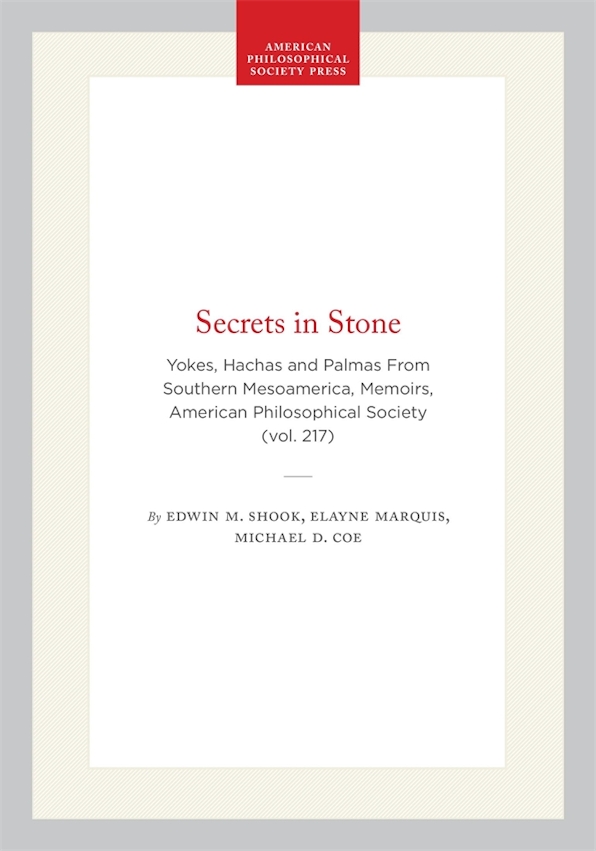
The Cleveland Museum of Art houses a beautiful example of Maya handiwork in jade, referred to here as the Cleveland Plaque (fig. 1). Carved from light green mottled jade, the Cleveland Plaque measures 14.4 cm in length and 1.4 cm in maximum width and weighs 253.5 grams. The rectangular plaque has slightly rounded sides and bears an incised text that today is highlighted with an unidentified black paint. A photograph published by Kelemen (1943: vol. 2, pl. 235b) reveals that the plaque was repainted sometime before the Cleveland Museum of Art purchased it in 1950. Drilled through the centre of the plaque is a large, straight hole, about half a centimetre in diameter, which flares out into conical cavities (fig. 2). These crudely worked cavities have left the edges of the plaque very thin, and consequently they are chipped. The damage supports Kelemen’s (1943: vol. 2, p. 289) suggestion that the plaque was originally worn as a bar pectoral. Maya bar pectorals are usually flanked by other jade ornaments, which are precisely what may have chipped the thinner edges of the plaque through repeated impact. However, no holes were noted on the long, narrow edge of the plaque, so it is not clear how it was suspended from the neck. In any case, the damage provides concrete evidence that the Cleveland Plaque was used in some active fashion, probably on many occasions.

Secrets in stone: Yokes, hachas, and palmas from southern Mesoamerica

Journal Article
Shook, E.M. and Marquis, E. (1996) Secrets in stone: Yokes, hachas, and palmas from southern Mesoamerica. Memoirs, American Philosophical Society, Vol. 217, 250 pp..
Record No. 28673  |  ISBN/ISSN: 9780870000000  |  Sinkankas/Born No.: NIS / NIB  |  RWHL
View Individual Record ↗
Yokes, hachas and palmas (YH&P) are 3 extraordinary pre-Columbian art forms that occur in a specific region of Mexico and Central Amer. and have no counterparts anywhere else. Although research proves that the names by which they are known have no bearing on their function, these misnomers have persisted. The practice of carving YH&P originated in the state of Veracruz in Mexico where they have been fairly well documented and considered exclusive paraphernalia of the ceremonial pre-Columbian ballgames. This vol. focuses on the YH&P that are from outside of Veracruz, in the peripheral Maya area of Southern Mesoamerica (Chiapas, Tabasco, Guatemala, Honduras and El Salvador).

Building a Gemological Library

Gemological books range from general identification manuals and textbooks to specialized works on individual gems, mineralogy, jewelry, treatments, synthesis, history and gem-producing regions.

For a curated selection of particularly useful books, read The Gemologist's Core Library — Classic Books on Gemology, Jewelry and Mineralogy.

About Four Treasures

Four Treasures is Lotus Gemology's freely accessible gemological reference database. Use the full database to search by author, title or keyword and explore literature on gemology, mineralogy, jewelry and related fields. Where available, hyperlinks on titles may lead directly to the full publication.

Search the Complete Four Treasures Database