Gemology Books Bibliography

Gemology Books Bibliography

Explore books on gems, gemology, jewelry and mineralogy in Four Treasures, the Lotus Gemology reference database. This bibliography brings together matching book records from the collection, with publication details, abstracts and cover images where available.

Gemology Book References

The list below matches books concerning gemology and related subjects in the database's searchable fields. Some works cover several branches of gems, jewelry or mineralogy.
2,141–2,160 of 3,681 matching references

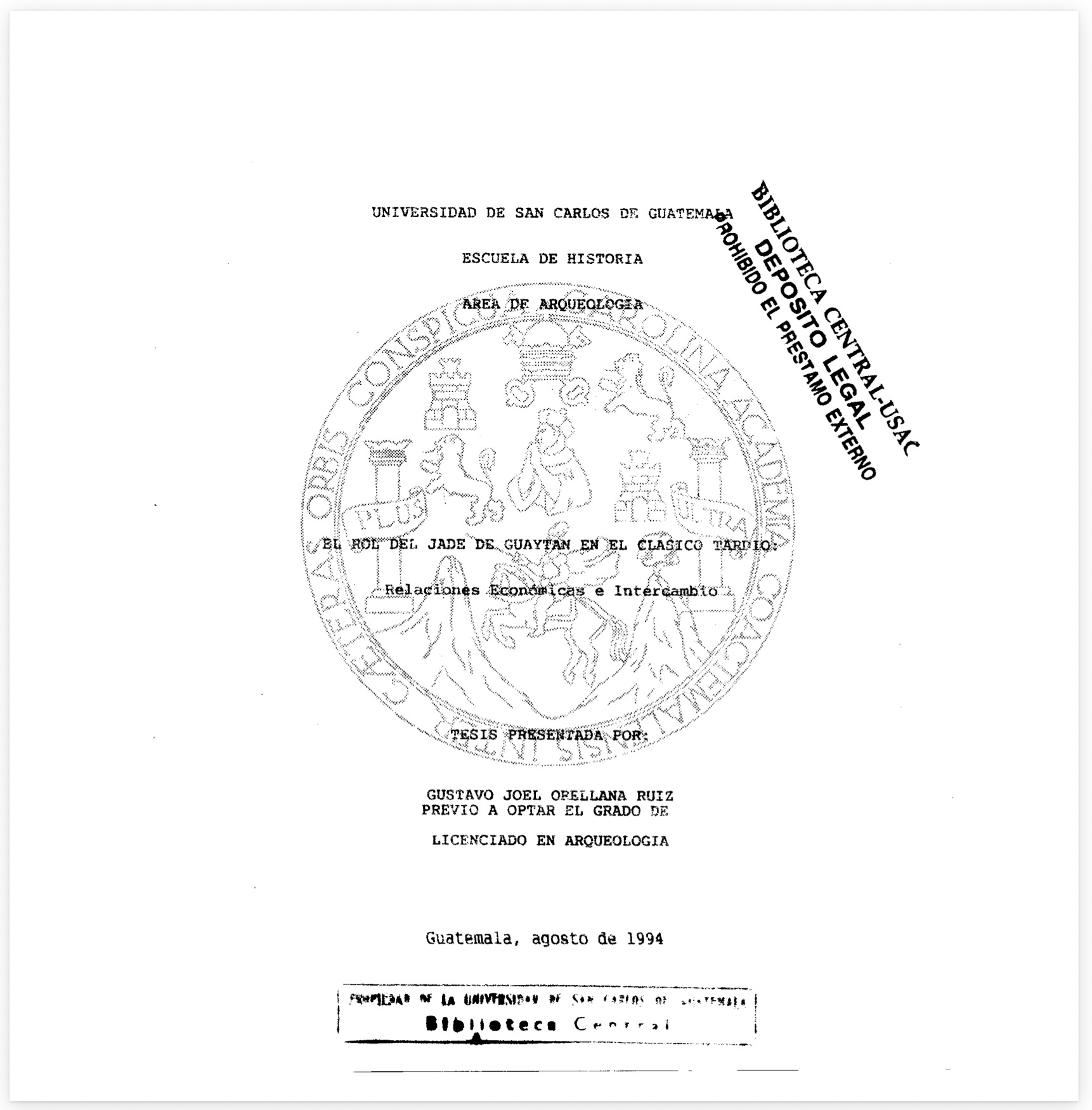
El rol del jade de Guaytan en el Clásico Tardío. Relaciones Económicas e intercambio
The Role of Guaytán Jade in the Late Classic Period: Economic Relations and Exchange
Thesis
Orellana Ruiz, G.J. (1994) El rol del jade de Guaytan en el Clásico Tardío. Relaciones Económicas e intercambio. [The Role of Guaytán Jade in the Late Classic Period: Economic Relations and Exchange]. Universidad de San Carlos de Guatemala, 59 pp.
Record No. 28426  |  Sinkankas/Born No.: NIS / NIB  |  Language: in Spanish  |  RWHL
View Individual Record ↗
A large part of the materials used by humanity from its beginnings to the present day includes minerals. The ability to locate and obtain them was based on observation and experience as needs arose. The demand for mineral raw materials made necessary the exploitation of outcrops and mines, as well as the search for new deposits. The remarkable stone works of ancient cultures date back to the beginning of our era (Laufer 1912; Sahagún 1530; Torquemada 1613). Like other minerals, jade was used as a necessary material in certain cultures. Although the term jade is a relatively recent innovation in Europe, jade had already been used by ancient societies in the lacustrine settlements of that continent (Foshag 1954). Despite the fact that we do not know exactly the place or date at which jade was first used, it is believed to have been during the Chou Dynasty in China and among the Olmec culture (Foshag, op. cit.: 4). In 1565, it was brought to Europe as a remedy for kidney diseases and was recognized as piedra de ijada, from which the term jade derives (Proskouriakoff 1974: 1). Objects and tools worked in jade are recognized as important archaeological finds when recovered during excavation. However, this mineral can give rise to confusion when it is not properly understood. Jade is a general name that has been given to a family of minerals that share related properties, although within this group there exist varied compositions.

Gem News: More on peridot from Pakistan
Journal Article
Koivula, J.I., Kammerling, R.C. and Fritsch, E. (1994) Gem News: More on peridot from Pakistan. Gems & Gemology, Vol. 30, No. 4, Winter, p. 275.
Record No. 26782  |  Sinkankas/Born No.: NIS / NIB  |  RWHL
View Individual Record ↗
Following the Fall 1994 Gem News report on a new peridot source in Pakistan’s far western Himalayas, further study of both rough and cut stones from the deposit has been conducted. The orthorhombic peridot crystals may initially appear hexagonal due to the symmetry of “columnar” and “pyramidal” faces, with face types identified using Goldschmidt’s Atlas der Krystallformen. Prominent faces included basal pinacoid (001), columnar (010) and (110), and pyramidal (021) and (111), with striations visible along the c-axis on the (010) and (110) faces, though many crystals, as confirmed by Laura Thompson of Shades of the Earth, also exhibit well-formed, lustrous faces. Two faceted stones—a 5.23 ct rectangular mixed cut and an 18.37 ct cushion modified brilliant—showed gemological properties consistent with known peridot: medium yellowish green color, transparent diaphaneity, R.I. values of α = 1.651, β = 1.669, γ = 1.687 (birefringence 0.036), specific gravity of 3.35, weak pleochroism, inert fluorescence, and distinct absorption bands at ~453, 477, 497 nm, and a weaker one at ~529 nm. These values suggest a composition of ~90% forsterite and 10% fayalite. No inclusions were visible under magnification in the faceted stones, though black rod-like inclusions, identified as ludwigite via X-ray diffraction, were noted in some cabochon-grade rough.

Gem News: Peridot from Pakistan

Journal Article
Koivula, J.I., Kammerling, R.C. and Fritsch, E. (1994) Gem News: Peridot from Pakistan. Gems & Gemology, Vol. 30, No. 3, Fall, p. 196.
Record No. 26781  |  Sinkankas/Born No.: NIS / NIB  |  RWHL
View Individual Record ↗
Peridot from Pakistan has emerged as a new source, joining Ethiopia and Vietnam as recent additions to the list of producing countries. First brought to attention in fall 1994 by Bill Larson of Pala International, further details came from Laura Thompson of Shades of the Earth, the company marketing the material. The deposit lies in the western Himalayas near the Indus River, at an elevation of about 4,500 meters, reachable only by a seven-hour horse ride and a two-day hike from Basham Village. Initial discoveries of small crystals occurred in 1992, but facet-grade material was only found and mined beginning mid-1994. Mining is carried out by 200 to 2,000 villagers without formal organization, and Shades of the Earth buys material directly from these groups. Due to the extreme altitude, the deposit is only accessible from late June to early October. As of October 1994, about 100 kg of material had been produced, with just 3 kg being facet-grade. Nonetheless, the crystal size allows for large stones, typically 10 to 20 carats, with future cuts expected to reach up to 100 carats. Only a few crystals have been examined so far, and gemological data will follow once faceted stones become available.

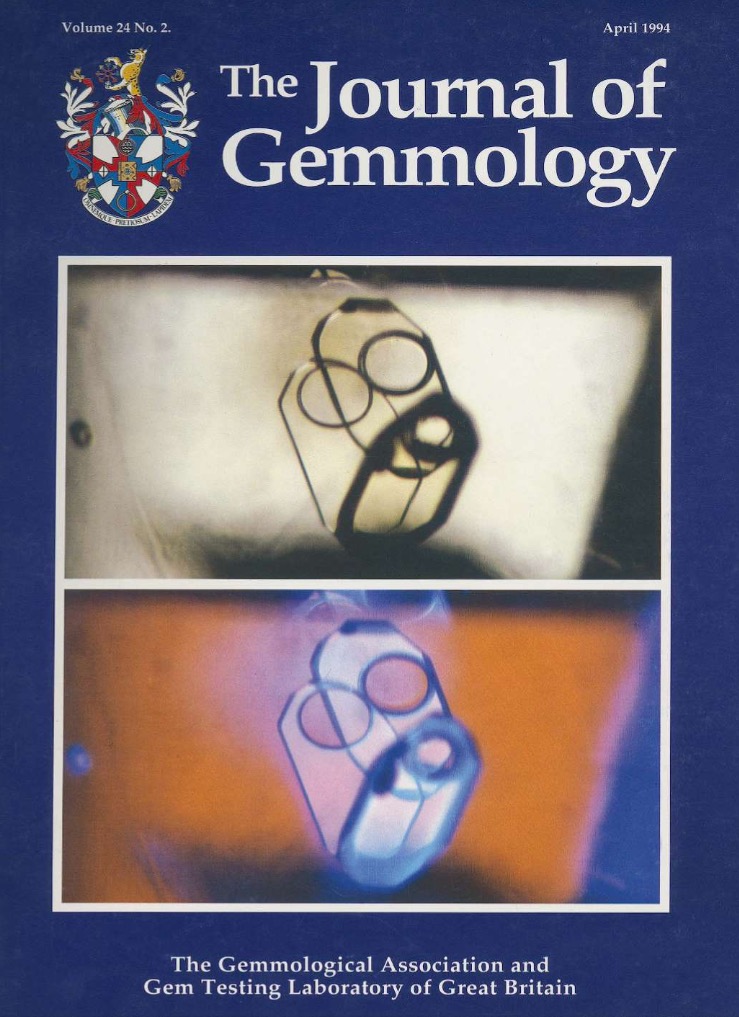
Four hessonite occurrences in Orissa, India
Journal Article
Kanis, J. and Redmann, M. (1994) Four hessonite occurrences in Orissa, India. Journal of Gemmology, Vol.  24, No. 2, April, pp. 75–83.
Record No. 26742  |  ISBN/ISSN: 221252  |  Sinkankas/Born No.: NIS / NIB  |  RWHL
View Individual Record ↗
Hessonite garnets from the villages of Ghatpara, Dahikbala, Budhido, and Burubura in Orissa, India, are located in the high-grade metamorphic khondalite suite and occur either in calc-silicate lenses or in quartzite-amphibolite contact zones. The paragenesis of Orissa’s hessonite is linked to regional metamorphic processes, probably during Middle Proterozoic times. The colours of the stones range from pale yellowish and orange to brown, with refractive indices and densities for each locality as follows: Ghatpara: n = 1.738–1.752, D = 3.56–3.64 g/cm³; Dahikbala: n = 1.750–1.756, D = 3.58–3.64 g/cm³; Budhido: n = 1.751–1.758, D = 3.60–3.63 g/cm³; Burubura: n = 1.759–1.763, D = 3.60–3.66 g/cm³. In addition to calcium, aluminium, and silicon, chemical analyses reveal a distinct content of iron and traces of manganese and titanium. Microscopical study shows that the hessonite from Ghatpara is characterized by mineral inclusions, healing cracks with two- or three-phase inclusions, and growth marks which sometimes display strong interference colours under crossed polarizers. The inclusions in stones from Burubura are mainly healing cracks with two- or three-phase inclusions and growth marks. Budhido hessonite exhibits a strong oily appearance and mineral inclusions, while Dahikbala stones are marked by needle-like inclusions, growth marks, and some mineral inclusions.

Glossary of mineral synonyms

Book
de Fourestier, J. (1994) Glossary of mineral synonyms. Montreal, Sanssouci Verlag (~61 pp.).
Record No. 26593  |  ISBN/ISSN: 969837208  |  DOI: https://dx.doi.org/10.13140/2.1.1999.9523  |  Sinkankas/Born No.: NIS / NIB  |  RWHL
View Individual Record ↗
Compiles an alphabetical reference to more than 4500 mineral-name entries, linking synonyms, varietal designations, obsolete terminology, discredited names and alternative spellings to their corresponding mineral identities. Intended for private collectors, museums and researchers, the glossary addresses the practical difficulty of interpreting old specimen labels and historical literature without undertaking complete reidentification of the material. Its preparation arose from the author’s own collecting and work with specimens at McGill University’s Redpath Museum, supplemented by several years of research in Europe and North America. Entries place the name being investigated in regular type and distinguish the accepted equivalent in bold, following the nomenclature approved by the International Mineralogical Association’s Commission on New Minerals and Mineral Names. Brief qualifications identify such relationships as compositional varieties, mixtures, intergrowths, alteration products, pseudomorphs, synthetic materials and doubtful or discredited substances. The resulting equivalences therefore encompass more than straightforward substitutions between two names for a single species. Parenthetical information may identify the mineralogist or locality associated with a particular usage, or supply a familiar variety name after the accepted mineral name. Where a historical designation has several possible meanings, alternatives are arranged alphabetically if equally plausible or in decreasing order of likelihood when one interpretation is preferred. Separate attributions distinguish meanings introduced by different mineralogists. Gemmological examples illustrate the usefulness of this approach: Adelaide ruby is referred to pyrope, adamantine spar to corundum, Matura diamond to zircon, and water sapphire to cordierite. Other entries distinguish mineral species from aggregate or mixture names and explain misleading commercial or descriptive terminology. An appendix translates previously numbered unidentified minerals from Mont Saint-Hilaire into subsequently established identities, retaining their locality-based UK designations for cross-reference. The work provides a compact means of connecting inherited labels and older descriptions with the terminology recognised at publication. The author presents it as an initial contribution to an evolving task, acknowledging that additional synonyms continue to emerge from both new usage and older references and inviting corrections and additions.

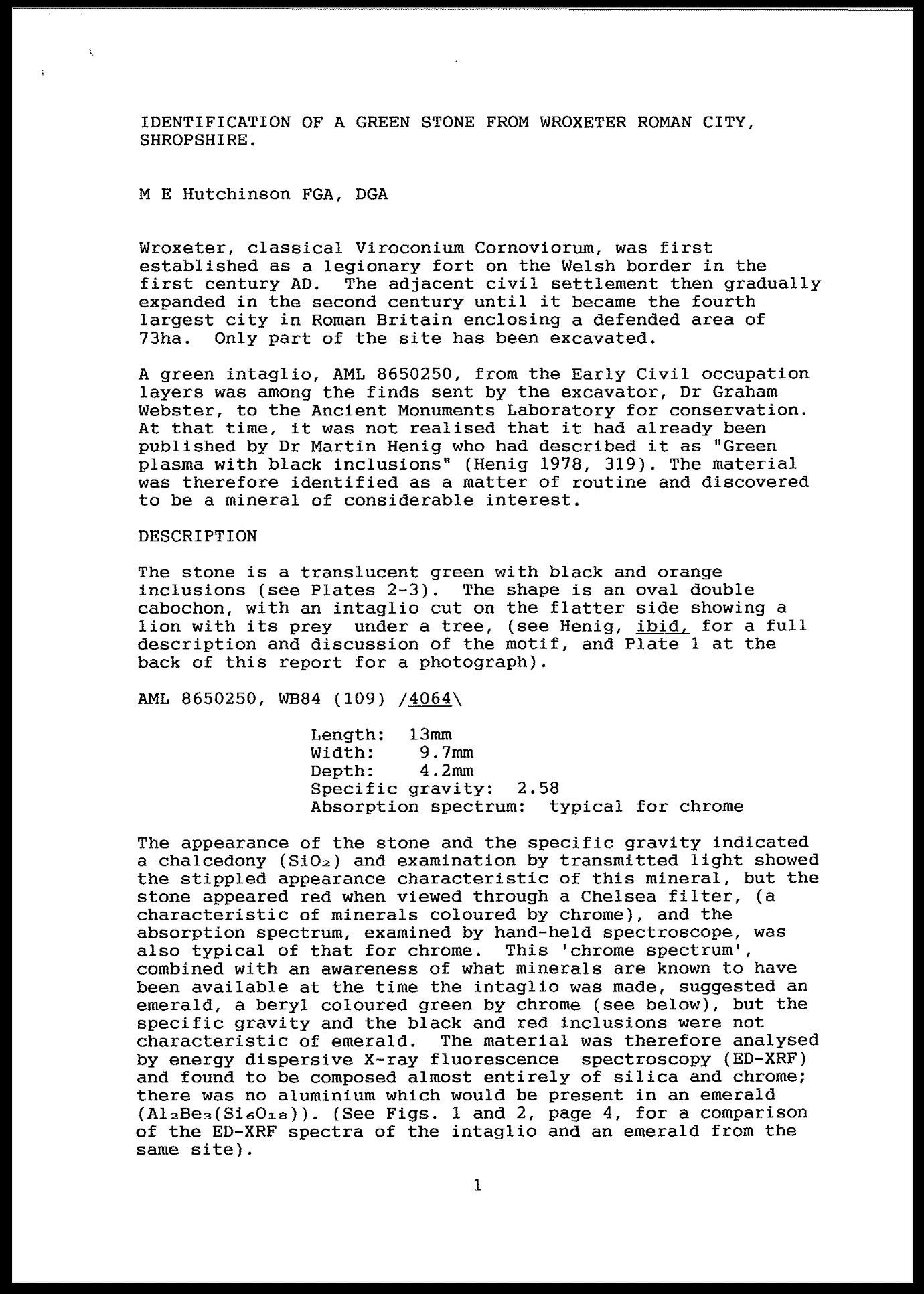
Identification of a green stone from Wroxeter Roman City, Shropshire
Journal Article
Hutchison, M. (1994) Identification of a green stone from Wroxeter Roman City, Shropshire. Ancient Monuments Laboratory Report, Vol. 32/94, 4 pp., 3 plates.
Record No. 26444  |  Sinkankas/Born No.: NIS / NIB  |  RWHL
View Individual Record ↗
A green intaglio, described by the seal specialist as ‘plasma’, was identified as a chalcedony colored green by chromium. This is of particular interest as chrome green chalcedony is supposed to have been first discovered in Africa in 1955.

Harappan technology: Theoretical and methodological issues
Journal Article
Bhan, K.K., Vidale, M. and Kenoyer, J.M. (1994) Harappan technology: Theoretical and methodological issues. Man and Environment, Vol. 19, No. 1–2, pp. 143–157.
Record No. 26359  |  Sinkankas/Born No.: NIS / NIB  |  RWHL
View Individual Record ↗
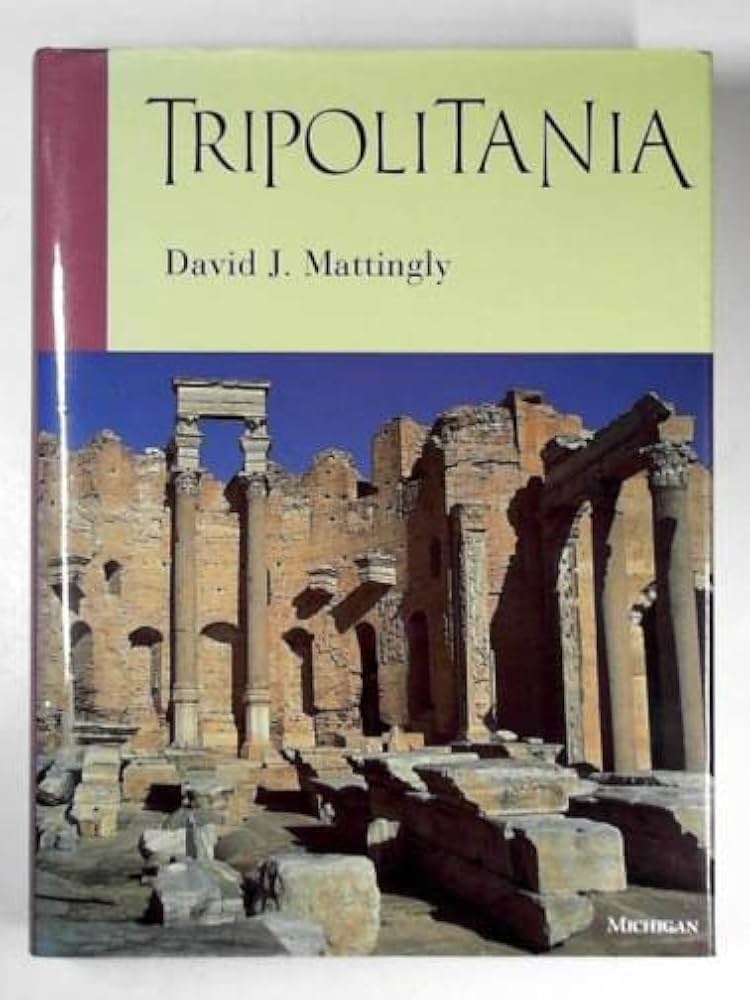
This paper will discuss some of the theoretical and methodological issues that are being addressed in the current research on craft production and technology in the Harappan Phase of the Indus Valley Tradition (c. 2600–1900 BC) (Shaffer 1991; Kenoyer 1991a). In presenting these issues we will highlight some of the recent new discoveries about Harappan technologies that serve to distinguish this society in the context of other early state level societies. Due to limited space it will not be possible to go into great detail about the specific crafts, but the selected bibliography at the end of the article will provide the reader with other sources of information.

Tripolitania

Book
Mattingly, D.J. (1994) Tripolitania. Ann Arbor, University of Michigan Press, 265 pp.
Record No. 17275  |  ISBN/ISSN: 9780470000000  |  Sinkankas/Born No.: NIS / NIB  |  RWHL
View Individual Record ↗
Lepcis Magna (Libya), one of the greatest cities of North Africa and one of the most famous archaeological sites in the Mediterranean, was situated in the region (later province) of Tripolitania. Birthplace of the emperor Septimius Severus, the city has yielded many well- preserved monuments from its Roman past, but the extraordinary architecture and history of this city has never been examined in the context of the ancient region as a whole, encompassing north-west Libya and southern Tunisia. David Mattingly has filled this gap, presenting important new research on the military frontier, the pre-Roman tribal background, the urban centers, and the regional economy. Drawing on recent excavations and field surveys, he reinterprets many aspects of the settlement history of this marginal arid zone that once was prosperous. Partly through large-scale cultivation of olives, one of the least promising environments of the Mediterranean hosted one of the wealthiest Roman provincial towns–Lepcis Magna. David Mattingly also considers many wider themes in Roman provincial studies: Romanization, the military strategy on the frontiers, and the economic links between provinces and the sources of elite wealth. The dramatic rise and premature decline of this region, over the 500-year period between Caesar's victory at Thapsus in 46 B.C.E. and the conquest of North Africa by the Vandals, make it one of the most unusual provincial histories of the Roman world. David J. Mattingly is Lecturer in Roman Archaeology, University of Leicester.

The Karl Krotki Library of Gemology & Mineralogy
Catalog
Swann Galleries (1994) The Karl Krotki Library of Gemology & Mineralogy. New York: Swann Galleries, 8 December, unpaginated, 347 lots.
Record No. 16934  |  Sinkankas/Born No.: NIS / NIB  |  RWHL
View Individual Record ↗
Auction catalog of a sale of books on mineralogy, gems and jewelry.

Gem News: “Teal” blue cobalt-colored spinel
Journal Article
Koivula, J.I., Kammerling, R.C. and Fritsch, E. (1994) Gem News: “Teal” blue cobalt-colored spinel. Journal of Gemmology, Vol. 30, No. 4, Winter, pp. 276–277.
Record No. 5991  |  ISBN/ISSN: 221252  |  Sinkankas/Born No.: NIS / NIB  |  RWHL
View Individual Record ↗
An unusually coloured natural spinel examined after the 1994 Tucson gem show provides evidence that nickel can contribute to the colour of natural spinel. The 4.88-carat cushion-cut stone, reportedly from Myanmar, displayed a slightly greenish blue or “teal” colour rather than the saturated royal blue more commonly associated with natural cobalt-bearing spinel. Standard gemmological testing gave a refractive index of 1.714, anomalous double refraction, and a specific gravity of 3.60. The specimen was inert to long-wave and short-wave ultraviolet radiation, fluoresced red under visible light, and showed a moderate red reaction through a colour filter. A handheld spectroscope revealed broad absorption bands near 460, 550, and 585 nm, together with total absorption above 610 nm, consistent with natural cobalt-blue spinel. Microscopic examination found the stone essentially clean apart from elongated yellow stains in surface-reaching fractures near a corner of the table; these could be mistaken for flux inclusions. Energy-dispersive X-ray fluorescence analysis supported natural origin through substantial zinc and gallium contents typical of natural spinel. In addition to magnesium and aluminium, the analysis detected abundant iron, trace manganese, and an unusually high nickel content compared with other natural blue spinels in the laboratory’s database. Cobalt was not detected, as its usual concentration in natural cobalt-blue spinel lies below the instrument’s detection limit. Ultraviolet–visible absorption spectroscopy identified a transmission window near 500 nm, compared with approximately 490 nm in typical royal-blue cobalt-bearing spinel. This shift towards greenish blue was attributed to a broad absorption underlying the principal cobalt feature. Absorption at 480 nm was also approximately as intense as that at 460 nm, whereas the former is usually weaker in other natural cobalt-blue spinels. Comparison with a Russian flux-grown synthetic spinel doped with divalent nickel suggested that nickel caused the additional absorption, consistent with the chemical analysis. The authors regarded the specimen as the first reported example of nickel contributing to the colour of natural spinel.

The “alexandrite effect” in gemstones
Journal Article
Liu, Y., Shigley, J., Fritsch, E. and Hemphill, S. (1994) The “alexandrite effect” in gemstones. Color Research & Application, Vol. 19, No. 3,, 6/1/94 pp. 186–191.
Record No. 5899  |  ISBN/ISSN: 3612317  |  DOI: 10.1002/col.5080190306  |  Sinkankas/Born No.: NIS / NIB  |  RWHL
View Individual Record ↗
The term “alexandrite effect” is used in gemology to describe a distinct change of color appearance when a gemstone is switched from daylight to incandescent light. Gemstones that exhibit the alexandrite effect can actually be divided into four categories based upon the value of the calculated absolute hue?angle change of the material under different pairs of illuminants. the alexandrite effect is a non?color?constancy phenomenon. It can be explained by a combination of both chromaticity adaptations to the different light sources, and vision system responses to the spectral distribution of the light emitted by alexandrite effect gemstones when they are illuminated alternatively by the different light sources.

Gem News: Coated jadeite

Journal Article
Koivula, J.I., Kammerling, R.C. and Fritsch, E. (1994) Gem News: Coated jadeite. Gems & Gemology, Vol. 30, No. 3, Fall, p. 199.
Record No. 5834  |  ISBN/ISSN: 0016626X  |  Sinkankas/Born No.: NIS / NIB  |  RWHL
View Individual Record ↗
Two examples of coated fei cui illustrate a treatment in which surface varnish improves colour and appearance while producing gemmological properties that can obscure the identity and treatment of the underlying material. During a visit to Taiwan, an editor examined a 117.99 ct bead, approximately 24 mm in diameter, supplied by Ten S.-T. Wu and Peter Chiu. The bead consisted of greyish purple fei cui covered with mottled green varnish and, viewed from a distance, convincingly resembled fine-quality material. Closer examination revealed that part of the coating had spalled away, exposing the original colour. Its refractive index of 1.52 was too low for fei cui and was attributed to the coating, while its specific gravity of 3.29 was slightly below the usual value. Strong chalky blue fluorescence under long-wave ultraviolet radiation, with a weaker short-wave reaction, was also considered to originate primarily from the varnish; natural fei cui fluorescence was described as generally spotty and yellowish white. Contact with a hot point melted the coating. A similarly treated pipe, approximately 8 cm long, was coated externally but not internally. Refractive-index readings of 1.54 on coated areas and 1.66 on exposed material distinguished the surface layer from the substrate. A moderate absorption line at 437 nm supported identification of the underlying material, which was further confirmed by energy-dispersive X-ray fluorescence comparison with documented reference samples. Reflected-light microscopy of chipped areas revealed two distinct coatings: an inner mottled green layer apparently intended to enhance colour and an outer colourless or very pale yellow layer interpreted as a protective varnish. Both fluoresced yellow-green under ultraviolet radiation, with differing intensities, whereas the substrate was inert. Infrared spectroscopy showed strong absorption around 2900 cm⁻¹, consistent with an organic coating. Because comparable absorption can occur in bleached and polymer-impregnated B-type fei cui, the authors emphasise that infrared evidence alone could lead to an erroneous diagnosis of impregnation. Microscopic examination of the surface, supported by optical, spectroscopic and chemical observations, established coating as the treatment present.

Minerals and Metals in Ancient India

Book
Biswas, A.K. and Biswas, S. (1994) Minerals and Metals in Ancient India. New Delhi, D.K. Printworld, 2 Vols., 524, 259 pp.
Record No. 5176  |  Sinkankas/Born No.: NIS / NIB  |  RWHL
View Individual Record ↗
A two-volume study of the production and use of minerals and metals in the Indian subcontinent, this work brings archaeological evidence into comparison with indigenous literary traditions. Its geographical scope includes present-day India, Pakistan and Bangladesh, with occasional reference to neighbouring regions. The first volume, devoted to archaeological evidence, follows material culture from pre-Harappan settlements through the Harappan civilisation and later excavated sites to approximately AD 1200. Chronologically arranged accounts draw on excavation reports and scientific examinations of artefacts to discuss mineral use, mining, metal extraction, alloy preparation and the manufacture of objects. Sites ranging from Mehrgarh to Taxila provide evidence for changing technologies and the circulation of materials. Subsequent thematic treatments address mining, iron and steel, zinc and brass, and other aspects of metallurgical development. Gemstones and ornamental minerals receive substantial attention alongside metals, while Buddhist relic caskets and religious metal images illustrate the relationship between materials, craftsmanship and artistic production. The authors emphasise achievements in carburised iron, crucible steel, forge-welding and zinc metallurgy, presenting arguments for the importance and originality of Indian technological traditions. The second volume examines Sanskrit sources from the Rigveda to the early fourteenth-century Rasaratnasamuccaya, extending beyond the first volume’s provisional chronological limit. It considers Vedic writings, Panini, Kautilya and the Mahabharata, followed by the development of gemmological literature, alchemy and mineral-based medicine. Technical vocabulary is interpreted in the light of modern mineralogical and metallurgical knowledge, with acknowledgement that some identifications and textual dates remain disputed. Discussion of ratnasastra and rasasastra connects the classification and valuation of gems with the processing of minerals and metals for practical, medicinal and alchemical purposes. The concluding analysis compares literary claims with archaeological and historical evidence and considers the social and intellectual circumstances of scientific activity. Maps, figures, tables, photographs, references and indexes support the compilation. The work assembles a broad documentary record of ancient material knowledge, although its archaeological interpretations require critical use: a contemporary review identified reliance on outdated excavation reports, inconsistencies between the volumes and errors in some metallurgical descriptions.

Gem News: Jade-cutting factory on the Myanmar–Thai border
Journal Article
Kammerling, R.C., Koivula, J.I., Johnson, M.L. and Fritsch, E. (1994) Gem News: Jade-cutting factory on the Myanmar–Thai border. Gems & Gemology, Vol. 30, No. 1, Spring, p. 47.
Record No. 5078  |  ISBN/ISSN: 0016626X  |  Sinkankas/Born No.: NIS / NIB  |  RWHL
View Individual Record ↗

Dyed natural star corundum as a ruby imitation
Journal Article
Schmetzer, K. and Schupp, F.-J. (1994) Dyed natural star corundum as a ruby imitation. Journal of Gemmology, Vol. 24, No. 4, October, pp. 253–255.
Record No. 4979  |  ISBN/ISSN: 221252  |  Sinkankas/Born No.: NIS / NIB  |  RWHL
View Individual Record ↗
Sixteen red cabochons purchased from a German dealer as natural star rubies were identified as dyed natural star corundum. The specimens measured approximately 7–12 mm, displayed intense red body color and sharp six-rayed stars, and, according to information supplied by the seller, were probably imported from India. Standard gemological tests established that the material was corundum. Microscopic examination revealed growth zoning associated with prism faces and hexagonal dipyramids, natural inclusions, and, in some specimens, parting parallel to the positive rhombohedron, supporting a natural origin. In several cabochons, the star rays ran perpendicular to traces of the observed growth planes, an orientation described as typical of Indian star corundum containing oriented rutile needles. Differences in the concentration of these needles between growth sectors produced variations in the milky-white appearance of the stones under reflected light. The red coloration, however, was concentrated unevenly within fissures and cracks traversing the crystals, demonstrating that the apparent ruby color was artificial. Neither the corundum nor the coloring material in the fissures fluoresced under long-wave or short-wave ultraviolet radiation. Immersion of one specimen in acetone removed part of its red color, and red spots subsequently appeared on the stone’s wrapping material, providing further evidence of dye treatment. The absence of fluorescence distinguished these samples from previously reported dyed corundum beads and faceted stones, in which the coloring agent produced strong yellow-orange fluorescence under long-wave ultraviolet radiation, and indicated the use of a different dye. The Mysore–Karnataka region of southern India is suggested as a possible source of the starting material because it had supplied substantial quantities of pale-colored star corundum and dyed material from that area had previously been reported. This geographic attribution remains tentative. The study demonstrates that natural inclusions and genuine rutile-induced asterism can coexist with artificially introduced red coloration. Identification depends principally on recognizing the irregular concentration of dye in fractures, a feature visible microscopically and sometimes with a hand lens.

Flux-induced fingerprint patterns in synthetic ruby: An update
Journal Article
Schmetzer, K. and Schupp, F.-J. (1994) Flux-induced fingerprint patterns in synthetic ruby: An update. Gems & Gemology, Vol. 30, No. 1, Spring, pp. 33–38.
Record No. 4978  |  ISBN/ISSN: 0016626X  |  Sinkankas/Born No.: NIS / NIB  |  RWHL
View Individual Record ↗
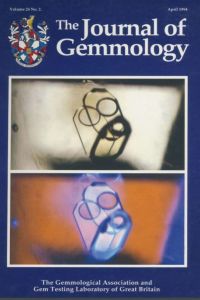
Flux treatment of synthetic ruby is reviewed, and a previously uncharacterised inclusion pattern is described in stones encountered in the gem trade, often represented as natural rubies from Afghanistan. Conventional treatment involves immersing Verneuil flame-fusion synthetic ruby in an aluminium oxide-bearing flux, which penetrates fractures and promotes partial healing, leaving residual flux arranged in fingerprint-like patterns that can resemble healed fractures in natural ruby. Such treatment can also obscure curved growth striations. Products associated with Chatham, Knischka, and Lechleitner are discussed, although the authors note that preliminary heating and quench cracking have not been experimentally demonstrated for every product. Treatment may produce a flux-grown synthetic ruby overgrowth on the Verneuil core; remnants can reveal distinct boundaries, parallel growth lines, coarse flux inclusions, or small synthetic corundum crystals. Identification may depend on curved growth striations, gas bubbles following curved growth layers, or trace-element detection of molybdenum, lead, or tungsten derived from the flux. Since 1989, the authors had encountered approximately 60 treated synthetic rubies with a different inclusion structure. Twenty were examined by standard gemmological methods, and two, weighing 1.99 and 9.93 carats, underwent scanning electron microscopy with energy-dispersive spectroscopy and energy-dispersive X-ray fluorescence analysis. These stones contained thin, continuous, three-dimensional networks of flux-filled fractures, producing a honeycomb-like cellular appearance in transmitted light and whitish to colourless surface-reaching networks in reflected light. Their refractive indices, specific gravities, ultraviolet fluorescence, and absorption spectra fell within ranges that overlap those of natural and synthetic ruby. Extremely weak curved striations were resolved in one sample, but were insufficient to establish Verneuil growth conclusively; Czochralski growth remained possible. Analysis of the fracture fillings detected calcium and lead but no aluminium. The authors infer treatment in a flux possibly containing lead fluoride and calcium fluoride, while emphasising that the precise procedure remains unknown. The absence of dissolved aluminium oxide, insufficient treatment duration, or a different treatment process could account for the lack of conventional partial-healing patterns. Unlike the discontinuous fingerprints typical of earlier treated synthetics, the continuous cellular networks generally do not resemble natural ruby inclusions and permit ready identification with a gemmological microscope or even a hand lens.

Twinning in Ramaura synthetic rubies

Journal Article
Schmetzer, K., Smith, C.P., Bosshart, G. and Medenbach, O. (1994) Twinning in Ramaura synthetic rubies. Journal of Gemmology, Vol. 24, No. 2, April, pp. 87–93.
Record No. 4977  |  ISBN/ISSN: 221252  |  Sinkankas/Born No.: NIS / NIB  |  RWHL
View Individual Record ↗
Twinned individuals of Ramaura synthetic rubies were examined and identified as penetration twins, with the two intergrown crystal components symmetrically related either by a 180° rotation about the c-axis, by reflection across one of the first-order hexagonal prism planes {101̅0}, or across the basal pinacoid (0001); the twins are in contact along four twin boundaries aligned with these twin planes, which together delineate a twinning form never before observed in either natural or synthetic corundum. Each twin crystal exhibits a single planar surface that marks the interface between the ruby and the floor of the crucible used during the growth process; these surfaces are divided into multiple sectors by the intersecting twin planes, which converge at a central point. On the basal planes of these crystals, triangular growth structures are seen to relate through the twin symmetry elements—specifically, a two-fold axis parallel to [0001] and mirror planes parallel to {101̅0}.

Gem corundum in alkali basalt: Origin and occurrence
Journal Article
Levinson, A.A. and Cook, F.A. (1994) Gem corundum in alkali basalt: Origin and occurrence. Gems & Gemology, Vol. 30, No. 4, Fall, pp. 253–262.
Record No. 4902  |  ISBN/ISSN: 0016626X  |  Sinkankas/Born No.: NIS / NIB  |  RWHL
View Individual Record ↗

Gem News: Update on Montana sapphires
Journal Article
Koivula, J.I., Kammerling, R.C. and Fritsch, E. (1994) Gem News: Update on Montana sapphires. Gems & Gemology, Vol. 30, No. 4, Fall, p. 276.
Record No. 4893  |  ISBN/ISSN: 0016626X  |  Sinkankas/Born No.: NIS / NIB  |  RWHL
View Individual Record ↗

Gem News: Sapphire from Scotland

Journal Article
Koivula, J.I., Kammerling, R.C. and Fritsch, E. (1994) Gem News: Sapphire from Scotland. Gems & Gemology, Vol. 30, No. 4, Winter, pp. 275–276.
Record No. 4892  |  ISBN/ISSN: 0016626X  |  Sinkankas/Born No.: NIS / NIB  |  RWHL
View Individual Record ↗

Building a Gemological Library

Gemological books range from general identification manuals and textbooks to specialized works on individual gems, mineralogy, jewelry, treatments, synthesis, history and gem-producing regions.

For a curated selection of particularly useful books, read The Gemologist's Core Library — Classic Books on Gemology, Jewelry and Mineralogy.

About Four Treasures

Four Treasures is Lotus Gemology's freely accessible gemological reference database. Use the full database to search by author, title or keyword and explore literature on gemology, mineralogy, jewelry and related fields. Where available, hyperlinks on titles may lead directly to the full publication.

Search the Complete Four Treasures Database