Gemology Books Bibliography

Gemology Books Bibliography

Explore books on gems, gemology, jewelry and mineralogy in Four Treasures, the Lotus Gemology reference database. This bibliography brings together matching book records from the collection, with publication details, abstracts and cover images where available.

Gemology Book References

The list below matches books concerning gemology and related subjects in the database's searchable fields. Some works cover several branches of gems, jewelry or mineralogy.
2,161–2,180 of 3,681 matching references

Gem News: Feldspar with ruby inclusions
Journal Article
Koivula, J.I., Kammerling, R.C. and Fritsch, E. (1994) Gem News: Feldspar with ruby inclusions. Gems & Gemology, Vol. 30, No. 4, Fall, p. 274.
Record No. 4891  |  ISBN/ISSN: 0016626X  |  Sinkankas/Born No.: NIS / NIB  |  RWHL
View Individual Record ↗

Gem News: Myanmar liberalizes gem trading
Journal Article
Koivula, J.I., Kammerling, R.C. and Fritsch, E. (1994) Gem News: Myanmar liberalizes gem trading. Gems & Gemology, Vol. 30, No. 2, Summer, pp. 126–127.
Record No. 4890  |  ISBN/ISSN: 0016626X  |  Sinkankas/Born No.: NIS / NIB  |  RWHL
View Individual Record ↗

Update on mining rubies and fancy sapphires in northern Vietnam
Journal Article
Kammerling, R.C., Keller, A.S., Scarratt, K.V. and Repetto, S. (1994) Update on mining rubies and fancy sapphires in northern Vietnam. Gems & Gemology, Vol. 30, No. 2, Summer, pp. 109–114.
Record No. 4825  |  ISBN/ISSN: 0016626X  |  Sinkankas/Born No.: NIS / NIB  |  RWHL
View Individual Record ↗
Northern Vietnam began producing significant quantities of rubies and fancy sapphires in the late 1980s. Since then, mining has evolved at the two major producing areas: Luc Yen and Quy Chau. Heavy machinery is now used in both of these remote areas, but small-scale manual mining is ongoing. Efforts continue to establish organized cutting and distribution centers.

An examination of Chatham flux-grown synthetic pink sapphires
Journal Article
Kammerling, R.C., Koivula, J.I. and Fritsch, E. (1994) An examination of Chatham flux-grown synthetic pink sapphires. Journal of Gemmology, Vol. 24, No. 3, July, pp. 149–154.
Record No. 4824  |  ISBN/ISSN: 221252  |  Sinkankas/Born No.: NIS / NIB  |  RWHL
View Individual Record ↗
The gemological, spectroscopic, and chemical characteristics of newly marketed Chatham flux-grown synthetic pink sapphires are documented through examination of four faceted stones weighing 2.73–4.19 ct and microscopic study of an 884 ct crystal. The material is essentially a lighter-toned counterpart of Chatham synthetic ruby. The faceted specimens are transparent, evenly colored, and medium light to medium purplish pink with fairly high saturation; the large crystal has comparable hue and saturation but a darker tone. Refractive indices are 1.768 and 1.759, birefringence is 0.009, and specific gravity ranges from 3.99 to 4.00. Dichroic colors are purplish pink and orange-pink. All specimens appear strongly red through a Chelsea filter and show absorption lines consistent with natural and synthetic ruby and pink sapphire. Long-wave and short-wave ultraviolet radiation produce essentially equally strong orange-red fluorescence with a weakly to moderately chalky overtone, without phosphorescence. This response differs from Chatham synthetic ruby, which generally fluoresces more strongly under long-wave radiation. Flux inclusions near the crystal’s surface fluoresce green, while deeper inclusions appear yellow, probably through combination with the host’s red fluorescence. Microscopic examination reveals primary flux inclusions ranging from large, granular masses to rows of minute droplets along growth steps. In two faceted stones, apparent primary flux particles form delicate intersecting rows producing a grid-like pattern, previously undocumented by the authors in synthetic gem materials and resembling arrangements of negative crystals in some natural spinels. Secondary flux inclusions occur as partially healed fingerprints, predominantly with undulating forms. Metallic inclusions include individual platelets, clusters of small rods and platelets, and dendritic formations; one stone contains a phantom layer of triangular and hexagonal platelets. Energy-dispersive X-ray fluorescence detects chromium, trace iron, and platinum in addition to aluminum. Platinum is attributed to the growth crucible and supports identification of the metallic inclusions. Chromium concentrations range from 0.027 to 0.200 wt.% Cr₂O₃, without an obvious relationship to specimen color, even after considering size differences. Most properties resemble those of other Chatham flux-grown corundums, while the ultraviolet response and unusual grid-like inclusions are noteworthy distinctions. Inclusions provide diagnostic evidence for separating these synthetic pink sapphires from natural material.

The Indaia sapphire deposits of Minas Gerais, Brazil
Journal Article
Epstein, D.S., Brennan, W. and Mendes, J.C. (1994) The Indaia sapphire deposits of Minas Gerais, Brazil. Gems & Gemology, Vol. 30, No. 1, Spring, pp. 24–32.
Record No. 4769  |  ISBN/ISSN: 0016626X  |  Sinkankas/Born No.: NIS / NIB  |  RWHL
View Individual Record ↗

Pink corundum from Kitui, Kenya

Journal Article
Barot, N.R. and Harding, R.R. (1994) Pink corundum from Kitui, Kenya. Journal of Gemmology, Vol. 24, No. 3, July, pp. 165–172.
Record No. 4706  |  ISBN/ISSN: 221252  |  Sinkankas/Born No.: NIS / NIB  |  RWHL
View Individual Record ↗
N.R. Barot and R.R. Harding describe a deposit of pink corundum in the eastern foothills of Mount Kenya and examine its geology, production, gemmological properties, and possible relationship to dyed corundum marketed through India. The Taawajah claim in northern Kitui lies within the Mozambique orogenic belt, where Precambrian basement rocks include quartzites, marbles, calc-silicate rocks, amphibolites, and gneisses associated with intrusive rocks. Pink corundum was recognized during prospecting in 1969, but development followed renewed surveying in 1988 and registration in 1989. Open-pit mining employs pneumatic drills, hand tools, washing, sieving, and manual selection, with a workforce of approximately 30–50. Reported weekly recovery generally ranges from 50 to 100 kg and occasionally reaches 200 kg. Most corundum occurs in shallow gravel, while deeper material remains attached to other minerals, suggesting a predominantly eluvial deposit derived from nearby rocks with some local reworking. Most production is exported to India; approximately 1–5% is considered good quality and is cut locally or sold to Germany. The translucent light to medium pink material is principally suitable for cabochons and beads. Examination of rough and polished specimens reveals reddish-pink colour, commonly complicated by red zoning, occasional blue areas grading through purple, iron staining, abundant fissures, twinning, and variably coarse rutile silk. Associated minerals include hornblende, feldspar, quartz, and micaceous material. Untreated specimens show moderate dichroism and orange-red ultraviolet fluorescence, weakened by increasing opacity or blue coloration. Electron microprobe analyses establish minor chromium and somewhat higher iron contents, while ultraviolet–visible spectra show no obvious features distinguishing the material from previously documented ruby and sapphire. The authors also investigate red-dyed cabochons and faceted beads obtained through India. Microscopy reveals patchy concentrations of dye along fractures, with fluorescence arising chiefly from these fissures. Treated cabochons have spectra closely resembling those of untreated Kitui corundum, making Kitui a possible source without establishing provenance. The dyed faceted beads differ spectrally and contain no detectable chromium at the stated analytical threshold; their source remains unknown. Water immersion produces no apparent dye loss, whereas organic solvents cause varying degrees of dissolution. Ethyl alcohol and amyl acetate are particularly effective for detecting dye in the beads through a pink residue transferred to white tissue, although cabochons with fewer fissures may require more persistent examination. The study documents a commercially productive source of cabochon-grade pink corundum and demonstrates the importance of fracture inspection and solvent testing when assessing strongly red material that may owe its appearance to dye.

Exploration gemmology

Journal Article
Taylor, A. (1994) Exploration gemmology. Journal of Gemmology, Vol. 24, No. 3, July, pp. 155–163.
Record No. 1687  |  ISBN/ISSN: 221252  |  Sinkankas/Born No.: NIS / NIB  |  RWHL
View Individual Record ↗
Gemmological techniques are applied to the microscopic examination of heavy-mineral concentrates from stream sediments as a rapid means of assessing mineral potential and guiding exploration. Systematic sampling of stream beds and tributaries produces concentrates whose mineral assemblages reflect the rocks undergoing erosion within a watershed. Examination with a binocular microscope provides early information about possible mineralisation and checks the interpretation of subsequent geochemical analyses. Magnetic response and crystal habit help distinguish magnetite, ilmenite and chromite, while colour, transparency, cleavage, refractive index and other familiar gemmological properties assist identification of the accompanying grains. Accessory minerals can indicate source rocks, and assemblages containing pyrope garnet, chromium-bearing diopside and picroilmenite illustrate the use of indicator minerals in diamond exploration. Similar attention to associated minerals can help trace gold, cassiterite and scheelite to their sources. Interpretation must account for the contribution of superficial deposits, including glacial material, river gravels and volcanic ash, since stream concentrates may represent these rather than the underlying bedrock. The method is therefore most appropriate where active drainage exposes and erodes the materials of interest. Gold-particle morphology is discussed as evidence of transport and subsequent alteration: abrasion flattens and fragments grains, while dissolution and renewed growth modify their surfaces during residence in alluvial deposits. Attached gangue minerals may provide further clues to origin. Microscopic examination also reveals misleading contaminants, including mercury-coated gold resembling platinum, shotgun pellets capable of producing false lead anomalies, and iron welding droplets that might be mistaken for micrometeorites. Because visual identification alone may be insufficient for small ore-mineral grains, simple microchemical confirmation methods are described. Cassiterite is reduced to a metallic tin coating using zinc and hydrochloric acid, and treated grains can be located through their bleaching effect on starch–iodine paper. Scheelite may be detected by its bluish fluorescence under short-wave ultraviolet radiation or by an acid treatment producing a yellow coating that dissolves in ammonia solution. The article concludes that combining microscopy, mineral identification and selected chemical tests increases the information obtained from pan-concentrate surveys and offers gemmologists a practical contribution to mineral exploration.

Lab Report: Kashan synthetic rubies; synthetic ruby from Russia; hydrothermal synthetic ruby—infrared spectrum
Journal Article
Scarratt, K. (1994) Lab Report: Kashan synthetic rubies; synthetic ruby from Russia; hydrothermal synthetic ruby—infrared spectrum. JewelSiam, Vol. 5, No. 1, February/March, pp. 62–69.
Record No. 1539  |  ISBN/ISSN: 8581843  |  Sinkankas/Born No.: NIS / NIB  |  RWHL
View Individual Record ↗
Three laboratory notes describe the production history, internal characteristics, and infrared examination of synthetic rubies encountered by the Asian Institute of Gemological Sciences. The Kashan note records Steve Ruyle’s acquisition of the remaining production assets associated with the synthetic ruby originally manufactured by F. Truehart Brown from the mid-1960s. Ruyle reported acquiring several furnaces, one of which was producing small quantities of Kashan-type material by what he described as a combination of flux and hydrothermal techniques. The stones actually examined were reportedly more than ten years old, so their characteristics document earlier material rather than establish the properties of the new production. Their colours ranged from pink through orangy red to deep purple-red. Microscopy revealed characteristic flux-filled feathers resembling twisted veils and isolated flux-filled cavities with forms previously likened to moccasin footprints, dog bones, or paint splashes. A second note examines two Russian synthetic ruby products attributed to different growth processes. The first was described as horizontally grown by a method combining aspects of pulling and floating-zone techniques, using a seed, a boat-shaped container of powdered constituents, and a moving tungsten heat source. Several heating passes reportedly produced a large crystal over approximately two weeks. The specimen examined weighed 2,817 carats despite being broken at one end, measured approximately 11 × 9 × 2 cm, and contained numerous gas bubbles together with dendritic crystal formations concentrated in its pointed end. The second product was reportedly made by combining Verneuil flame fusion and pulling techniques. Its 286.44-carat crystal, approximately 7 × 2 cm, had a roughly hexagonal seed-end outline and a rippled, silky exterior. Unlike typical Verneuil material, it appeared free of the usual bubbles; the only observed growth structures were fine diagonal lines. The final note reports Fourier-transform infrared examination of a previously described Russian hydrothermal synthetic ruby using a Nicolet Magna 550 spectrometer. Comparison with a natural ruby from Myanmar revealed distinct spectral differences across approximately 3800–2800 cm⁻¹, illustrated by pronounced absorption features in the synthetic specimen.

Ruby and sapphire from the Southern Ural Mountains, Russia
Journal Article
Kissin, A.J. (1994) Ruby and sapphire from the Southern Ural Mountains, Russia. Gems & Gemology, Vol. 30, No. 4, Winter, pp. 243–252.
Record No. 1101  |  ISBN/ISSN: 0016626X  |  Sinkankas/Born No.: NIS / NIB  |  RWHL
View Individual Record ↗

A new type of synthetic ruby from Russia
Journal Article
Henn, U. (1994) A new type of synthetic ruby from Russia. Australian Gemmologist, Vol. 18, No. 11, pp. 362–364.
Record No. 964  |  Sinkankas/Born No.: NIS / NIB  |  RWHL
View Individual Record ↗
A Russian synthetic ruby submitted in 1993 to the German Foundation for Gemstone Research is characterised by standard gemmological testing, microscopy, visible absorption spectroscopy, and chemical analysis. Although reportedly produced hydrothermally in Novosibirsk, the specimen is identified as a product of flux synthesis. The investigation is placed within the expanding supply of Russian synthetic gemstones following the political and economic changes in the former Soviet Union, with a table summarising materials and production methods previously reported from the region. Earlier Russian rubies had included both flux-grown and hydrothermal products. The examined crystal weighed 138 carats, had a boule-like shape, and was dark red, showing distinct purplish-red and orange-red pleochroism. Macroscopic examination revealed dark dendritic inclusions and a metallic coating over a small surface area. Measured refractive indices were 1.762 and 1.770, with birefringence of 0.008 and specific gravity of 4.00. Fluorescence was strong red under long-wave ultraviolet radiation and weak red under short-wave radiation. Immersion microscopy revealed opaque black flux residues with characteristic dendritic forms; dark-field illumination showed their polycrystalline nature. A second inclusion type consisted of clouds of bubble-like flux residues within partly healed cavities, resembling features described in Knischka synthetic rubies from Austria. Polarised visible absorption spectra displayed pronounced chromium-related lines and bands, including a line at 692 nm. Broad absorption maxima occurred at 545 and 409 nm for light polarised parallel to the crystallographic c-axis, and at 554 and 400 nm for perpendicular polarisation. Scanning electron microscopy with energy-dispersive X-ray analysis gave a composition of 98.61 wt.% aluminium oxide and 1.39 wt.% chromium oxide. Tungsten and molybdenum were detected in the metallic surface coating and in fractures where dendritic inclusions reached the surface. These flux-related elements and the diagnostic inclusion structures establish flux growth despite the reported hydrothermal origin. The physical properties and chemical composition otherwise fall within the ranges of synthetic rubies from other producers, making the microscopic and inclusion-chemical evidence central to recognising the material’s growth method.

Origin determination for gemstones: Possibilities, restrictions and reliability
Journal Article
Hänni, H.A. (1994) Origin determination for gemstones: Possibilities, restrictions and reliability. Journal of Gemmology, Vol. 24, No. 3, July, pp. 138–148.
Record No. 954  |  ISBN/ISSN: 221252  |  Sinkankas/Born No.: NIS / NIB  |  RWHL
View Individual Record ↗
Examines the scientific basis, practical requirements and limitations of determining the geographical origin of gemstones, emphasising that locality names should describe provenance rather than colour or quality. Hänni distinguishes a gemstone’s deposit of origin, whether primary or secondary, from commercial associations attached to names such as Myanmar, Kashmir or Pailin. Deposits produce variable material, and visually similar stones can occur in different regions; consequently, appearance alone cannot establish origin. Reliable attribution requires characteristics that support a proposed source while excluding alternatives, preferably through at least three independent diagnostic features involving inclusions, spectroscopy and trace-element composition. The paper relates such characteristics to the conditions of crystal formation, including available constituents, growth rate, fluid chemistry, oxidation state, temperature, pressure and deformation history. These processes influence growth zoning, twinning, colour distribution, mineral and fluid inclusions, healed fissures and trace-element patterns. Methods reviewed include microscopy in air and immersion, microthermometry, ultraviolet–visible and infrared spectroscopy, energy-dispersive X-ray fluorescence, electron-microprobe analysis, scanning electron microscopy, Raman spectroscopy and magnetic-resonance techniques. Their complementary roles range from documenting internal structures to identifying enclosed minerals and measuring chemical differences among gemstone populations. Particular importance is assigned to comprehensive reference collections of securely sourced specimens, analytical records, geological information and current literature. Ideally, comparison material should be collected directly from deposits; where this is impossible, reliable museum or historical collections may provide alternatives. Reference collections must represent variation within individual sources as well as differences between them. Examples demonstrate that features once regarded as exclusive can lose diagnostic status: three-phase inclusions formerly associated principally with Colombian emeralds also occur in material from Australia and Nigeria, requiring additional chemical evidence. Attribution is restricted when stones lack diagnostic features, properties overlap among deposits, jewellery settings obstruct examination, source information is inadequate or heating has destroyed useful evidence. Political borders may divide geological deposits, while individual countries may contain several distinct sources, complicating the wording of conclusions. Origin determinations therefore remain expert opinions expressing the most probable interpretation of available evidence. Their reliability depends on equipment, experience, continually revised reference data and prudent interpretation. Where observations are insufficient or ambiguous, the author argues that a definite origin report should not be issued.

Gem Trade Lab Notes: Sapphires from Yogo Gulch, Montana
Journal Article
DelRe, N. (1994) Gem Trade Lab Notes: Sapphires from Yogo Gulch, Montana. Gems & Gemology, Vol. 30, No. 2, Summer, p. 120.
Record No. 660  |  ISBN/ISSN: 0016626X  |  Sinkankas/Born No.: NIS / NIB  |  RWHL
View Individual Record ↗

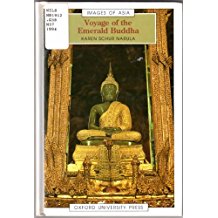
Taj Mahal and the Saga of the Great Mughals
Book
Lall, J. (1994) Taj Mahal and the Saga of the Great Mughals. London, Tiger Books International, 96 pp.
Record No. 40  |  ISBN/ISSN: 1855015900  |  Sinkankas/Born No.: NIS / NIB  |  RWHL
View Individual Record ↗
John Lall’s Taj Mahal and the Saga of the Great Mughals (1994) is a richly illustrated historical and architectural study of the Mughal dynasty and its monuments at Agra, culminating in the construction of the Taj Mahal by Emperor Shah Jahan in memory of his wife Mumtaz Mahal. Lall, a former Indian Civil Service officer who served as Commissioner of Agra during the 1950s, traces the development of Mughal power from Babur’s conquest of northern India in 1526 through the reigns of Humayun, Akbar, Jahangir, Shah Jahan, and Aurangzeb, emphasizing their contributions to architecture, decorative arts, jewellery, and imperial culture. The book is divided into four principal sections covering the dynasty’s history, political expansion, architectural achievements, and the Taj Mahal itself. Of particular gemological interest is its extensive photographic documentation of Mughal jewellery, ornamental stones, and decorative inlay techniques. Illustrations include necklaces, earrings, forehead ornaments, turban jewels, bracelets, anklets, enamelled gold ornaments, and jade objects set with emeralds, rubies, and diamonds. The author discusses traditional Indian jewellery techniques, including kundan gemstone setting and meenakari enamelling, and the development of pietra dura inlay under the patronage of Empress Nur Jahan and Shah Jahan. The celebrated Peacock Throne receives special attention. Lall cites the French jeweller Jean-Baptiste Tavernier’s description of its solid-gold construction, jewelled canopy, peacock adorned with blue sapphires and other coloured stones, and a prominent ruby supporting a pear-shaped pearl weighing approximately 50 carats. Tavernier reportedly counted 108 exceptional rubies, some weighing 200 carats or more, together with 116 emeralds and numerous pearls. The throne was carried away following Nadir Shah’s sack of Delhi in 1739 and subsequently dismantled. The Koh-i-Noor diamond is also discussed in connection with Humayun’s acquisition of Mughal treasures at Agra and its eventual incorporation into the British Crown Jewels. In examining the Taj Mahal, Lall identifies Ustad Ahmad Lahori as its principal architect and describes the contributions of Indian, Persian, and Central Asian craftsmen to its construction. Particular attention is devoted to the marble’s decorative stone inlays and the international sources of the materials employed. Citing the Tarikh-i-Taj Mahal, he records jasper from the Punjab, carnelian from Baghdad, amethyst from Persia, and sapphire from Sri Lanka. The floral inlays decorating the mausoleum and its cenotaphs incorporate agate, carnelian, bloodstone, lapis lazuli, and other coloured stones, individually shaped and fitted into white Makrana marble with extraordinary precision. Lall notes that some floral designs contain as many as 31 or 64 separate stone elements. The intricately carved marble screen surrounding the cenotaphs reportedly required ten years to complete. The author also examines the monument’s deterioration through historical plundering, including the removal of gemstones from its decorations, and warns of the destructive effects of atmospheric pollution on its marble surfaces. Numerous colour photographs document the Taj Mahal, Agra Fort, Fatehpur Sikri, the tomb of Itmad-ud-Daulah, and outstanding examples of Mughal jewellery and decorative craftsmanship. The volume provides a valuable illustrated introduction to the relationship between Mughal imperial patronage, gemstone use, jewellery design, ornamental stone carving, and monumental architecture.

Voyage of the Emerald Buddha

Book
Narula, K.S. (1994) Voyage of the Emerald Buddha. Kuala Lumpur, Oxford Univ. Press, 88 pp.
Record No. 29  |  Sinkankas/Born No.: NIS/NIB  |  RWHL
View Individual Record ↗
Karen Schur Narula’s Voyage of the Emerald Buddha, published in Oxford University Press’s Images of Asia series, traces the legendary and historically documented movements of Thailand’s most revered Buddhist image, the Emerald Buddha (Phra Kaeo Morakot), now enshrined in Wat Phra Kaeo within Bangkok’s Grand Palace. Combining Buddhist chronicles, regional history, religious traditions, and art-historical observations, Narula examines the statue’s uncertain origins and its association with political legitimacy, royal authority, and the spread of Theravada Buddhism across South and Southeast Asia. The narrative begins with the royal ceremony in which Thailand’s monarch changes the image’s seasonal garments, describing its elaborate gold ornaments, including a jeweled headdress decorated with sapphires and a robe embellished with rubies. The author then introduces the Chronicle of the Emerald Buddha, a collection of traditions preserved in manuscripts from Thailand, Laos, and Cambodia. According to the legend, the image was created in India through the intervention of the Buddhist sage Nāgasena, assisted by Indra and the celestial craftsman Visukamma, who obtained a magnificent green stone from supernatural guardians. The statue was subsequently transported to Sri Lanka, Burma, Cambodia, and northern Thailand before reaching Laos. Narula emphasizes that this account contains substantial chronological contradictions and supernatural elements that prevent its acceptance as reliable historical evidence. The book’s successive chapters examine the histories of India, Sri Lanka, Burma, Cambodia, Thailand, and Laos, connecting the legendary itinerary with the development of Buddhist sculpture, religious institutions, political alliances, and commercial networks. Of particular gemological interest is the question of the statue’s material and geographical origin. Despite its conventional name, the Emerald Buddha is not fashioned from emerald. Narula identifies the material as jade and specifically suggests nephrite as a possible carving material, although the book provides no analytical evidence establishing its precise mineralogical composition. She considers possible origins in India, Sri Lanka, and northern Thailand, noting the influence of Gandharan, Amaravati, Sinhalese, and Lan Na sculptural traditions. The first securely documented appearance of the image occurred at Chiang Rai in 1434, when a stucco-covered statue was discovered inside a chedi, reportedly following a lightning strike. When the stucco subsequently flaked away, the concealed green stone was revealed. The image was transferred to Lampang, where it remained until 1468, and then to Chiang Mai. In the sixteenth century it passed into Lao possession under King Setthathirat, eventually reaching Vientiane in 1564. There it remained until Siamese forces under Chaophraya Chakri captured the city in 1778 and carried the image to Thonburi. Following the establishment of Bangkok as the capital of the Chakri Dynasty, King Rama I transferred the statue to its present shrine on 22 March 1784. Throughout the narrative, Narula stresses the image’s significance as a palladium whose possession was believed to ensure prosperity, religious protection, and legitimate sovereignty. Numerous photographs, historical illustrations, maps, and examples of Buddhist sculpture document the artistic traditions and monuments associated with its supposed travels. Although primarily a historical and religious study rather than a technical gemological investigation, the book provides useful information on the Emerald Buddha’s possible nephrite composition, uncertain provenance, stylistic characteristics, and the cultural significance of a monumental green gemstone carving within Southeast Asian Buddhism.

The Book of the Treasure (Li Livres dou Tresor)
Book
Latini, B. (1993) The Book of the Treasure (Li Livres dou Tresor). New York, Garland Publishing, 384 pp.
Record No. 29635  |  Sinkankas/Born No.: NIS / NIB  |  RWHL
View Individual Record ↗
A major medieval vernacular encyclopedia by the Florentine statesman and scholar Brunetto Latini (ca. 1220–1294), Li livres dou tresor was composed in Old French during Latini’s exile in France in the 1260s. Organized in three books, it assembles a broad compendium of contemporary knowledge: the first treats theology, universal history, geography, astronomy, natural history, animals, plants, stones, and other aspects of the physical world; the second concerns ethics, virtues, and vices, drawing particularly upon Aristotle; and the third addresses rhetoric, politics, and the government of cities. Of particular gemological interest are the sections dealing with minerals and precious stones, which preserve medieval European conceptions of their names, characteristics, origins, and reputed properties. The work circulated extensively in manuscript and was translated into several European languages, making it an important source for the transmission of natural-history and lapidary traditions in the later Middle Ages.

The first occurrence of musgravite as a faceted gemstone
Journal Article
Demartin, F., Pilati, T., Gramaccioli, C.M. and de Michele, V. (1993) The first occurrence of musgravite as a faceted gemstone. Journal of Gemmology, Vol. 23, No. 8, pp. 482–485.
Record No. 29629  |  DOI: https://doi.org/10.15506/JOG.1993.23.8.482  |  Sinkankas/Born No.: NIS / NIB  |  RWHL
View Individual Record ↗
Demartin and coauthors report the first known musgravite to have been fashioned as a faceted gemstone. The specimen, a 5.74 ct greenish-grey stone reportedly from Sri Lanka, was initially submitted for identification as a possible taaffeite. Gemological, chemical and X-ray investigations identified it as musgravite, a rare beryllium-magnesium-aluminium oxide closely related to taaffeite. The authors describe its refractive indices, specific gravity, optical character, absorption spectrum and chemical composition, and compare these properties with those of taaffeite. The identification demonstrated that musgravite, previously known principally as a rare mineral species, can occur as transparent material of sufficient size and quality for faceting.

England, the international gem trade and the growth of geographical knowledge from Columbus to James I
Book Section
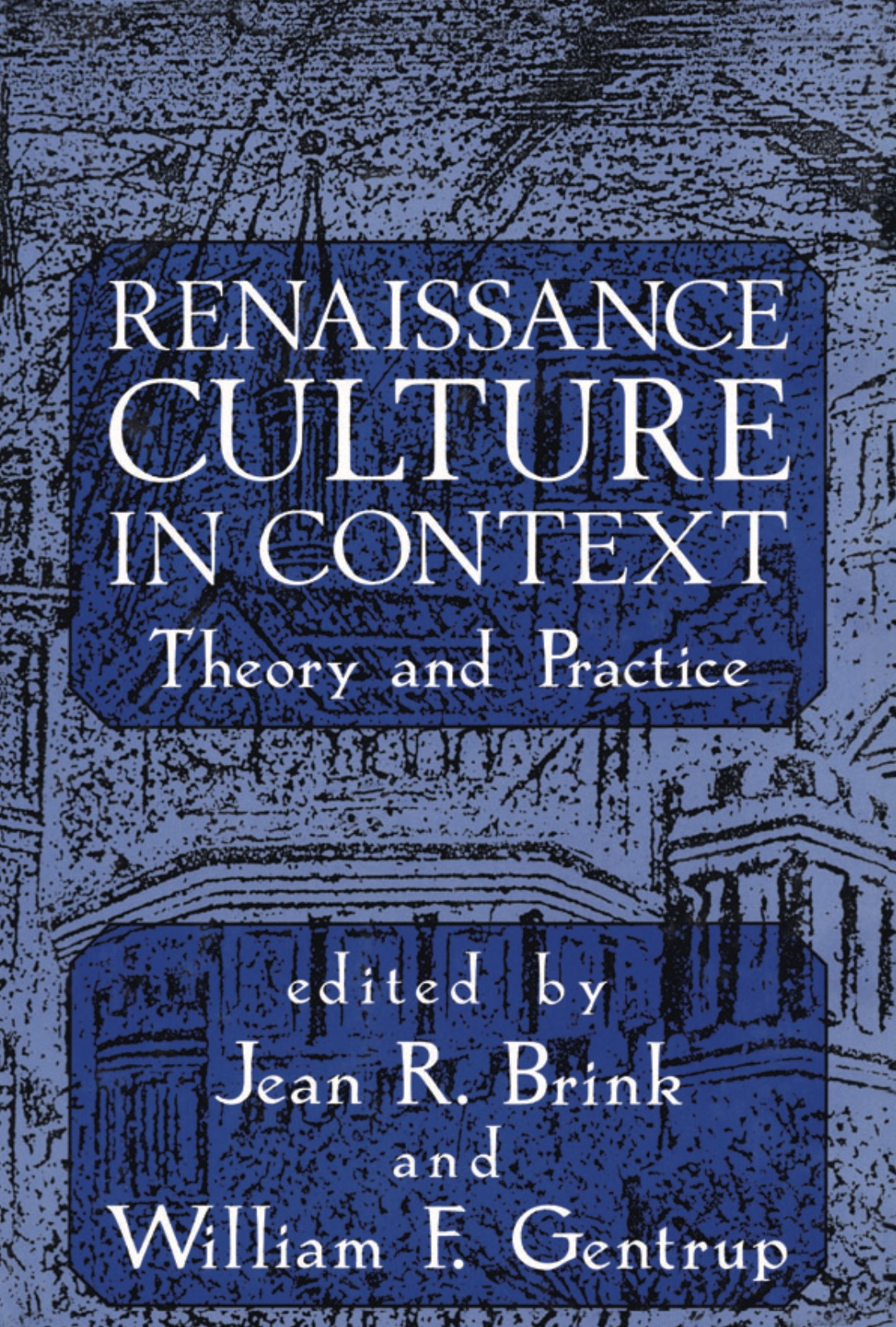
Lenman, B.P. (1993) England, the international gem trade and the growth of geographical knowledge from Columbus to James I. In: Renaissance Culture in Context : Theory and Practice, pp. 86–99.
Record No. 29020  |  Sinkankas/Born No.: NIS / NIB  |  RWHL
View Individual Record ↗
It is comparatively recently that historical scholarship has begun to escape from the Eurocentric assumption that the first global economic system was ‘invented’ by European seafarers in the late fifteenth and sixteenth centuries. This latter phenomenon, so brilliantly described by Immanuel Wallerstein,1 we now begin to see rather as a European take over of the run-down remains of an older global trading system, in which Europe was peripheral, and in which a series of precociously-developed urban complexes exchanged a highly selective range of goods through a network of trade which was intricate, far-flung and often indirect. This global system peaked in the thirteenth century, with the Islamic Middle East as its heart, and China as its most advanced participant.2 Medieval Europe’s knowledge of quite important parts of the system was vague. If we glance at Mandeville’s Travels, which was originally written in French, possibly at Liège around 1357, not, of course, by its fictitious English author, but certainly by someone who had never left Europe, we have, in effect, a compilation of other men’s accounts of the Middle East and Asia. They are quite good on the Middle East, where Crusader and Armenian sources were available, and not totally ill-informed about central Asia and China thanks to the accounts of Franciscan missionaries like Odoric of Pordenone. ‘Mandeville’ says, quite correctly, that Genoese and Venetian merchants visited Cathay. On India he is woefully ignorant, more than usually inclined to fable and error, but clear that it is from ‘Ind’ that men obtain ‘the good diamonds.

The Codex Borgia: A Full-Color Restoration of the Ancient Mexican Manuscript
Book
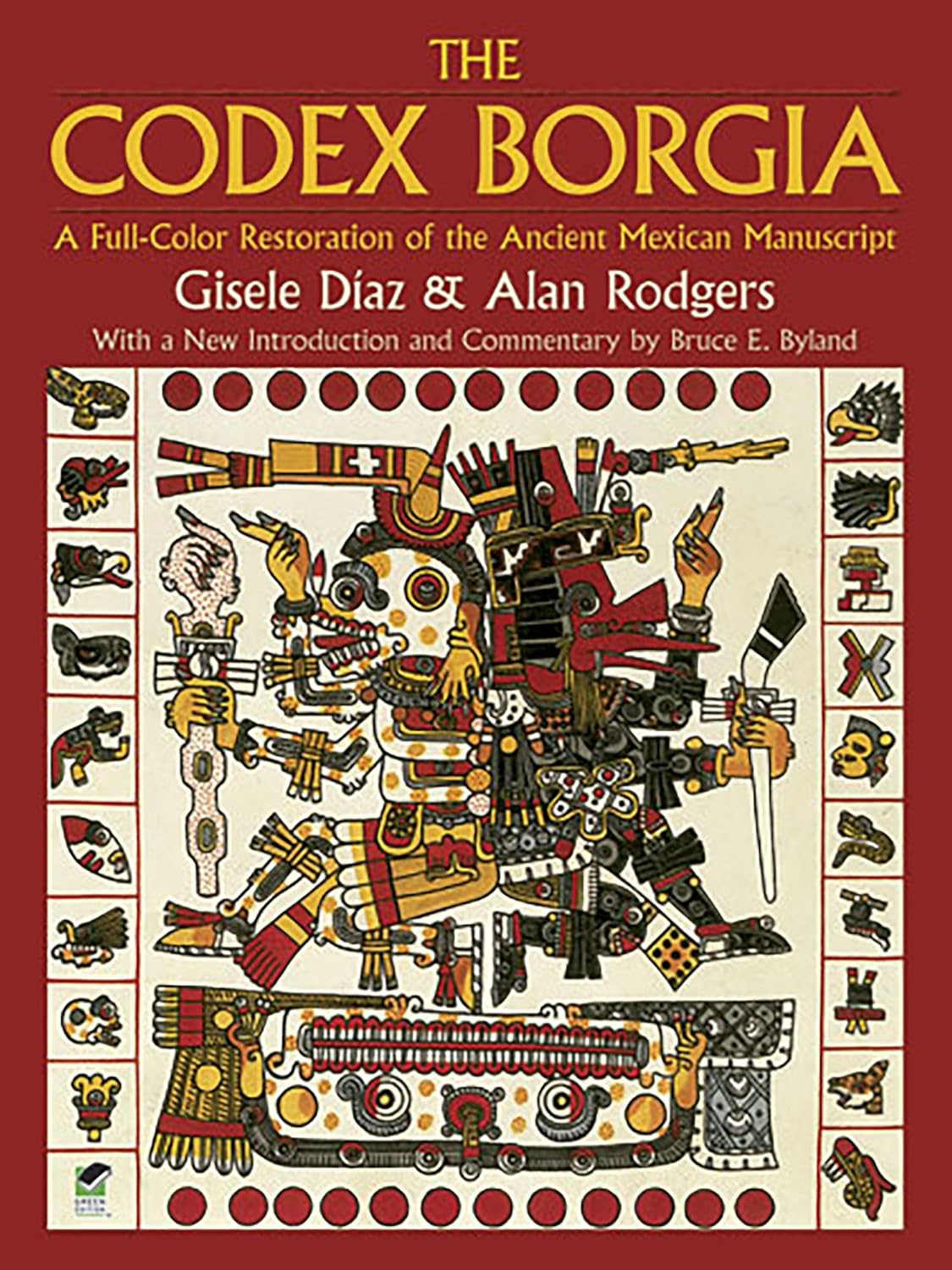
Díaz, G. and Rogers, A. (1993) The Codex Borgia: A Full-Color Restoration of the Ancient Mexican Manuscript. Mineola, NY, Dover Publications, 112 pp.
Record No. 28733  |  ISBN/ISSN: 9780490000000  |  Sinkankas/Born No.: NIS / NIB  |  RWHL
View Individual Record ↗
Considered by many scholars the finest extant Mexican codex and one of the most important original sources for the study of pre-Columbian religion, the Codex Borgia is a work of profound beauty, filled with strange and evocative images related to calendrical, cosmological, ritual, and divinatory matters. Generally similar to such Mixtec manuscripts as the Codex Nuttall, the Codex Borgia is thought to have its origin (ca. A.D. 1400) in the southern central highlands of Mexico, perhaps in Puebla or Oaxaca. It is most probably a religious document that once belonged to a temple or sacred shrine. One use of the Codex many have been to divine the future, for it includes ritual 260 day calendars, material on aspects of the planet Venus, and a sort of numerological prognostic of the lives of wedded couples. Another section concerns various regions of the world and the supernatural characters and attributes of those regions. Also described are the characteristics of a number of deities, while still other passages relate to installation ceremonies of rulers in pre-Columbian kingdoms. Until the publication of this Dover edition, the Codex Borgia has been largely inaccessible to the general public. The priceless original is in the Vatican Library and previous photographic facsimiles are very rare or very expensive or both. Moreover, the original Codex has been damaged over the centuries, resulting in the obscuration and loss of many images. In order to recapture the beauty and grandeur of the original, Gisele Diaz and Alan Rodgers have painstakingly restored the Codex by hand— a seven-year project — employing the most scrupulous research and restoration techniques. The result is 76 large full-color plates of vibrant, striking depictions of gods, kings, warriors, mythical creatures, and mysterious abstract designs — a vivid panorama that offers profound insights into pre-Columbian Mexican myth and ritual. Now students, anthropologists, lovers of fine art and rare books — anyone interested in the art and culture of ancient Mexico — can study the Codex Borgia in this inexpensive, accurate, well-made edition. An informative introduction by noted anthropologist Bruce E. Byland places the Codex in its historical context and helps elucidate its meaning and significance.

Presencia de piedra verde en el Grupo A-IV-1 de Kaminaljuyu
Presence of greenstone in Group A-IV-1 at Kaminaljuyú
Conference Paper
Suasnávar, J.S. (1993) Presencia de piedra verde en el Grupo A-IV-1 de Kaminaljuyu. [Presence of greenstone in Group A-IV-1 at Kaminaljuyú] VI Simposio de Investigaciones Arqueológicas en Guatemala, 1992, Guatemala City: Museo Nacional de Arqueología y Etnología, pp. 346–352.
Record No. 28687  |  Sinkankas/Born No.: NIS / NIB  |  Language: in Spanish  |  RWHL
View Individual Record ↗
We know that in the most advanced civilizations jade was used for ceremonial and ornamental objects; the characteristic most admired was its hardness, which best served artistic expression, together with its ability to receive and retain a lustrous polish (Foshag 1954:3). Jade was a stone of particular significance to the people of pre-Columbian Mesoamerica, for whom it was “the precious stone of grace, the first infinite grace, its green colour forming an allegorical metaphor for young maize, flowing water, and life itself” (Thompson 1950). In Group A-IV-1 at Kaminaljuyú, during excavations carried out in 1990 and 1991, a small but important assemblage of greenstone artefacts was recovered (Figure 1). Apparently, the first European contact with the material occurred in the sixteenth century through specimens brought back by the Spanish, rather than, as might be assumed, through contact with China (Foshag 1957:2). The word jade was coined in France as a derivation of the term piedra de ijada (“stone of the flank”), used by Spanish chroniclers to refer to this green stone arriving from the Americas, to which medicinal properties against kidney ailments were attributed (Hammond et al. 1977:38). By the time of the Conquest (Foshag 1954), several types of jade were distinguished among the Aztecs: chalchihuitl, which could be translated as “green-grass jewel stone,” referring to ordinary jade; quetzalitli, named after the iridescent green tail feathers of the quetzal, probably denoting the finest translucent emerald-green jade; tlilayutic, which may refer to dark chloromelanite; and white chalchihuitl, which appears to have been albite-jadeite. In addition to the identification of different qualities of the mineral, there is evidence of a preference among the elite for the finest-quality jades, a pattern that can also be traced back to Preclassic groups. With the Spanish conquest and the replacement of indigenous cultures, the use and knowledge of jade disappeared; along with it, the associated folklore was also lost.

Collecting and exhibiting Pre-Columbiana in France and England

Conference Paper
Williams, E.A. (1993) Collecting and exhibiting Pre-Columbiana in France and England. Collecting the Pre-Columbian Past: A Symposium at Dumbarton Oaks, 6–7 October, Washington, DC: Dumbarton Oaks Research Library and Collection, pp. 123–140.
Record No. 28684  |  Sinkankas/Born No.: NIS / NIB  |  RWHL
View Individual Record ↗
Reviewing a work of Alfred Métraux in 1962, Claude Lévi-Strauss approved the author’s efforts to “demystify” the ancient Incas and to reinforce the standards of “austere science,” but he observed that nevertheless the Incas remained a mystery and indeed that all of Pre-Columbian America was like “a sort of planet Mars” (1962: 140). This statement is a bit jarring, coming as it does from the professional anthropologist whose stock-in-trade is usually presumed to be the process of demystifying, reducing strangeness, and narrowing cultural gaps. Certainly it marks a break with the tone of early twentieth-century anthropology, in which the assumption was current that once the prejudices imposed by Eurocentrism, colonialism, and racism were jettisoned, “understanding”—even across the barriers separating the modern and the Pre-Columbian worlds—would be the result. Lévi-Strauss’ scepticism about such a possibility marked yet another turn of the wheel in the long process of interpretation and reinterpretation that constitutes the history of the European encounter with and response to Pre-Columbian civilization. His remarks were one instance of a more general retreat from the claims of Western science (to objectivity, comprehensiveness, and boundless hermeneutic prowess) that was essential if the blinders created by the scientizing process itself were to be recognized. This paper—which examines some moments in the history of French and English collecting and exhibiting of Pre-Columbiana—is offered in the spirit of recent work in the history of anthropology that “observes the observer” in order to chart this growth in self-consciousness and reflexivity in what has come to be called the discourse of the Other (Stocking 1985: 3–14). Like a number of the papers here, it explores the changing cognitive and cultural frameworks that conditioned the search for and representation of the materials of Pre-Columbian civilization. The focus is on Europe, where rationales for Pre-Columbian inquiry developed that were quite distinct from American ideologies of hemispheric cultural identity (Hinsley and Barnet-Sanchez, this volume). The specific focus is on France and England, the two leading colonial powers of the nineteenth century and countries in which extensive Pre-Columbian collections were built despite hesitations, perplexities, and formidable material obstacles. The period treated is 1870–1930, an era of peculiar importance because it encompasses the development of “museum anthropology,” with its privileging of the study of objects rather than cultural or social processes, and because it includes the period of the dramatic aesthetic revaluation of Pre-Columbiana that accompanied the so-called primitivist revolution.

Building a Gemological Library

Gemological books range from general identification manuals and textbooks to specialized works on individual gems, mineralogy, jewelry, treatments, synthesis, history and gem-producing regions.

For a curated selection of particularly useful books, read The Gemologist's Core Library — Classic Books on Gemology, Jewelry and Mineralogy.

About Four Treasures

Four Treasures is Lotus Gemology's freely accessible gemological reference database. Use the full database to search by author, title or keyword and explore literature on gemology, mineralogy, jewelry and related fields. Where available, hyperlinks on titles may lead directly to the full publication.

Search the Complete Four Treasures Database