Gemology Books Bibliography

Gemology Books Bibliography

Explore books on gems, gemology, jewelry and mineralogy in Four Treasures, the Lotus Gemology reference database. This bibliography brings together matching book records from the collection, with publication details, abstracts and cover images where available.

Gemology Book References

The list below matches books concerning gemology and related subjects in the database's searchable fields. Some works cover several branches of gems, jewelry or mineralogy.
2,121–2,140 of 3,681 matching references

Gem Trade Lab Notes: Synthetic star sapphire with an unusual color
Journal Article
Kammerling, R.C. and Fritsch, E. (1995) Gem Trade Lab Notes: Synthetic star sapphire with an unusual color. Gems & Gemology, Vol. 31, No. 1, Spring, pp. 57–58.
Record No. 4826  |  ISBN/ISSN: 0016626X  |  Sinkankas/Born No.: NIS / NIB  |  RWHL
View Individual Record ↗

Gem News: Ruby market in Taunggyi; sapphire mining in Laos; sapphire mining in Madagascar
Journal Article
Kammerling, R.C., Koivula, J.I., Johnson, M.L. and Fritsch, E. (1995) Gem News: Ruby market in Taunggyi; sapphire mining in Laos; sapphire mining in Madagascar. Gems & Gemology, Vol. 31, No. 4, Winter, pp. 281–284.
Record No. 4668  |  ISBN/ISSN: 0016626X  |  Sinkankas/Born No.: NIS / NIB  |  RWHL
View Individual Record ↗

Lab News: Spinel, natural with a dendritic inclusion
Journal Article
Johnson, M.L. (1995) Lab News: Spinel, natural with a dendritic inclusion. Gems & Gemology, Vol. 31, No. 1, Spring, p. 58.
Record No. 4137  |  ISBN/ISSN: 0016626X  |  Sinkankas/Born No.: NIS / NIB  |  RWHL
View Individual Record ↗

GIA Gem Trade Lab Notes: Spinel, with högbomite(?) inclusions
Journal Article
Johnson, M.L. (1995) GIA Gem Trade Lab Notes: Spinel, with högbomite(?) inclusions. Gems & Gemology, Vol. 31, No. 4, Winter, p. 272.
Record No. 4134  |  ISBN/ISSN: 0016626X  |  Sinkankas/Born No.: NIS / NIB  |  RWHL
View Individual Record ↗

Trace elements as colouring agents in jadeites
Journal Article
Harder, H. (1995) Trace elements as colouring agents in jadeites. Journal of Gemmology, Vol. 24, No. 7, July, pp. 508–511.
Record No. 3700  |  ISBN/ISSN: 221252  |  Sinkankas/Born No.: NIS / NIB  |  RWHL
View Individual Record ↗
Jadeite may be white, pink, lilac, brown, red, orange, blue, black or many shades of green, and contains different trace elements as colouring agents. Of these trace elements, iron shows the highest concentration and its oxidation states of ferrous or ferric iron produce different colours. In white jadeite nearly all iron is present as ferric (trivalent) iron, while in black jadeite half is ferrous (divalent) and half ferric. In the leaf green jadeites the Fe2+ /Fe3+ ratio ranges from 0.1 to 0.2. The finest green Burmese jadeite, whose colour is caused by up to 0.3 per cent chromium, has been called Imperial jade' or 'emerald jade'. Contents of iron (up to 0.6% Fe) and nickel (0.04% Ni) can modify the rich chromium green of the jadeite. Lilac, mauve or lavender jade may contain manganese (up to 0.01% Mn), cobalt (up to 0.001% Co), chromium (up to 0.001% Cr) and iron (from 0.006 to 0.3% Fe).

Gem Trade Lab Notes: Sapphire, with zoned transmission luminescence
Journal Article
Kammerling, R.C. (1995) Gem Trade Lab Notes: Sapphire, with zoned transmission luminescence. Gems & Gemology, Vol. 31, No. 4, Winter,, Winter pp. 270–271.
Record No. 2525  |  ISBN/ISSN: 0016626X  |  Sinkankas/Born No.: NIS / NIB  |  RWHL
View Individual Record ↗

An attempt to explain the instigation of the formation of the natural pearl
Journal Article
Gübelin, E.J. (1995) An attempt to explain the instigation of the formation of the natural pearl. Journal of Gemmology, Vol. 24, No. 8, October, pp. 539–545.
Record No. 2197  |  ISBN/ISSN: 221252  |  Sinkankas/Born No.: NIS / NIB  |  RWHL
View Individual Record ↗
A proposed explanation for the initiation of natural pearl formation is developed from studies of molluscan shell growth, epithelial behaviour and the structure of pearls. The author challenges the familiar account in which a grain of sand enters between mantle and shell and becomes coated with nacre, arguing that the close anatomical relationship between these tissues makes passive entry improbable. Instead, pearl formation is attributed to local proliferation of shell-secreting epithelial cells, potentially following injury or an unidentified natural stimulus. The discussion first outlines shell construction: an outer organic covering, a prismatic calcium-carbonate layer commonly composed of calcite, and an inner nacreous layer of aragonite platelets. The organic protein material termed conchin forms a matrix surrounding the mineral components and limits their growth into individual crystals. Changes in the secretory products of epithelial cells are related to cellular age. In the proposed mechanism, interactions between the epithelium and underlying connective mantle tissue favour expansion as a single-cell layer rather than an irregular mass. Continued proliferation produces an indentation that deepens into the mantle and develops into an enclosing pearl sac. Under ideal conditions, this sac and its growing pearl approach a spherical form. The cells are described as secreting the same materials in the same general succession as shell formation: an initial organic centre, followed by prismatic calcite and aragonitic nacre, with thin organic films between mineral deposits. Pearls with relatively large organic centres are discussed in relation to the trade term “blue pearls” and their darker central appearance in radiographs. Deposition is not presented as uniformly continuous concentric layering; overlapping cap-like increments and locally variable epithelial activity can produce irregular structures visible along drill-hole walls, although some layers may envelop the whole pearl. The possible involvement of G-proteins in signalling epithelial proliferation is introduced as a hypothesis rather than a demonstrated trigger. Shell-attached blister pearls arising from local irritation are distinguished from the free pearls addressed by the proposed model. The author acknowledges that the account combines experimental observations with theoretical interpretation and that the initiating stimulus and several cellular processes remain unresolved. The paper therefore offers a tentative biological model intended to replace an oversimplified foreign-particle explanation, while calling for direct observation of the complete formation process.

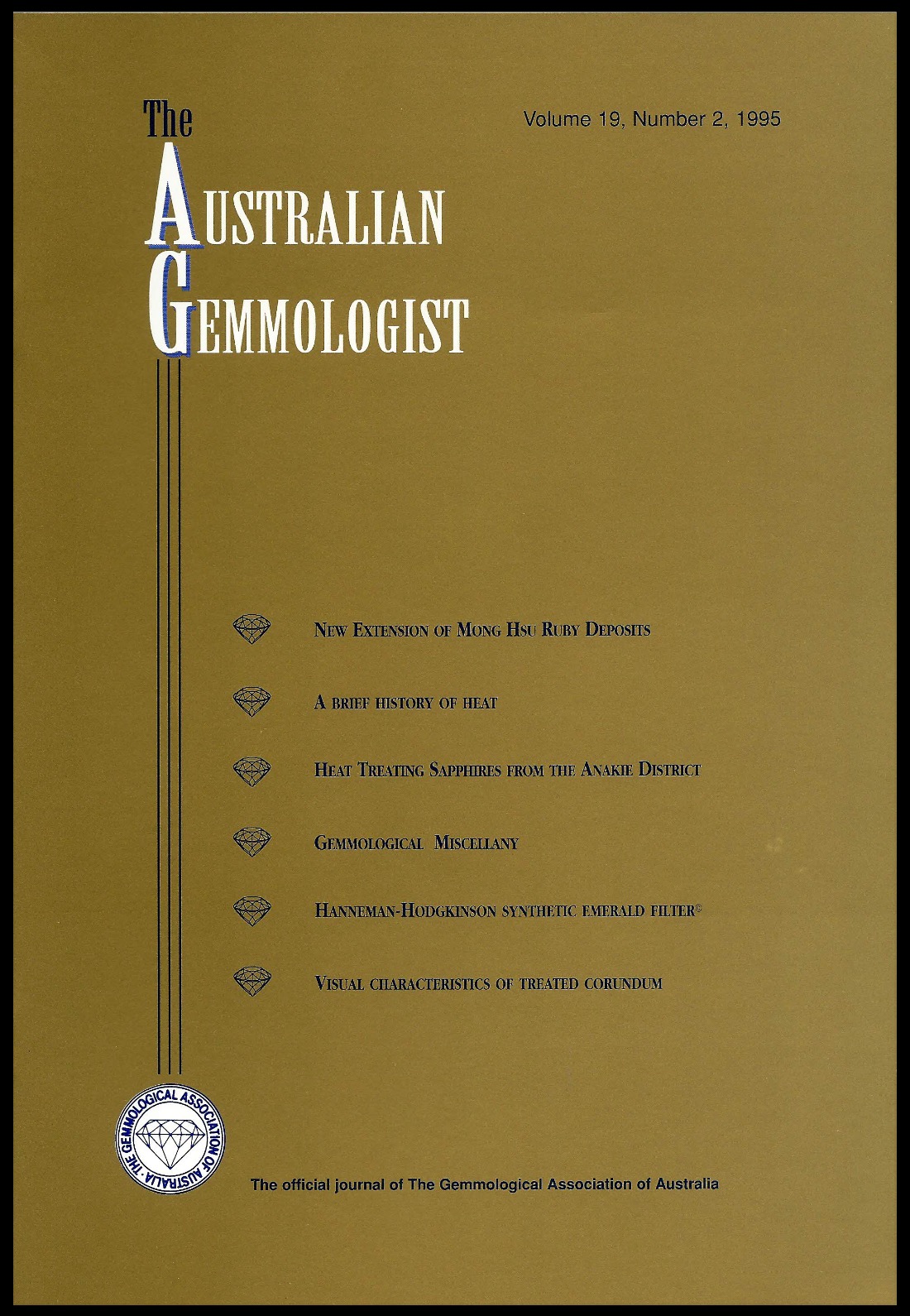
Australian ruby

Journal Article
Webb, G. (1995) Australian ruby. Australian Gemmologist, Vol. 19, No. 2, pp. 61, 63.
Record No. 1821  |  ISBN/ISSN: 49174  |  Sinkankas/Born No.: NIS / NIB  |  RWHL
View Individual Record ↗
Webb reports two unusual ruby specimens from the Inverell district of New South Wales, documenting the occurrence of ruby in an Australian gemfield better known for sapphire. The principal specimen is a faceted ruby weighing 1.41 ct, recovered by a fossicker panning in Swan Brook and subsequently retained in the private collection of its cutter. Staff of the Mineral Section of the Australian Museum examined the stone and regarded its combination of colour, quality and size as exceptional for the locality. The accompanying photograph illustrates the finished gem. Webb places this find in the context of other Australian ruby occurrences. Most Australian rubies were reported to come from the Harts Range, where the material is generally opaque and suitable for beads and cabochons. Faceting-quality ruby had also been found in the Barrington Tops area, although mining there had not been consistent. Ruby was described as a rare discovery in the sapphire fields of both Inverell and Anakie, making an attractive faceted example from either district a collector’s item. Examination of the Swan Brook stone established gemmological properties normal for ruby. It showed moderate fluorescence under long-wave ultraviolet radiation and was inert under short-wave ultraviolet radiation. A diffraction-grating spectroscope revealed a characteristic ruby spectrum, including three narrow bands in the blue region. The only inclusions observed were several partially healed fractures confined to a corner of the stone. The note also records an unusually large piece of pale ruby rough from Frazer’s Creek, Inverell, which museum staff had inspected a few weeks before examining the faceted specimen. This second ruby weighed 11.30 ct and was held by a local property owner. Together, the two specimens provide examples of the uncommon ruby component of the Inverell sapphire fields: one notable as a finished gem of unusual quality and the other for its relatively large size as rough. The report documents individual finds rather than sustained ruby production from the district.

Visual characteristics of heat treated corundum
Journal Article
Sechos, B. (1995) Visual characteristics of heat treated corundum. Australian Gemmologist, Vol. 19, No. 2, pp. 69–72.
Record No. 1571  |  ISBN/ISSN: 49174  |  Sinkankas/Born No.: NIS / NIB  |  RWHL
View Individual Record ↗
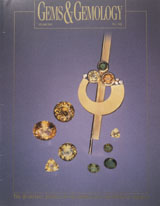
The visual identification of heat treatment in ruby and sapphire is reviewed through changes in ultraviolet fluorescence and the microscopic appearance of inclusions, illustrated by eight photomicrographs. Heating is used to improve clarity by dissolving rutile silk, modify or enhance colour, and sometimes develop asterism in titanium-rich material. Because treatment produces no appreciable changes in refractive index, birefringence, specific gravity, dichroism, or visible absorption spectra, examination of internal features provides the principal means of recognition. Ultraviolet responses offer supplementary evidence. The apricot fluorescence commonly observed in untreated yellow-orange, yellow, and colourless Sri Lankan sapphires is reduced or eliminated by heating. Some heated blue sapphires display patchy, chalky green fluorescence under short-wave ultraviolet light, potentially resembling Verneuil synthetic blue sapphire. In heated natural stones, however, this fluorescence is confined to colourless areas, while blue zones remain inert; the synthetic material is described as fluorescing evenly across its surface. Heated rubies may exhibit unusual patches of chalky white short-wave fluorescence in addition to their normal red response. Microscopic indicators include partial dissolution of rutile needles, thermal alteration of included crystals, and modification of secondary fluid inclusions. Long, continuous rutile needles oriented in the characteristic directions of corundum are presented as evidence of an untreated stone, although remnants of silk may survive heating. Unequal thermal expansion can produce roughly circular, glassy tension fractures around included crystals, sometimes with rims indicating incipient healing. Crystals may become white, rounded “snowballs”, develop surrounding zones of melted material, or form negative crystals containing colourless or brown glass. In rubies, these altered inclusions may occur within partially healed fractures. Heating can also remove reddish orange staining from secondary fluid inclusions and transform their tubular liquid channels into strings of droplets that follow the original pathways. Surface diffusion treatment is considered separately because its colour is concentrated in a shallow surface layer that may be removed by repolishing. Diagnostic features include stronger colour at the girdle and facet edges, unequal colour concentration between facets, and colour extending into surface-reaching fractures or around inclusions connected to them. These features are most readily examined by immersion in methylene iodide under a microscope with diffused illumination; a dark-field arrangement fitted with a diffuser can reveal many of the same characteristics when immersion is unavailable. The article emphasises practical recognition using ordinary gemmological magnification, ultraviolet examination, and immersion techniques.

GIA Gem Trade Lab Notes: Large synthetic ruby
Journal Article
Reintiz, I. (1995) GIA Gem Trade Lab Notes: Large synthetic ruby. Gems & Gemology, Vol. 31, No. 3, Fall, p. 203.
Record No. 1474  |  ISBN/ISSN: 0016626X  |  Sinkankas/Born No.: NIS / NIB  |  RWHL
View Individual Record ↗
This past summer, a manufacturer of synthetic corundum shared the Czochralski-pulled synthetic ruby shown in figure 20 with staff mem-bers of the East Coast lab. The modi-fied triangular mixed cut weighed 115.56 ct and was completely trans-parent, with a strong red color that had no purple or brown components. Although natural ruby may be found in large sizes, it usually contains so many inclusions that the diaphaneity is translucent rather than transparent, One area of the pavilion of this large synthetic showed fine curved striae, but otherwise it was free of inclusions or variations in color. Because of the large size and trans-parency, a slight doubling of the pavilion facet junctions-a rare sight in corundum, which has low birefrin-gence-was visible through the table. The manufacturer of this synthetic ruby reports that he is using a new process in which growth is controlled on a scale of several inches, with the goal of producing material that is entirely free of inclusions or disrup-tions of the crystal structure (such as twinning or graining) up to sizes as large as 500+ ct.

Gem Trade Lab Notes: Synthetic sapphire, color-change with twin lamellae
Journal Article
Kammerling, R.C. (1995) Gem Trade Lab Notes: Synthetic sapphire, color-change with twin lamellae. Gems & Gemology, Vol. 31, No. 2, Summer, p. 127.
Record No. 1075  |  ISBN/ISSN: 0016626X  |  Sinkankas/Born No.: NIS / NIB  |  RWHL
View Individual Record ↗
An unusual colour-change synthetic sapphire demonstrates that twin lamellae, although commonly associated with natural corundum, cannot independently establish natural origin. The specimen, examined at the GIA Gem Trade Laboratory’s West Coast facility in November 1994, was a transparent emerald-cut stone weighing 1.43 ct and measuring approximately 6.85 × 5.73 × 3.80 mm. It appeared bluish green under daylight-equivalent fluorescent illumination and pinkish purple under incandescent light. This behaviour resembled that of the vanadium-doped, flame-fusion synthetic sapphires frequently submitted to the laboratory, sometimes in the mistaken belief that they are natural or synthetic alexandrite. Such synthetic corundum is normally identified without difficulty by a vanadium-related absorption band near 474 nm and curved growth striae visible under magnification with darkfield illumination. In the reported specimen, initial binocular microscopic examination revealed neither solid mineral inclusions nor cavities such as gas bubbles or negative crystals. Instead, a conspicuous series of laminated twin planes was readily visible through the table facet. Although the author emphasises that twinning does not prove natural origin, its presence could have encouraged that interpretation because it is an uncommon feature in flame-fusion synthetic corundum. Continued examination from different directions resolved the apparent contradiction: observation through the pavilion facets revealed curved striae, establishing the stone’s synthetic origin. The note places this finding alongside earlier published accounts of polysynthetic twinning in Verneuil corundum and reviews other atypical internal features that can complicate identification. These include undissolved alumina, triangular cavities containing gas bubbles and needle-like inclusions. Their occurrence shows that synthetic corundum may contain features that differ from the familiar curved striae and rounded bubbles expected in routine examination. The principal diagnostic lesson is therefore methodological: an identification should not rest on the first inclusion or structural feature observed. All internal characteristics must be evaluated together, and the gemstone should be examined from several viewing angles before a conclusion is reached. In this case, the combination of unusual twinning with diagnostic curved growth striae illustrates the importance of a thorough microscopic investigation.

Gem Trade Lab Notes: Cat’s-eye sapphire
Journal Article
Kammerling, R.C. (1995) Gem Trade Lab Notes: Cat’s-eye sapphire. Gems & Gemology, Vol. 31, No. 2, Summer, pp. 126–127.
Record No. 1074  |  ISBN/ISSN: 0016626X  |  Sinkankas/Born No.: NIS / NIB  |  RWHL
View Individual Record ↗
An unusual natural cat’s-eye sapphire examined by the GIA Gem Trade Laboratory demonstrates chatoyancy produced by aligned fluid inclusions rather than the rutile needles commonly responsible for asterism in corundum. The specimen, submitted to the West Coast laboratory for identification in early 1995, was a semitransparent oval cabochon weighing 1.91 ct and measuring 13.99 × 5.19 × 2.54 mm. It had a mottled greenish blue colour and displayed a distinct cat’s-eye effect across its domed surface. Standard gemmological testing established its identity as natural sapphire. The note places the observation in the context of the relative frequency of optical phenomena in corundum: asterism is fairly common, whereas chatoyancy is encountered only rarely. In the laboratory’s experience, an apparent cat’s-eye effect in either natural or synthetic corundum usually results from the orientation chosen during cutting of an asteriated stone. When the star’s axis is positioned off-centre, only one ray extends across the cabochon dome, giving the appearance of a single eye. Microscopic examination of the submitted sapphire revealed a different explanation. The stone contained almost no needle-like rutile crystals, prompting investigation of other internal features capable of producing the observed effect. Instead, it contained numerous approximately planar, mutually parallel, liquid-filled inclusions described as fingerprints. The accompanying photomicrograph illustrates these as parallel liquid-filled channels. Light scattering from this aligned inclusion system was identified as the cause of chatoyancy. Examination also revealed diffuse colour halos surrounding crystal inclusions, which were interpreted as evidence that the sapphire had undergone heat treatment. The report therefore documents both an uncommon inclusion-related optical effect and microscopic evidence of treatment in the same natural stone. Its principal finding is that a distinct eye in sapphire can originate from parallel fluid-filled structures, providing an alternative to the more usual explanation involving the cutting orientation of a star-bearing corundum cabochon.

GIA Gem Trade Lab Notes: Corundum, diffusion treated
Journal Article
Hurwit, K. (1995) GIA Gem Trade Lab Notes: Corundum, diffusion treated. Gems & Gemology, Vol. 31, No. 3, Fall, pp. 196–197.
Record No. 1027  |  ISBN/ISSN: 0016626X  |  Sinkankas/Born No.: NIS / NIB  |  RWHL
View Individual Record ↗

New extension of Mong Hsu ruby deposit
Journal Article
U Tin Hlaing (1995) New extension of Mong Hsu ruby deposit. Australian Gemmologist, Vol. 19, No. 2, p. 51.
Record No. 991  |  ISBN/ISSN: 49174  |  Sinkankas/Born No.: NIS / NIB  |  RWHL
View Individual Record ↗
A newly discovered ruby occurrence approximately 10 km north of the intensively worked Mong Hsu deposit in Myanmar is described as a possible extension of that field. The unnamed locality lies about two and a half hours’ walking distance from Mong Hsu along mountain ranges. Preliminary information derives from specimens collected in mid-December 1994 by a gemmology student from Taunggyi University, together with subsequent reports from the area. A bulk sample weighing 570 carats contained ruby and several associated minerals. Tourmaline accounted for approximately 10% of the sample, while quartz, pyrite, tremolite and bismutite were also recorded. Reports of pegmatite veins dipping westwards at approximately 25–30° contrast with the eastward dips of 20–25° cited for Mong Hsu. The note records this structural difference without establishing the geological relationship between the two occurrences. Two promising ruby specimens were fashioned into cabochons and produced attractive stones of better quality than initially anticipated. No characteristic inclusions had been recognised in the specimens examined at the time of reporting. Most ruby crystals were broken and sharp-edged, ranging from flesh red to brick red and from translucent to nearly opaque. Their surfaces displayed pits and etched lines filled with iron oxides. Dark cores resembling those familiar in Mong Hsu ruby were observed, providing one point of comparison with the established deposit. The sample also included complete, dark, lustrous prismatic crystals. Accessory crystals occurred on ruby prism faces, predominantly oriented parallel to those faces, although some projected outwards. Green tourmaline was recovered as an additional component of the assemblage, with the largest reported piece weighing three carats. As of April 1995, an exploratory party from the government Department of Geological Survey and Mineral Exploration was investigating the locality to assess its potential as a future ruby resource. The account presents an early description of the material’s appearance, associated minerals and reported structures, while leaving the proposed extension and its commercial significance subject to further exploration.

The Cheapside Hoard confusion

Journal Article
Gosling, J.G. (1995) The Cheapside Hoard confusion. Journal of Gemmology, Vol. 24, No. 6, April, pp. 395–400.
Record No. 838  |  ISBN/ISSN: 221252  |  Sinkankas/Born No.: NIS / NIB  |  RWHL
View Individual Record ↗
Reviews conflicting accounts of the discovery and recovery of the Cheapside Hoard, a collection of approximately 340 jewellery items unearthed in London in 1912, and combines this historical investigation with descriptions of exceptional gemstones and workmanship. The hoard is interpreted as the stock of a Jacobean goldsmith, pawnbroker or dealer, buried under unknown circumstances in the early seventeenth century. Gosling compares museum catalogues, historical studies, newspaper tributes and recollections that disagree over the precise location, date, container and manner of recovery. Reports variously describe a decayed wooden box, a bucket, or jewels embedded in lumps of clay, while the absence of a direct account of the actual excavation prevents a definitive reconstruction. Central to the story is G.F. Lawrence, known as “Stony Jack”, whose relationships with building labourers enabled him to recover archaeological objects for London museums. Accounts portray him purchasing finds from workmen and receiving successive deliveries of clay-encrusted jewellery at his Wandsworth premises. The article highlights both his contribution to preserving the hoard and the unresolved details surrounding ownership, payments and Treasure Trove claims. Institutional disputes delayed agreement until 1916, when the collection was divided principally between the London and Guildhall museums, with smaller holdings elsewhere. Their later amalgamation reunited most of the material in the Museum of London. Gemmological notes describe a watch enclosed in Colombian emerald, identified by characteristic multiphase inclusions; a table-cut diamond estimated at three to four carats with a modified scissors-cut pavilion; and a hexagonal sapphire displaying rutile silk, pronounced growth zoning and an unusual combination of crown facets and a stepped pavilion. The sapphire’s appearance and setting are compared with those of the Stuart Sapphire. Amethyst and emerald grape pendants illustrate sophisticated lapidary methods, apparently involving intersecting annular drillings followed by removal of intervening material and rounding of the exposed ends. Gosling also considers how damp clay beneath a chalk cellar floor could explain decay of the container and dispersal of its contents. He concludes that the surviving uncertainties justify a new authoritative illustrated catalogue and consideration of further reunification of the collection, while recognising its importance as evidence of Elizabethan and Jacobean jewellery, gem cutting and material culture.

Gem Trade Lab Notes: Synthetic ruby, with diffusion-induced “fingerprint” inclusions and asterism
Journal Article
Crowningshield, G.R. (1995) Gem Trade Lab Notes: Synthetic ruby, with diffusion-induced “fingerprint” inclusions and asterism. Gems & Gemology, Vol. 31, No. 2, Summer, p. 126.
Record No. 640  |  ISBN/ISSN: 0016626X  |  Sinkankas/Born No.: NIS / NIB  |  RWHL
View Individual Record ↗

Gem Trade Lab Notes: Sapphire with diffusion-induced color and star
Journal Article
Crowningshield, G.R. (1995) Gem Trade Lab Notes: Sapphire with diffusion-induced color and star. Gems & Gemology, Vol. 31, No. 1, Spring, pp. 56–57.
Record No. 639  |  ISBN/ISSN: 0016626X  |  Sinkankas/Born No.: NIS / NIB  |  RWHL
View Individual Record ↗

Ancient Astrological Gemstones & Talismans
Book
Brown, R.S. (1995) Ancient Astrological Gemstones & Talismans. Bangkok, A.G.T. Co., Ltd., 148 pp.
Record No. 535  |  ISBN/ISSN: 9748902242  |  Sinkankas/Born No.: NIS/NIB  |  RWHL
View Individual Record ↗
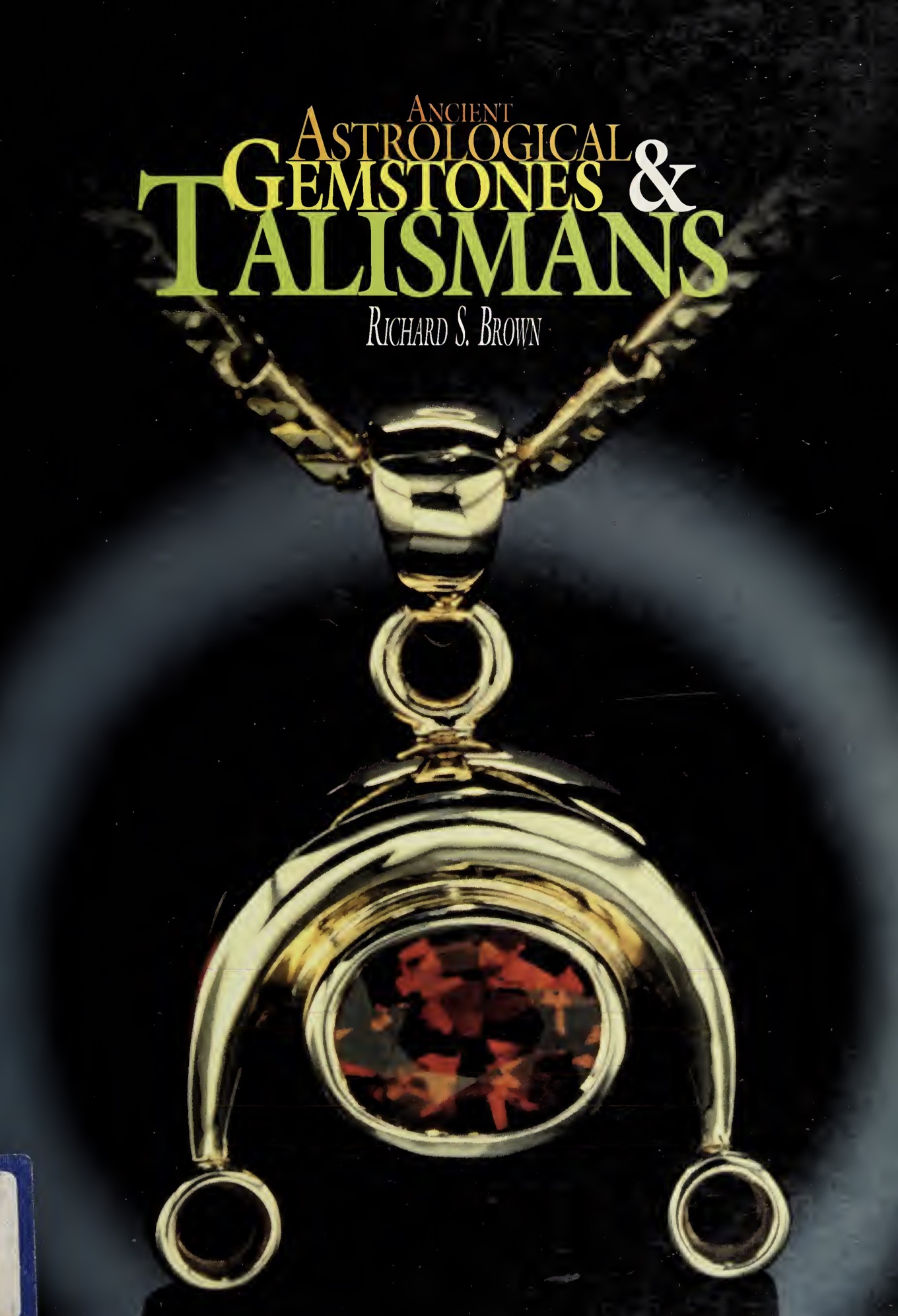
Richard Shaw Brown’s Ancient Astrological Gemstones & Talismans: The Complete Science of Planetary Gemology is an extensively illustrated examination of the traditional relationship between gemstones, planetary influences, and talismanic jewelry, drawing principally upon Hindu astrological and religious literature. Compiled from research undertaken in Asia between 1968 and 1994, the book seeks to reconcile ancient Vedic concepts of gemstone efficacy with modern gemological terminology and the practical manufacture of gemstone talismans. Brown describes the system of navaratna, or nine gems, in which particular gemstones correspond to the nine celestial influences recognized in Indian sidereal astrology (jyotisha). These associations comprise ruby for the Sun, natural pearl for the Moon, red coral for Mars, emerald for Mercury, yellow sapphire for Jupiter, diamond for Venus, blue sapphire for Saturn, hessonite garnet for Rahu, and cat’s-eye chrysoberyl for Ketu. Rahu and Ketu represent the ascending and descending lunar nodes rather than physical planets. The author explains the traditional belief that gemstones transmit or enhance planetary influences through their colors and other supposed energetic properties, thereby affecting health, prosperity, relationships, spiritual development, and personal fortune. Particular importance is attached to the quality of the gemstones selected for astrological purposes. Brown argues that natural, untreated gemstones possessing excellent color, transparency, and freedom from visible defects are essential for producing beneficial effects, whereas heavily included, flawed, synthetic, or otherwise unsuitable stones may be ineffective or potentially inauspicious according to traditional interpretations. The discussion distinguishes these principles from modern commercial birthstone lists, which the author regards as having little connection with authentic astrological practice. Gemological characteristics, including gemstone identity, color, clarity, and physical properties, are considered alongside their symbolic and religious significance. Considerable attention is devoted to the design and manufacture of talismans, particularly the selection and arrangement of gemstones in gold settings incorporating planetary symbols and traditional motifs. The book discusses the importance of individual horoscopes in selecting appropriate stones, together with the relationships between planetary deities, gemstones, colors, and the circumstances considered favorable for their use. Ancient Sanskrit sources, including the Garuda Purana and other works on gemstones and astrology, provide the historical and religious framework for the author's interpretations. The publication contains 161 color plates illustrating gemstones, gemstone-set rings, pendants, and elaborate talismanic ornaments, emphasizing both the visual beauty of the materials and their traditional astrological associations. A glossary and bibliography supplement the discussion. Although Brown presents planetary gemology as a science, the proposed astrological and therapeutic effects of gemstones have not been established through reproducible scientific evidence and must be distinguished from their objectively measurable mineralogical and optical properties. For gemologists and historians of jewelry, the book is particularly valuable as a record of South Asian gemstone traditions, historical beliefs concerning gem quality, the association of individual gem species with planetary deities, and the continuing influence of religious and astrological concepts upon gemstone selection, jewelry design, and marketing in contemporary Asia.

The Art & History of the Book

Book
Levarie, N. (1995) The Art & History of the Book. New Castle, DE, Oak Knoll Press, 315 pp.
Record No. 122  |  ISBN/ISSN: 1884718027  |  Sinkankas/Born No.: NIS/NIB  |  RWHL
View Individual Record ↗
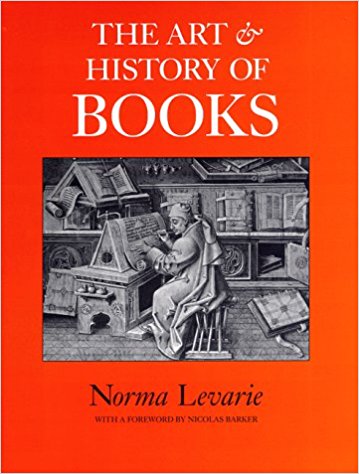
Norma Levarie’s The Art & History of Books, originally published in 1968 and reissued by Oak Knoll Press and the British Library in 1995 with a new foreword by Nicolas Barker, is an extensively illustrated survey of the development of the book as an artistic, intellectual, and material object. Rather than treating the history of printing solely as a sequence of technological innovations, Levarie examines the relationship between book design and the changing religious, political, economic, and cultural circumstances of the societies that produced books. The study ranges from the earliest surviving examples of written and illustrated books to twentieth-century publishing, considering the evolution of manuscript production, typography, illustration, page composition, and the aesthetic principles governing the relationship between text and image. Particular attention is given to the transformation from manuscript to printed book and the ways in which printers, artists, publishers, and patrons adapted established artistic conventions to new methods of reproduction. The introduction of movable-type printing in fifteenth-century Europe is considered within the broader history of bookmaking, emphasizing both its revolutionary consequences and its continuity with earlier manuscript traditions. Levarie examines the influence of Renaissance humanism, religious reform, expanding literacy, and changing patterns of patronage upon the appearance and production of books. The study follows the development of European printing through successive centuries, addressing the interaction between typography, illustration, decorative ornament, and the increasingly specialized professions associated with book production. Illustrated books receive particular emphasis, including the artistic possibilities offered by different reproductive techniques and the contributions of artists and designers to the visual character of printed works. The changing relationship between publisher, printer, illustrator, and reader is examined alongside improvements in printing technology and the emergence of new markets for books. The discussion extends beyond European printing to consider bookmaking traditions in other parts of the world, placing Western developments within a broader cultural and artistic context. One of the publication’s principal strengths is its extensive visual documentation, comprising 176 facsimile pages reproduced from books selected for their unusual beauty, historical significance, or distinctive design. Many examples were photographed specifically for the original publication, allowing readers to examine the arrangement of type, illustrations, margins, ornament, and other elements of page design. These reproductions are integral to the author’s argument that the history of the book cannot be understood independently of the physical and visual qualities of surviving examples. The volume itself demonstrates the principles under discussion through its carefully considered typography, page layout, and relationship between illustrations and explanatory text. The 1995 edition preserves the original study while adding Barker’s introductory perspective and an updated bibliography. Although the work is not specifically concerned with gemology, it provides valuable historical context for the study of early mineralogical, scientific, and gemological publications, particularly their typography, engraved illustrations, printing methods, and changing standards of book design. For bibliographers and collectors of historical gemological literature, the volume offers a useful framework for understanding the artistic and technological circumstances in which illustrated books were produced, as well as the importance of their physical characteristics in bibliographic description and historical interpretation.

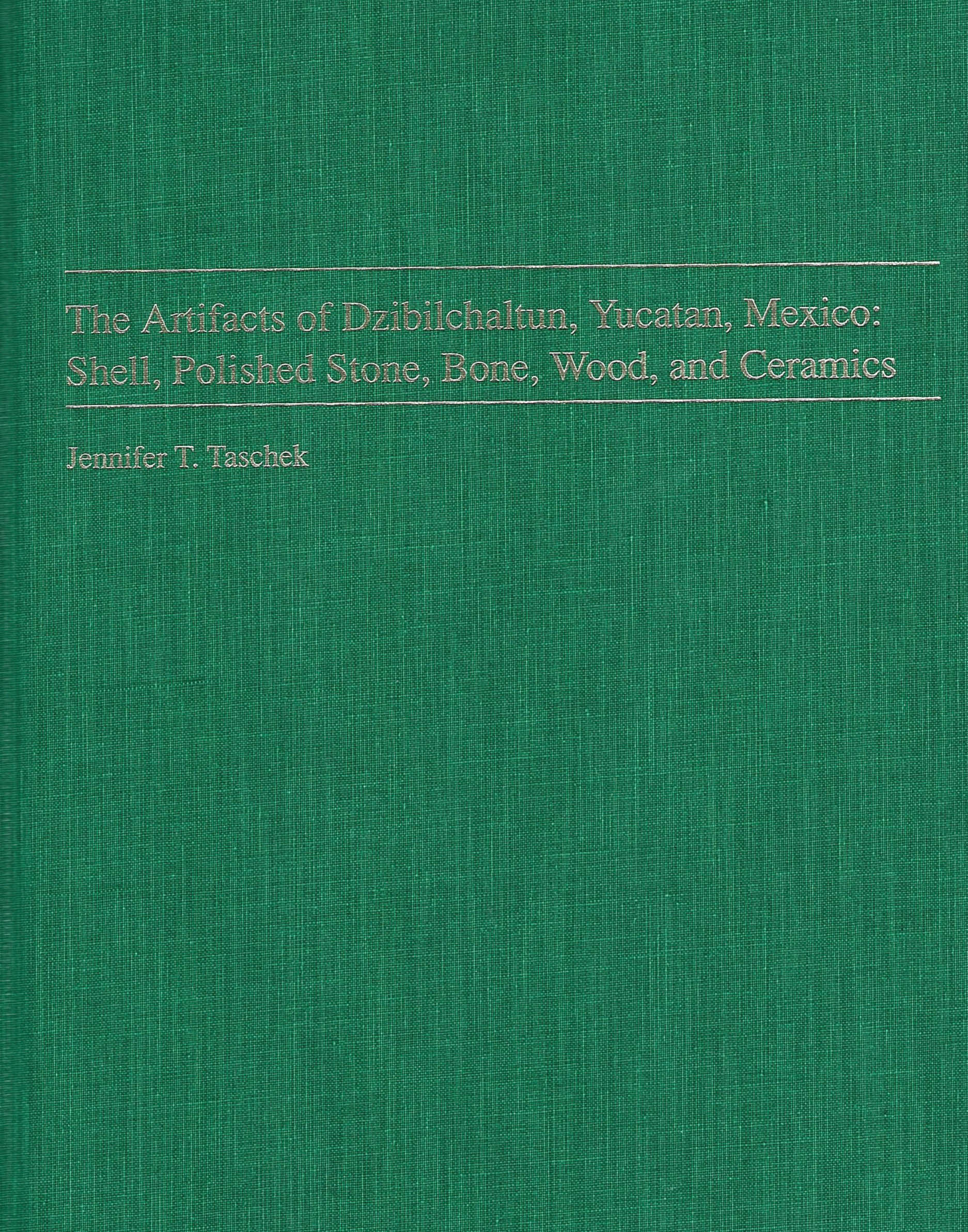
The Artifacts of Dzibilchaltun, Yucatan, Mexico: Shell, Polished Stone, Bone, Wood and Ceramics

Book
Taschek, J.T. (1994) The Artifacts of Dzibilchaltun, Yucatan, Mexico: Shell, Polished Stone, Bone, Wood and Ceramics. New Orleans, Middle American Research Institute, Publication No. 50 , 304 pp.
Record No. 28640  |  ISBN/ISSN: 939238802  |  Sinkankas/Born No.: NIS / NIB  |  RWHL
View Individual Record ↗
The 1957-1965 Tulane University excavations at Dzibilchaltun recovered thousands of artifacts of many materials. Most of these objects date to the Late Classic period (Early period II and the Pure Florescent, ca. A.D. 700-1000), when the community of more than 25,000 persons covered 16 km2, but the collection spans the years from 600 B.C. until the arrival of the Spanish. It is the only large excavated collection of artifacts from a northern Maya site to cover this large a part of the prehispanic past.

Building a Gemological Library

Gemological books range from general identification manuals and textbooks to specialized works on individual gems, mineralogy, jewelry, treatments, synthesis, history and gem-producing regions.

For a curated selection of particularly useful books, read The Gemologist's Core Library — Classic Books on Gemology, Jewelry and Mineralogy.

About Four Treasures

Four Treasures is Lotus Gemology's freely accessible gemological reference database. Use the full database to search by author, title or keyword and explore literature on gemology, mineralogy, jewelry and related fields. Where available, hyperlinks on titles may lead directly to the full publication.

Search the Complete Four Treasures Database