Gemstone Inclusions Bibliography

Gemstone Inclusions Bibliography

Explore books, articles and historical sources on inclusions in gemstones in Four Treasures, the Lotus Gemology reference database. This bibliography brings together matching records from the collection, with publication details, abstracts and cover images where available.

Gemstone Inclusion References

The list below matches the terms inclusion or inclusions in the database's searchable fields. Some references discuss inclusions as part of a broader subject.

261–280 of 1,111 matching references
Rubine aus dem Pamir-Gebirge, UdSSR

Rubine aus dem Pamir-Gebirge, UdSSR

Rubies from the Pamir Mountains, USSR

Henn, U., Bank, H. and Bank-Scherner, M. (1990)

Journal Article · Source: Zeitschrift der Deutschen Gemmologischen Gesellschaft · Volume: Vol. 39 · Issue: No. 4 · Pages: pp. 201–205 · Language: In German

Abstract
Describes gem-quality rubies from a marble-hosted deposit in the Pamir Mountains of the then USSR, near the Chinese border. The stones range from red through reddish to violet-red and have SG 3.98, refractive indices nₑ 1.761–1.762 and nₒ 1.769–1.770, and birefringence 0.008. Microscopic features include twinning lamellae, healed fissures, fluid inclusions, rutile dust and distinct growth striae. Trace-element analysis detected chromium, iron and titanium; absorption spectra show the characteristic chromium bands, and the stones exhibit strong red fluorescence.
Keywords
corundum, ruby, USSR.12, Tajikistan.12, inclusions.5, gems
Ein gravieter Kashmir-saphir

Ein gravieter Kashmir-saphir

An engraved Kashmir sapphire

Diehl, R. and Meng, K.H. (1990)

Journal Article · Source: Zeitschrift der Deutschen Gemmologischen Gesellschaft · Volume: Vol. 39 · Issue: No. 4 · Pages: pp. 193–200 · Language: In German

Abstract
Describes an unusual engraved Kashmir sapphire weighing 6.175 ct and measuring 12.19 × 10.04 × 5.32 mm. The antique-cut stone has 32 crown facets, a thin girdle and a pavilion arranged in four groups of 16 facets. Its characteristic silk and microscopic inclusions establish its Kashmir origin. The engraving depicts a lion seated upon a crown and was produced with fine diamond points using non-rotating tools. The complexity of the design would have made the seal difficult to counterfeit, and evidence indicates that the sapphire was repeatedly used as an official seal. Diehl and Meng suggest that it may have belonged to an Indian ruling family, possibly Sikh, although neither its precise provenance nor its age could be established.
Keywords
corundum, sapphire, Kashmir.12, India.12, gems
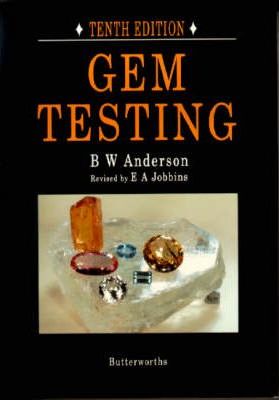
Gem Testing

Gem Testing

Anderson, B.W. and Jobbins, E.A. (1990)

Book · Publisher: Butterworths · Pages: 390 pp.

Abstract
Anderson’s Gem Testing is one of the most important gemology books of the 20th century. Revised many times as gemology changed, after his death, Alan Jobbins continued the tradition. Not surprisingly, this is the best of the editions, and should be on the shelf of every gemologist. In 2013, Anderson was named in the French Association of Gemmology’s 50 most influential gemmologists of all time.
Keywords
corundum, ruby, sapphire, synthetic corundum.7, treatments.6, properties.3, color.4, inclusions.5, gems
A contribution to the distinguishing characteristics of sapphire from Kashmir

A contribution to the distinguishing characteristics of sapphire from Kashmir

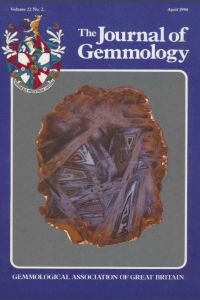
Hänni, H.A. (1990)

Journal Article · Source: Journal of Gemmology · Volume: Vol. 22 · Issue: No. 2, April · Pages: pp. 67–75

Abstract
This investigation was undertaken to contribute to the knowledge of sapphire from Kashmir, and over 50 cut stones were studied. Comparison of the observed inclusions with those described in other publications, identified in part using the scanning electron microscope SEM/EDS, confirmed the results of earlier findings (tourmaline, pargasite and zircon inclusions). In addition, some internal characteristics are newly described: plagioclase, uraninite, allanite and rutile (P) occurring in various forms, healed fissures and zoned growth. Spectral properties are presented. The significance of origin reports is discussed.
Keywords
India.12, Kashmir.12, inclusions.5, gems
Ein Beitrag zu den Erkennungsmerkmalen der Kaschmir-Saphire

Ein Beitrag zu den Erkennungsmerkmalen der Kaschmir-Saphire

A contribution to the identification features of Kashmir sapphires

Hänni, H.A. (1990)

Journal Article · Source: Zeitschrift der Deutschen Gemmologischen Gesellschaft · Volume: Vol. 39 · Issue: No. 2/3 · Pages: pp. 107–120 · Language: In German

Abstract
Hänni examines more than 50 faceted Kashmir sapphires to establish reliable criteria for determining geographic origin. Microscopic investigation, supplemented in some cases by SEM-EDS analysis, confirms previously reported mineral inclusions including tourmaline, pargasite and zircon, while identifying additional inclusions such as plagioclase, uraninite, allanite and probable rutile. Other characteristic internal features include healed fissures, growth structures and zoning. The study also discusses spectral characteristics of Kashmir sapphire and the causes of its characteristic velvety appearance, which may involve growth disturbances, healed fissures, light scattering from inclusions and extremely fine fluid or mineral particles. Hänni stresses that “Kashmir sapphire” denotes geographic origin rather than a particular quality or color, and discusses the limitations and significance of laboratory origin determinations.
Keywords
India.12, Kashmir.12, inclusions.5, corundum, sapphire, gems
Origin and classification of Pakistani and world emerald deposits

Origin and classification of Pakistani and world emerald deposits

Snee, L.W. and Kazmi, A.H. (1989)

Book Section · Source: Emeralds of Pakistan: Geology, Gemology and Genesis · Publisher: Geological Survey of Pakistan and Van Nostrand Reinhold · Pages: pp. 229–236

Abstract
Emerald, formed by the substitution of a small amount of chromium for aluminum in the beryl crystal structure (Deer et al., 1986), results from rare geological conditions. While beryl—the most common beryllium-bearing mineral—is itself uncommon and primarily found in late-stage igneous rocks like pegmatites, emerald is even rarer due to the geochemical incompatibility between its two essential components: chromium and beryllium. Beryllium, with a small ionic radius (0.3 Å; Shannon and Prewitt, 1969) and a low crustal abundance (less than 5 ppm per Wedepohl, 1978; or less than 3.5 ppm according to Beus, 1965), is generally absent from the chromium-rich, ultramafic rocks where chromium resides in significant concentrations. Thus, emerald formation requires exceptional conditions that bring these two incompatible elements together, making emerald one of the rarest and most valuable gemstones. In Pakistan, a unique sequence of geological events created such conditions. The first three chapters of this book summarize these large-scale events, while chapters four through seven examine clues about emerald formation revealed through the physical and chemical characteristics of the crystals and the morphology and physicochemical formation conditions of their inclusions. Chapter 8 reviews the geology of other global emerald deposits. This cumulative analysis reveals a broader understanding of both Pakistani and global emerald genesis. The concluding chapter summarizes the characteristics of Pakistani emeralds and uses this data to formulate a theory of their origin, then proposes a classification scheme based on the geologic setting of global emerald deposits, developing it into a hypothesis for the genesis of all emeralds. Finally, suggestions for future research are offered to further elucidate emerald formation processes.
Keywords
beryl, emerald, Pakistan, gems, pegmatitic emerald, emerald geology
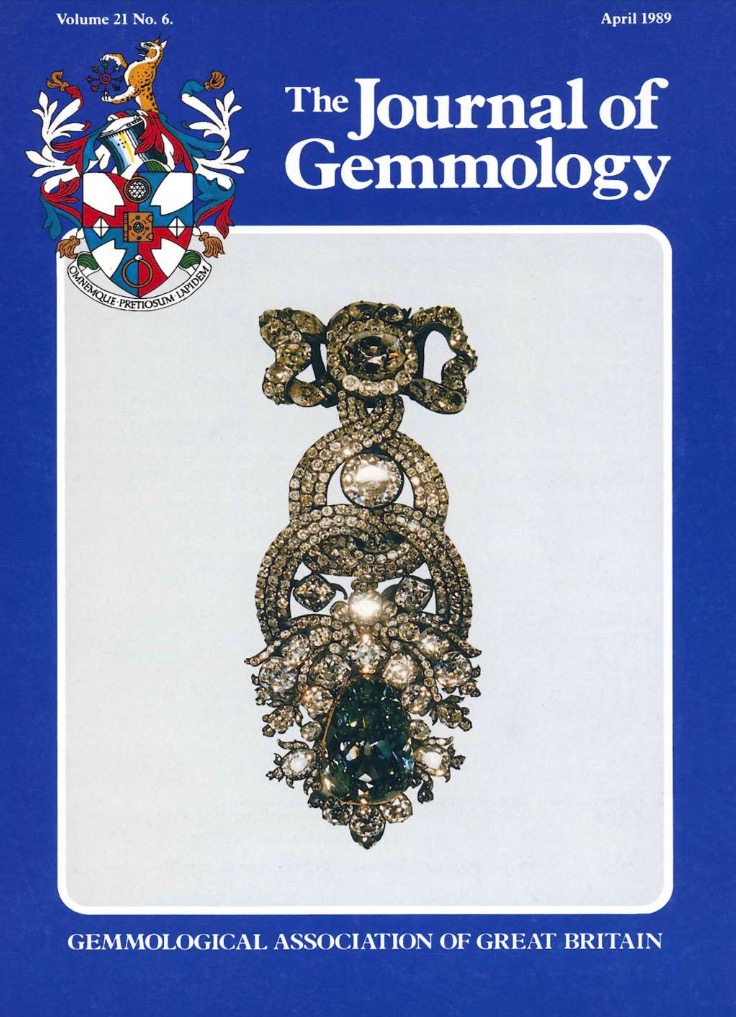
Methods for the distinction of natural and synthetic citrine and prasiolite

Methods for the distinction of natural and synthetic citrine and prasiolite

Schmetzer, K. (1989)

Journal Article · Source: Journal of Gemmology · Volume: Vol. 21 · Issue: No. 6, April · Pages: pp. 368–391

Abstract
Different types of natural and synthetic citrine are characterized by a combination of absorption spectroscopy in the visible and ultraviolet range with microscopic investigations of structural properties such as twinning, growth structures, colour zoning, as well as orientated channel-like inclusions or orientated striations. Most natural citrines used in the trade are heat-treated natural amethysts; however, non-artificially-irradiated, non-heat-treated or heat-treated as well as irradiated and possibly heat-treated natural quartz is also found. Most synthetic citrines of the trade are different types of Fe-bearing as well as Fe- and Co-containing quartz crystals, which are grown hydrothermally from K₂CO₃-bearing solutions with or without additional oxidizers. Both methods reveal a number of typical features which indicate artificial irradiation and/or heat treatment. The colour of natural and synthetic citrine is caused by traces of iron and/or cobalt, as well as by radiation-induced colour centres. According to colour causes and treatment histories, natural and synthetic citrines are classified into different categories. Trace element analyses of synthetic citrine can indicate growth media and oxidizers used in the working solution.
Keywords
gems, quartz, synthetic quartz, synthetic amethyst, hydrothermal, polysynthetic twinning
Emerald and gold treasures of the Spanish galleon Nuestra Señora de Atocha

Emerald and gold treasures of the Spanish galleon Nuestra Señora de Atocha

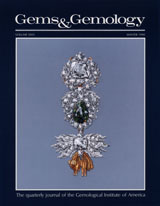
Kane, R.E., Kammerling, R.C., Moldes, R., Koivula, J.I., McClure, S.F. and Smith, C.P. (1989)

Journal Article · Source: Gems & Gemology · Volume: Vol. 25 · Issue: No. 4, Winter · Pages: pp. 196–206

Abstract
During the 1970s and 1980s, treasure hunters discovered the centuries-old re-mains of the sunken Spanish galleons Nuestra Senora de Atocha and Santa Mar-garita. Not only did they find massive amounts of silver and gold in coins, bars, and chains, but they also uncovered a number of rough emeralds and several pieces of emerald-set jewelry. Recently, some of the treasures recovered from the Atocha were examined at the Santa Monica office of the GIA Gem Trade Lab-oratory. Gemological testing of the emer-alds revealed inclusions typical of stones mined in Colombia as well as possible ev-idence of extended submersion in s e w -ter. Study of the jewelry revealed a high-karat gold content and fine workmanship that represented methods typical of the era.
Keywords
gems, beryl, emerald, Colombia, gold, shipwrecks, Florida Keys
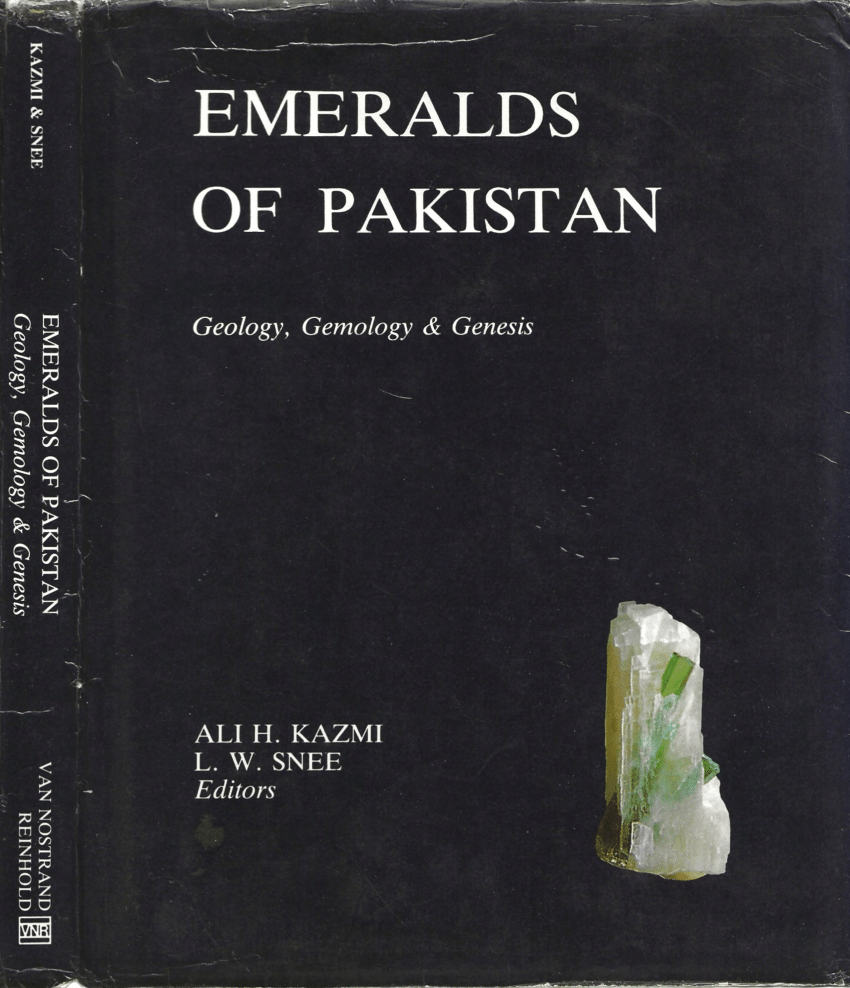
Emeralds of Pakistan: Geology, Gemology and Genesis

Emeralds of Pakistan: Geology, Gemology and Genesis

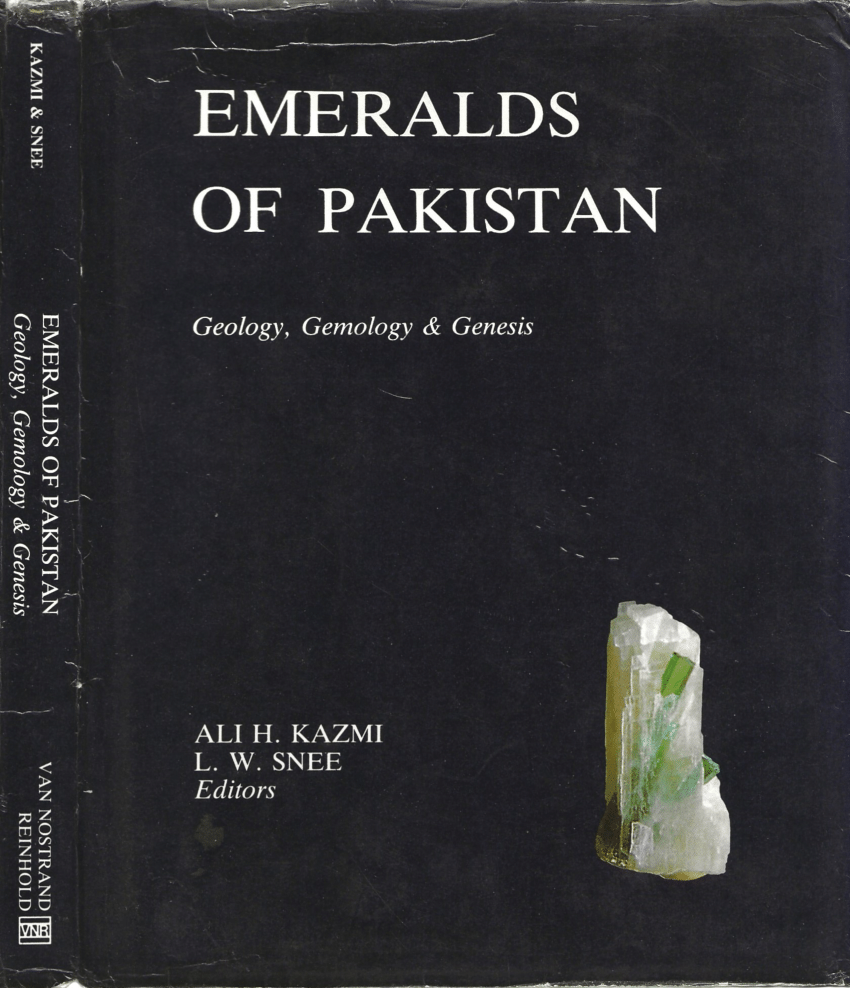
Kazmi, A.H. and Snee, L.W. (1989)

Edited Book · Publisher: Geological Survey of Pakistan and Van Nostrand Reinhold · Pages: 269 pp.

Abstract
This is a comprehensive study of emeralds and emerald deposits in Pakistan. Nine chapters include: a review of geology and metallogenic provinces of Pakistan; geological setting of Pakistani emerald deposits; detailed description of each of the Pakistani emerald deposits known before 1989; gemological characteristics of Pakistani emeralds; regional chemical differences among emeralds and host rocks of Pakistan and Afghanistan; mineral chemistry of emeralds and associated minerals; a fluid inclusion study; geology of world emerald deposits; and origin and classification of Pakistani and world emerald deposits. The book also includes a comprehensive bibliography of the emerald deposit literature up to 1989. With color photos by E.J. Gübelin
Keywords
beryl, emerald, Pakistan, gems
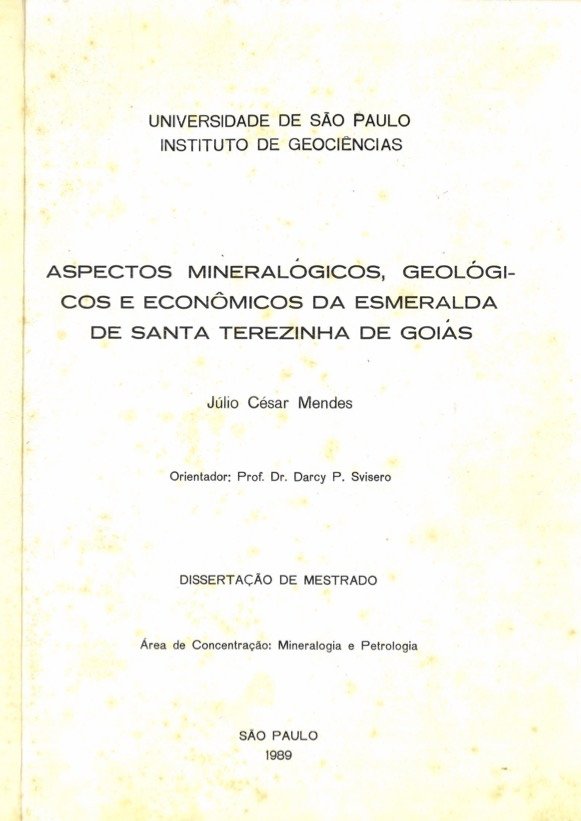
Aspectos Mineralogicos, Geológicos e Econômicos da Esmeralda de Santa Terezinha de Goiás

Aspectos Mineralogicos, Geológicos e Econômicos da Esmeralda de Santa Terezinha de Goiás

Mineralogical, Geological and Economic Aspects of the Emerald of Santa Terezinha de Goiás

Cesar-Mendes, J. (1989)

Thesis · Publisher: Universidade de São Paulo · Volume: Master’s Thesis · Pages: 163 pp. · Language: in Portuguese

Abstract
A detailed mineralogical, geological and economic study of the Santa Terezinha de Goiás emerald deposits, situated about 23 km northeast of the town of Santa Terezinha. Geological mapping identifies emerald mineralization within low-grade metamorphic rocks of the Santa Terezinha Sequence, particularly quartz-carbonate-talc schists and biotite/phlogopite schists, with both lithological and structural controls on ore distribution. The emeralds are characterized by intense green color, refractive indices of approximately 1.580–1.599 and an average specific gravity of about 2.71. Electron-microprobe analyses show significant Cr and Fe, both correlated with increasing color intensity. Mineral inclusions include chromite, carbonates, talc, phlogopite, pyrite, patronite, quartz, barite, beryl and ferropargasite. Mendes discusses several possible sources for the beryllium and concludes that the chromophoric elements were derived from associated meta-ultramafic rocks. The work also examines the organization and economic importance of emerald mining at Santa Terezinha.
Keywords
gems, beryl, emerald, Brazil, inclusions
A new sapphire deposit: Turkana, Kenya

A new sapphire deposit: Turkana, Kenya

Themelis, T. (1989)

Journal Article · Source: Gemological Digest · Volume: Vol. 2 · Issue: No. 4 · Pages: pp. 32–36

Abstract
A new sapphire deposit has been discovered in Kenya's Turkana Province. Transparent dark blue and greenish blue sapphires, as well as star sapphires are now available in the gem market. Heat-treatment experiments have produced fine medium-blue sapphires, reminiscent of their Thai and Kampuchean counterparts. This article resulted from the author's experiments, his detailed examination of the material and a personal visit to the area in November, 1988. An appendix discusses the typcal inclusions of this material.
Keywords
corundum, sapphire, geology.11, East Africa.12, Kenya.12, gems
The Book Most Comprehensive in Knowledge on Precious Stones: al-Beruni’s Book on Mineralogy [Kitab al-jamahir fi marifat al-jawahir]

The Book Most Comprehensive in Knowledge on Precious Stones: al-Beruni’s Book on Mineralogy [Kitab al-jamahir fi marifat al-jawahir]

Al-Bīrūnī, M.i.A. and Said, H.M. (1989)

Book · Source: One Hundred Great Books of Islamic Civilization, Natural Sciences No. 66 · Publisher: Pakistan Hijra Council · Pages: 355 pp.

Abstract
This book, a translation of the 11th century work on precious stones by Al-Biruni, shows us how the Arabic scholar saw the world of gemology. The work comprises mineralogy, geology and the mystic powers of gemstones, and is one of the most important gemological books ever published.
Keywords
corundum, history.1, inclusions.5, treatments.6, Tajikistan.12, gems, jade, nephrite, Khotan, Xinjiang, Arabic mineralogy, early lapidaries
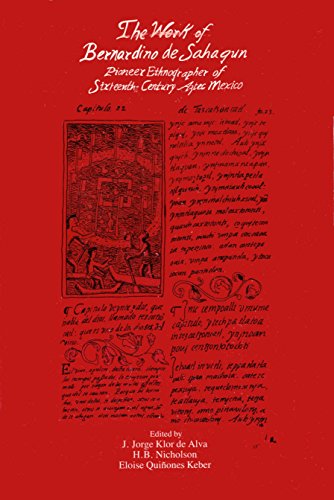
The Work of Bernardino de Sahagun, Pioneer Ethnographer of Sixteenth-Century Aztec Mexico

The Work of Bernardino de Sahagun, Pioneer Ethnographer of Sixteenth-Century Aztec Mexico

Klor de Alva, J.J., Nicholson, H.B. and Quinones Keber, E. (1988)

Edited Book · Publisher: Institute for Mesoamerican Studies · Pages: 372 pp.

Abstract
In 1990 the scholarly world commemorated the 400th anniversary of the death of Bernardino de Sahagún, widely regarded as the most systematic and innovative early ethnographer of the cultures of the Americas and among the first investigators to experiment with methods resembling modern anthropology. It was therefore fitting that the Institute for Mesoamerican Studies publish a volume devoted to the results of his nearly sixty years of “field work” among the Nahuatl-speaking peoples of Mexico. The institute took particular pride in issuing the book in time to encourage reflection during the years in which the name of this celebrated Franciscan would be frequently invoked by Mesoamericanists around the world. Special thanks were extended to H. B. Nicholson and Eloise Quiñones Keber, coeditors of the volume, for their timely and thoughtful assistance throughout the preparation of the manuscript. The author also gratefully acknowledged support from the John Simon Guggenheim Memorial Foundation, whose fellowship made it possible to complete the volume on schedule by relieving many competing obligations.
Keywords
gems, jade, jadeite, fei cui, Mesoamerica, Mexico, Guatemala, Costa Rica, Mayans, Olmecs, Aztecs, archaeology, history, archaeogemology, Pre-Columbian jade; Costa Rica; Maya; exchange; iconography, lapidary
Rubine aus Malawi

Rubine aus Malawi

Rubies from Malawi

Bank, H., Henn, U. and Lind, T. (1988)

Journal Article · Source: Zeitschrift der Deutschen Gemmologischen Gesellschaft · Volume: Vol. 37 · Issue: No. 3/4 · Pages: pp. 113–119 · Language: In German

Abstract
Describes gem-quality red and orange corundum from Malawi, material that became available in 1988 from deposits that had produced corundum since the late 1950s. The stones range from pale to dark red, with some material of fine facetable quality. Gemological examination shows variations in refractive index, birefringence and specific gravity related principally to differing chromium and iron contents. Microscopic features include growth structures with hexagonal symmetry, color zoning along growth planes, and mineral inclusions. The study characterizes the Malawi material and documents the relationship between trace-element composition, color and physical properties. A more extensive English-language study of the material subsequently appeared in The Journal of Gemmology in 1990.
Keywords
corundum, ruby, Malawi.12, inclusions.5, gems
An oil well in your garden

An oil well in your garden

Hänni, H.A. (1988)

Journal Article · Source: Swiss Watch and Jewellery Journal · Issue: Mar-88 · Pages: pp. 461–464

Abstract
This paper does not wish to deal with the luck of a Texan property owner, but rather to share my experience in the gemmological laboratory. The article could just as well be titled: What many people do not yet know about oiling emeralds, and others at times tend to forget. ”Cemmosophic” literature likes to use the French term jardin” (Engl.: garden) for typical, vei|—like inclusions visible to the naked eye. These internal structures, resembling leaves and tendrils, are commonly classified as healed fissures, but often also as open cracks. The latter are usually considered to be negative properties."
Keywords
gems, emerald, oiling, treatments, enhancements, fillers

Exploring the Literature of Gemstone Inclusions

The literature of gemstone inclusions covers identification, origin determination, treatments, synthesis, mineral inclusions, fluid inclusions and other internal features of natural and synthetic gems.

For a curated selection of important sources, read Inclusions in Gemstones — Hyperion Literature Sources.

About Four Treasures

Four Treasures is Lotus Gemology's freely accessible gemological reference database. Use the full database to search by author, title or keyword and explore literature on gemology, mineralogy, jewelry and related fields. Where available, hyperlinks on titles may lead directly to the full publication.

Search the Complete Four Treasures Database