Sapphire Inclusions
Explore sapphire inclusions in Hyperion, the Lotus Gemology inclusion database. Hyperion contains photomicrographs of inclusions and internal features in natural sapphire, documented with information on geographic origin, treatment, lighting conditions, field of view, photographer and published references.
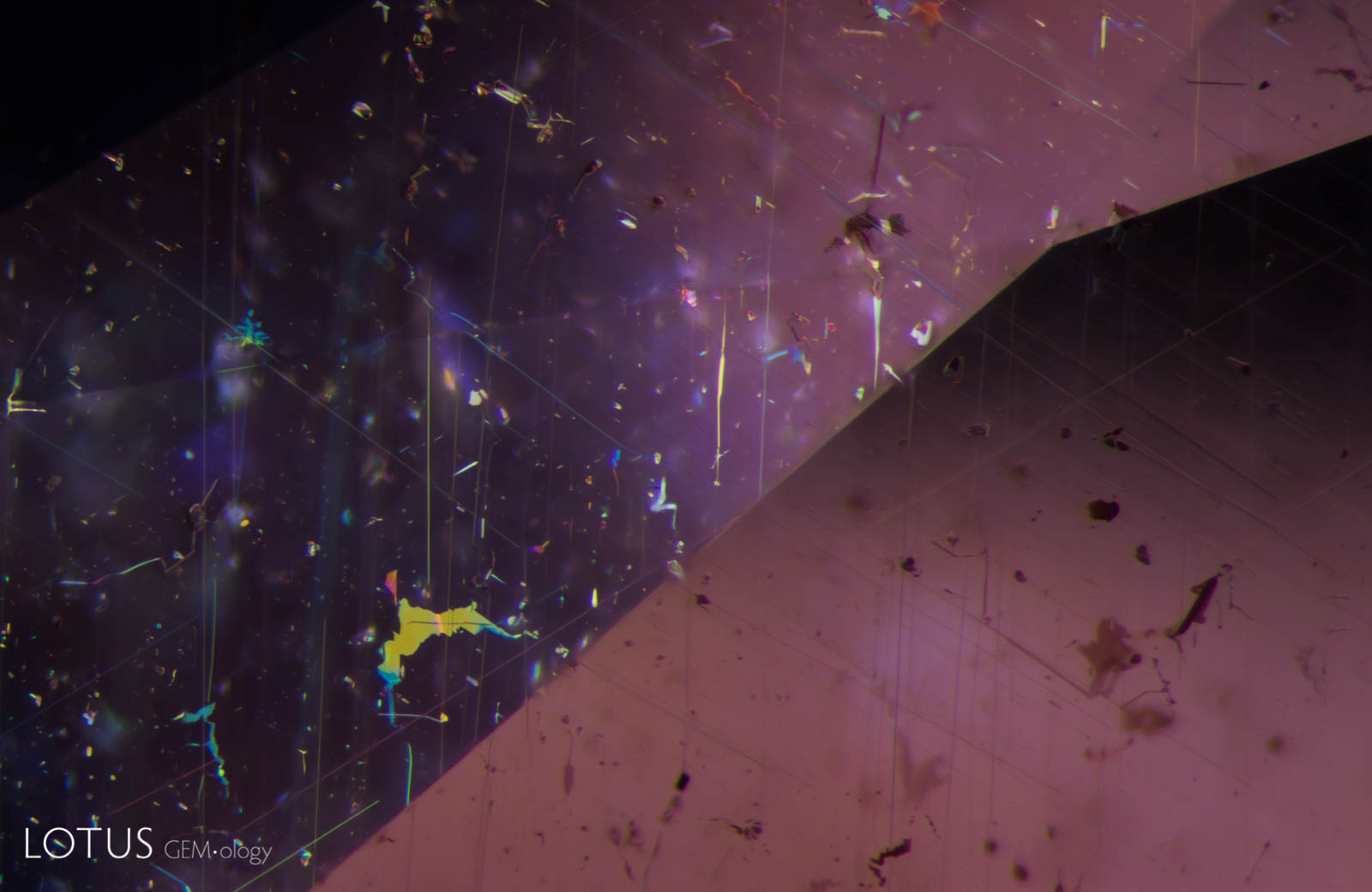
Iron rich sapphire often contain “silk” in the form of these irregularly shaped platelets. Notice that reflected light can produce a variety of interference colors (left side of image) while transmitted light shows that the platelets have a brown body color (right side of image).
Natural Sapphire •
Sri Lanka (Ceylon) •
Enhancements:
None Detected (None) •
Lighting Conditions:
Diffuse Light Field + Fiber Optic
Photographer:
E. Billie Hughes •
Image Number:
A-002-9496-2
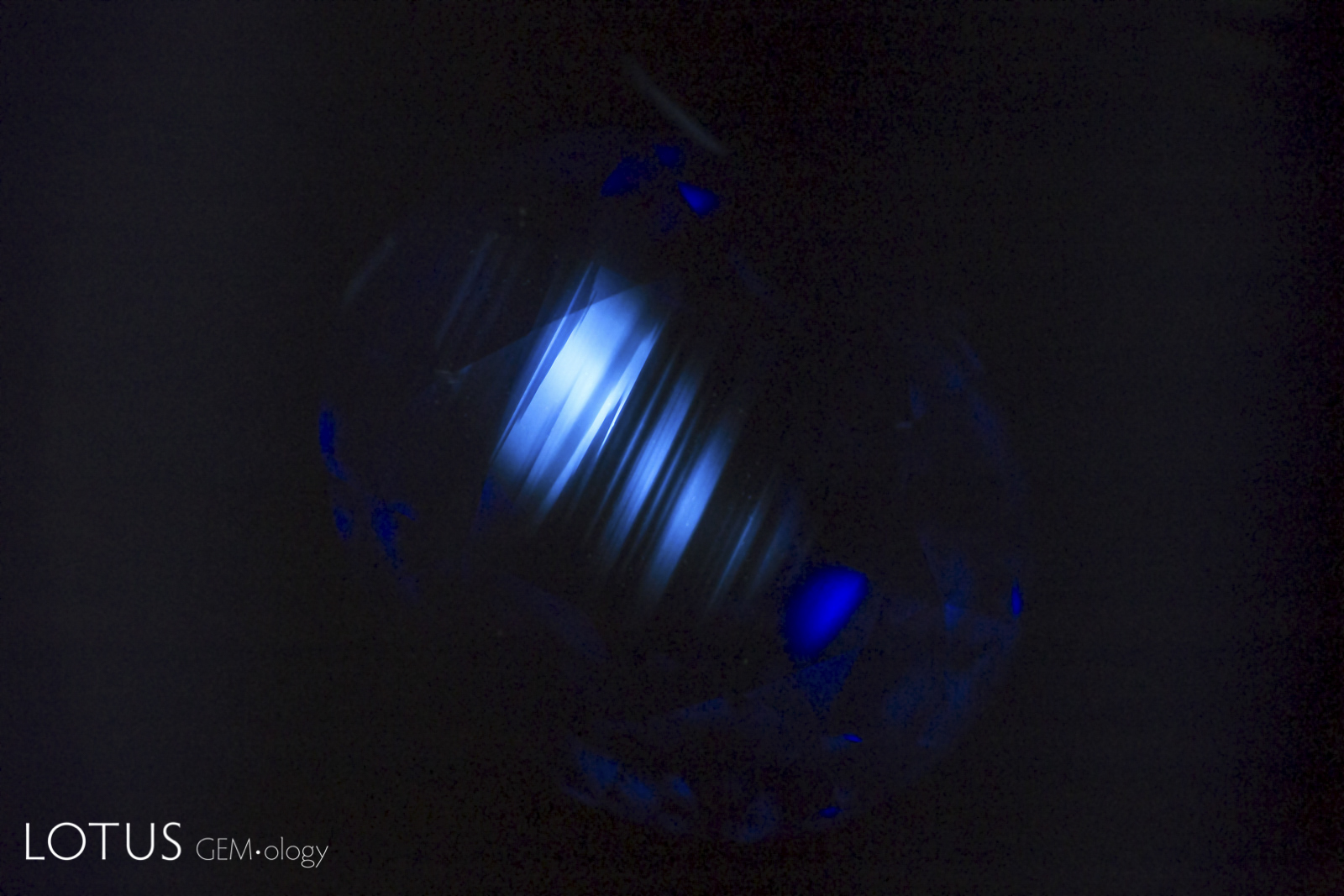
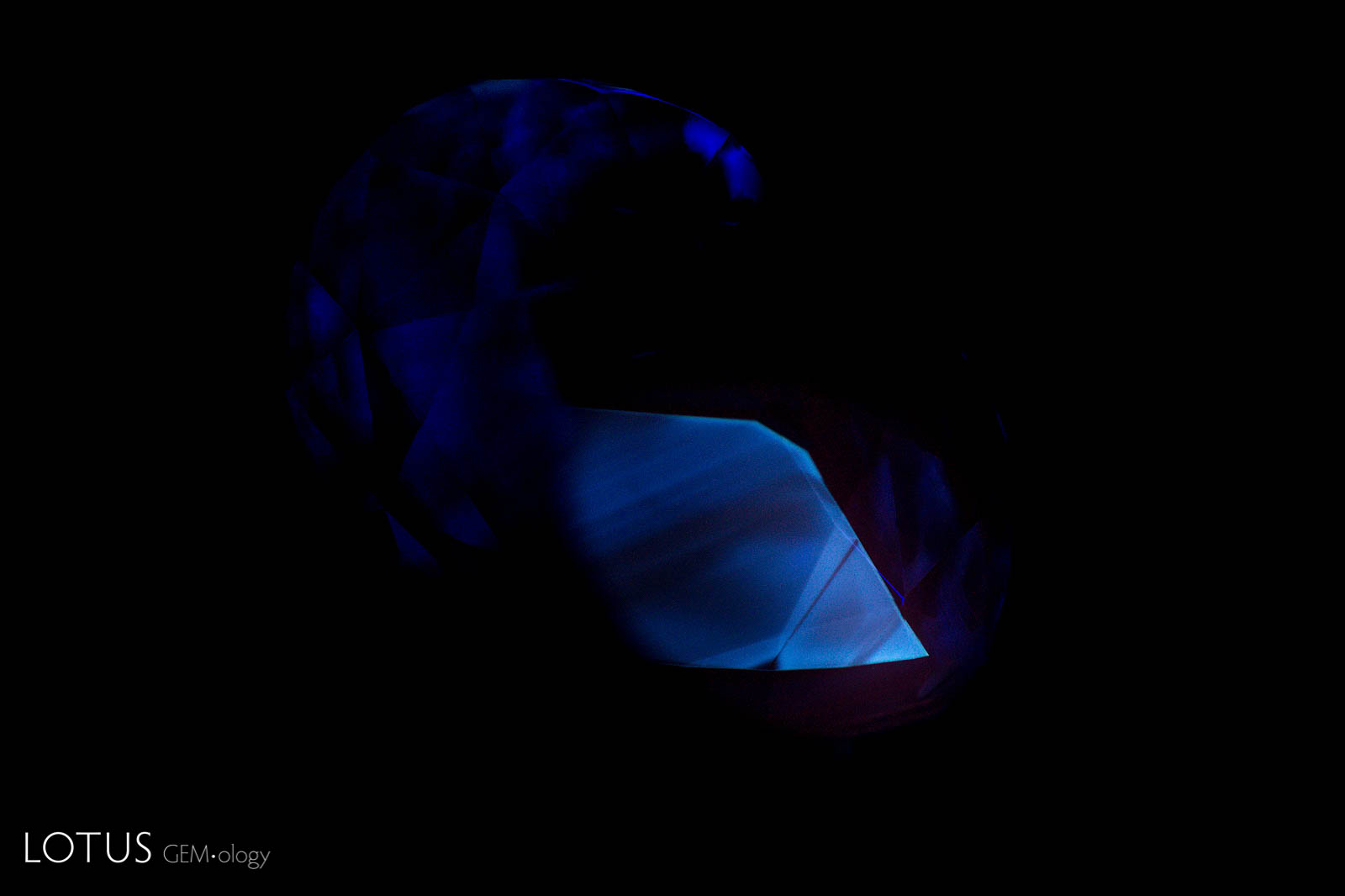
Angular zoned chalky shortwave fluorescent reaction, indicative of heat treatment.
Natural Sapphire •
Madagascar •
Enhancements:
Heat (H) •
Lighting Conditions:
Ultraviolet: Shortwave
Photographer:
E. Billie Hughes •
Image Number:
A-002-9410-1
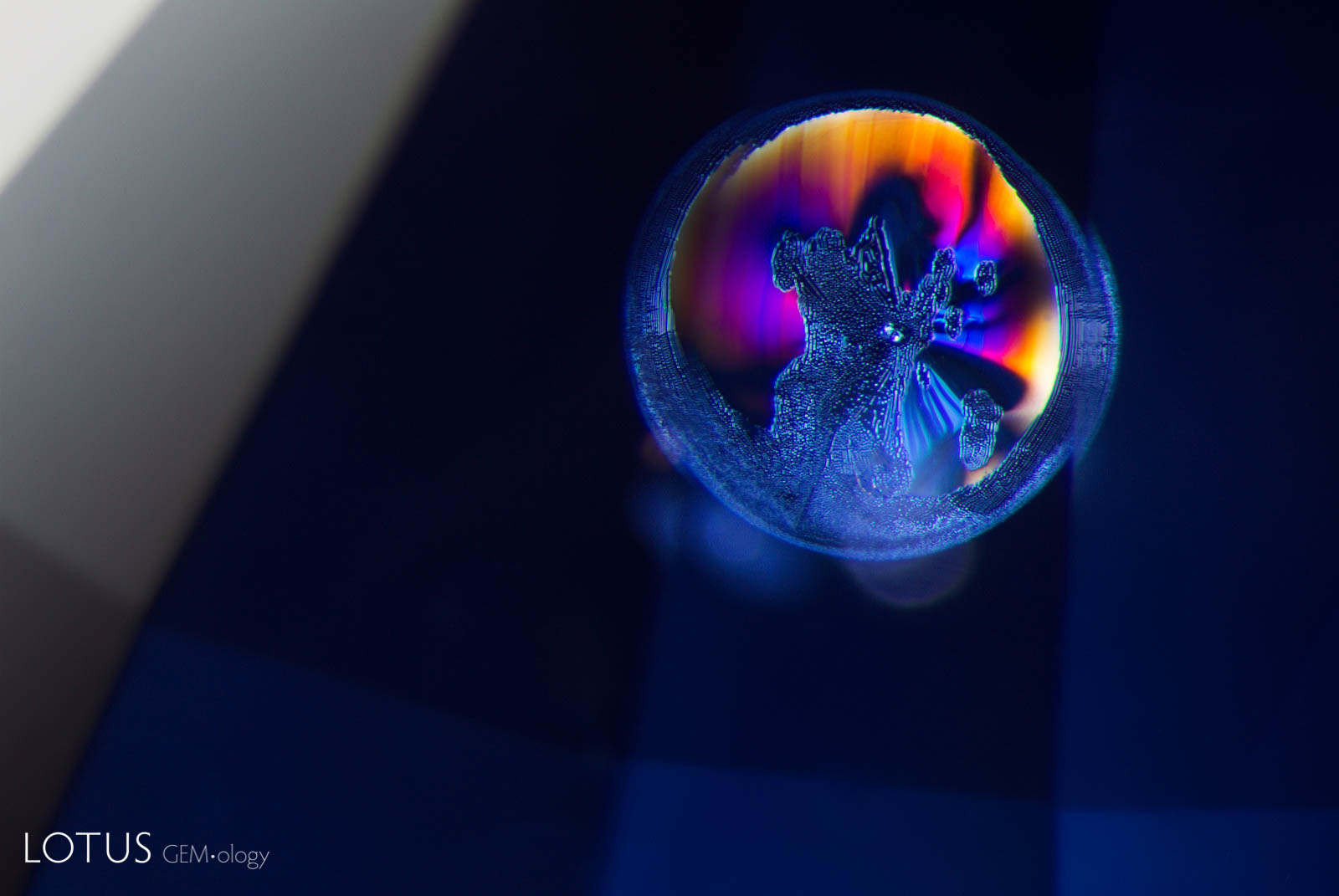
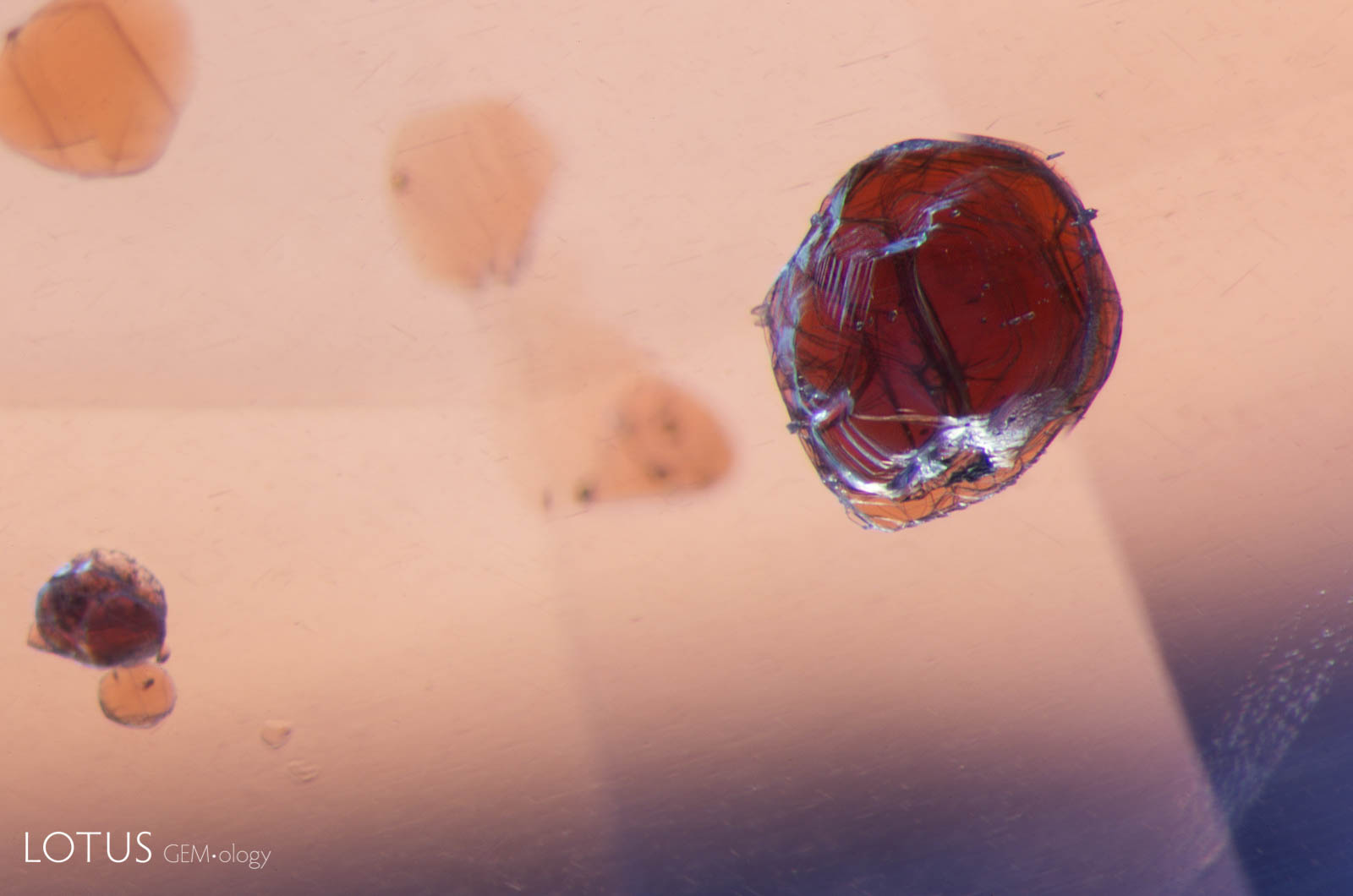
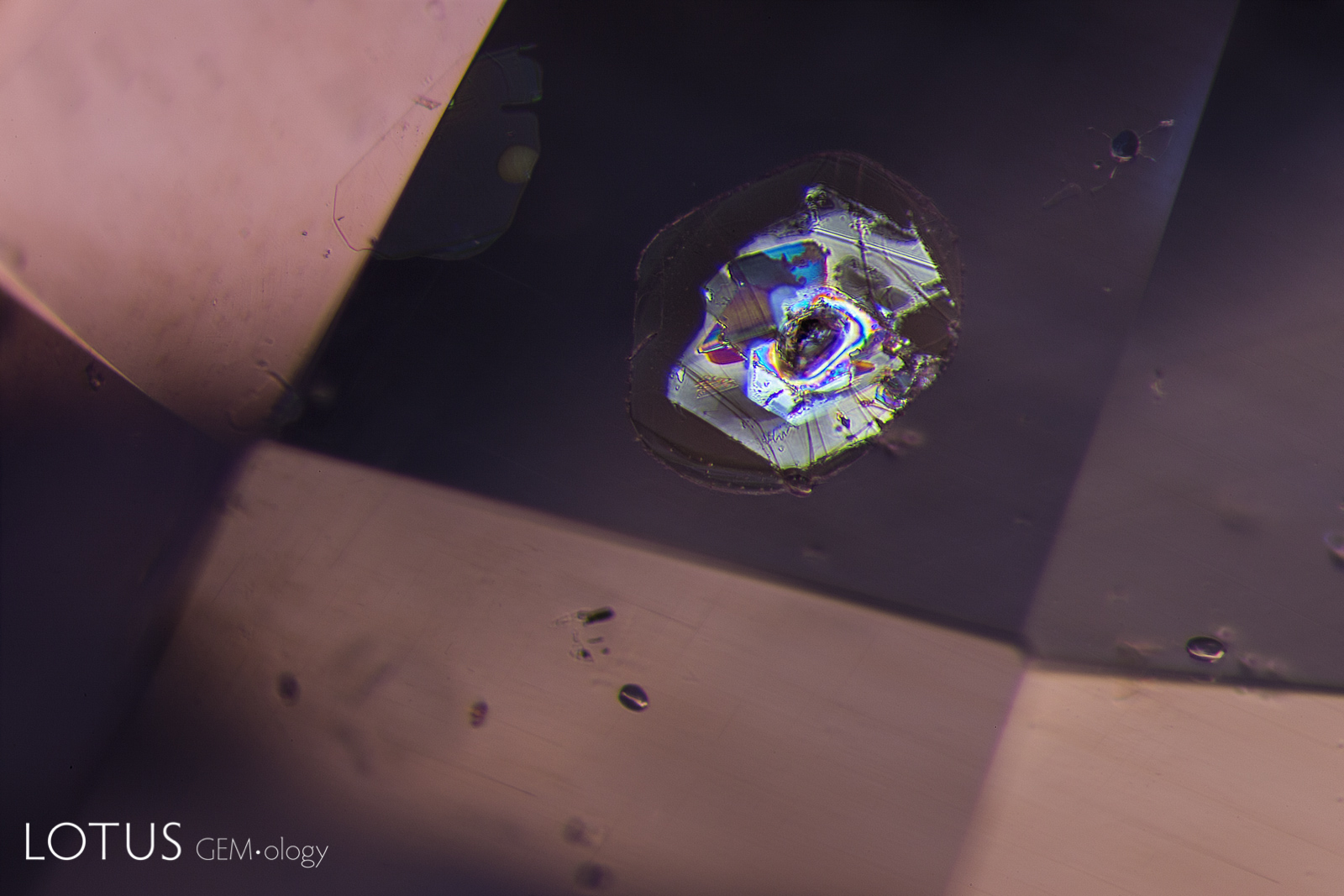
The melted, shiny fissure around this small crystal represents clear evidence that the sapphire host has been heat treated.
Natural Sapphire •
Sri Lanka (Ceylon) •
Enhancements:
Heat (H) •
Lighting Conditions:
Fiber Optic: Diffuse Oblique
Photographer:
E. Billie Hughes •
Image Number:
A-002-9394-1
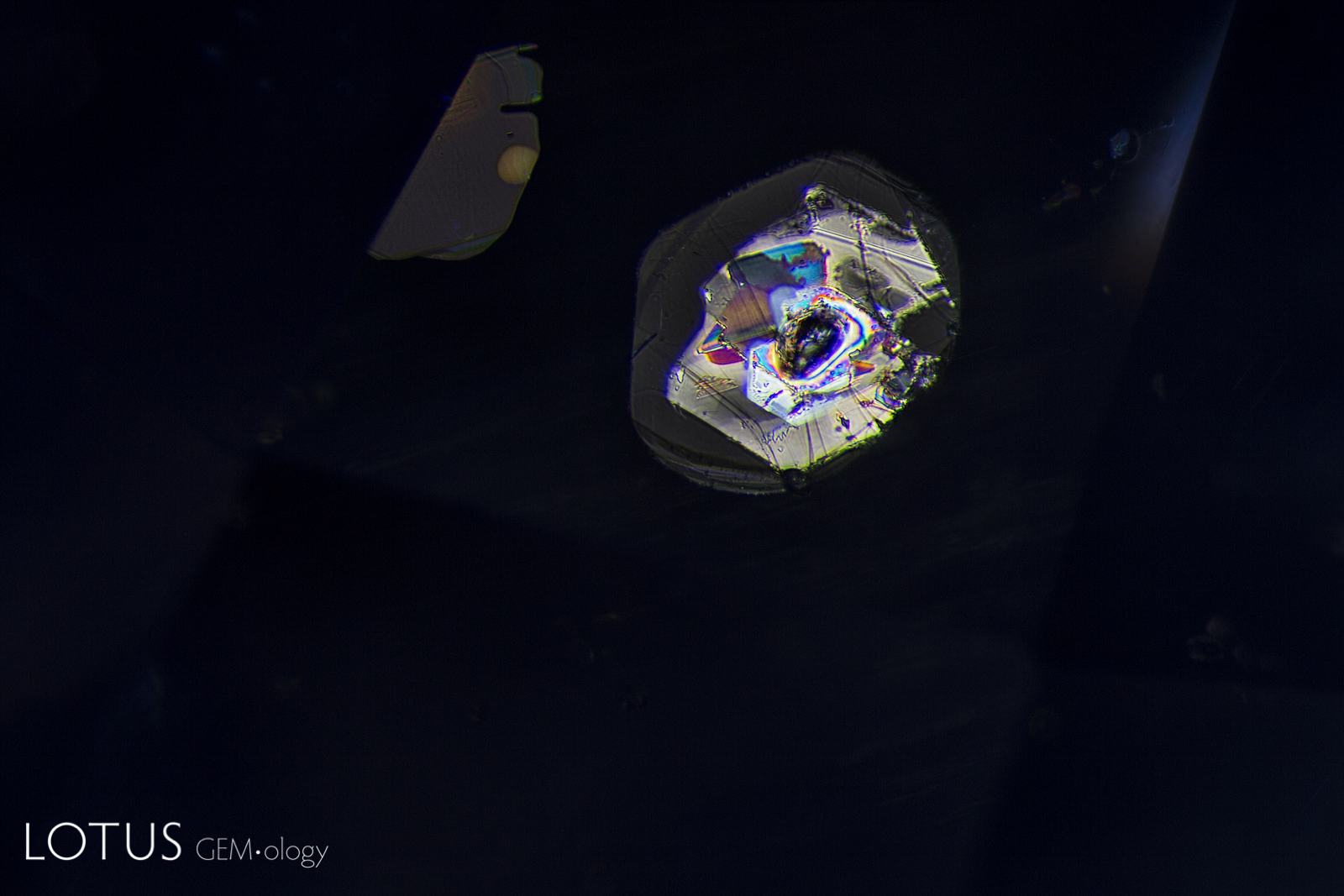
Negative crystals can contain a variety of substances. In this example, on the left we see what are likely diaspore needles, then a graphite flake in the center, and a gas bubble on the right. All show no signs of heat treatment. The gas bubble is the gaseous phase of the liquid carbon dioxide that fills the cavity.
Natural Color-Change Star Sapphire •
Sri Lanka (Ceylon) •
Enhancements:
None Detected (None) •
Lighting Conditions:
Dark Field
Photographer:
E. Billie Hughes •
Image Number:
A-002-9387-1
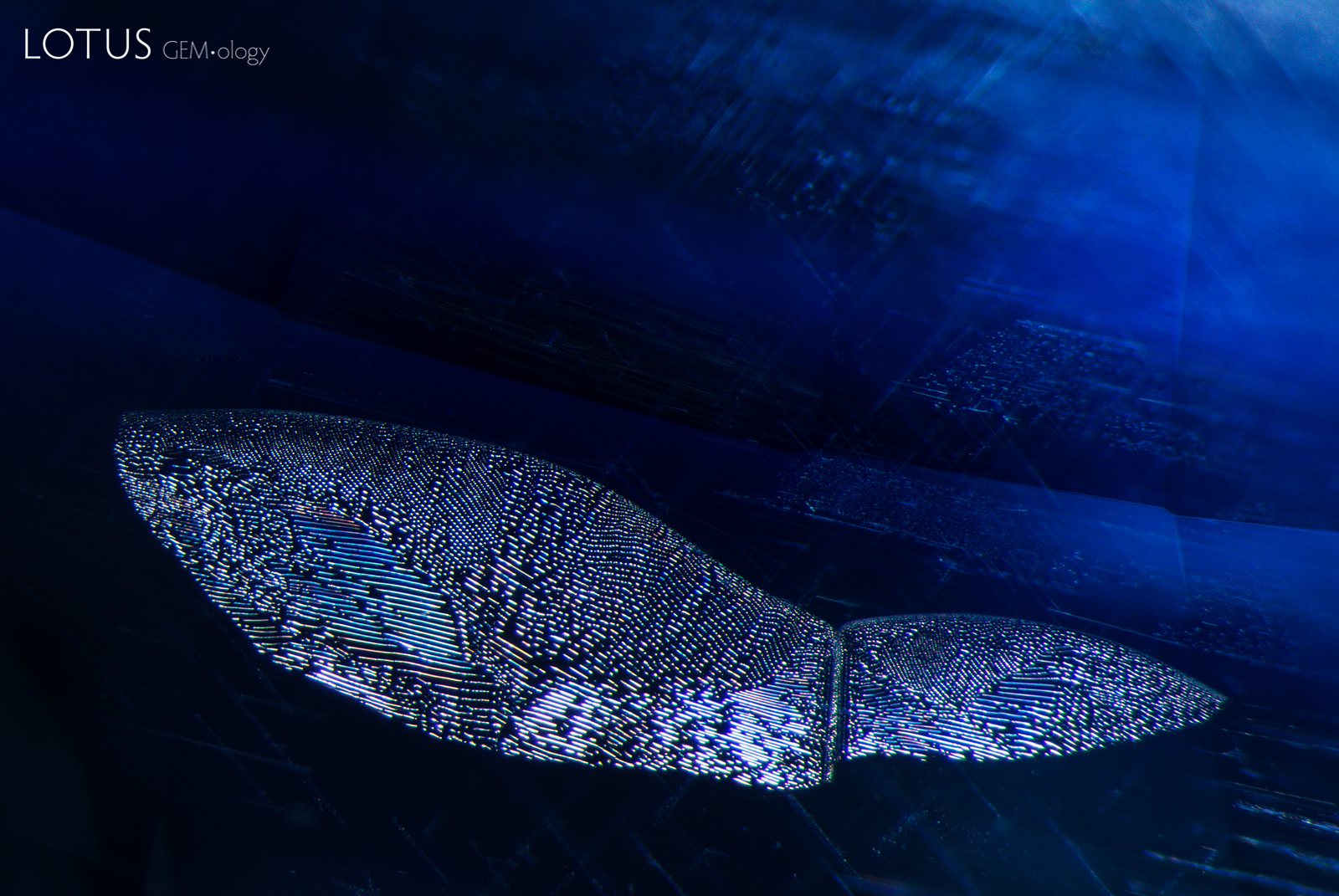
Looking at this image, it’s easy to see why gemologists use the term “fingerprint” to describe partially healed fissures.
Natural Sapphire •
Sri Lanka (Ceylon) •
Enhancements:
None Detected (None) •
Lighting Conditions:
Dark Field
Photographer:
E. Billie Hughes •
Image Number:
A-002-9312-1
These brown crystals (probably phlogopite mica) show no signs of heat damage in their Sri Lankan sapphire host.
Natural Sapphire •
Sri Lanka (Ceylon) •
Enhancements:
None Detected (None) •
Lighting Conditions:
Diffuse Light Field + Fiber Optic
Photographer:
E. Billie Hughes •
Image Number:
A-002-8724-2
These brown crystals (probably phlogopite mica) show no signs of heat damage in their Sri Lankan sapphire host.
Natural Sapphire •
Sri Lanka (Ceylon) •
Enhancements:
None Detected (None) •
Lighting Conditions:
Diffuse Light Field + Fiber Optic
Photographer:
E. Billie Hughes •
Image Number:
A-002-8724-1
Often chalky shortwave fluorescence is a sign of heat treatment in sapphire, but some stones from Madagascar, like this one, show a superficially chalky patch that is not associated with heat treatment.
Natural Sapphire •
Madagascar •
Enhancements:
None Detected (None) •
Lighting Conditions:
Ultraviolet: Shortwave
Photographer:
E. Billie Hughes •
Image Number:
A-002-8709-1
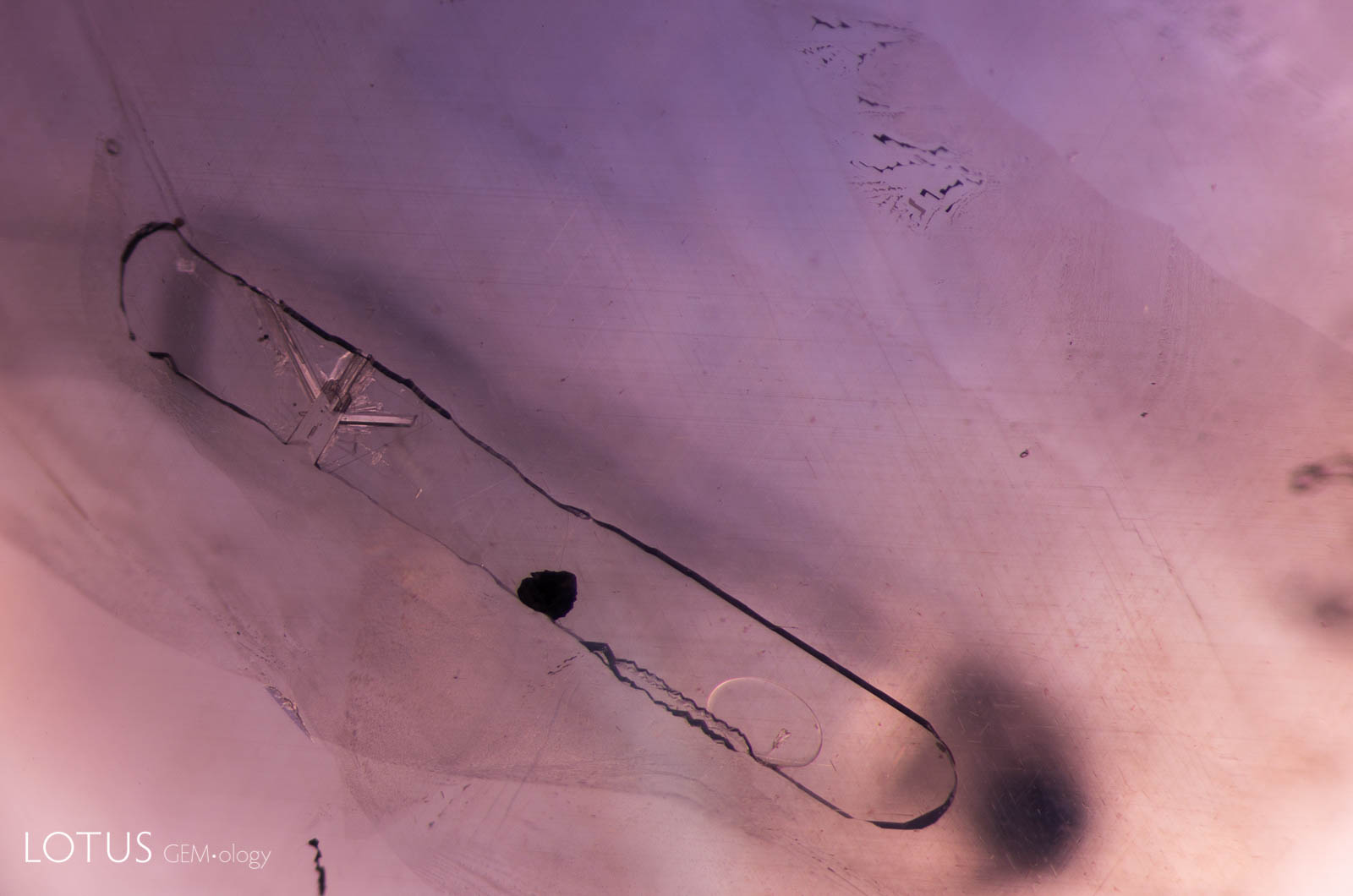
Overhead lighting was used to photograph this scene in a violet sapphire from Sri Lanka, which shows two large mica plates. The undamaged state of the mica reveals that this sapphire has not been subjected to heat treatment.
Natural Sapphire •
Sri Lanka (Ceylon) •
Enhancements:
None Detected (None) •
Lighting Conditions:
Fiber Optic: Overhead
Photographer:
Richard W. Hughes •
Image Number:
A-002-8706-2
Koivula, J.I. (2007) Photographing gems. In Focus, No. 7, September, pp. 24–59; RWHL**.
A combination of dark field and overhead lighting was used to photograph this scene in a violet sapphire from Sri Lanka, which shows two large mica plates and smaller rounded zircon crystals. The undamaged state of the mica reveals that this sapphire has not been subjected to heat treatment.
Natural Sapphire •
Sri Lanka (Ceylon) •
Enhancements:
None Detected (None) •
Lighting Conditions:
Dark Field + Overhead Fiber Optic
Photographer:
Richard W. Hughes •
Image Number:
A-002-8706-1
Koivula, J.I. (2007) Photographing gems. In Focus, No. 7, September, pp. 24–59; RWHL**.
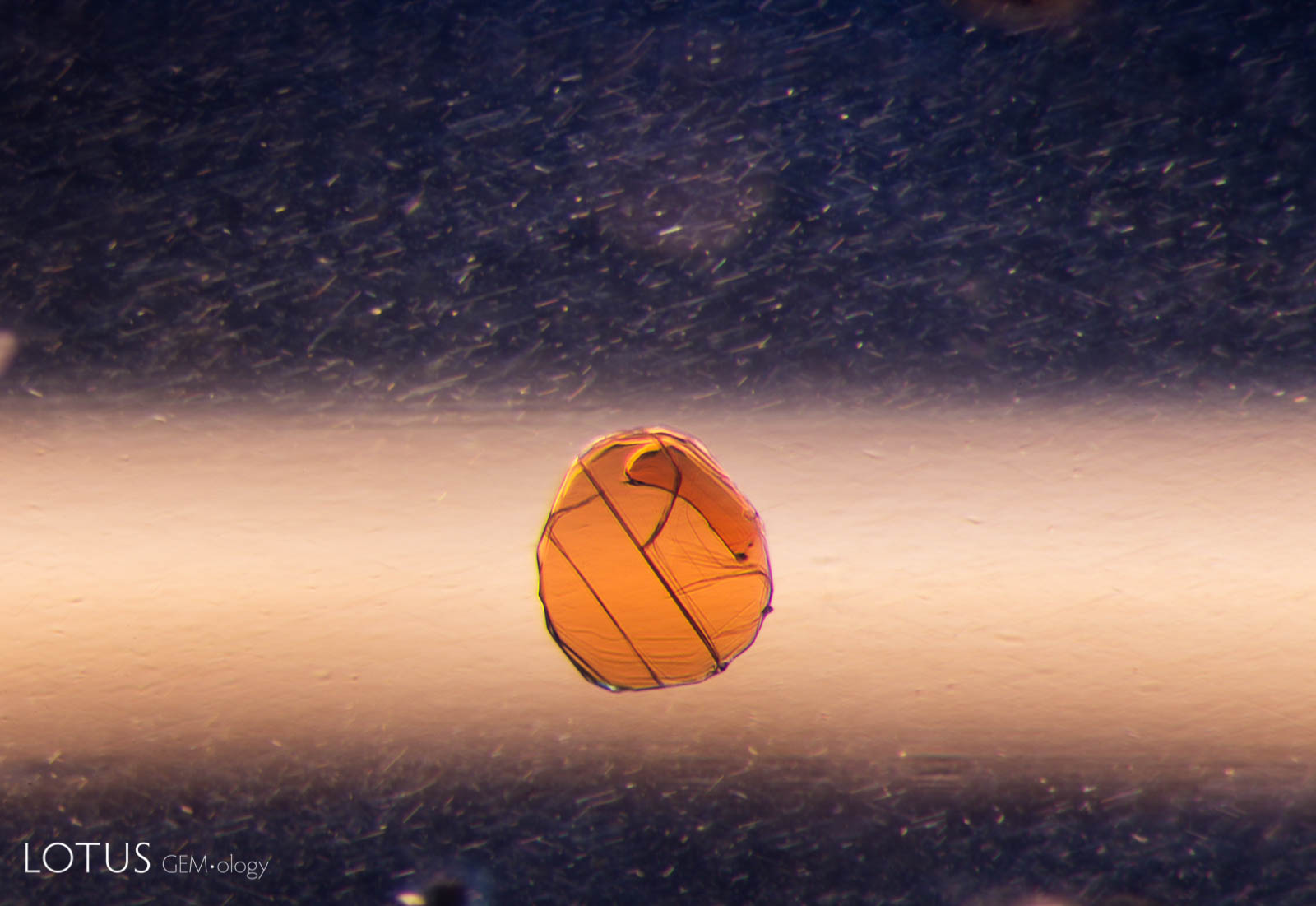
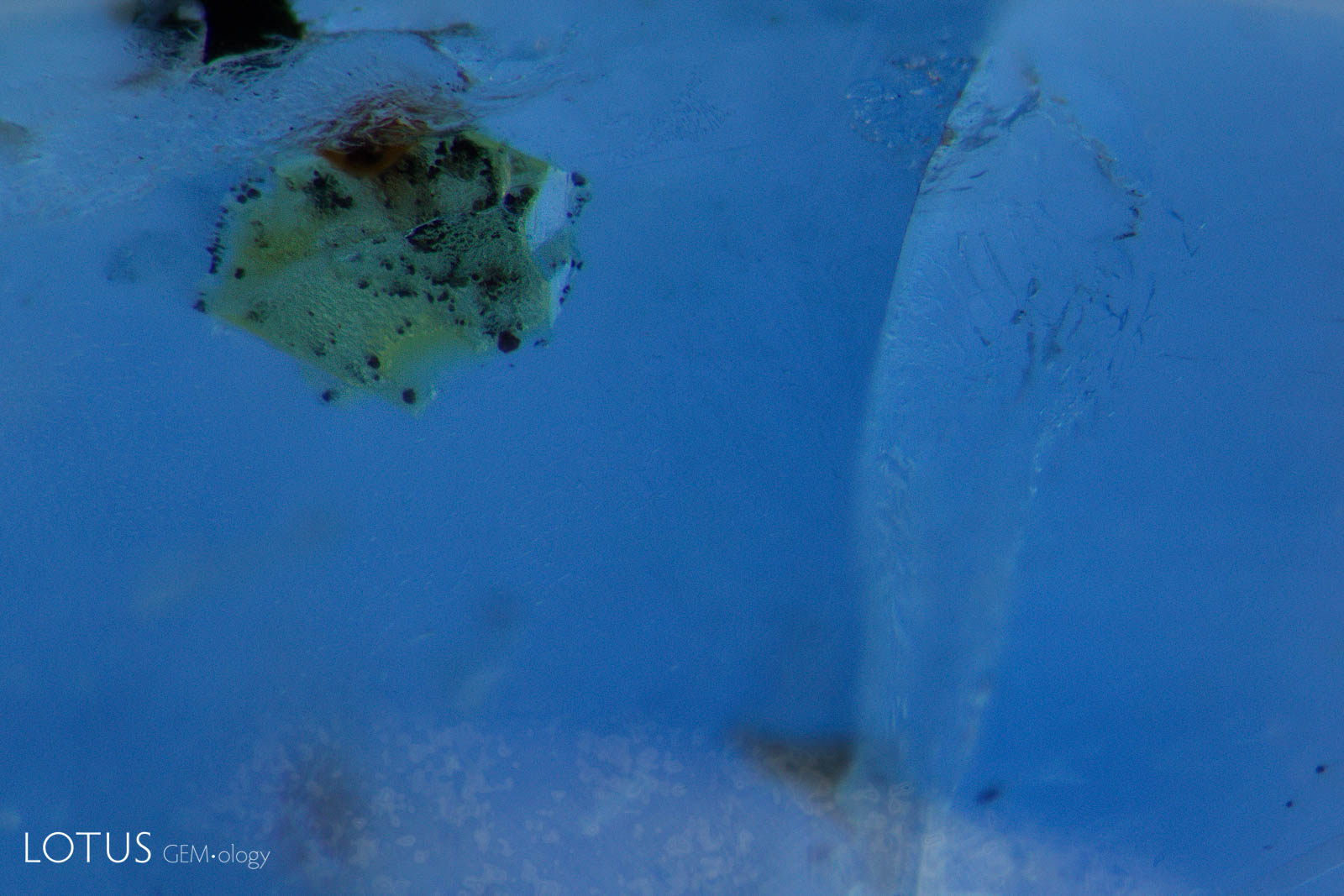
A crystal filled with an unknown yellow substance stands out against its sapphire-blue background.
Natural Sapphire •
Myanmar (Burma); Mogok •
Enhancements:
None Detected (None) •
Lighting Conditions:
Dark Field
Photographer:
E. Billie Hughes •
Image Number:
A-002-8666-1
This image clearly illustrates what master photomicrographer John Koivula has termed “chromophore cannibalization.” As titanium is drawn out of solid solution to form exsolved rutile silk, the area in the immediate vicinity is decolorized, losing its blue color.
Natural Sapphire •
Sri Lanka (Ceylon) •
Enhancements:
None Detected (None) •
Lighting Conditions:
Diffuse Light Field (Transmitted Light)
Photographer:
E. Billie Hughes •
Image Number:
A-002-8624-2
Koivula, J.I. (1987) Internal diffusion. Journal of Gemmology, Vol. 20, No. 7/8, pp. 474–477; RWHL*.
Search the Complete Hyperion Database
Sapphire inclusions may include mineral crystals, rutile silk, healed fissures, fluid inclusions, negative crystals, color zoning and other features formed during or after crystal growth. Such features are important to gemologists because they can provide evidence useful in identifying sapphire, understanding its geological history, recognizing treatment and, in some cases, determining geographic origin.
Sapphire Inclusion Photomicrographs
The Hyperion sapphire gallery includes microscopic features found in sapphires from major deposits around the world. Each entry is accompanied by descriptive information and, where available, references to the gemological literature.
What Inclusions Can Reveal About Sapphire
Inclusions are an important part of sapphire identification. Their form, composition, orientation and alteration can help gemologists distinguish natural sapphire from synthetic material, recognize evidence of heat treatment, and study the geological environment in which the sapphire formed.
Hyperion combines inclusion photomicrography with supporting gemological information so that individual features can be compared with documented examples from known sapphire deposits.
About Hyperion
Hyperion is the Lotus Gemology searchable inclusion database. It allows users to browse gemstone inclusions by gem type, geographic origin, treatment and keyword.