Gemology Books Bibliography

Gemology Books Bibliography

Explore books on gems, gemology, jewelry and mineralogy in Four Treasures, the Lotus Gemology reference database. This bibliography brings together matching book records from the collection, with publication details, abstracts and cover images where available.

Gemology Book References

The list below matches books concerning gemology and related subjects in the database's searchable fields. Some works cover several branches of gems, jewelry or mineralogy.
2,201–2,220 of 3,681 matching references

Gem News: Miscellaneous notes on sapphires
Journal Article
Koivula, J.I., Kammerling, R.C. and Fritsch, E. (1993) Gem News: Miscellaneous notes on sapphires. Gems & Gemology, Vol. 29, No. 1, Spring, p. 61.
Record No. 4884  |  ISBN/ISSN: 0016626X  |  Sinkankas/Born No.: NIS / NIB  |  RWHL
View Individual Record ↗

Gem News: Update on rubies

Journal Article
Koivula, J.I., Kammerling, R.C. and Fritsch, E. (1993) Gem News: Update on rubies. Gems & Gemology, Vol. 29, No. 1, Spring, pp. 60–61.
Record No. 4883  |  ISBN/ISSN: 0016626X  |  Sinkankas/Born No.: NIS / NIB  |  RWHL
View Individual Record ↗

Gem News: Ruby mining near Mahenge, Tanzania
Journal Article
Koivula, J.I., Kammerling, R.C. and Fritsch, E. (1993) Gem News: Ruby mining near Mahenge, Tanzania. Gems & Gemology, Vol. 29, No. 2, Summer, p. 136.
Record No. 4882  |  ISBN/ISSN: 0016626X  |  Sinkankas/Born No.: NIS / NIB  |  RWHL
View Individual Record ↗

Die Rubin-und Saphir-Abbaue von Mogok: Eine aktuelle Reportage aus Myanmar
The ruby and sapphire mines of Mogok: A current report from Myanmar
Journal Article
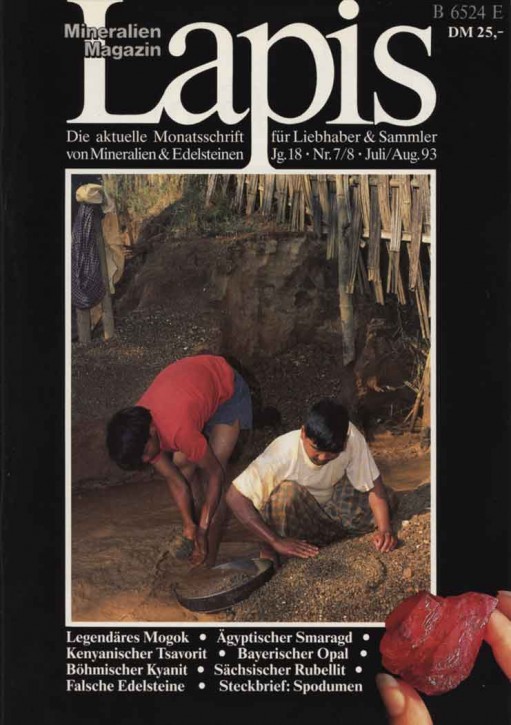
Kane, R.E. and Kammerling, R.C. (1993) Die Rubin-und Saphir-Abbaue von Mogok: Eine aktuelle Reportage aus Myanmar. [The ruby and sapphire mines of Mogok: A current report from Myanmar] Lapis, Vol. 18, No. 7/8, Juli/August, pp. 40–56.
Record No. 4839  |  Sinkankas/Born No.: NIS / NIB  |  Language: in German  |  RWHL
View Individual Record ↗
Describes traditional and more modern methods of mining ruby and sapphire in the Mogok region of Myanmar, with an account of the area’s geology and mineralization. Twenty-seven photographs and two maps illustrate the mining district, and an appended list records its gem-quality minerals. The article is a revised and updated version of the authors’ 1992 report in Gems & Gemology.

Flux-grown synthetic rubies from Russia
Journal Article
Henn, U. and Bank, H. (1993) Flux-grown synthetic rubies from Russia. Journal of Gemmology, Vol. 23, No. 4, pp. 393–396.
Record No. 4809  |  ISBN/ISSN: 221252  |  Sinkankas/Born No.: NIS / NIB  |  RWHL
View Individual Record ↗

Blue color in sapphire caused by Fe²⁺/Fe³⁺ intervalence charge transfer [letter to the editor]
letter to the editor
Journal Article
Fritsch, E. and Mercer, M. (1993) Blue color in sapphire caused by Fe²⁺/Fe³⁺ intervalence charge transfer [letter to the editor]. Gems & Gemology, Vol. 29, No. 3, Fall, pp. 151, 226.
Record No. 4779  |  ISBN/ISSN: 0016626X  |  Sinkankas/Born No.: NIS / NIB  |  RWHL
View Individual Record ↗
It is widely accepted that the blue color in sapphire is due to Fe²⁺/Ti⁴⁺ charge transfer, often accompanied by Fe²⁺/Fe³⁺ intervalence charge transfer (IVCT; Schmetzer and Bank, 1981; Fritsch and Rossman, 1988). However, to date the extent of the contribution of the Fe²⁺/Fe³⁺ IVCT to the color of sapphire has not been established, since no sapphire has been reported in which this chromogen contributes the primary absorption. We are now writing to report that such material has recently been studied, and it proves that Fe²⁺/Fe³⁺ IVCT alone can produce a blue color in sapphire. The two grayish blue sapphires examined are 1.57 ct and 1.19 ct (figure A). Their UV–visible–near infrared spectra (figure B) reveal a broad band centered at 890 nm, which corresponds to the broad band centered at 870 nm that has been attributed by Ferguson and Fielding (1971) and Schmetzer and Bank (1981) to Fe²⁺/Fe³⁺ IVCT. The other distinct features—at 376, 388, and 451 nm—are due to the Fe³⁺ ion or to Fe³⁺ pair transitions, according to the same researchers. The spectra shown in figure B exhibit little or no absorption due to Fe²⁺/Ti⁴⁺ (which typically occurs at approximately 560 nm), although the stones appear distinctly grayish blue. To our knowledge, this is the first time that Fe²⁺/Fe³⁺ intervalence charge transfer has been demonstrated to cause blue color in sapphire. Note that the blue color generated by this mechanism appears to be significantly grayer than the color produced by Fe²⁺/Ti⁴⁺ charge transfer. Further investigations are being conducted into the polarized absorption spectra of these samples and the response of the Fe²⁺/Fe³⁺ IVCT absorption to various treatment processes. Fe²⁺/Fe³⁺ IVCT plays a major role in the color of many dark blue sapphires from basaltic origins, such as localities in Australia, China, Thailand, and Cambodia (Schmetzer and Kiefert, 1990; Poirot, 1992). Many such sapphires would benefit from having their color lightened, but traditional heat-treatment processes—designed to reduce the Fe²⁺/Ti⁴⁺ charge-transfer absorption in sapphires of metamorphic origin (from localities such as Sri Lanka, Myanmar)—may not be effective in these cases.

Microscopic studies of Burmese jadeite jade
Journal Article
Ouyang, C.M. [歐陽秋眉] (1993) Microscopic studies of Burmese jadeite jade. Journal of Gemmology, Vol. 23, No. 5, pp. 278–284.
Record No. 2290  |  ISBN/ISSN: 221252  |  Sinkankas/Born No.: NIS / NIB  |  RWHL
View Individual Record ↗
Microscopic examination of 102 specimens of Myanmar fei cui documents variations in mineral composition, deformation, alteration, and their effects on gem appearance. Samples were selected to represent differences in colour, grain size, appearance, and categories recognized by Hong Kong dealers. Four petrographic types are described: essentially monomineralic material, crushed material, material altered to tremolite–actinolite, and kosmochlor-rich material, termed ureyite in the paper. The first consists predominantly of jadeite crystals with minor diopside and albite, has a granoblastic texture, and shows little evidence of alteration; specimens are generally white, occasionally lavender or pale green. Crushed material displays uneven grain sizes and mortar textures, with larger crystals surrounded by fine fragments generated by deformation. Increasing crushing produces textures ranging from coarse grains with narrow crushed margins to fine-grained aggregates containing isolated remnants of larger crystals. Electron-microprobe analyses distinguish chromium-free, colourless coarse jadeite crystals from chromium-bearing, green finer crystals, explaining some green patterns on white backgrounds. Alteration to tremolite and actinolite begins along jadeite cleavage planes and grain boundaries and progresses to extensive replacement by fibrous amphiboles. Slightly altered specimens contain approximately 15–20% amphibole, moderately altered material approximately 50–60%, and strongly altered material approximately 80–98%. Advanced alteration produces fibrous textures with residual jadeite and may be accompanied by muscovite, chlorite, and quartz microveins. Tremolite-rich specimens are white to grey, whereas actinolite-rich specimens are dark green and may display an oily polished lustre and greater transparency. The relatively rare kosmochlor-rich specimens are compact, opaque, dark to bright green aggregates containing approximately 90–95% kosmochlor, with chromite and other accessory minerals. Kosmochlor occurs in granular, short-prismatic, and fibrous forms and shows strong pleochroism. Intergrowths interpreted as exsolution lamellae of jadeite in kosmochlor suggest greater mutual solubility at higher temperature and pressure, followed by separation as conditions changed. Undulose extinction and replacement textures indicate deformation and alteration. At least two amphibole generations are recognized: a coarsely fibrous generation replacing kosmochlor and a finer generation forming cross-cutting or enclosing veinlets. No measured optical properties indicate aegirine, consistent with the chemical evidence. The study distinguishes solid-solution relationships between jadeite and kosmochlor from amphibole replacement of either mineral and concludes that mineralogical and textural differences influence colour, lustre, transparency, specific gravity, and gem quality.

Gemstone enhancement: Detection of polymer-treated jadeite
Journal Article
Hodgkinson, A. (1993) Gemstone enhancement: Detection of polymer-treated jadeite. Journal of Gemmology, Vol. 23, No. 7, July, pp. 415–417.
Record No. 2263  |  ISBN/ISSN: 221252  |  Sinkankas/Born No.: NIS / NIB  |  RWHL
View Individual Record ↗
An acid-droplet test is described as a practical aid for distinguishing untreated fei cui from material that has been acid bleached and impregnated with polymer. The discussion supplements the earlier study by Fritsch and colleagues, which established infrared spectroscopy as a means of positively identifying the impregnating polymer. Three trade categories are outlined: type A, untreated apart from traditional surface waxing; type B, acid bleached and polymer impregnated; and type C, artificially stained. Hodgkinson’s test depends on differences in the accessibility of the material’s microscopic pore and fracture network. On untreated specimens, concentrated hydrochloric acid placed on a clean surface is drawn inward by capillary action along grain boundaries or open fractures and subsequently reappears beyond the original droplet. This may take the form of droplets outlining fractures or a surrounding aureole resembling perspiration. An untreated bead illustrates the emergence of acid along intersecting internal fractures after approximately two to three minutes. In polymer-impregnated material, the acid is reported to remain at the application site until evaporation because the polymer seals the microporous structure. The author discusses initially conflicting observations from the Gemological Institute of America and mixed results in Hong Kong, attributing these partly to fine grain texture, carved surface grooves, and rapid evaporation under warmer or air-conditioned conditions. Enclosing the specimen beneath a glass cover with a small water container is proposed to maintain suitable conditions. Another observation on untreated material was the appearance of brown iron staining on a white tissue used to remove the acid, although no colour had been visible in the droplet itself; such staining would normally be removed during bleaching before polymer impregnation. A stained, more porous type C specimen produced a particularly extensive aureole, while additional polymer impregnation would be expected to suppress this response. Traditional surface waxing reportedly did not prevent the test from working. The article also notes that droplets can magnify dye concentrations and that residual purple colouring may remain from an earlier stage of green staining. The method is presented as an adjunct to the more comprehensive investigation of polymer treatment.

Gemstones of East Africa [book review]
book review
Journal Article
Bassett, A.M. (1993) Gemstones of East Africa [book review]. Gems & Gemology, Vol. 29, No. 3, Fall, p. 217.
Record No. 438  |  ISBN/ISSN: 0016626X  |  Sinkankas/Born No.: NIS / NIB  |  RWHL
View Individual Record ↗

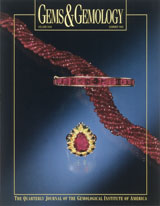
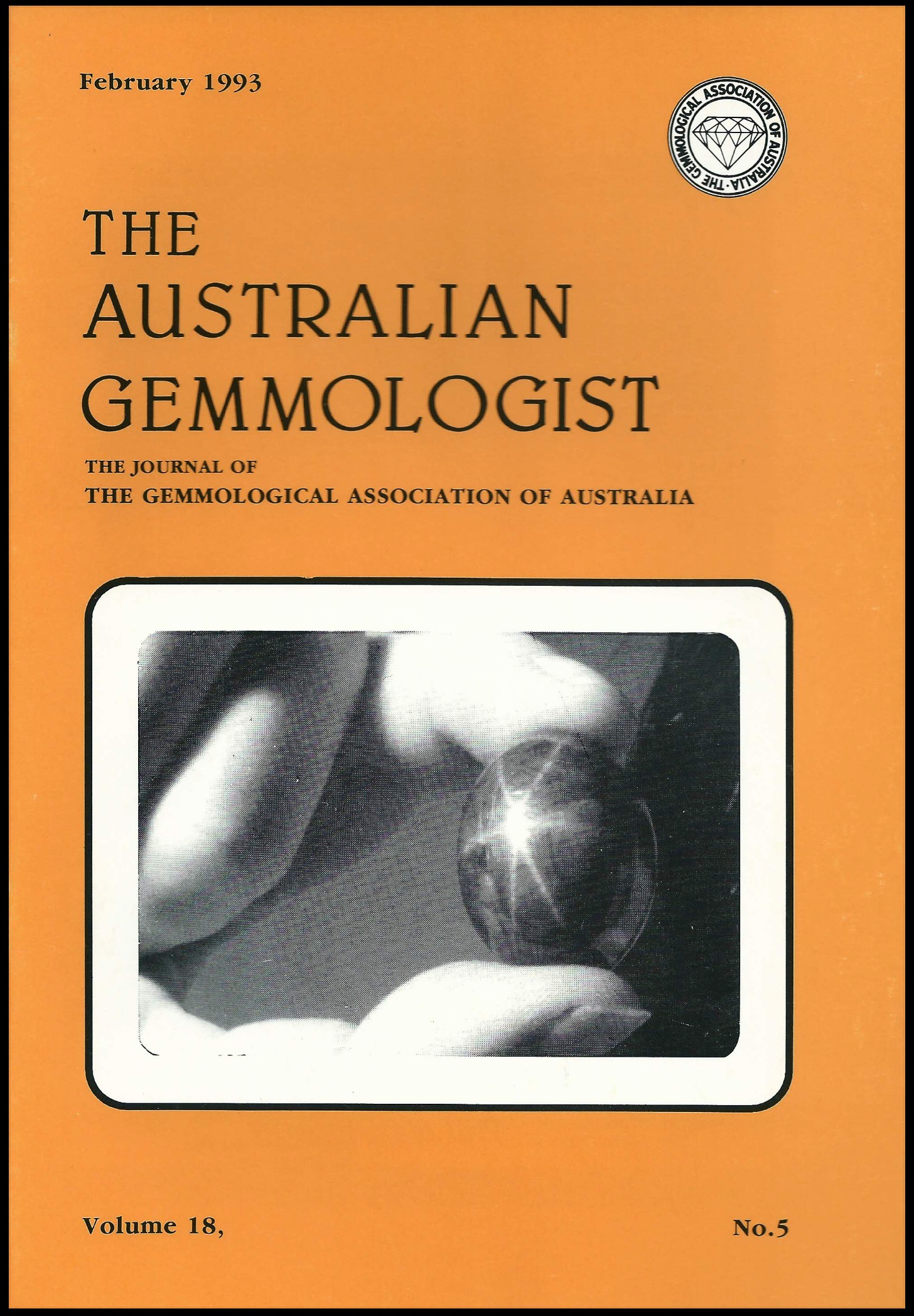
The Appalacian star ruby

Journal Article
Anonymous (1993) The Appalacian star ruby. Australian Gemmologist, Vol. 18, No. 5, Feb., p. 174.
Record No. 367  |  Sinkankas/Born No.: NIS / NIB  |  RWHL
View Individual Record ↗
Describes the Appalachian star ruby, a large star ruby reported to originate from the northeastern United States and featured on the journal’s cover. The stone weighs 139.43 carats and measures 28.6 mm in length. Its principal distinguishing feature is a six-rayed star, described as perfect, which becomes visible when the stone catches the light. The account emphasises the quality of this star alongside the ruby’s substantial weight, presenting the combination of size and a well-defined optical effect as the specimen’s notable attributes. It explicitly distinguishes this assessment from a claim to record size: the Appalachian ruby is not described as the heaviest star ruby in the world. In discussing larger examples, the note refers to a ruby from India believed to weigh more than 1,000 carats. That comparison is qualified as a belief rather than presented as a documented measurement of an identified specimen, and the Indian stone is not named. A second comparison concerns the famous Rosser Reeves ruby displayed at the Smithsonian Institution. The Appalachian specimen is stated to exceed the Rosser Reeves ruby in weight, although the latter’s weight and dimensions are not supplied. These comparisons establish the emphasis of the report: the Appalachian ruby is noteworthy for its fine star and considerable size even though heavier star rubies are reported. The geographical description remains broad, identifying only the northeastern United States rather than a particular state, mine, or deposit. The account provides no information about the stone’s discovery, ownership, cutting history, colour, transparency, or treatment status. Nor does it report laboratory measurements beyond its weight and length, or describe microscopic inclusions or tests used to establish its nature or origin. The six-rayed star is reported as a visual characteristic without discussion of its internal cause. The contribution is therefore a brief descriptive notice of a featured gemstone, supported by reference to the cover illustration, rather than a detailed gemmological investigation.

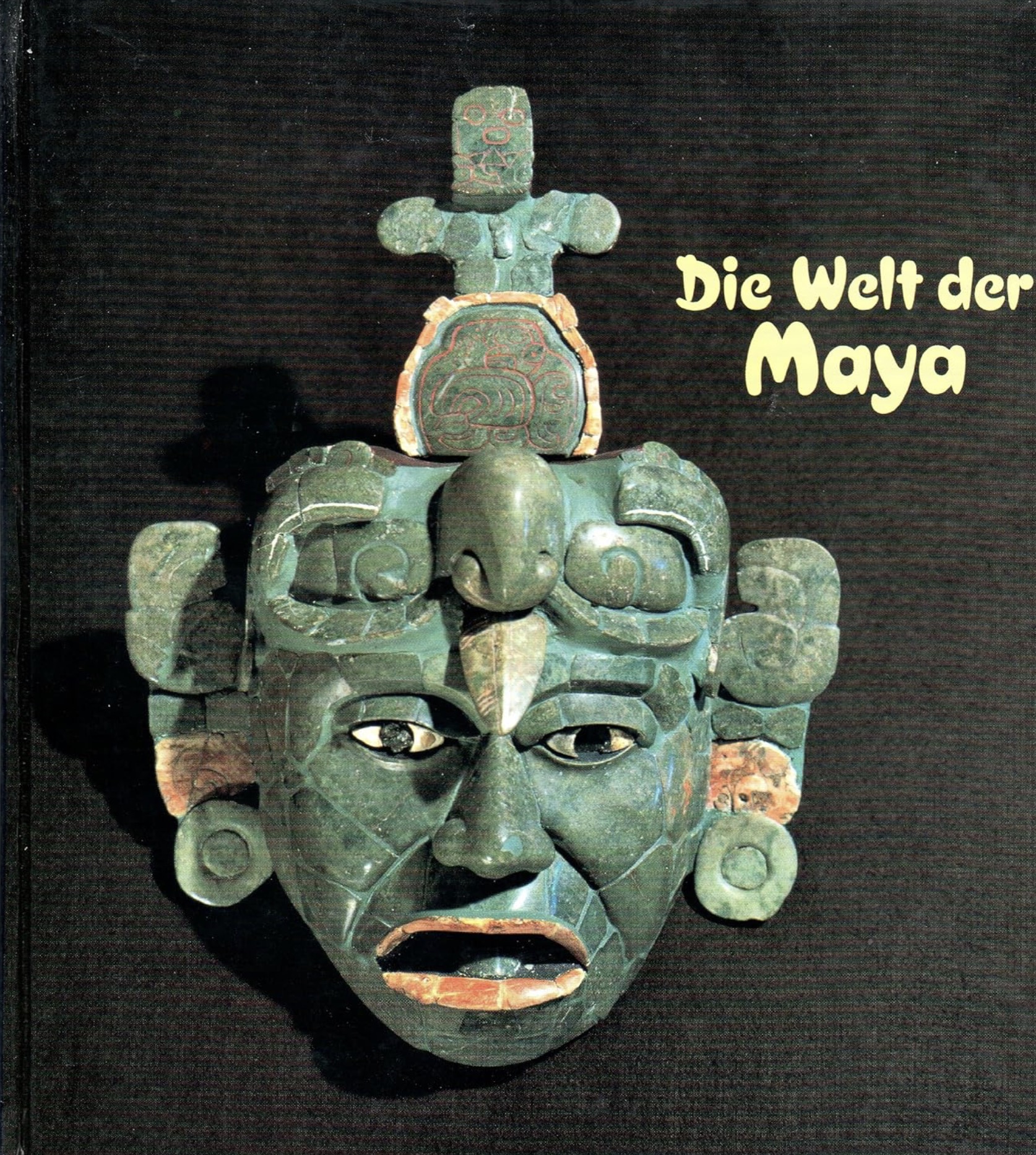
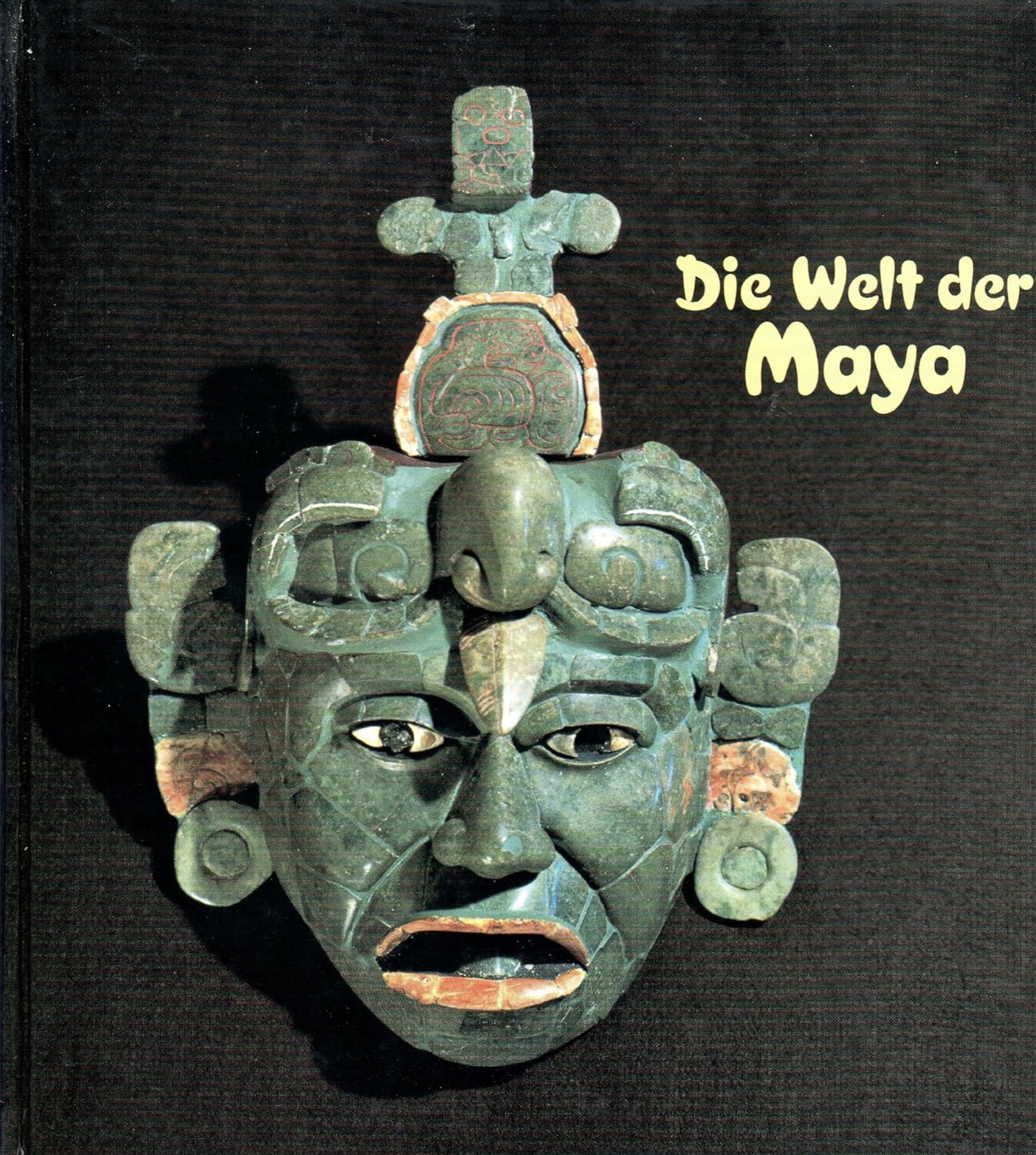
Die Welt der Maya

The World of the Maya
Edited Book
Eggebrecht, E., Eggebrecht, A. and Grube, N., editor (1992) Die Welt der Maya. [The World of the Maya]. Mainz am Rhein, Germany, Philipp von Zabern, pp. 530–551.
Record No. 28863  |  ISBN/ISSN: 9783810000000  |  Sinkankas/Born No.: NIS / NIB  |  Language: in German  |  RWHL
View Individual Record ↗
“Like a mist in the night, the Maya appeared in this land more than three thousand years ago. They created a civilization that endured six times longer than the Roman Empire. They lived by a calendar equal to our own, developed the concept of zero in mathematics, predicted eclipses of the sun and moon, and traced the path of Venus with an error of only fourteen seconds per year” (W. E. Garrett, National Geographic Magazine). These are only a few facets of Maya genius, which also expressed itself in magnificent temple and pyramid architecture. Highly advanced agriculturalists, the Maya were also remarkable painters and sculptors — their bas-reliefs are especially well known — and demonstrated artistic abilities equal to those of the most accomplished civilizations elsewhere in the world. Today, more than one million Maya still speak their ancestral languages and preserve a rich heritage of cultural traditions, particularly in music, cosmology, mythology, and complex rituals rooted in the pre-Columbian past. Yet all of these treasures are now under threat, and greater awareness of their importance is urgently needed. The exhibition “Maya World” is therefore especially welcome, presenting a collection of objects of exceptional value. It arrives at an opportune moment, coinciding with the World Decade for Cultural Development proclaimed by the United Nations Educational, Scientific and Cultural Organization in 1988, as well as with the commemoration of the fifth centenary of the encounter between the Old World and the New. The exhibition also accompanies the launch of UNESCO’s “El Mundo Maya” project. Its message will help preserve the land of the Maya, so rich in history, living tradition, and natural beauty. Belize, El Salvador, Guatemala, Honduras, and Mexico — all part of the Maya world — have continually worked toward this goal and have participated generously in the exhibition. Their shared heritage underlies their appeal to the international community to safeguard this legacy for future generations, so that their destiny may remain inscribed both in the memory of the past and in the life of the present.

Objektbescchreibungen: The El Cajón jades
Object Descriptions: The El Cajón Jades
Book Section
Hirth, K.G. and Hirth, S.G. (1992) Objektbescchreibungen: The El Cajón jades. [Object Descriptions: The El Cajón Jades] In: Die Welt der Maya, Mainz am Rhein, Germany: Philipp von Zabern, pp. 530–551.
Record No. 28862  |  ISBN/ISSN: 9783810000000  |  Sinkankas/Born No.: NIS / NIB  |  Language: in German  |  RWHL
View Individual Record ↗
“Like a mist in the night, the Maya appeared in this land more than three thousand years ago. They created a civilization that endured six times longer than the Roman Empire. They lived by a calendar equal to our own, developed the concept of zero in mathematics, predicted eclipses of the sun and moon, and traced the path of Venus with an error of only fourteen seconds per year” (W. E. Garrett, National Geographic Magazine). These are only a few facets of Maya genius, which also expressed itself in magnificent temple and pyramid architecture. Highly advanced agriculturalists, the Maya were also remarkable painters and sculptors — their bas-reliefs are especially well known — and demonstrated artistic abilities equal to those of the most accomplished civilizations elsewhere in the world. Today, more than one million Maya still speak their ancestral languages and preserve a rich heritage of cultural traditions, particularly in music, cosmology, mythology, and complex rituals rooted in the pre-Columbian past. Yet all of these treasures are now under threat, and greater awareness of their importance is urgently needed. The exhibition “Maya World” is therefore especially welcome, presenting a collection of objects of exceptional value. It arrives at an opportune moment, coinciding with the World Decade for Cultural Development proclaimed by the United Nations Educational, Scientific and Cultural Organization in 1988, as well as with the commemoration of the fifth centenary of the encounter between the Old World and the New. The exhibition also accompanies the launch of UNESCO’s “El Mundo Maya” project. Its message will help preserve the land of the Maya, so rich in history, living tradition, and natural beauty. Belize, El Salvador, Guatemala, Honduras, and Mexico — all part of the Maya world — have continually worked toward this goal and have participated generously in the exhibition. Their shared heritage underlies their appeal to the international community to safeguard this legacy for future generations, so that their destiny may remain inscribed both in the memory of the past and in the life of the present.

Códice Chimalpopoca. Anales de Cuahtitlan y Leyenda de los Soles
Codex Chimalpopoca: Annals of Cuauhtitlan and the Legend of the Suns
Book
Velazquez, P.F. (1992) Códice Chimalpopoca. Anales de Cuahtitlan y Leyenda de los Soles. [Codex Chimalpopoca: Annals of Cuauhtitlan and the Legend of the Suns] Mexico City, Universidad Nacional Autónoma de México, Instituto de Investigaciones Históricas Editorial, 162 pp.
Record No. 28698  |  Sinkankas/Born No.: NIS / NIB  |  Language: in Spanish  |  RWHL
View Individual Record ↗
Among the works of greatest importance for gaining an understanding of the pre-Hispanic history of Mexico are the Annals of Cuauhtitlan and the text known as the Legend of the Suns. Both were published by this Institute in 1945 under the title Codex Chimalpopoca. After that first edition was exhausted, the work was reprinted in 1975. Once again, to satisfy the wishes of the many readers interested in it, our Institute is bringing it back into print. Although earlier editions of these texts exist, the Spanish translation prepared by Don Primo Feliciano Velázquez represented a valuable contribution in many respects. It should be emphasized that, particularly following its publication, researchers of pre-Hispanic Mexican history were able to make much fuller use of the wealth of information contained in these ancient documents. This is not to suggest that further studies of these sources are unnecessary, nor that a new translation based on more recent advances in the study of Nahuatl language and culture is not desirable. Nevertheless, when preparing this third edition of Velázquez’s work, it was thought that the saying “the best is the enemy of the good” was applicable. In other words, although there are good reasons to hope for a superior future edition, the work already accomplished should not remain unavailable in the meantime. For the reader’s information, and also as a tribute to the memory of Don Primo Feliciano Velázquez, it seems appropriate to provide a brief account of his life and activities. He was born in Santa María del Río, San Luis Potosí, on 6 June 1860. A long-lived man, he died in the city of San Luis Potosí on 19 June 1953. After completing his humanities studies at the diocesan seminary in the state capital, he entered the School of Law, where he earned his law degree in 1890. Although he practiced law for a time, journalism and historical research eventually became his principal interests. A skilled and polished writer, he contributed to numerous newspapers and journals, both in the provinces and in Mexico City. In recognition of his literary abilities, he was elected a corresponding member of the Mexican Academy of Language. Licenciado Velázquez devoted himself with great diligence to the study of the Nahuatl language. Among other works, he prepared the Spanish translation of the texts published here, the Annals of Cuauhtitlan and the Legend of the Suns. He also translated the text attributed to Valeriano, the distinguished Indigenous disciple of Fray Bernardino de Sahagún, concerning the apparitions of the Virgin of Guadalupe. In addition, he specialized in regional history, consulting archives and compiling bibliographies relating to the history of San Luis Potosí. His publications on the history of his native region bear witness to his meticulous scholarship. In this field, at least two important works deserve mention: Collection of Documents for the History of San Luis Potosí, 4 vols. (San Luis Potosí, 1897–1899), and History of San Luis Potosí, 4 vols. (Mexico City, 1946–1948).

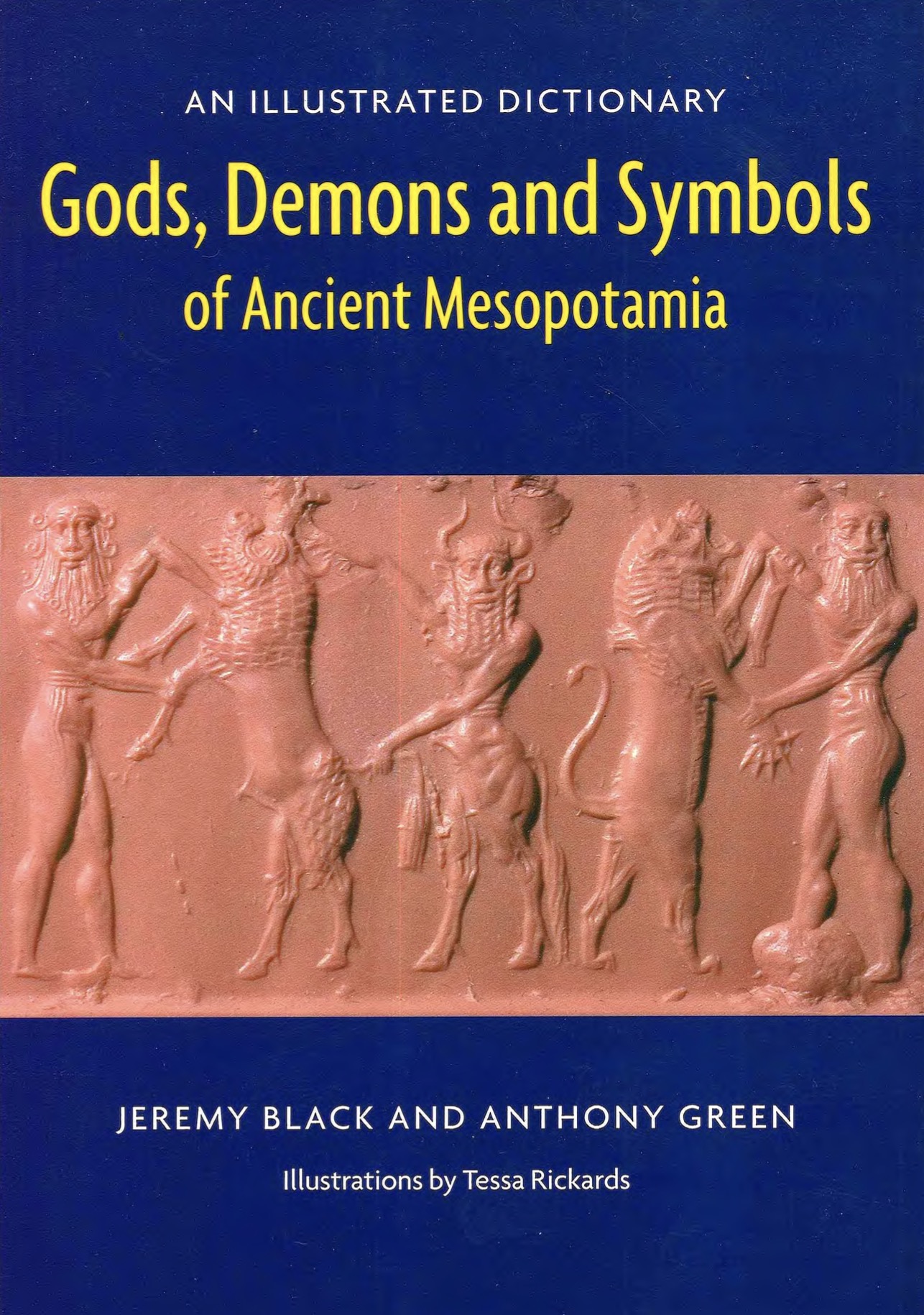
Gods, Demons and Symbols of Ancient Mesopotamia: An Illustrated Dictionary
Book
Black, J. and Green, A. (1992) Gods, Demons and Symbols of Ancient Mesopotamia: An Illustrated Dictionary. London, British Museum Press, 192 pp.
Record No. 28550  |  Sinkankas/Born No.: NIS / NIB  |  RWHL
View Individual Record ↗
Ancient Mesopotamia was the home of some of the world’s earliest cities and the place where writing was invented. For these two major developments alone—urban society and literate society—it might justly be titled the “cradle of civilisation”, but in its literature, its religious philosophies, and no less in its art, it can also be placed firmly as a direct ancestor of the Western world. Our knowledge of the civilisation of ancient Mesopotamia is constantly expanding. A hundred and fifty years after the first modern excavations, archaeological work in the Near East continues unabated, and new discoveries are constantly being made that add to, reshape, and refine our understanding of some of the most staggering human achievements of antiquity. At the sites of ancient settlements and in the museums of Iraq and other countries, one can contemplate and wonder at the monuments, arts, handicrafts, and utensils of daily life created by the Mesopotamians. Thanks to the Mesopotamians’ greatest invention—writing—and the modern decipherment of the languages in which they expressed themselves, we can read their literature, reconstruct their history, and gain insight into their thoughts.

Die frühen Türken in Zentralasien: Eine Einführung in ihre Geschichte und Kultur
The early Turks in Central Asia: An Introduction to their History and Culture
Book
Scharlipp, W.E. (1992) Die frühen Türken in Zentralasien: Eine Einführung in ihre Geschichte und Kultur. [The early Turks in Central Asia: An Introduction to their History and Culture] Darmstadt, Wissenschaftliche Buchgesellschaft, 161 pp.
Record No. 28194  |  ISBN/ISSN: 9783530000000  |  Sinkankas/Born No.: NIS / NIB  |  Language: in German  |  RWHL
View Individual Record ↗
This interesting book by Wolfgang-Ekkehard Scharlipp, a lecturer at the Oriental Seminar in Freiburg, is the first comprehensive account of the earliest general and cultural history of the Turkic tribes which, united in a tribal confederation or steppe state of the “Heavenly Turks” (Göktürks), are first mentioned in historical sources (Chinese annals from 552) under the name T’u-küe. After a brief introduction outlining basic information on Turkic peoples following the collapse of the Soviet Union and the geographical terms Turkestan and Turan, the book proceeds to a chapter on Turkish prehistory, dealing with the Scythians and the Huns (Xiongnu). It emphasizes the historical significance of a unified Eurasian space in which successive steppe cultures of various nomadic peoples developed, and argues that the earliest Turkic steppe states—the First and Second Khaganates—can be seen as inheritors of the social, economic, political, and cultural structures of earlier steppe empires. Scharlipp repeatedly stresses that neither the Scythians nor the Huns were “Turks,” contrary to claims sometimes made by Turkish scholars; the Scythians are generally recognized as an Indo-European people, while the term “Huns” is understood not as an ethnic designation but as a political one, encompassing ethnically diverse groups, including some Turkic tribes.

The Deer Goddess of Ancient Siberia: A Study in the Ecology of Belief
Book
Jacobson, E. (1992) The Deer Goddess of Ancient Siberia: A Study in the Ecology of Belief.
Record No. 27246  |  ISBN/ISSN: 9789000000000  |  Sinkankas/Born No.: NIS / NIB  |  RWHL
View Individual Record ↗
Central to this study is the image of the deer within the iconography of the Early Nomads of South Siberia. By examining the symbolic structures revealed in the art and archaeology of the Early Nomads, the author challenges existing theories regarding Early Nomadic cosmology. The reconstruction of meanings embedded in the deer image carries the investigation back to rock carvings, paintings, and monolithic stelae of South Siberia and northern Central Asia, from the Neolithic period down through the early Iron Age. The succession of images dominating that artistic tradition is considered against the background of cultures — including the Baykal Neolithic Afanasevo, Okunev, Andronovo, and Karasuk — evolving from a hunting-fishing dependency to a dependency on livestock. The archaic mythic traditions of specific Siberian groups are also found to lend critical detail to the changing symbolic systems of South Siberia.

Archaeology of the Greeks and Barbarian Peoples around the Black Sea
Report
Hind, J.G.F. (1992) Archaeology of the Greeks and Barbarian Peoples around the Black Sea. Archaeological Reports, No. 39 (1982–1992), Society for the Promotion of Hellenic Studies, pp. 82–112
Record No. 27245  |  Sinkankas/Born No.: NIS / NIB  |  RWHL
View Individual Record ↗
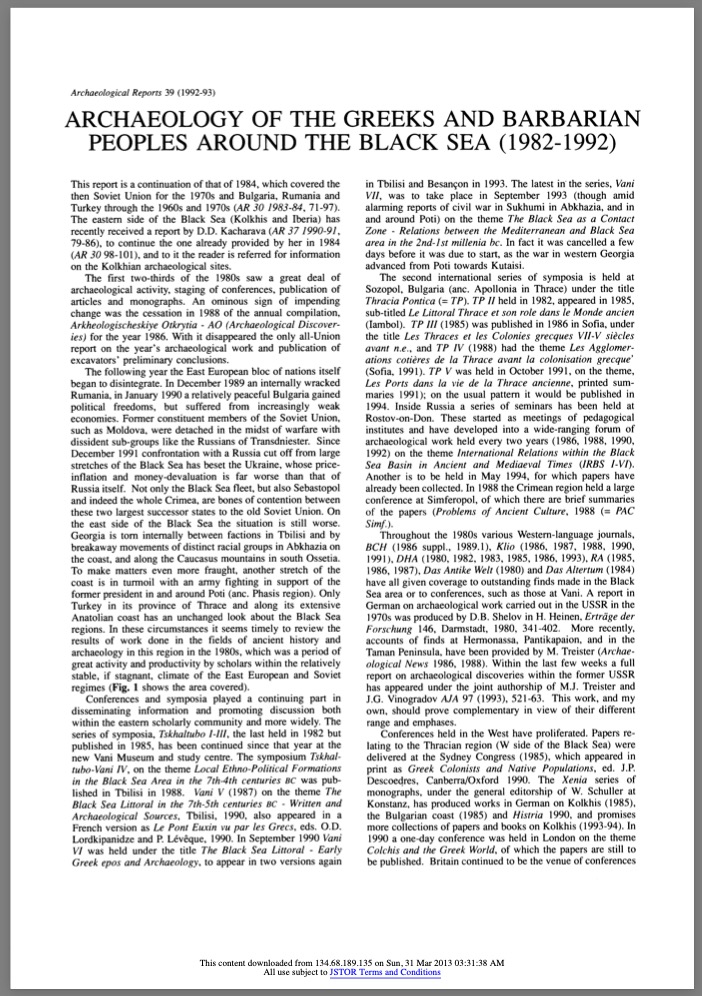
This report continues from the 1984 account, which surveyed archaeological activity in the then Soviet Union during the 1970s and in Bulgaria, Romania, and Turkey throughout the 1960s and 1970s (AR 30, 1983–84, 71–97), while the eastern Black Sea region (Kolkhis and Iberia) has more recently been addressed by D.D. Kacharava in AR 37 (1990–91, 79–86), building on her earlier 1984 contribution (AR 30, 98–101), to which readers are referred for Kolkhian archaeological data; the first two-thirds of the 1980s saw intense archaeological work, scholarly conferences, and a substantial output of articles and monographs, but a foreboding development came in 1988 with the termination of Arkheologicheskiye Otkrytiya (AO), the annual compilation of archaeological discoveries for the year 1986, marking the end of the only comprehensive all-Union report on the year’s fieldwork and preliminary findings.

Sacred hot springs, instant patinas

Journal Article
Benedict, J.B. (1992) Sacred hot springs, instant patinas. Plains Anthropologist, Vol. 37, No.  138, pp. 1–6.
Record No. 26913  |  DOI: https://doi.org/10.1080/2052546.1992.11909660  |  Sinkankas/Born No.: NIS / NIB  |  RWHL
View Individual Record ↗
A Hog Back Comer-notched aowpoint from an excavated hunting camp near timberline in the Colorado Front Range is patinated on all surfaces except for flake scars produced in modifying its blade and tip for secondary use as a cutting and perforating tool. Fewer than 300 years can have elapsed between manufacture and reworking of the point-too little time for heavy patination to occur by natural weathering processes. The point is made of Kremmling chert, a rock type that develops an opaque whit patina in less than a week when heated in sodium-rich spring water. Native inhabitants of the Plains and Front Range foothills left a"owpoints as offerings to spirits believed to reside in springs, and may have deliberately patinated points in hot springs as a source of hunting magic. Ritual activities must be added to the list of factors that can potentially influence rates of patina development."

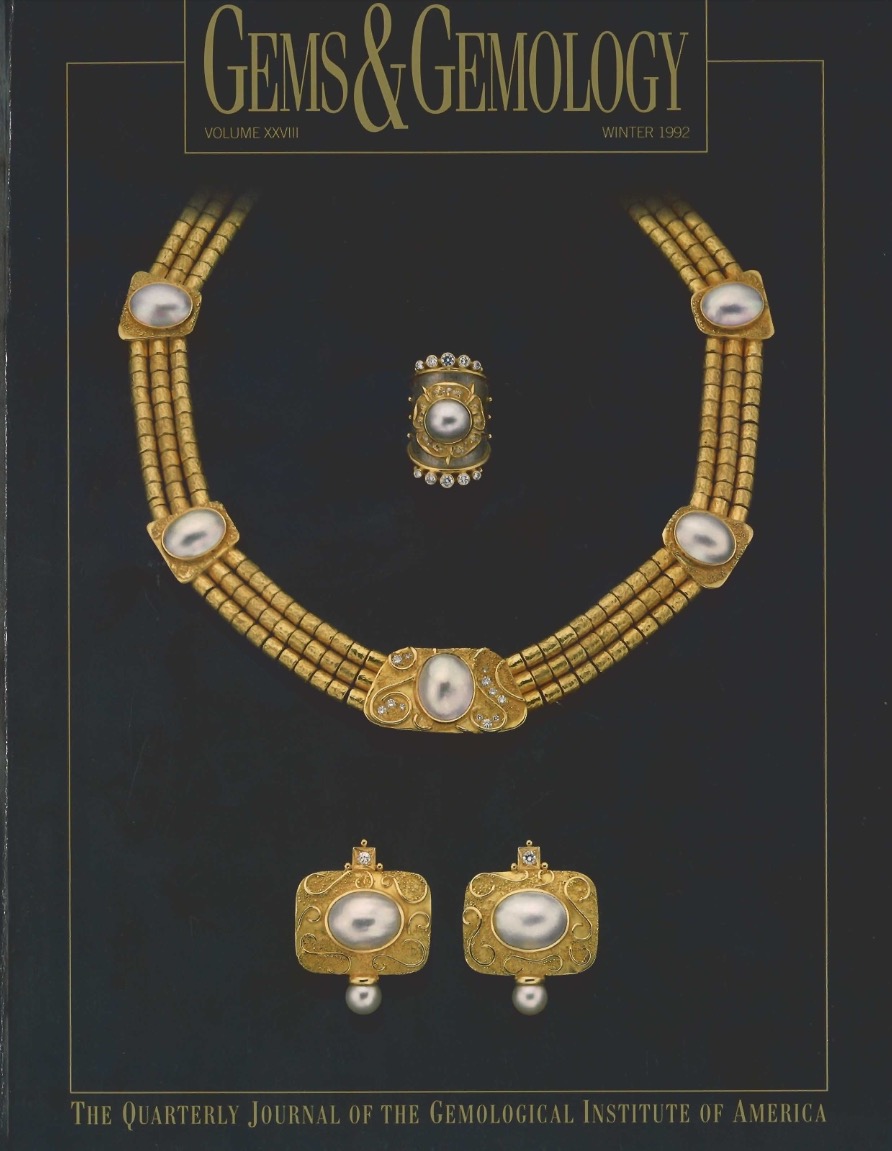
Gem News: Feldspar and amphibole gem from Egypt
Journal Article
Koivula, J.I., Kammerling, R.C. and Fritsch, E. (1992) Gem News: Feldspar and amphibole gem from Egypt. Gems & Gemology, Vol. 28, No. 4, Winter, pp. 271–272.
Record No. 26787  |  Sinkankas/Born No.: NIS / NIB  |  RWHL
View Individual Record ↗
A mottled blue-to-green gem material from Egypt, observed in Cairo and said to be sporadically collected by Bedouin tribespeople, was found to resemble the well-known copper-colored “Eilat stone” of Israel. Two cabochons—a 7.05-ct pear shape and a 3.29-ct oval—were semitranslucent with greenish blue and nearly black dark green areas, the former highly fractured and veined, and the latter containing metallic-luster inclusions. Additional inclusions of saturated greenish blue with lower diaphaneity and some brownish red (likely limonitic) staining were noted. Spot refractive index measured 1.54, and the gems appeared green through the Chelsea filter. The translucent zones fluoresced faint yellowish green under long-wave UV, while the material was inert to short-wave UV. Specific gravity values were 2.67 and 2.74. As standard tests were inconclusive, X-ray powder diffraction revealed the greenish blue areas to be feldspar and the dark green areas amphibole, though species were not identified. EDXRF analysis detected Al, Si, K, Ca, Ba, Mn, Fe, and Cu, with copper likely responsible for the blue coloration. The stones were thus identified as rocks composed of feldspar and amphibole, with other minor mineral components.

Garnets from Egypt

Journal Article
Koivula, J.I., Kammerling, R.C. and Fritsch, E. (1992) Garnets from Egypt. Gems & Gemology, Vol. 28, No. 2, Summer, p. 132.
Record No. 26755  |  Sinkankas/Born No.: NIS / NIB  |  RWHL
View Individual Record ↗
During a 1991 visit to Egypt, a Gem News editor observed gem-set antiquities in the Egyptian Museum in Cairo, including dark brownish red stones in Greco-Roman jewelry that resembled almandine garnet. A museum chart listed garnet among the materials used by ancient Egyptians, though without specifying species. Later, in Luxor, the editor encountered a necklace of similarly colored beads from a gem dealer, who claimed they were garnets sourced from the south-central Sinai Peninsula, near Gebel Musa (Mt. Sinai), though the exact mine location was lost. John D. Rouse, in Garnet, referenced Pliny’s mention of Egypt as a source of “carbuncles,” likely garnets, possibly originating from a Theban trading station rather than a mine. The necklace, acquired for gemological study, comprised 36 off-round beads, 12.3–13.0 mm in diameter, appearing brown and opaque in reflected light but brownish red and transparent in transmitted light. Magnification revealed dark inclusions and stained fractures. Spot refractive index readings exceeded 1.80, and spectroscopic analysis showed absorption features typical of almandine and spessartine. EDXRF analysis confirmed the presence of iron and manganese, leading to the identification of the beads as almandine–spessartine garnets.

Building a Gemological Library

Gemological books range from general identification manuals and textbooks to specialized works on individual gems, mineralogy, jewelry, treatments, synthesis, history and gem-producing regions.

For a curated selection of particularly useful books, read The Gemologist's Core Library — Classic Books on Gemology, Jewelry and Mineralogy.

About Four Treasures

Four Treasures is Lotus Gemology's freely accessible gemological reference database. Use the full database to search by author, title or keyword and explore literature on gemology, mineralogy, jewelry and related fields. Where available, hyperlinks on titles may lead directly to the full publication.

Search the Complete Four Treasures Database