Gemology Books Bibliography

Gemology Books Bibliography

Explore books on gems, gemology, jewelry and mineralogy in Four Treasures, the Lotus Gemology reference database. This bibliography brings together matching book records from the collection, with publication details, abstracts and cover images where available.

Gemology Book References

The list below matches books concerning gemology and related subjects in the database's searchable fields. Some works cover several branches of gems, jewelry or mineralogy.
2,261–2,280 of 3,681 matching references

Vietnamese ruby: A discriminatory problem for gemmologists
Journal Article
Brown, G. (1992) Vietnamese ruby: A discriminatory problem for gemmologists. Australian Gemmologist, Vol. 18, No. 2, pp. 43–46.
Record No. 534  |  Sinkankas/Born No.: NIS / NIB  |  RWHL
View Individual Record ↗
Grahame Brown examines the difficulties of distinguishing Vietnamese ruby from Myanmar ruby and identifying heat-treated Verneuil synthetics introduced into parcels represented as natural Vietnamese corundum. Discoveries at Luc Yen in 1987 and Quy Chau in 1990 supplied rubies and pink sapphires whose attractive colours closely resembled valuable Myanmar material. By late 1990, these stones were appearing in Australia through Vietnamese residents and dealers purchasing from Thai wholesalers. Brown reports that some parcels of rough and faceted ruby, as well as blue sapphire, contained convincing synthetic substitutes. Routine gemmological measurements provide little assistance because refractive indices, birefringence, specific gravity, pleochroism, fluorescence, and absorption spectra overlap among the materials concerned. Microscopic examination is therefore essential, although many inclusions previously considered characteristic of Myanmar ruby also occur in Vietnamese stones. Shared features include swirling growth structures, boehmite-decorated twin planes, rutile clouds, partly healed fractures, negative crystals, carbonates, apatite, mica, zircon, and pyrrhotite. Drawing on published research, Brown discusses potentially useful combinations of Vietnamese features, including blue growth-related zoning, rod-like pyrrhotite and carbonate inclusions, orange prismatic rutile, bluish clouds of fine rutile, and orange inclusions attributed to nordstrandite. These observations support cautious provenance assessment rather than simple separation by colour or one inclusion. The second problem arises because prolonged heating can diffuse the curved colour banding normally used to recognize flame-fusion corundum. Brown recommends examining every stone in immersion at 10–25× magnification, using diffuse transmitted light together with lateral fibre-optic illumination and rotating the specimen through different orientations. Residual diffuse banding, rounded or elongated gas bubbles, and partly fused whitish alumina near the original boule attachment can reveal synthetic origin. Other apparently reassuring features require caution: heating may generate natural-looking fractures in synthetic stones, and Verneuil corundum can display polysynthetic twinning. Conversely, elongated cavities in demonstrably natural Vietnamese ruby may resemble stretched synthetic gas bubbles. Photomicrographs document these overlapping appearances. Brown concludes that detecting synthetic additions and distinguishing Vietnamese from Myanmar origin require separate judgments, both founded on careful interpretation of multiple microscopic features. Chemical discrimination between natural sources in specimens lacking informative inclusions remained unproven at the time of the report.

The Great Game: The Struggle for Empire in Central Asia
Book
Hopkirk, P. (1992) The Great Game: The Struggle for Empire in Central Asia. New York, Kodansha, 565 pp.
Record No. 194  |  ISBN/ISSN: 4770017030  |  Sinkankas/Born No.: NIS / NIB  |  RWHL
View Individual Record ↗
Peter Hopkirk’s The Great Game: The Struggle for Empire in Central Asia recounts the nineteenth-century rivalry between the British and Russian empires for political, military, and commercial influence across Central Asia, particularly Afghanistan, Persia, the Pamirs, Tibet, and the territories bordering British India. Drawing extensively on contemporary travel narratives, military dispatches, diplomatic correspondence, memoirs, and historical studies, Hopkirk reconstructs the activities of explorers, spies, soldiers, merchants, and political agents who ventured into remote and frequently dangerous regions. The narrative begins with Russia’s expansion across Siberia and the Caucasus, tracing the growing British fear that Russian armies might eventually threaten India through Afghanistan and the mountain passes of the Hindu Kush. Among the principal figures are Henry Pottinger, Charles Christie, William Moorcroft, Alexander Burnes, Arthur Conolly, Francis Younghusband, and their Russian counterparts, including Nikolai Muraviev and Bronislav Gromchevsky. Hopkirk describes clandestine surveying expeditions, diplomatic intrigues, the conquest of the Central Asian khanates, the disastrous British invasion of Afghanistan in 1839, and the subsequent struggle for control of strategic mountain corridors. Particular attention is devoted to the geographical obstacles confronting imperial expansion, including the deserts of Baluchistan and Turkestan, the Karakoram and Pamir mountain systems, and the difficult approaches to Kashmir, Ladakh, and Chinese Turkestan. For gemological and mineralogical history, the book provides valuable incidental evidence concerning the movement of precious stones, gold, and luxury goods along the commercial networks connecting Central Asia with India, Persia, Russia, and China. Hopkirk describes Peter the Great’s interest in reported gold deposits along the River Oxus and his unsuccessful attempt to establish a Russian presence at Khiva in 1717, partly to facilitate mineral exploration and overland commerce (pp. 16–20). The diplomatic use of gemstones is illustrated by the British mission of Sir Harford Jones to Persia, during which a large diamond presented on behalf of George III helped restore relations with the Shah (p. 35). The book also recounts the activities of Aga Mehdi, a Persian-Jewish merchant operating as a Russian agent, who carried valuable rubies and emeralds through Central Asia, apparently intended as diplomatic gifts for Ranjit Singh and other influential rulers (p. 94). The famous Koh-i-Noor diamond and Peacock Throne appear in the account of Nadir Shah’s sack of Delhi in 1739, illustrating the importance of jewels as symbols of imperial wealth and conquest (p. 69). Beyond these references, Hopkirk’s descriptions of caravan routes, trading centers, political boundaries, and the opening of previously inaccessible territories provide historical context for understanding the circulation of gemstones and other valuable commodities between the Himalayan region, Central Asia, and international markets. Although not a gemological treatise, the work is an important historical resource for reconstructing the political and geographical circumstances surrounding nineteenth-century exploration, commerce, and the movement of precious materials across Inner Asia.

Topaz

Book
Hoover, D.B. (1992) Topaz. London, Butterworth-Heinemann, 207 pp.
Record No. 102  |  ISBN/ISSN: 750610875  |  Sinkankas/Born No.: NIS / NIB  |  RWHL
View Individual Record ↗
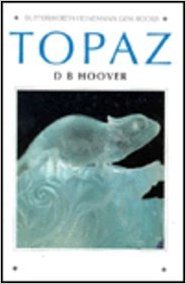
D.B. Hoover’s Topaz (1992), published in the Butterworth-Heinemann Gem Books series, is a comprehensive mineralogical, geological, historical, and gemological study of topaz. The author examines the mineral from its earliest historical references to modern scientific investigations, emphasizing the relationship between its chemical composition, crystallographic structure, physical properties, geological formation, and use as a gemstone. The opening chapters investigate the etymology of the name topaz and the historical confusion surrounding its identification, particularly the application of the name to other yellow and green gemstones. Famous topaz crystals and faceted gemstones are described, followed by a systematic examination of the mineral’s chemistry, crystal structure, and physical and optical properties. Hoover discusses variations in refractive index, specific gravity, and other measurable characteristics, questioning whether some properties are more closely associated with geological origin and conditions of formation than with colour alone. He also examines evidence suggesting that certain topaz specimens may possess triclinic rather than strictly orthorhombic symmetry, challenging conventional assumptions about the mineral’s crystallography. The treatment of colour encompasses natural colour variations, luminescence, and the processes responsible for colour changes, including artificial colour modification through irradiation and heating. Crystal morphology receives detailed attention, together with the characteristics and significance of inclusions, which provide information relevant to both gem identification and the geological environment of crystallization. The geological sections describe the formation of topaz in different rock types and mineral deposits, emphasizing the conditions under which fluorine-bearing fluids and magmatic processes contribute to its development. A substantial geographical survey examines important occurrences around the world, documenting the geological settings, associated minerals, and gem-producing potential of individual localities. Particular attention is devoted to the celebrated topaz deposits of the Ouro Preto district of Minas Gerais, Brazil, including their geology, history of mining, and production of the orange, pink, and reddish varieties associated with imperial topaz. The volume also considers the scientific and commercial significance of large crystals and exceptional faceted examples, placing them within the broader history of gemstone collecting and the gem trade. A particularly important theme running throughout the book is the substitution of hydroxyl (OH) for fluorine in the topaz structure, which Hoover shows can produce previously unrecognized variations in crystallographic, physical, and optical properties. The work is illustrated with colour photographs and black-and-white figures and is supported by an extensive bibliography. In a 1993 review in The Journal of Gemmology, Michael O’Donoghue praised the clarity of Hoover’s writing, the strength of his scientific evidence, and the originality of his mineralogical interpretations, recommending the book as an essential reference for gemologists.

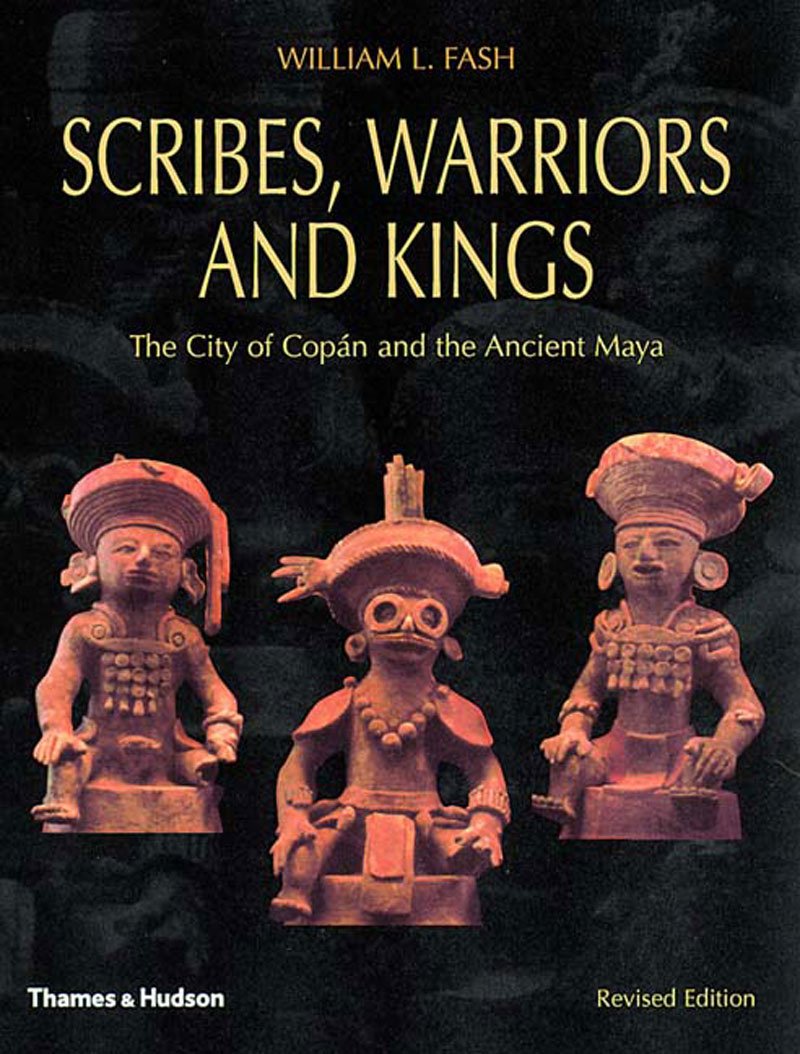
Scribes, Warriors, and Kings: The City of Copan and the Ancient Maya
Book
Fash, W.L. (1991) Scribes, Warriors, and Kings: The City of Copan and the Ancient Maya. New York, Thames and Hudson, 192 pp.
Record No. 28431  |  Sinkankas/Born No.: NIS / NIB  |  RWHL
View Individual Record ↗
Copan in modern Honduras was one of the great cities of the Classic Maya. Abandoned to the rain forest for nearly a thousand years, it was rediscovered in the early 1800s. Now, two centuries later, an international team of scholars is solving the puzzle of Copan and the ancient Maya. William Fash, himself one of the key contributors to the recent breakthroughs, describes how decipherment of the Maya inscriptions together with tomb finds have unlocked the secrets of Copan's history. For this revised edition, Professor Fash shows how recent discoveries in the Acropolis, urban wards, and rural redoubts of the Copan kingdom reveal fascinating insights into the life and times of royalty, nobles, and commoners in this distinguished Maya city. The uncovering of the extraordinary tomb of the dynasty's founder provides illuminating information on his origins and accomplishments, while archaeological and hieroglyphic studies have demonstrated the importance of Tikal and the great metropolis of Teotihuacan in the founding and long-term legitimization of the Copan royal line. New excavations in the royal residential area give a blueprint for the layout and functioning of Maya palaces, as well as dramatic evidence for the violent and sudden end to dynastic rule. 11 color and 109 b/w illustrations.

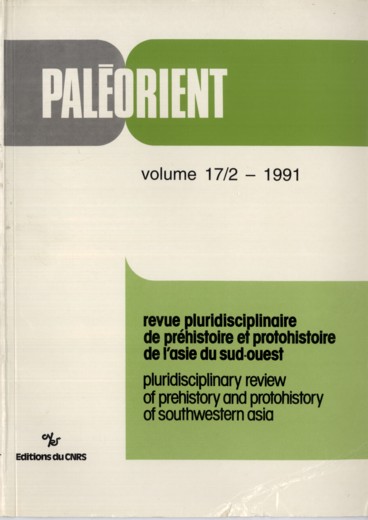
Picrolite, its nature, provenance, and possible distribution patterns in the Chalcolithic Period of Cyprus
Journal Article
Xenophontos, C. (1991) Picrolite, its nature, provenance, and possible distribution patterns in the Chalcolithic Period of Cyprus. Bulletin of the American Schools of Oriental Research, Nos. 282/283, May–August, pp. 127–138.
Record No. 27625  |  DOI: https://doi.org/10.2307/1357266  |  Sinkankas/Born No.: NIS / NIB  |  RWHL
View Individual Record ↗
Neolithic (Stone Age) and Chalcolithic (Copper Age) stone decorative artifacts, in various shades of blue-green and green, have been referred to as steatite, “antigorite steatite,” antigorite, serpentine, or simply green rock. Petrographic, chemical, and x-ray diffraction analyses of samples from such artifacts show the material to consist of a fine-grained mixture of the serpentine polymorphs chrysotile and lizardite. An identical rock, in the form of veins within serpentinized ultramafic exposures on the island, is known as picrolite. A detailed field study revealed that suitable material for artifact manufacture is present only on Mt. Olympus, the highest point in the Troodos Mountains (1951 m), a source that could not have been easily accessible. All unworked or partly unworked fragments of this rock type found at Neolithic and Chalcolithic sites are waterworn river pebbles. An exhaustive river-bed survey identified the Kouris and Karyotis rivers, with headwaters on Mt. Olympus, as the only picrolite carriers on the island. The lower reaches of those rivers are proposed as the source areas from which the material was dispersed throughout Cyprus.

Ornament styles of the Indus Valley tradition: Evidence from recent excavations at Harappa, Pakistan
Journal Article
Kenoyer, J.M. (1991) Ornament styles of the Indus Valley tradition: Evidence from recent excavations at Harappa, Pakistan. Paléorient, Vol. 17, No. 2, pp. 79–98.
Record No. 26830  |  Sinkankas/Born No.: NIS / NIB  |  RWHL
View Individual Record ↗
Recent excavations at Harappa and Mehrgarh, along with other sites in Pakistan and India, have provided new opportunities to study the ornaments of the Indus Civilization. A brief discussion of the methodologies required for studying Indus ornaments is presented, along with examples of how Indus artisans combined precious metals, stone beads, shell, and faience to create elaborate ornaments. Many of these styles were also imitated in more readily available materials such as steatite or terra-cotta. The social and ritual implications of specific ornaments are explored through their archaeological contexts and comparisons with the roles of such ornaments as recorded in ancient texts and folk traditions of South Asia.

Pliny on Art and Society: The Elder Pliny’s Chapters on the History of Art
Book
Isager, J. (1991) Pliny on Art and Society: The Elder Pliny’s Chapters on the History of Art. Odense, Odense University Press, 256 pp.
Record No. 26473  |  ISBN/ISSN: 9780420000000  |  Sinkankas/Born No.: NIS / NIB  |  RWHL
View Individual Record ↗
Pliny sketches a theory of advancing moral decline and extravagance, in the course of which he gives a detailed account of six centuries of classical art and a fascinating sketch of the world of the rich Roman collector. Isager's is the first full treatment of this subject for over a hundred years.

Colour questions

Journal Article
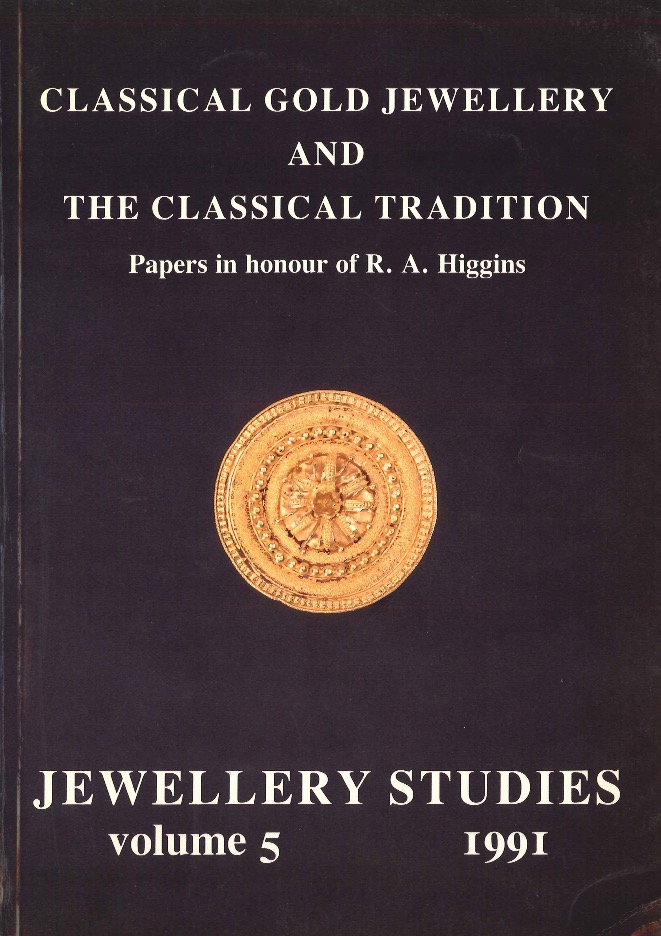
Boardman, J. (1991) Colour questions. Jewellery Studies, Vol. 5, pp. 29–31.
Record No. 26381  |  Sinkankas/Born No.: NIS / NIB  |  RWHL
View Individual Record ↗
The subject of colour aesthetics in ancient gems and jewellery has received little scholarly attention. Discussions of gold and silver in jewellery and finger-rings have tended to focus more on technique and relative value than on aesthetic considerations, aside from obvious art-historical issues. While colour contrasts between metals are noted, they are rarely examined in depth and seldom intentionally exploited in Archaic and Classical Greek art, with only slightly more attention in later periods. It is primarily from the fourth century BC onward that the colour contrast introduced by precious stones—used as beads or inlay—becomes significant. Earlier, isolated orientalising practices in the Greek world, such as the use of colourless rock crystal or amber as inlay, had no immediate continuation. This paper offers a summary consideration of questions raised by the physical appearance—rather than the intrinsic or relative value—of gold and silver in Greek antiquity, and examines evidence for possible colour selection in Mediterranean glyptics from the sixth to fourth centuries BC.

Antique gems in Roman Britain

Journal Article
Henig, M. (1991) Antique gems in Roman Britain. Jewellery Studies, Vol. 5, pp. 49–54.
Record No. 17222  |  Sinkankas/Born No.: NIS / NIB  |  RWHL
View Individual Record ↗
The writer of this note is aware that his interests are often regarded as art-historical by archaeologists and as archaeological by art historians. This sense of being wedged between disciplines is one that most students of jewellery (and especially of ancient jewellery) will share. Like other connoisseurs, the jewellery historian will always wish to explore the aesthetic values of the objects he studies and the techniques of the craftsman. He will also want to know something of the context in which an item of jewellery was used, and, as far as Antiquity is concerned, this requires a close attention to field archaeology and to stratigraphy. However disconcerting the position of the archaeologist-art historian may seem within the structure of the British academic scene, it certainly has its strengths in an attempt to endow the past with significance. Reynold Higgins has demonstrated this in his important work on gold jewellery, for instance in his account of the Aegina Treasure in the British Museum (R. Higgins, The Aegina Treasure. An Archaeological Mystery, British Museum, London 1979). One of the uses of gold was in order to manufacture rings which were frequently employed for sealing. I hope that Dr Higgins will excuse me if I take a tangential approach to his particular specialism and look not at metal jewellery but at stones associated with it. Engraved gems can, in part, reveal their histories in their devices. Their intrinsic meaning is proclaimed, for instance, in images of deities (worship), heroes (veneration), lucky devices and love-charms. For the many gems without provenance in old collections and, alas, others still being found by treasure-hunters who remove them from where they have lain for some two millennia without record, this is as far as we can go. However, many stones do, fortunately, have geographical and even stratigraphical contexts, and these can be very useful in telling us about the sort of people who wore signet-rings, their choice of devices and even the age of the ring stones they owned.

Piers Gaveston and the Royal Treasure
Journal Article
Hamilton, J.S. (1991) Piers Gaveston and the Royal Treasure. Albion: A Quarterly Journal Concerned with British Studies, Vol. 23, No. 2, pp. 201–207.
Record No. 17072  |  ISBN/ISSN: 951390  |  DOI: https://doi.org/10.2307/4050602  |  Sinkankas/Born No.: NIS / NIB  |  RWHL
View Individual Record ↗
Piers Gaveston, the Gascon favorite of Edward II and earl of Cornwall from 1307 until his violent death in 1312 at the hands of disaffected magnates led by Thomas of Lancaster and Guy of Warwick, was the subject of numerous accusations, one of the most prominent being that he had unlawfully seized the royal treasure and transported it to his native Gascony. Contemporary sources like the Annales Londonienses report that upon Gaveston’s return from exile, Edward II entrusted him with the entirety of the royal treasure, including jewels and precious stones. Other chronicles suggest that this event coincided with the fall of Walter Langton, bishop of Coventry and Lichfield, who had previously served as Edward I’s treasurer. The Annales Paulini even claim that Gaveston persuaded Edward to surrender to him the wedding gifts received from Philip the Fair of France. Allegedly, Gaveston sent much of this wealth abroad, leaving both king and Crown impoverished. While such charges were widely accepted by fourteenth-century chroniclers and the authors of the Ordinances of 1311 without the need for proof, modern historians demand more substantial evidence than these narrative accounts can provide, turning instead to documentary records to better understand Gaveston’s dealings with the royal treasure.

Gem News: Update from Sri Lanka [describes fine red star spinel]
describes fine red star spinel
Journal Article
Koivula, J.I. and Kammerling, R. (1991) Gem News: Update from Sri Lanka [describes fine red star spinel]. Gems & Gemology, Vol. 27, No. 4, Winter, pp. 260–261.
Record No. 5992  |  ISBN/ISSN: 0016626X  |  Sinkankas/Born No.: NIS / NIB  |  RWHL
View Individual Record ↗
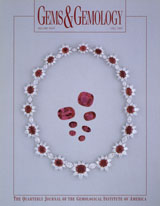
Recent developments in Sri Lankan gemstone production are summarised from information supplied by dealer Gordon Bleck, with particular attention to unusual materials and newly reported occurrences. Mining was reportedly being hindered by terrorist activity, especially in remote jungle areas around Okampitiya, while Ratnapura remained relatively safe. Rubies from a newly reported locality near Hambantota were described as unusually good in quality and deeper in colour than material generally associated with Sri Lanka, although individual stones rarely reached one carat. Deep pink fancy sapphires had also been found in the Matara district on the southern coast, but production was limited and fashioned stones seldom exceeded two carats. A notable departure from previously encountered Sri Lankan star spinel was the discovery in the Ratnapura district during 1991 of saturated red material with a high degree of transparency. Earlier examples familiar to the editors had generally been almost opaque, very dark, and weakly saturated purple. A photographed 1.12-carat red star spinel illustrates the distinctive combination of colour, transparency, and asterism. Other reported finds included clean, light yellow danburite from the Nirialla River, approximately ten kilometres from Ratnapura near Palawela and Nirialla. A large river-bed specimen yielded an 11.52-carat pear-shaped gem, while smaller fragments came from the river bank; this newer production was less included than earlier material. Two translucent yellowish green andradite crystals were among the year’s rarities, the larger measuring about two centimetres across and showing combined dodecahedral and trapezohedral forms. Increased quantities of colour-change spinel, sapphire, and garnet were also reported. Facetable kornerupine had become more available, including a 17.01-carat brownish green stone from central Sri Lanka whose unusually light tone was noteworthy for its size, whereas cat’s-eye kornerupine had become scarce. An unusually large, 5.00-carat blue sillimanite from Ambalapitiya completed the selection. The report documents the diversity of the country’s gem output through specific examples, emphasising differences in colour, transparency, size, inclusion abundance, and availability.

Bohemian garnet—Today

Journal Article
Schlüter, J. and Weitschat, W. (1991) Bohemian garnet—Today. Gems & Gemology, Vol. 27, No. 3, Fall, pp. 168–173.
Record No. 5488  |  ISBN/ISSN: 0016626X  |  Sinkankas/Born No.: NIS / NIB  |  RWHL
View Individual Record ↗
Red garnets have been mined in the Bohemian Hills of Czechoslovakia since the 16th century. These pyrope garnets reached their height of popularity in jewelry of the Victorian era. Although the deposits had been generally regarded as depleted, today a small mining operation is working on garnetiferous gravels near the village of Podsedice, northwest of Prague.

Gem News: More experimentation with blue diffusion-treated sapphires
Journal Article
Koivula, J.I. and Kammerling, R.C. (1991) Gem News: More experimentation with blue diffusion-treated sapphires. Gems & Gemology, Vol. 27, No. 3, Fall, pp. 187—188.
Record No. 5395  |  ISBN/ISSN: 0016626X  |  Sinkankas/Born No.: NIS / NIB  |  RWHL
View Individual Record ↗
The Summer 1990 issue of Gems & Gemology carried a comprehensive article on diffusion-treated sapphires. Among the materials examined were stones marketed by the firm Gem Source of Las Vegas, Nevada, and Bangkok, Thailand. At that time, Jeffery Bergman of Gem Source stated that he used Sri Lankan sapphires as starting material. Recently, Mr. Bergman shared information relating to experimental diffusion treatment of sapphires from another locality: Montana. He also donated eight of these stones, ranging from 0.53 to 1.18 ct, to GIA for study. According to Mr. Bergman, approximately 50% of the Montana sapphires they have diffusion treated to produce a blue color have also developed unwanted yellowish orange zones. Examination of the eight sample stones with magnification readily revealed the yellowish orange zones described by Mr. Bergman; also noted in some of the stones were disk-like areas of dark blue surrounding dark crystalline inclusions (figure 12). We believe that the yellowish orange areas are related to zoned growth and reflect a higher iron impurity content, while the disk-like dark blue areas are caused by internal diffusion—a cannibalization of both iron and titanium from possibly iron-rich rutile and/or ilmenite inclusions. Both of these unanticipated color areas no doubt result from the high temperatures used in the diffusion-treatment process.

Gem News: Montana sapphire heat treatment
Journal Article
Koivula, J.I. and Kammerling, R.C. (1991) Gem News: Montana sapphire heat treatment. Gems & Gemology, Vol. 27, No. 3, Fall, p. 186.
Record No. 5394  |  ISBN/ISSN: 0016626X  |  Sinkankas/Born No.: NIS / NIB  |  RWHL
View Individual Record ↗

Gem News: Unusual corundum/mica carving material
Journal Article
Koivula, J.I. and Kammerling, R.C. (1991) Gem News: Unusual corundum/mica carving material. Gems & Gemology, Vol. 27, No. 2, Summer, p. 120.
Record No. 5390  |  ISBN/ISSN: 0016626X  |  Sinkankas/Born No.: NIS / NIB  |  RWHL
View Individual Record ↗

Gem News: African gem update

Journal Article
Koivula, J.I. and Kammerling, R.C. (1991) Gem News: African gem update. Gems & Gemology, Vol. 27, No. 2, Summer, p. 119.
Record No. 5389  |  ISBN/ISSN: 0016626X  |  Sinkankas/Born No.: NIS / NIB  |  RWHL
View Individual Record ↗

Gem News: More on diffusion-treated sapphires
Journal Article
Koivula, J.I. and Kammerling, R.C. (1991) Gem News: More on diffusion-treated sapphires. Gems & Gemology, Vol. 27, No. 1, Spring, p. 53.
Record No. 5388  |  ISBN/ISSN: 0016626X  |  Sinkankas/Born No.: NIS / NIB  |  RWHL
View Individual Record ↗

Sunstone labradorite from the Ponderosa Mine, Oregon
Journal Article
Johnston, C.L., Gunter, M.E. and Knowles, C.R. (1991) Sunstone labradorite from the Ponderosa Mine, Oregon. Gems & Gemology, Vol. 27, No. 4, Winter, pp. 220–233.
Record No. 5323  |  ISBN/ISSN: 0016626X  |  Sinkankas/Born No.: NIS / NIB  |  RWHL
View Individual Record ↗
The Ponderosa mine is now producing commercial quantities of the gem-quality labradorite feldspar known as sunstone. This gem material exhibits unique optical and physical properties that include a wide range of saturated body colors, aventurescence, and strong pleochroism. The feldspar is An₇₀ labradorite, a high-calcic plagioclase; the aventurescence-causing inclusions have been identified as pure native copper. Microprobe analyses conducted on colorless, red, and green samples did not reveal any obvious causative mechanism for the exhibited colors, although ongoing research is investigating intervalence charge transfer, possibly involving colloidal copper. Gemological identification involves the use of R.I., S.G., and microscopy. Locality determination (Oregon) is based on the copper inclusions and a distinct pleochroism.

Gem News: Postage stamp commemorates large Burmese ruby
Journal Article
Koivula, J.I. and Kammerling, R.C. (1991) Gem News: Postage stamp commemorates large Burmese ruby. Gems & Gemology, Vol. 27, No. 3, Fall, p. 182.
Record No. 5198  |  ISBN/ISSN: 0016626X  |  Sinkankas/Born No.: NIS / NIB  |  RWHL
View Individual Record ↗

A study of natural and synthetic rubies by PIXE

Journal Article
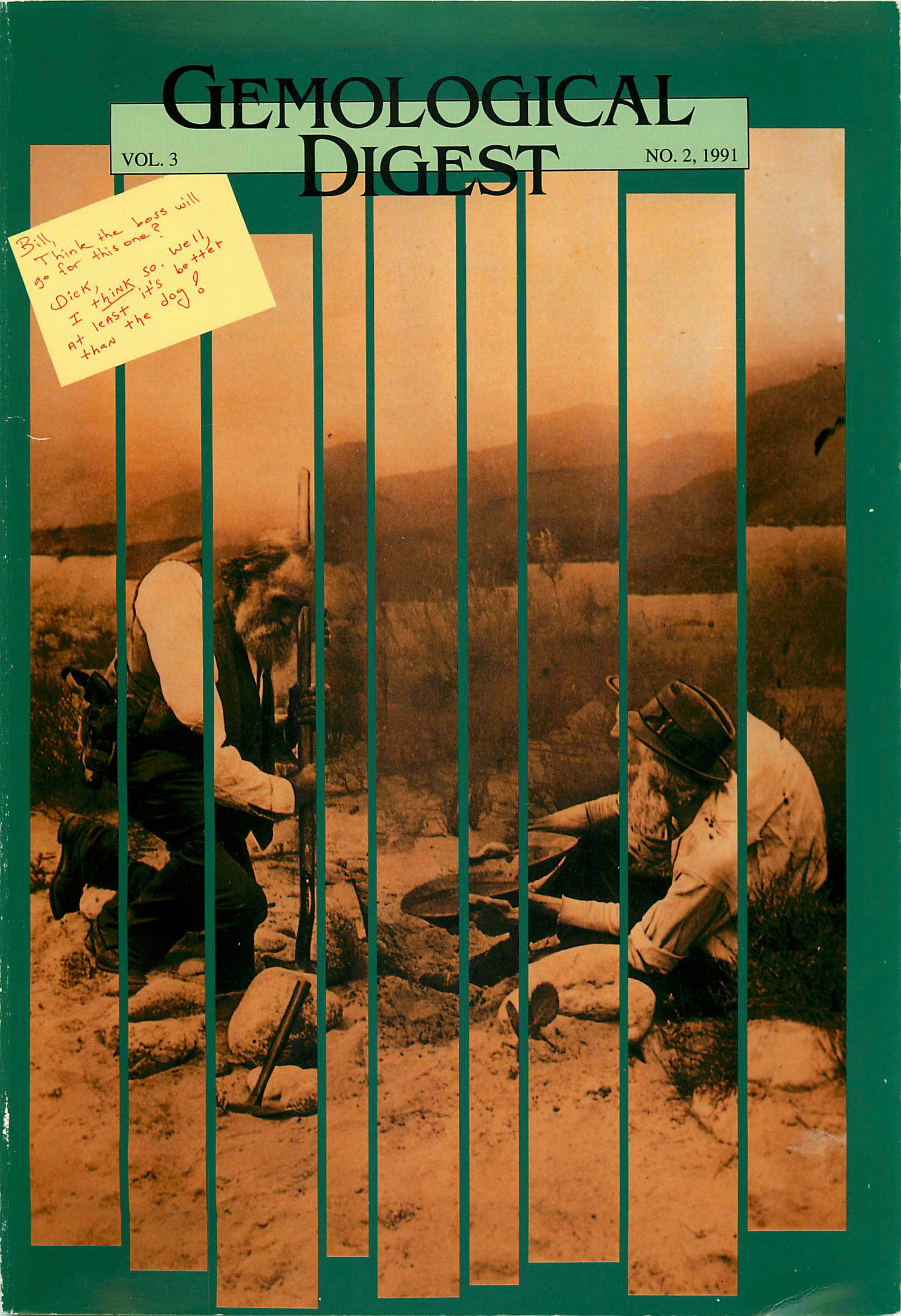
Tang, S.M., Tang, S.H., Mok, K.F., Retty, A.T. and Tay, T.S. (1991) A study of natural and synthetic rubies by PIXE. Gemological Digest, Vol. 3, No. 2, pp. 63–67.
Record No. 5037  |  Sinkankas/Born No.: NIS / NIB  |  RWHL
View Individual Record ↗
Investigates the use of proton-induced X-ray emission (PIXE) to distinguish natural from synthetic ruby and assess relationships between trace-element composition and source. The study analyzes 160 specimens comprising 133 natural rubies from Afghanistan, Burma, two Indian localities, Kenya, Sri Lanka and Thailand, together with 27 synthetic rubies representing Chatham, Inamori, Kashan, Knischka, Ramaura, Seiko and an unidentified flame-fusion source. Some natural origins were supported by characteristic inclusions, whereas others depended on supplier information because the specimens were insufficiently transparent for microscopic verification. Measurements employed 2 MeV protons from a Van de Graaff accelerator, a silicon-lithium detector and a counting time of 150 seconds per specimen. Spectra were fitted using the AXIL program, with calibration standards enabling quantitative determination of trace-element concentrations relative to aluminum oxide. Natural rubies generally contained a greater variety and higher concentrations of impurities than synthetic specimens. Besides chromium, detected elements included silicon, chlorine, sulfur, potassium, calcium, titanium, vanadium, manganese, iron and gallium. Vanadium was undetectable in every synthetic specimen but occurred in most natural rubies, with exceptions among Thai and Indian samples. The detection limit was approximately 20 ppm in the absence of titanium. Burmese rubies had the highest mean vanadium concentration, with one specimen reaching 1800 ppm, while Thai rubies had the lowest mean. Consequently, detectable vanadium strongly supported natural origin within the studied population, although its absence did not establish synthetic origin. Most synthetic rubies contained little iron, with the Knischka specimen providing an exception; Thai rubies and some Sri Lankan specimens were comparatively iron-rich. Chromium concentrations varied considerably between groups but were relatively consistent within several individual sources, suggesting additional discriminatory value. The authors emphasize that source attribution requires combinations of elements rather than a single concentration. For example, high iron together with low chromium and vanadium favored a Sri Lankan attribution within their dataset. Titanium, calcium and potassium also offered potentially useful information in some cases. The results agree with published analyses obtained by energy-dispersive X-ray fluorescence and neutron activation. PIXE is presented as a rapid and useful identification technique, and the authors recommend developing a larger database of specimens with known origins. They nevertheless caution that synthetic ruby manufacturers could modify product compositions, potentially reducing the future reliability of distinctions based on trace-element chemistry.

Building a Gemological Library

Gemological books range from general identification manuals and textbooks to specialized works on individual gems, mineralogy, jewelry, treatments, synthesis, history and gem-producing regions.

For a curated selection of particularly useful books, read The Gemologist's Core Library — Classic Books on Gemology, Jewelry and Mineralogy.

About Four Treasures

Four Treasures is Lotus Gemology's freely accessible gemological reference database. Use the full database to search by author, title or keyword and explore literature on gemology, mineralogy, jewelry and related fields. Where available, hyperlinks on titles may lead directly to the full publication.

Search the Complete Four Treasures Database