Gemstone Inclusions Bibliography

Gemstone Inclusions Bibliography

Explore books, articles and historical sources on inclusions in gemstones in Four Treasures, the Lotus Gemology reference database. This bibliography brings together matching records from the collection, with publication details, abstracts and cover images where available.

Gemstone Inclusion References

The list below matches the terms inclusion or inclusions in the database's searchable fields. Some references discuss inclusions as part of a broader subject.

901–920 of 1,111 matching references
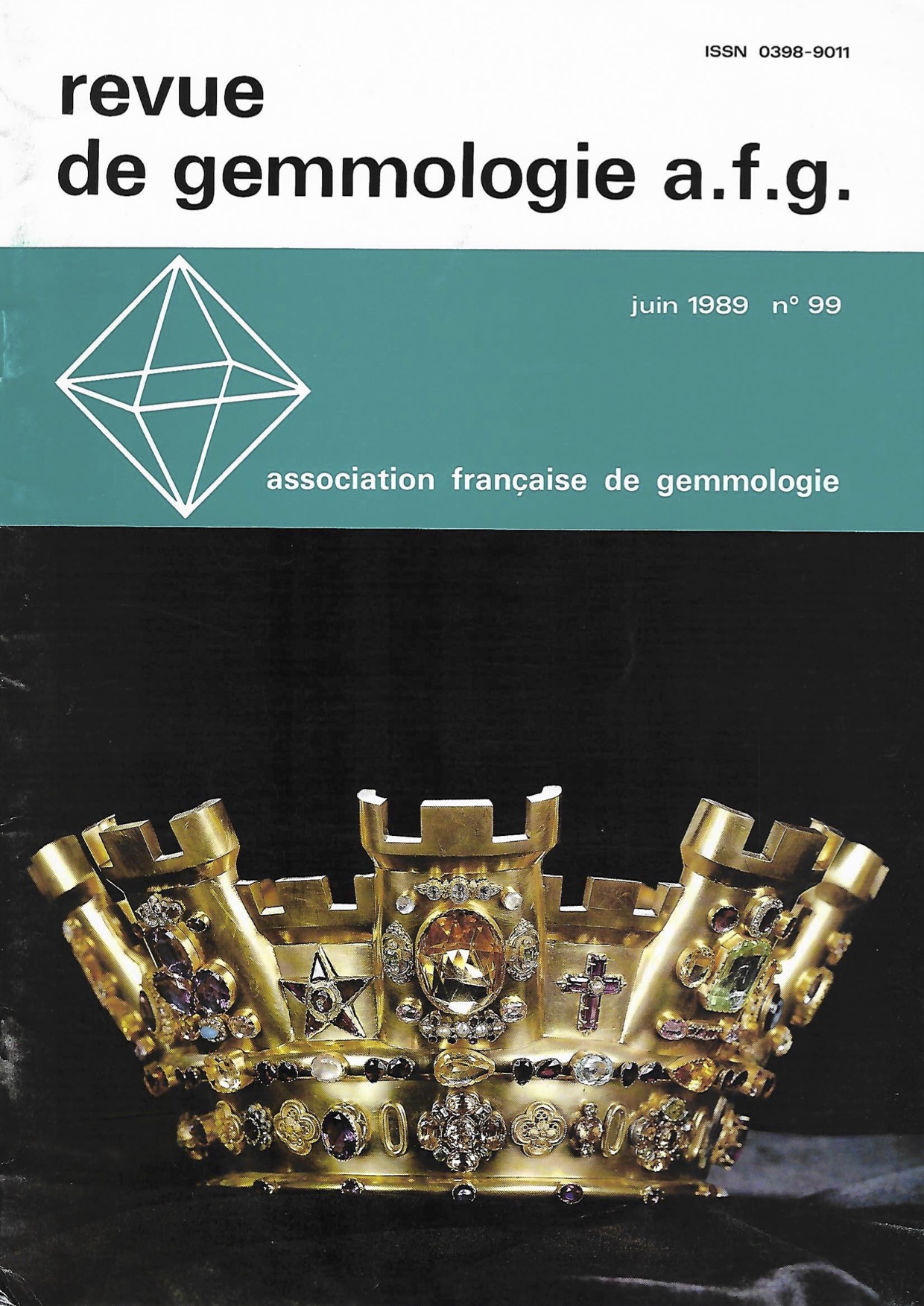
Lacunes cristallines dans un saphir

Lacunes cristallines dans un saphir

Crystal defects in a sapphire

Duyk, F. (1983)

Journal Article · Source: Revue de Gemmologie A.F.G. · Issue: No. 77 · Pages: pp. 14–15 · Language: in French

Abstract
Duyk describes an unusual 51 ct sapphire cabochon, apparently from Sri Lanka, containing two conspicuous internal cavities with well-developed crystalline outlines. He examines the morphology and optical appearance of these voids and discusses their relationship to the host sapphire, illustrating the features with nine photographs. The observations show that apparently empty, crystallographically shaped cavities can occur as internal features in natural sapphire and may provide useful evidence concerning the stone’s growth history.
Keywords
corundum, Sri Lanka.12, inclusions.5, gems
Ramaura: Eine neue Rubinsynthese (erste untersuchungsergebnisse)

Ramaura: Eine neue Rubinsynthese (erste untersuchungsergebnisse)

Ramaura: A new ruby synthesis (first research results)

Bosshart, G. (1983)

Journal Article · Source: Zeitschrift der Deutschen Gemmologischen Gesellschaft · Volume: Vol. 32 · Pages: pp. 164–171 · Language: In German

Abstract
Bosshart presents the first gemological investigation of the newly introduced Ramaura synthetic ruby. Seven specimens ranging from intense red to pale violet-red were examined. Particular attention is given to microscopic inclusions and ultraviolet-visible absorption spectra, with significant differences observed between the strongly colored and paler material. The intense red specimens contained substantially more inclusions, while spectrophotometry revealed two distinct types of absorption behavior corresponding to the different color groups. Some Ramaura rubies showed properties sufficiently similar to natural ruby to make identification difficult, emphasizing the importance of microscopic examination and spectrophotometry in distinguishing this new synthetic material.
Keywords
corundum, synthetic corundum.7, Ramaura, flux, gems
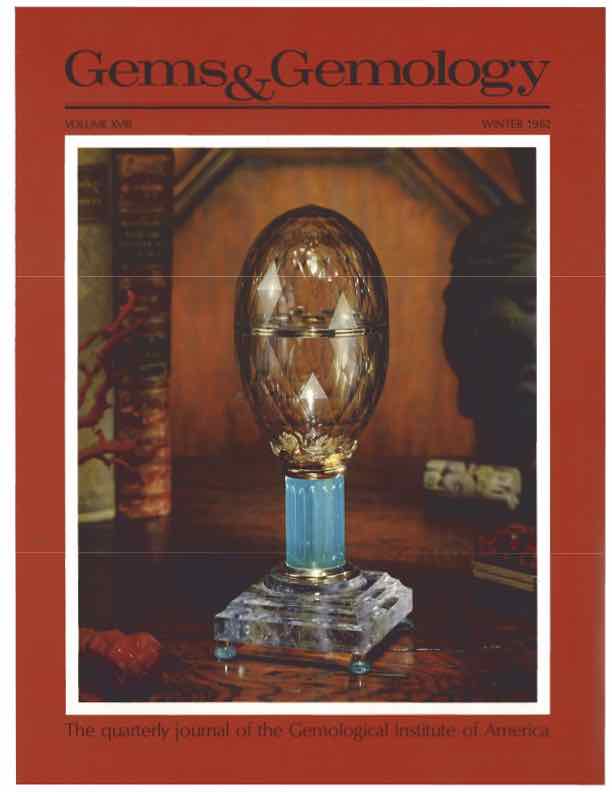
Tourmaline as an inclusion in Zambian emeralds

Tourmaline as an inclusion in Zambian emeralds

Koivula, J.I. (1982)

Journal Article · Source: Gems & Gemology · Volume: Vol. 18 · Issue: No. 4, Winter · Pages: pp. 225–227

Abstract
This article reports the identification of tourmaline crystals as inclusions in emeralds from Zambia, in south-central Africa. To under stand the paragenesis responsible for this unusual association, the geology of the area is reviewed. The gemological properties of these emeralds are also noted.
Keywords
gems, beryl, emerald, Zambia, inclusions
Mineral inclusions contribute towards elucidating the genesis of the diamond

Mineral inclusions contribute towards elucidating the genesis of the diamond

Gübelin, E.J. (1982)

Journal Article · Source: Journal of Gemmology · Volume: Vol. 18 · Issue: No. 4, October · Pages: pp. 297–320

Abstract
Gübelin examines mineral inclusions in natural diamonds as evidence for the conditions and processes of diamond formation in the upper mantle. He distinguishes two principal inclusion assemblages: an ultramafic suite characterized by chromium-bearing olivine, chrome-pyrope garnet, enstatite, chrome diopside, and chromite, and an eclogitic suite characterized particularly by pyrope-almandine garnet and omphacitic clinopyroxene, with rarer coesite, corundum (ruby), rutile, kyanite, and ilmenite. Minerals of the two suites had not then been observed together in a single diamond, whereas several inclusions belonging to one suite may coexist, indicating distinct paragenetic environments. Their chemistry, morphology, and relationships to the enclosing diamond are used to argue that diamond and its inclusions crystallized at great depth under upper-mantle pressures and temperatures and that diamond did not originate in kimberlite during its subsequent ascent. Gübelin discusses experimental and mineralogical evidence for crystallization from carbon-bearing ultramafic or eclogitic melts or partially molten material, with H₂O- and CO₂-rich fluids and Fe-Ni-Cu-Co sulphides playing potentially important roles. Sulphide inclusions, particularly pyrrhotite, are considered in relation to possible reduction reactions capable of precipitating carbon as diamond, while trapped gases provide additional evidence concerning the diamond-forming environment. The preservation of nickel-rich pyrrhotite is interpreted as evidence of rapid cooling, and the survival of diamond during transport requires rapid ascent in kimberlitic eruptions. Photomicrographs illustrate characteristic inclusions of olivine, garnet, enstatite, chrome diopside, omphacitic clinopyroxene, chromite, coesite, ruby, rutile, biotite, sulphides, and even diamond within diamond. The latter demonstrate that diamond growth could occur in successive episodes rather than as a single continuous event. Gübelin concludes that mineral inclusions provide direct samples of the otherwise inaccessible environment in which diamonds formed and permit important constraints to be placed on their paragenesis, pressure-temperature conditions, growth history, and subsequent transport to the Earth’s surface.
Keywords
diamond, inclusions, gems
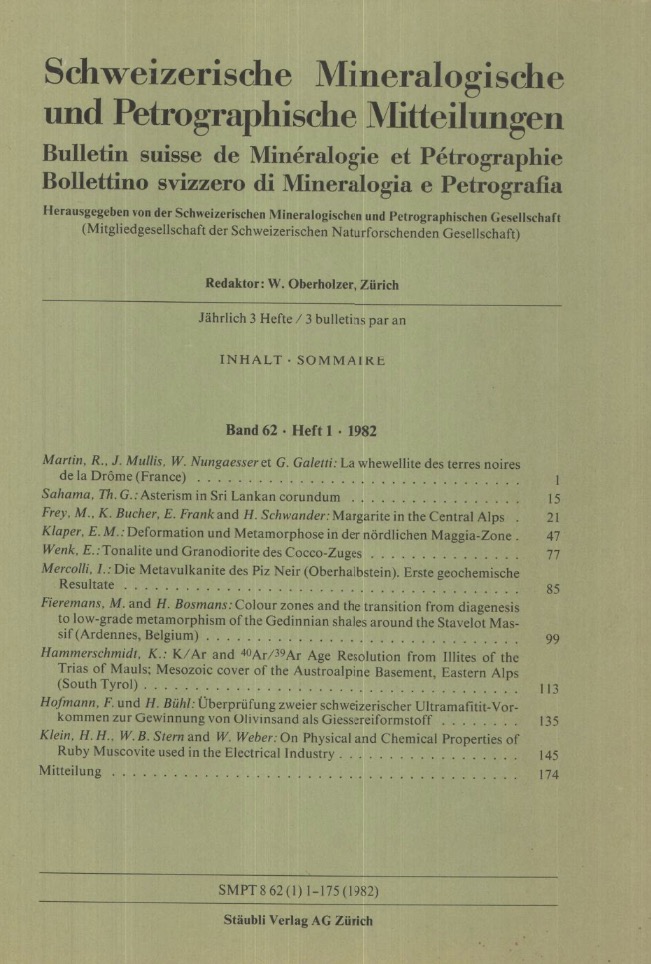
Asterism in Sri Lankan corundum

Asterism in Sri Lankan corundum

Sahama, T.G. (1982)

Journal Article · Source: Schweizerische Mineralogische un Petrographische Mitteilungen · Volume: Vol. 62 · Issue: No. 1 · Pages: pp. 15–20

Abstract
This paper describes the identification and crystallographic orientation of the rutile inclusions found in a corundum from the Elahera area, Sri Lanka. The corundum crystals are heavily zoned (fig. 1). The rutile inclusions are almost invariably twinned—either of a needle-like habit with two individuals or geniculated with three or four individuals. The twin plane is {1011} and the needle axis is ⟨011⟩. The orientation of the rutile inclusions in the corundum host is as follows: • Rutile ⟨010⟩ || Corundum [0001] • Rutile ⟨01T⟩ || Corundum ⟨11̅20⟩
Keywords
corundum, Sri Lanka.12, inclusions.5, synthetic corundum.7, gems
Pinpoint illumination: A controllable system of lighting for gem microscopy

Pinpoint illumination: A controllable system of lighting for gem microscopy

Koivula, J.I. (1982)

Journal Article · Source: Gems & Gemology · Volume: Vol. 18 · Issue: No. 2, Summer · Pages: pp. 83–86

Abstract
Pinpoint illumination uses a highly flexible but extremely durable glass fiber-optic bundle that incorporates six easily interchangeable light wands of various shapes and cross-sectional thicknesses down to one millimeter in diameter. The wands are hand held and can be used to illuminate hard-to-reach areas in complex jewelry ino~intingsW. ith the pinpoint, ill~lmintaor, a gemstone can be examined from any angle; the light source is placed exactly where it is needed, minimizing glare and unwanted external or internal reflections.
Keywords
corundum, inclusions.5, gems
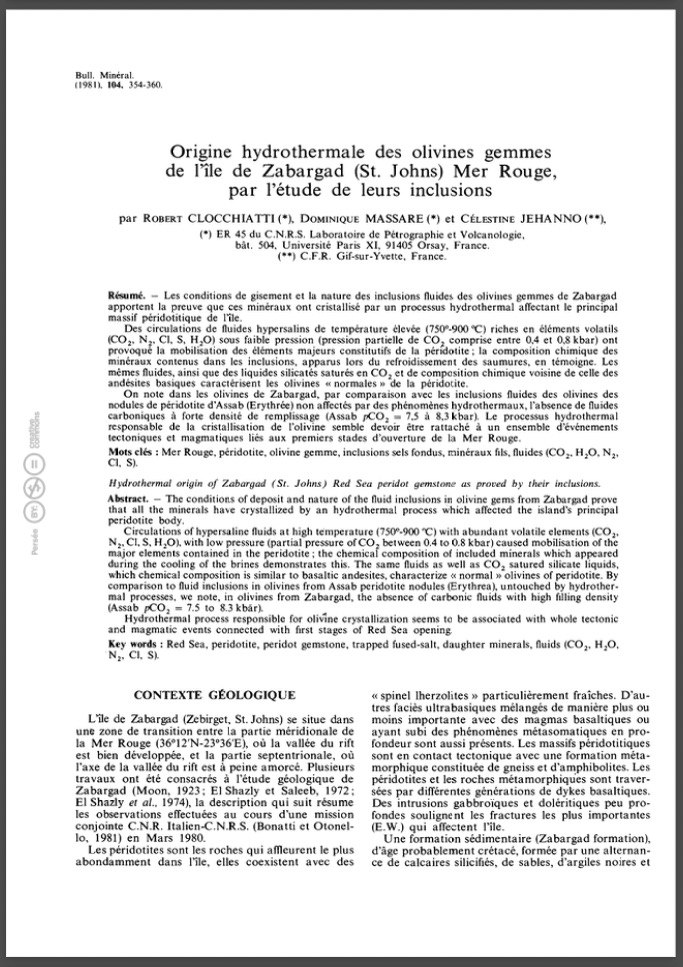
Origine hydrothermale des olivines gemmes de l’ile de Zabargad (St. John), Mer Rouge, par l’etude de leurs inclusions

Origine hydrothermale des olivines gemmes de l’ile de Zabargad (St. John), Mer Rouge, par l’etude de leurs inclusions

Clochiatti, R., Massare, D. and Jehanno, C. (1981)

Journal Article · Source: Bulletin de Minéralogie · Issue: No. 104 · Pages: pp. 354–360 · Language: in French

Abstract
Hydrothermal origin of gem olivines from Zabargad Island (St. John), Red Sea, through the study of their inclusions. The conditions of deposit and nature of the fluid inclusions in olivine gems from Zabargad prove that all the minerals have crystallized by an hydrothermal process which affected the island's principal peridotite body. Circulations of hypersaline fluids at high temperature (750°-900°C) with abundant volatile elements (CO₂, N₂, Cl, S, H₂O), with low pressure (partial pressure of CO₂ between 0.4 to 0.8 kbar) caused mobilisation of the major elements contained in the peridotite ; the chemical composition of included minerals which appeared during the cooling of the brines demonstrates this. The same fluids as well as CO₂ satured silicate liquids, which chemical composition is similar to basaltic andesites, characterize « normal » olivines of peridotite. By comparison to fluid inclusions in olivines from Assab peridotite nodules (Erythrea), untouched by hydrothermal processes, we note, in olivines from Zabargad, the absence of carbonic fluids with high filling density (Assab pCO₂ = 7.5 to 8.3 kbar). Hydrothermal process responsible for olivine crystallization seems to be associated with whole tectonic and magmatic events connected with first stages of Red Sea opening.
Keywords
peridot, St. John’s Island, Egypt, gems, Classical world, geology, inclusions
San Carlos peridot

San Carlos peridot

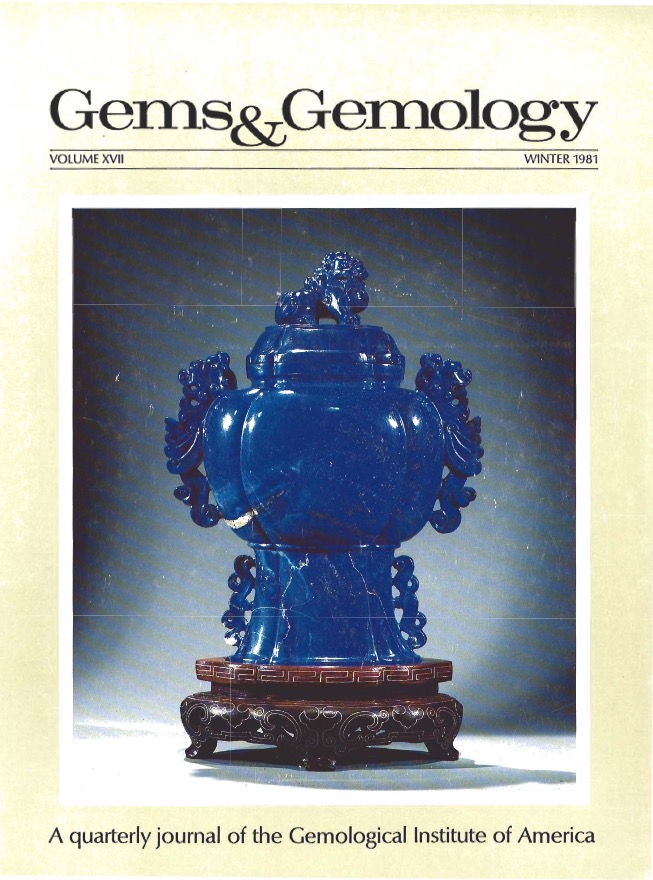
Koivula, J.I. (1981)

Journal Article · Source: Gems & Gemology · Volume: Vol. 17 · Issue: No. 4, Winter · Pages: pp. 2

Abstract
Each year basalt-topped Peridot Mesa, on the San Carlos Apache Reservation, is a major source for thousands of carats of gem-quality peridot in sizes suitable for use in modern jewelry. Marketed throughout the world, San Carlos material is often confused with, and sold as, peridot from localities that are better known and documented. Peridot Mesa resulted from a single volcanic eruption and basalt flow over an already existing conglomerate base; it is thought to be of late Tertiary or Quaternary age. The peridot is found in irregularly shaped nodules within the basalt. The gemological properties and color range of these Arizona gems suggest an olivine that is rich in the magnesium forsterite end member. Inclusions documented are chromite, chromian spinel, negative crystals, lily pad" cleavages, glass blebs, chrome diopside, biotite, and smoke-like veiling."
Keywords
gems, olivine, peridot, San Carlos, Arizona, Apache
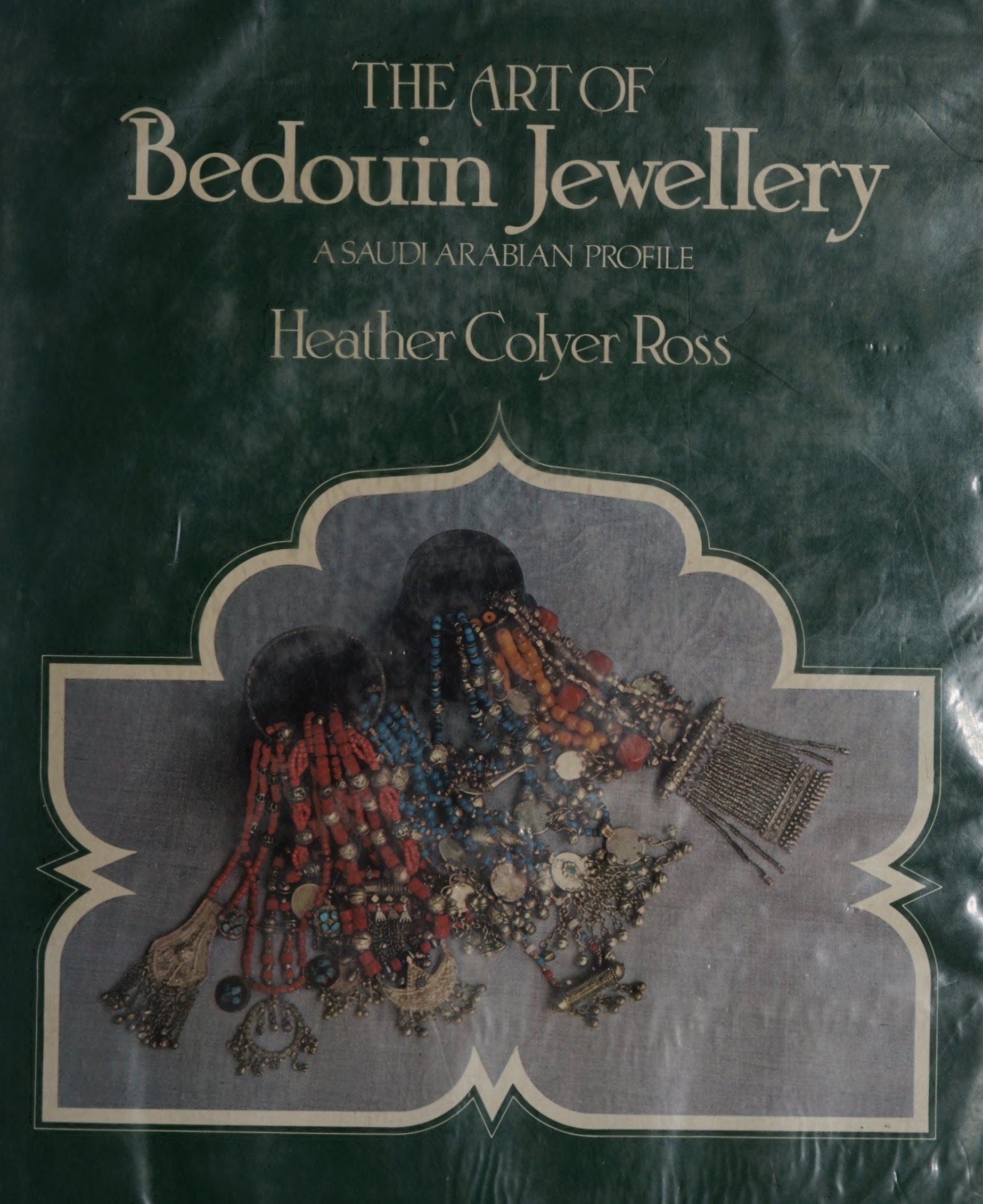
The Art of Bedouin Jewelry: A Saudi Arabian Profile

The Art of Bedouin Jewelry: A Saudi Arabian Profile

Ross, H.C. (1981)

Book · Publisher: Arabesque Commercial SA · Pages: 132 pp.

Abstract
Development in the Kingdom of Saudi Arabia has progressed at an astonishing pace, and nowhere is this more evident than in the field of archaeology—an area the author argues holds the key to unlocking many of the mysteries surrounding Bedouin jewellery. In light of newly available information, the documentation and preservation of this cultural heritage is both timely and vital. *The Art of Bedouin Jewellery* by Heather Colyer Ross presents a clear and engaging exploration of the remarkable range of ornaments crafted not only for adornment but also as portable wealth. Beginning with a historical overview, Ross traces the diverse influences that have shaped this art form—from Vikings and Chinese artisans to ancient Etruscans and modern Asian cultures—while also offering a detailed look into the life and traditions of the Bedouin people, which give this jewellery its cultural context. With over 100 colour photographs, primarily taken by the author, the book serves as a comprehensive visual and textual catalogue of necklaces, bracelets, armlets, anklets, belts, headpieces, and more, found across the Arabian Peninsula. Regional styles, the silversmith’s techniques, and the materials used are thoroughly examined, and the inclusion of an extensive glossary and list of technical terms in both English and Arabic adds significant value. *The Art of Bedouin Jewellery* is not only a treasure trove for collectors, but also an indispensable resource for anyone seeking to understand the rich traditions and craftsmanship of Arabia.
Keywords
gems, Arabic mineralogy, jewelry from the Middle East, ethnic jewelry
Scanning electron microscopy in gemology [composition of maw-sit-sit]

Scanning electron microscopy in gemology [composition of maw-sit-sit]

Stockton, C.M. and Manson, D.V. (1981)

Journal Article · Source: Gems & Gemology · Volume: Vol. 17 · Issue: No. 2, Summer · Pages: pp. 72–79 (see p. 78)

Abstract
This article examines both the principles behind the functioning of the scanning electron microscope-energy dispersive spectrometer system and its application to the chemical and structural analyses of gems. The examples presented describe the distinction of natural from treated opals, the relationships observed between a diamond and its kimberlite matrix, the identification of inclusions in ruby and taaffeite, the elemental mapping and chemical analysis of maw-sit-sit,and the study of chemical interrelationships between various types of garnets.
Keywords
jade, jadeite, fei cui, Burma, maw-sit-sit, gems
Growth of corundum single crystals by seed rotation method

Growth of corundum single crystals by seed rotation method

Watanabe, K., Iida, A. and Sumiyoshi, Y. (1981)

Journal Article · Source: Journal of Crystal Growth · Volume: Vol. 54 · Issue: No. 3 · Pages: pp. 381–393

Abstract
Single crystals of corundum attaining 5 cm across were synthesized from cryolite (Na₃AlF₆) flux by the seed rotation method. The effect of growth conditions such as growth temperature, temperature difference, baffle aperture, and rotation rate upon crystal perfection is discussed to clarify the optimum conditions required to obtain crystals of high quality, containing the minimum amount of flux inclusions. The external shape of the corundum crystals did not show a noticeable change, except that the edges became more rounded with an increase in rotation rate. Experiments to simulate convective flow in solution were carried out on two systems—water and water–saccharose—under conditions simulating those of flux growth. When a baffle plate with 20% aperture was used, the flow velocity reached a maximum.
Keywords
corundum, synthetic corundum.7, gems
Ruby in diamond

Ruby in diamond

Meyer, H.O.A. and Gübelin, E.J. (1981)

Journal Article · Source: Gems & Gemology · Volume: Vol. 17 · Issue: No. 3, Fall · Pages: pp. 153–156

Abstract
The first substantiated identification of corundum (var. ruby) occurring as an inclusion in natural diamond is presented. The ruby is assigned to the eclogitic suite of inclusions in diamond, and the implications of its occurrence are discussed in relation to the genesis of “eclogitic” diamonds. It is concluded that diamond crystallizes from a melt over a long period of time with possible fluctuations in ambient temperature and geochemical environment.
Keywords
corundum, inclusions.5, gems
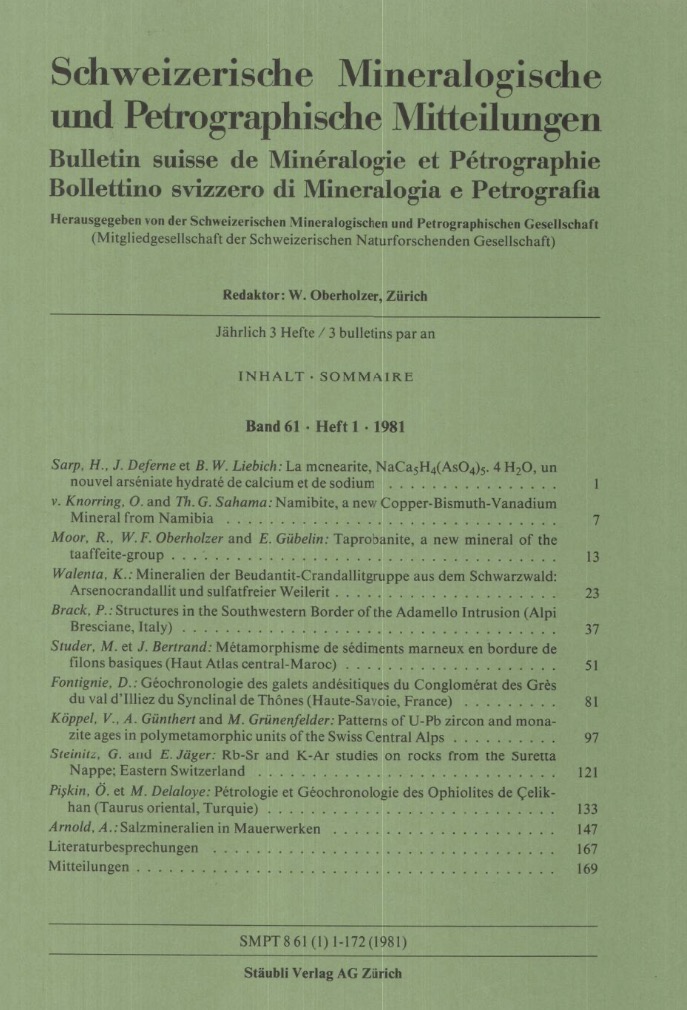
Taprobanite: A new mineral of the taaffeite group

Taprobanite: A new mineral of the taaffeite group

Gübelin, E.J. (1981)

Journal Article · Source: Schweizerische Mineralogische und Petrographische Mitteilungen · Issue: No. 61 · Pages: pp. 13–21 · Language: in German

Abstract
Gübelin describes “taprobanite,” a rare red gemstone from Sri Lanka initially thought to be taaffeite because of its similar appearance and gemological properties. Detailed examination showed it to represent a distinct member of the taaffeite mineral group, characterized by differences in chemical composition, crystallographic properties, and optical behavior. The study discusses its identification, physical and optical constants, absorption characteristics, inclusions, and relationship to taaffeite, emphasizing the difficulty of recognizing such rare stones by conventional gemological testing alone. The name derives from Taprobane, the ancient name for Sri Lanka.
Keywords
taaffeite, Sri Lanka, gems
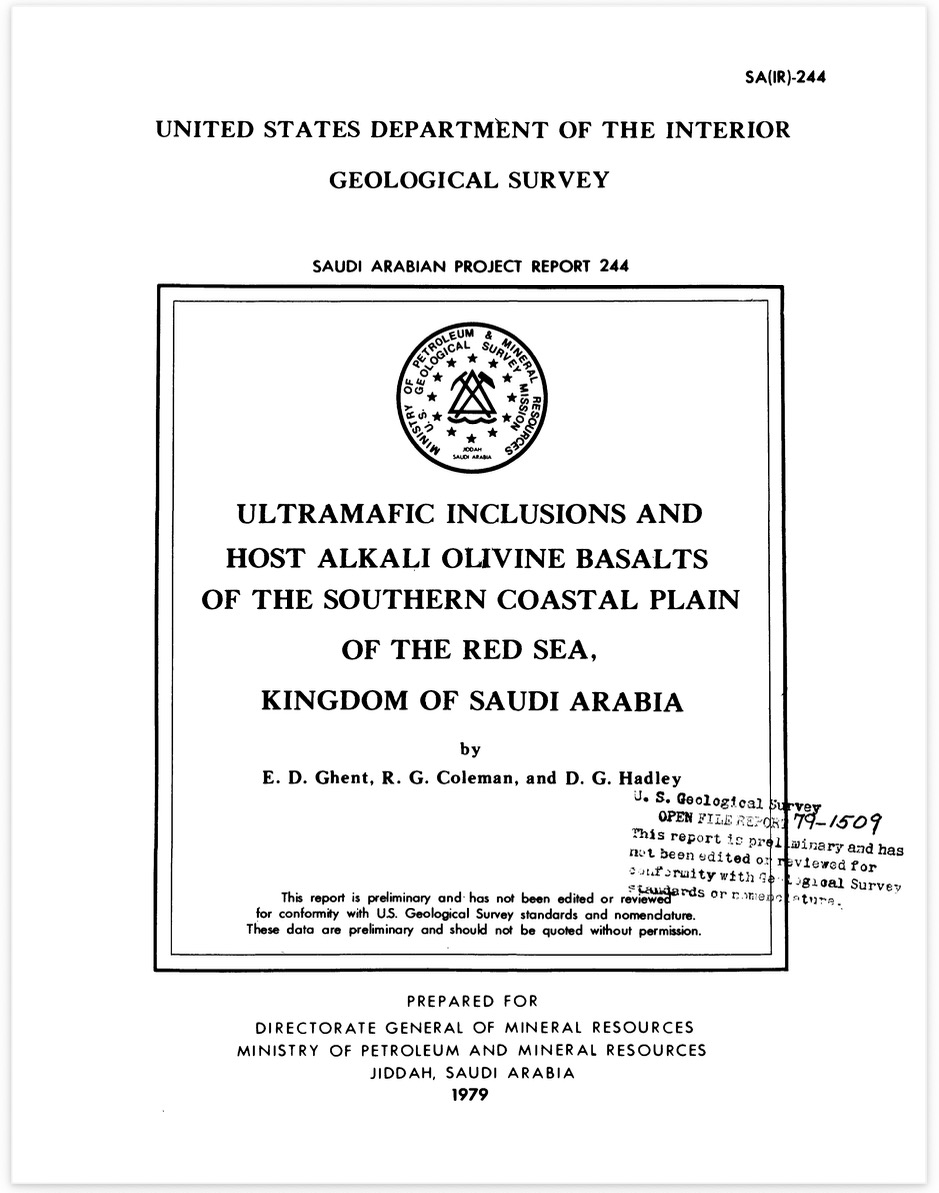
Ultramafic inclusions and host alkali olivine basalts of the sourthern coastal plain of the Red Sea, Saudi Arabia

Ultramafic inclusions and host alkali olivine basalts of the sourthern coastal plain of the Red Sea, Saudi Arabia

Ghent, E., Coleman, R.G. and Hadley, D.G. (1980)

Report · Publisher: US Geological Survey · Volume: Vol. 280A · Issue: Saudi Arabian Project Report 244 · Pages: 37 pp.

Abstract
A variety of mafic and ultramafic inclusions occur within the pyroclastic components of the Al Birk basalt, erupted on the southern Red Sea coastal plain of Saudi Arabia from Pleistocene time to the present. Depleted harzburgites are the only inclusions contained within the basalts that were erupted through Miocene oceanic crust (15 km thick) in the vicinity of Jizan, whereas to the north in the vicinity of Al Birk, alkali basalts that were erupted through a thicker Precambrian crust (48 km thick) contain mixtures of harzburgites, cumulate gabbro, and websterite inclusions accompanied by large (> 2 cm) megacrysts of glassy alumina-rich clinopyroxene, plagioclase, and spinel. Microprobe analyses of individual minerals from the harzburgites, websterites, and cumulate gabbros reveal variations in composition that can be related to a complex mantle history during the evolution of the alkali basalts. Clinopyroxene and plagioclase megacrysts may represent early phases that crystallized from the alkali olivine basalt magma at depths less than 35 km. Layered websterites and gabbros with cumulate plagioclase and clinopyroxene may represent continuing crystallization of the alkali olivine basalt magma in the lower crust when basaltic magma was not rapidly ascending. It is significant that the megacrysts and cumulate inclusions apparently form only where the magmas have traversed the Precambrian crust, whereas the harzburgite-bearing basalts that penetrated a much thinner Miocene oceanic crust reveal no evidence of mantle fractionation. These alkali olivine basalts and their contained inclusions are related in time to present-day rifting in the Red Sea axial trough. The onshore, deep-seated, undersaturated magmas are separated from the shallow Red Sea rift subalkaline basalts by only 170 km. The contemporaneity of alkaline olivine and subalkaline basalts requires that they must relate directly to the separation of the Arabian plate from the African plate.
Keywords
gems, olivine, peridot, Red Sea, Saudi Arabia
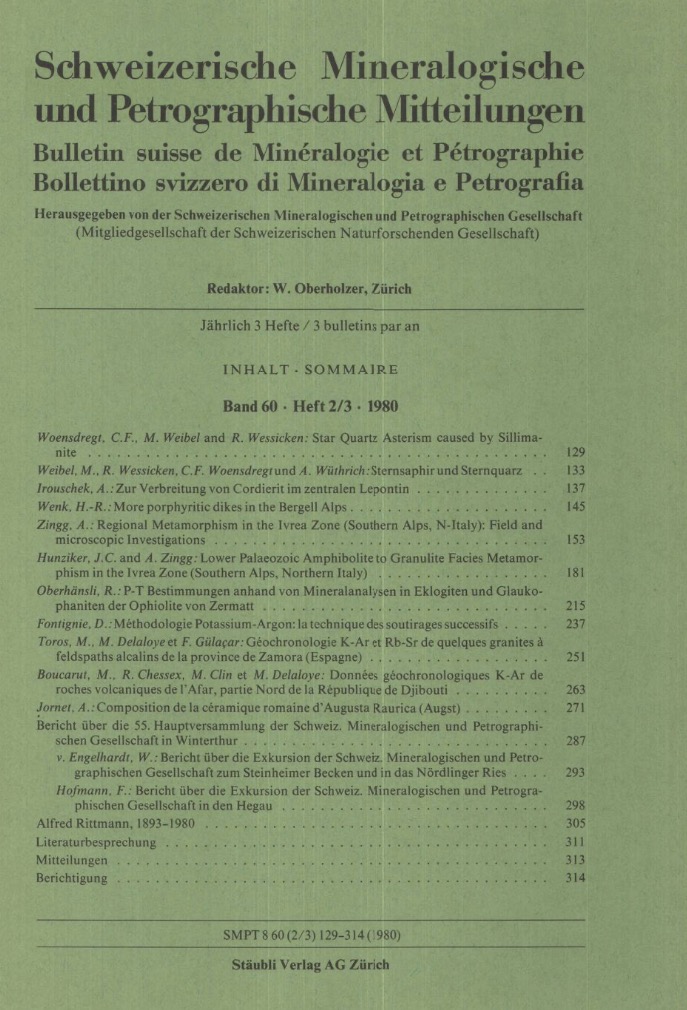
Sternsaphir und sternquarz

Sternsaphir und sternquarz

Star sapphire and star quartz

Weibel, M., Wessicken, R., Woensdregt, C.F. and Wüthrich, A. (1980)

Journal Article · Source: Schweizerische mineralogische und petrographische Mitteilungen · Volume: Vol. 60 · Issue: No. 2–3 · Pages: pp. 133–136 · Language: in German

Abstract
Weibel, Wessicken, Woensdregt, and Wüthrich examine the optical mechanism responsible for chatoyancy and asterism, with particular attention to black star sapphire from southeastern Thailand and milky-white star quartz from Ratnapura, Sri Lanka. They explain that each ray of a star results from light scattering by a set of parallel fibrous structures within the crystal, with refraction at the curved cabochon surface also contributing to the observed effect. Contrary to the usual explanation involving rutile silk, electron microscopy revealed no inclusions in the Thai black star sapphire; its fracture surfaces instead show stepped structures with trigonal dislocations, and the authors suggest regular lattice dislocations or twinning as possible causes of the asterism. In the Ratnapura star quartz, electron diffraction identifies the scattering needles as sillimanite, averaging about 0.02 μm thick, rather than rutile; their imperfect orientation accounts for the diffuse and incomplete star.
Keywords
corundum, sapphire, star sapphire, inclusions.5, star quartz, gems
Characteristics of synthetic hydrothermal emeralds from USA and USSR

Characteristics of synthetic hydrothermal emeralds from USA and USSR

米国およびソ連の水熱合成エメラルドの特徴

Takubo, H. (1979)

Journal Article · Source: Journal of The Gemmological Society of Japan [宝石学会誌] · Volume: Vol. 6 · Issue: No. 4 · Pages: pp. 3–18 · Language: in Japanese with English abstract

Abstract
As-grown and faceted crystals of synthetic hydrothermal emeralds from the USA and USSR were compared in terms of morphology, internal features, and physical properties. The USSR emeralds are notably closer to natural emeralds in physical and optical properties, although both types differ from natural stones primarily in their internal features. USA emeralds (SG: 2.67–2.68, RI: ω 1.572–1.574, ε 1.568–1.569) display bright red fluorescence under 365 nm UV, show Chelsea filter reactions (red), and often contain optical strain, “earthworm” cracks, phenacite, and 2- or 3-phase inclusions—often originating from natural beryl seed plates. USSR emeralds (SG: 2.70–2.71, RI: ω 1.583–1.586, ε 1.577–1.579) are slightly softer (H 7–7.5), show weaker UV fluorescence and pleochroism closer to natural emeralds, and lack spikes or strong zonation. Their inclusions include more naturalistic features like “wheat-head” textures, 2- and 3-phase inclusions, and reddish-brown plates. Growth habits differ slightly, with the USSR stones typically showing multiple growth planes ({112̅1} and {112̅0}) and shorter estimated growth times. Overall, USSR hydrothermal emeralds reach ~90% similarity to natural emeralds, versus ~80% for USA stones and 40–60% for flux-grown emeralds.
Keywords
synthetic beryl, emerald, gems

Exploring the Literature of Gemstone Inclusions

The literature of gemstone inclusions covers identification, origin determination, treatments, synthesis, mineral inclusions, fluid inclusions and other internal features of natural and synthetic gems.

For a curated selection of important sources, read Inclusions in Gemstones — Hyperion Literature Sources.

About Four Treasures

Four Treasures is Lotus Gemology's freely accessible gemological reference database. Use the full database to search by author, title or keyword and explore literature on gemology, mineralogy, jewelry and related fields. Where available, hyperlinks on titles may lead directly to the full publication.

Search the Complete Four Treasures Database