Jade Bibliography

Jade Bibliography

Explore books, articles and historical sources on jade in Four Treasures, the Lotus Gemology reference database. This bibliography brings together matching records from the collection, with publication details, abstracts and cover images where available.

Jade References

The list below matches the terms jade, jadeite, nephrite or Fei Cui in the database's searchable fields. Some references discuss these materials as part of a broader subject.

81–100 of 3,747 matching references
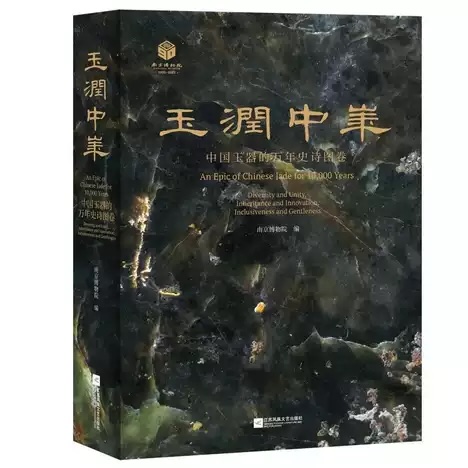
An Epic of Chinese Jade for 10,000 Years

An Epic of Chinese Jade for 10,000 Years

玉潤中華 中國玉器的萬年史詩圖卷

Nanjing Museum (2023)

Book · Publisher: Jiangsu Phoenix Literature and Art Publishing · Pages: 488 pp. · Language: in Chinese with small English sections

Abstract
Nanjing Museum ushered in the 90th anniversary of its establishment. After nearly three years of preparation and careful planning, its blockbuster special exhibition Yurun China - The Ten-Year Epic Scroll of Chinese Jade" finally began on November 7th, and the public will enter for free! The exhibition cooperated with 44 domestic archaeological and cultural institutions, and gathered more than 600 pieces (groups) of top jade art from archaeological excavations and collections from all over the country. The exhibition is divided into three chapters. Yusheng Huaxia focuses on the origin of Chinese jade culture and presents the Neolithic Xiaonanshan, Hongshan, Liangzhu and Longshan cultural jade. Among them, the jade unearthed at the Xiaonanshan site of the Heilong River can be traced back to 9,000 years ago. It is the earliest jade known in China and provides extremely valuable physical data for the study of jade culture in China and even the whole East Asia. "Yucheng China" exhibited jade in the Xia, Shang and Zhou dynasties and the Qin and Han dynasties, focusing on exploring the relationship between jade and "li" and "de". "Jade Beauty Shenzhou" displays jade from the Three Kingdoms to the Qing Dynasty, reflecting the prosperity and development of jade categories, themes and crafts. This chapter collects the representative collections of many cultural and museum institutions. Highlights include the Yuliang Jinbao belt collected by the Institute of Archaeology of the Western Province, the Guan'er jade pot of the Anhui Museum of the Song Dynasty, the jade used by the Wanli emperor in the Ming Tombs Museum, and the court jade collected by the Palace Museum of the Qing Dynasty. The special exhibition catalogue is also divided into three parts: "Yusheng Huaxia", "Yucheng China" and "Yumei Shenzhou" in chronological order. It contains more than 340 pieces (groups) of unearthed and handed down jade. Using rich high-definition detailed drawings, artifact rubbings, line drawings, etc., the system tells the development of jade from mysterious rituals in ancient times to the royal and ordinary people's play accessories. Cheng. Finally, in the academic paper, four current hot experts (Deng Shuping, an expert in the Forbidden City of Taipei, Xu Lin, an expert in the Forbidden City, Deng Cong of Shandong University, and Yang Zhishui, an expert from the Academy of Social Sciences), wrote articles about the early Chinese jade rituals, the development of jade from the Sui and Tang Dynasties to the Qing dynasties, the ancient jade cutting examination and the gold-inlaid jade."
Keywords
gems, jade, archaic jade, China, Chinese jade carving, nephrite, amphibole jade, Fischer-Chinese, Broken Bangle
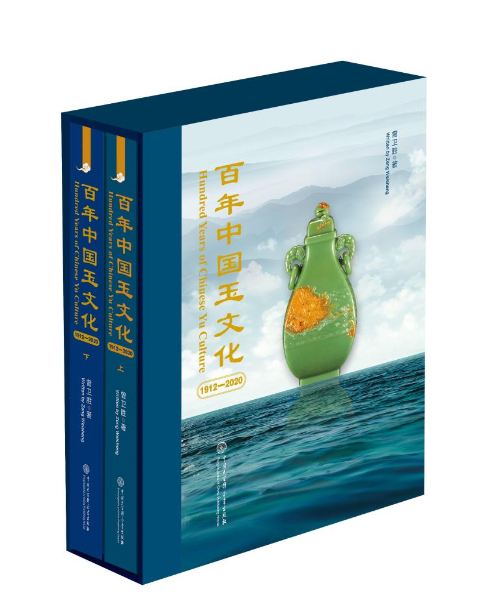
Hundred Years of Chinese Yu Culture 1912–2020

Hundred Years of Chinese Yu Culture 1912–2020

百年中国玉文化1912—2020

Zeng, W. (2023)

Book · Publisher: Encyclopedia of China Publishing House · Language: in Chinese

Abstract
The book includes over a hundred jade carving artists (spanning over a century in the book's timeframe), showcasing more than 50 classic works from different eras, regions, styles, and materials, focusing on representative figures and artworks in the world of art. Zeng Weisheng emphasized that during the writing process, every effort was made to respect history and spare no expense in researching materials, in order to uncover the people and events that deserve their true historical status and to restore those forgotten historical facts and steadfastness. One of the significant ways of inheriting the skills in the jade carving industry is through generations, with nearly a thousand influential jade carving artists (masters) documented over the past century. However, it's rare to find father and son pairs both achieving outstanding artistic accomplishments. The book only highlights the father-son pairs of Gu Yongjun and Gu Ming from Yangzhou and Lin Hengyun and Lin Fei from Fuzhou. After outlining the development of Chinese jade culture over the past century, the book attempts to explore relevant issues concerning the future development of modern Chinese jade culture and provides recommendations. Liu Zuochen, Executive Director (President) and Party Committee Secretary of the Encyclopedia of China Publishing House, pointed out that the selected time period in the book is highly representative. First, both the photography techniques and records have never been so detailed and exquisite as seen in this book. Over a hundred masterpieces have been passed down, showcasing both orderly inheritance and continuous innovation, which demonstrates the author's vision and grasp of jade culture. Second, the structure and framework are rigorous, balancing between an overview and specific subtopics, making it scientific. Lastly, the images are exquisite, especially in the seventh chapter, which lists classic jade artworks from over a century, allowing readers to grasp the development of jade craftsmanship and derive aesthetic enjoyment from it. Bi Lijun, Vice President and Secretary-General of the China Jewelry Jade Jewelry Industry Association, stated that the development of Chinese jade culture over the past 100 years has been both tortuous and splendid. The book primarily focuses on jade carving artisans and jade artworks, conducting a detailed analysis and summary from historical and artistic perspectives. It includes two essential sections: Jade Carving Artists" and "Classic Jade Carving Artworks," fully reflecting the author's appreciation and respect for jade carving art and its creators. It is hoped that this book will promote the better inheritance and innovation of Chinese jade culture. Shi Hongyue, Deputy President and full-time Vice President of the China Jewelry Jade Jewelry Industry Association, highly praised the comprehensive exploration of jade culture in this book, spanning over a century and covering aspects such as the historical background, figures, events, mineral resources, classic artworks, education, market, and craft styles. He believes that this book lays the foundation for advancing Chinese jade culture. Renowned jade artists Song Shiyi, Tian Jianqiao, and Zhang Tiecheng shared their thoughts on the current state and future of modern Chinese jade carving. They unanimously agreed that the entire jade carving art world should look back to tradition, delve deeper into the new value of jade beauty and craftsmanship in the modern context, and reevaluate the standards of contemporary jade carving art with an attitude of "revival and reflection." Based on this foundation, they should continue to draw from the strengths of world art, exchange and blend, and ultimately create a jade carving development path with distinctive Chinese characteristics and artistic features."
Keywords
gems, jade, Chinese jade carving, jadeite, fei cui, nephrite, fei cui, Fischer-Chinese
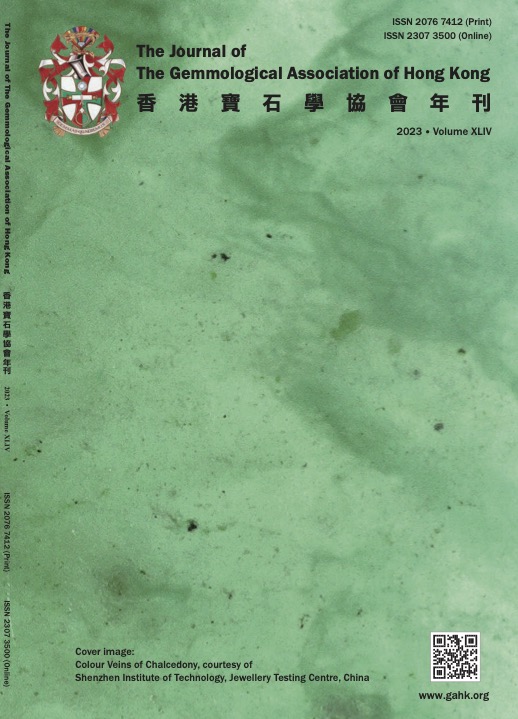
The characteristics of Hetian jade (nephrite jade) pebbles

The characteristics of Hetian jade (nephrite jade) pebbles

Liu, J., Li, J., Liu, S. and Wang, L. (2023)

Journal Article · Source: Journal of the Gemmological Association of Hong Kong · Volume: Vol. 44 · Pages: pp. 63–70 · Language: in Chinese with English abstract

Abstract
Hetian Jade Pebbles is the name given to Hetian jade, nephrite jade, from Hetian, Xinjian Region, PRC; material with a well rounded pebble- like form, often with a coloured skin. This material is formed after separation from the primary source, being transported by water for long distances - the geological process of “deposition- transport-deposition”. The distinguishing features of Hetian jade pebbles include: good roundness, a natural appearance without manual cutting, grinding and rounding; a smooth surface, “sweat pores”, “sand holes” and pits; “sand holes”, deep pits, “nail marks”, cracks and grooves filled with secondary minerals; natural skin colour and weathered skin of varying thickness; dry, white, variegated, coarse, cracked, or grooved jade sections. Secondary minerals include clinochlore or penninite, colloidal apatite, goethite/ lepidocrocite, hematite, barium psilomelane and calcite in various weaker sections of the epidermis with crustiform, filmy, colloidal banded, fine-grained, flaky and fibrous aggregates.
Keywords
gems, jade, nephrite, Hetian jade, Khotan, Hotan, surface characteristics of nephrite pebbles
The hardness of fei cui • A gemmological perspective

The hardness of fei cui • A gemmological perspective

Khourie, K. (2023)

Journal Article · Source: Journal of the Gemmological Association of Hong Kong · Volume: Vol. 44 · Pages: pp. 45–57

Abstract
Jade has a long and varied nomenclatural history, with its definition altered in the current age for practical and cultural reasons. Due to the discovery that many pyroxene jades are composed of various amounts of jadeite, omphacite and kosmochlor, the term “fei cui” has been proposed and widely accepted. It has been suggested that since the reported hardness of omphacite is lower than that of jadeite, a clear distinction should be made between omphacite- rich fei cui and other fei cui because of the potential long-term durability issues. Hardness also has a complicated history, as there are many factors to be considered when assessing the hardness of a material as well as its relation to scratch resistance. In this paper, the author examines these two topics and presents them in a simplified format based on empirical evidence and theoretical principles, while also considering the data available in literature.
Keywords
gems, jade, fei cui, pyroxene jade, jadeite, fei cui, omphacite, kosmochlor, fei cui hardness, Broken Bangle
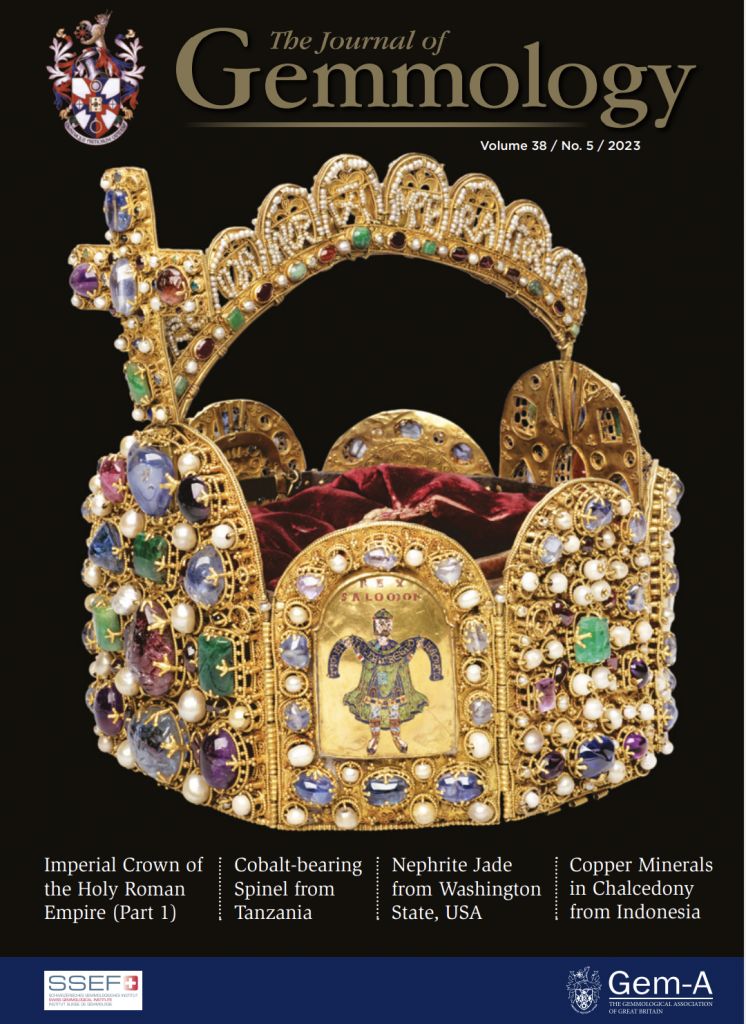
Nephrite jade from Washington State, USA, including a new variety showing optical phenomena

Nephrite jade from Washington State, USA, including a new variety showing optical phenomena

Jutras, J.-P., Williams, C., Williams, B. and Rossman, G.R. (2023)

Journal Article · Source: Journal of Gemmology · Volume: Vol. 38 · Issue: No. 5 · Pages: pp. 494–511

Abstract
In 2018, a new type of nephrite jade was recognised from the DJ project in Washington State (USA) that exhibits subtle-to-strong directional colour variations when viewed at different orientations. Its colouration ranges from green to blue in light-to-dark tones, and its mineralogical and gemmological properties are consistent with nephrite jade from other localities. The optical phenomenon is related to pleochroism resulting from the internal structure of the tremolite fibres constituting the nephrite. These fibres show high-angle to orthogonal cross-felting, often with variations in chemical composition, and appear to result from more than one generation of formation. The presence of sheen (caused by the scattering of light from fibrous tremolite domains) is sometimes seen in addition to the pleochroic optical effect. This phenomenal material has the toughness required to be cut into cabochons or carved without any stabilising treatment, thus possessing workability that qualifies it as a new and unique variety of nephrite jade. Three other nephrite types—classified here as Ornamental, Carving and Gem—additionally occur at the DJ project, and are also described in this article.
Keywords
gems, jade, nephrite, Washington, USA
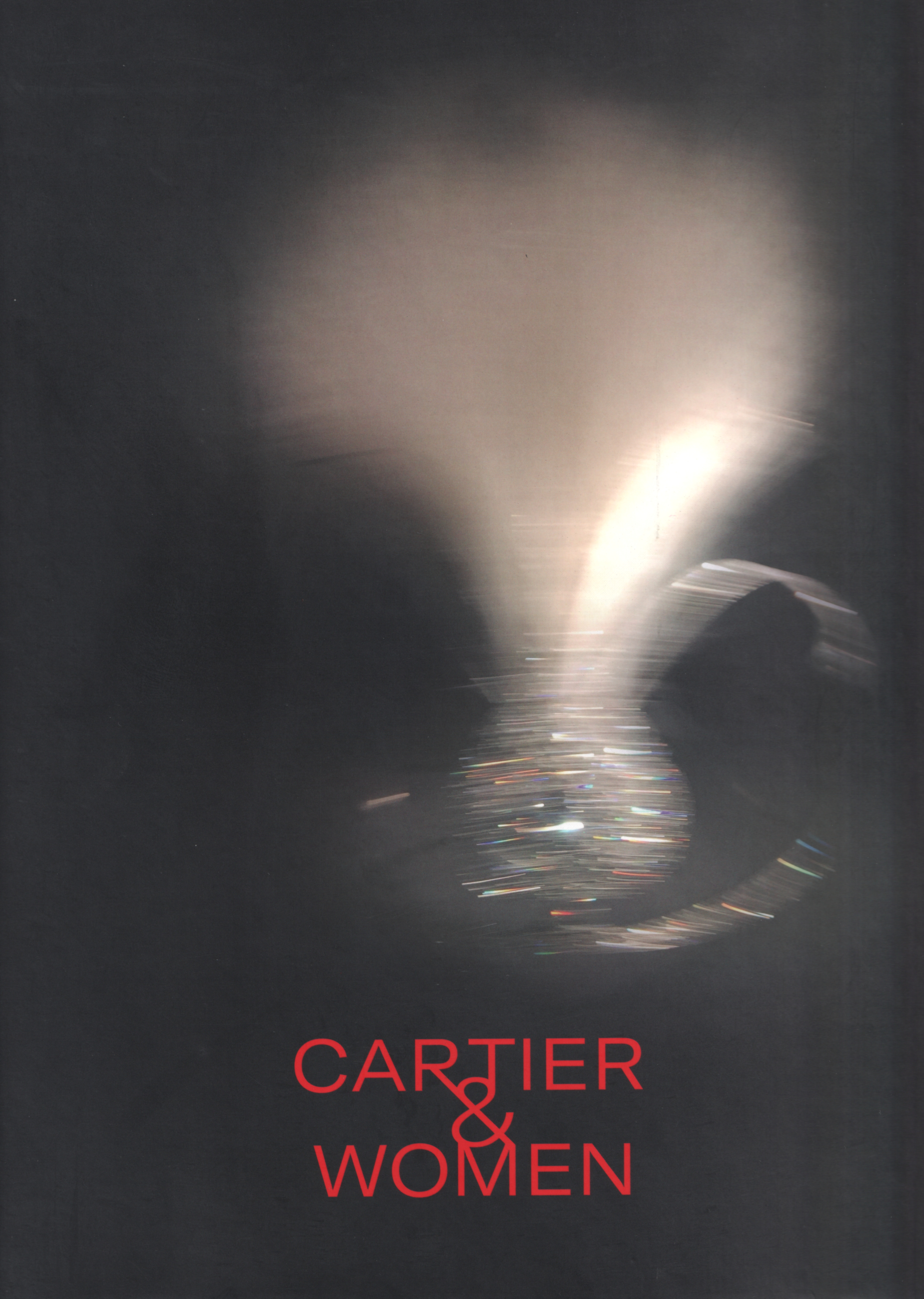
Cartier & Women

Cartier & Women

Osselt, E.N., van and Yin, Y.S. (2023)

Edited Book · Publisher: Hong Kong Palace Museum · Pages: 375 pp.

Abstract
Sumptuous volume in slipcase that was issued in conjunction with the 14 April to 14 August 2023 special exhibit of the same name at the Hong Kong Palace Museum. This featuress many famous pieces, including the Hutton jadeite necklace.
Keywords
gems, jewelry, Chinese jewelry, Chinese contemporary jewelry, jade, Chinese history, jade
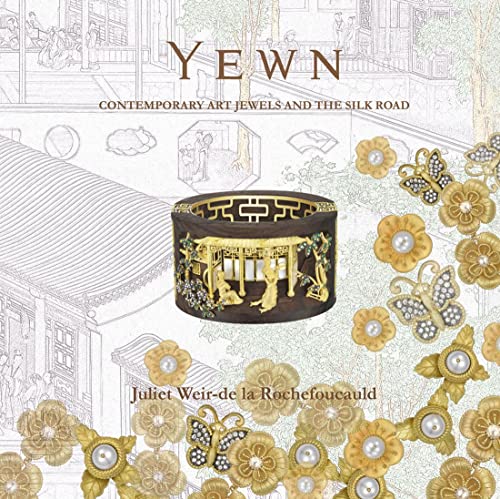
Yewn • Contemporary Art Jewels and the Silk Road

Yewn • Contemporary Art Jewels and the Silk Road

Weir-de La Rochefoucauld, J. (2023)

Book · Publisher: ACC Art Books · Pages: 276 pp.

Abstract
A detailed study of contemporary artist and jewelry creator, Dickson Yewn, renowned as the designer worn by the likes of Michelle Obama. Focuses on Yewn's inspirations, influences and the integral place of Han Chinese culture in his work. One of the most important pioneers in bringing Han Chinese culture back into the modern and contemporary jewelry world of today. First-of-its-kind art book narrating worldly and philosophical Han Chinese culture in the language of jewelry art. Informative background research on Yewn's creative process, bolstered by stunning high-quality photography from museum archivesDickson Yewn is the quintessential modern-day literatus. His contemporary jewelry is a crystallization of thousands of years of Chinese material history. Square rings rub shoulders with antique porcelain forms, shapes taken from Ming furniture and the geometric latticework found in Chinese architecture. Yewn focuses on these traditional Chinese motifs, but also understands the significance of different materials. Wood, one of the five elements in Chinese philosophy, is present in most of his collections. To wear a contemporary jewel by Dickson Yewn is to delve back into China's works of art and its history, blended with a contemporary twist. This new monograph of his work details the inspiration Yewn has drawn from the Imperial court, exploring its influence on the art of jewelry, from silks, embroidery, painting, architecture and cloisonné enamel to courtesan culture. Beautiful, detailed illustrations and photographs highlight Yewn's fealty to the artisanal techniques employed by the Imperial courts. Esteemed jewelry writer Juliet Weir-de La Rochefoucauld invites the reader to explore the deeper symbolism behind Yewn's jewels.
Keywords
gems, jewelry, Chinese jewelry, Chinese contemporary jewelry, jade, Chinese history
The importance of multidisciplinary analytical strategies to solve identification and characterization challenges in gemology: The example of the “green stones”

The importance of multidisciplinary analytical strategies to solve identification and characterization challenges in gemology: The example of the “green stones”

Musa, M. (2022)

Electronic Article · Source: Applied Sciences · Volume: Vol. 12 · Issue: No. 14 · Pages: 7168, 30 pp.

Abstract
The present review aims to discuss the importance of a multidisciplinary approach in cultural heritage and archaeometry investigations. The analytical methods used to identify and characterize “Green Stones” are discussed as an example. In the present paper, the term Green Stones is applied but not limited to jade materials, which have considerable importance in cultural heritage studies. In fact, archaeological samples made in Green Stones have been discovered worldwide, with many dating back to the Neolithic Age. Moreover, these materials represent an interesting analytical challenge, starting with their nomenclature and, in most cases, the nature of their polycrystalline samples and their heterogeneity. Indeed, after a brief introduction about the advantages of the non-destructive analytical techniques commonly used for gemstones and cultural heritage samples analyses, the limits of the same have been discussed on the basis of Green Stones applicability. Finally, a multidisciplinary methodology for Green Stones identification and full characterization, which considers materials’ heterogeneity and information, has been proposed and based on different references.
Keywords
gems, jade, amphibole jade, nephrite, pyroxene jade, fei cui, jadeite, maw-sit-sit, multidisciplinary approach, identification, characterization, green stones
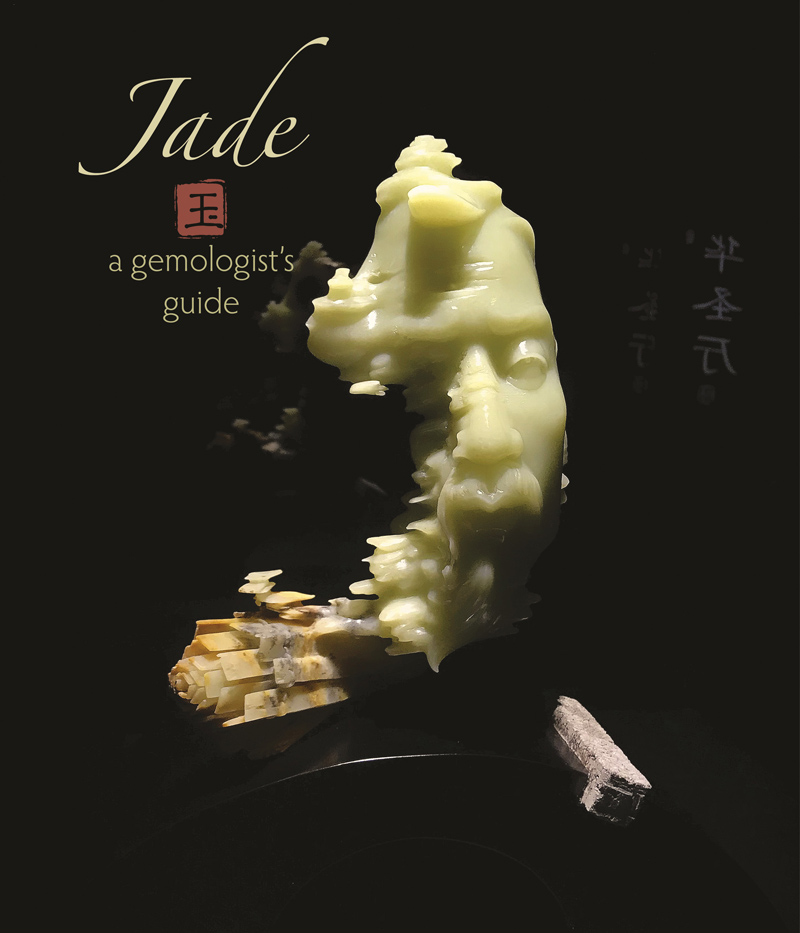
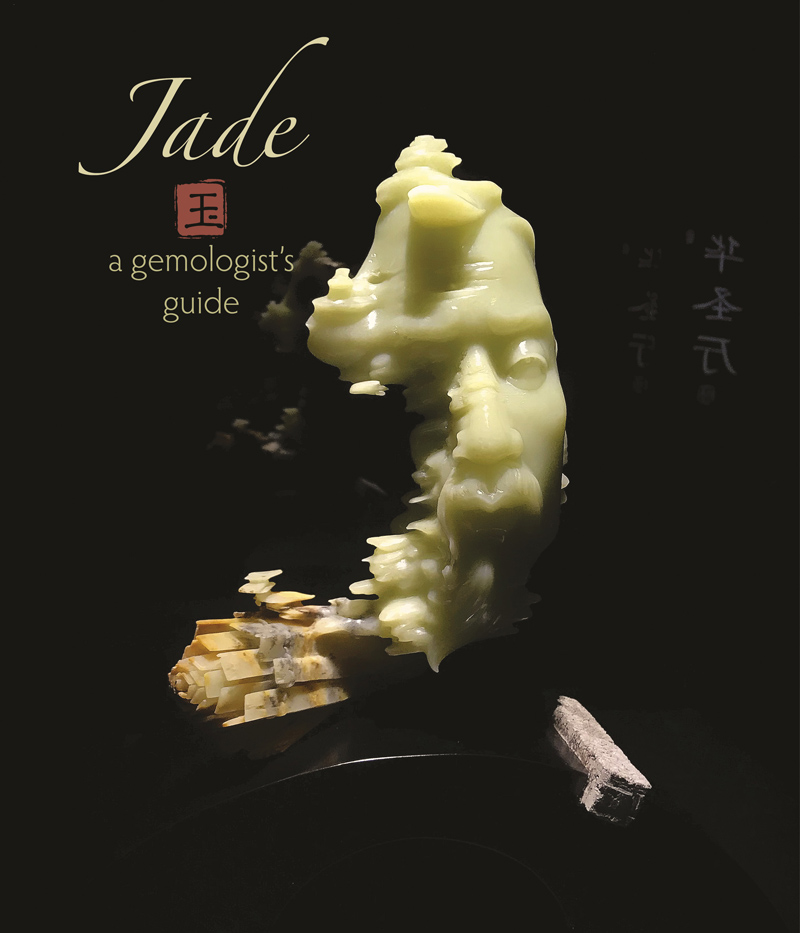
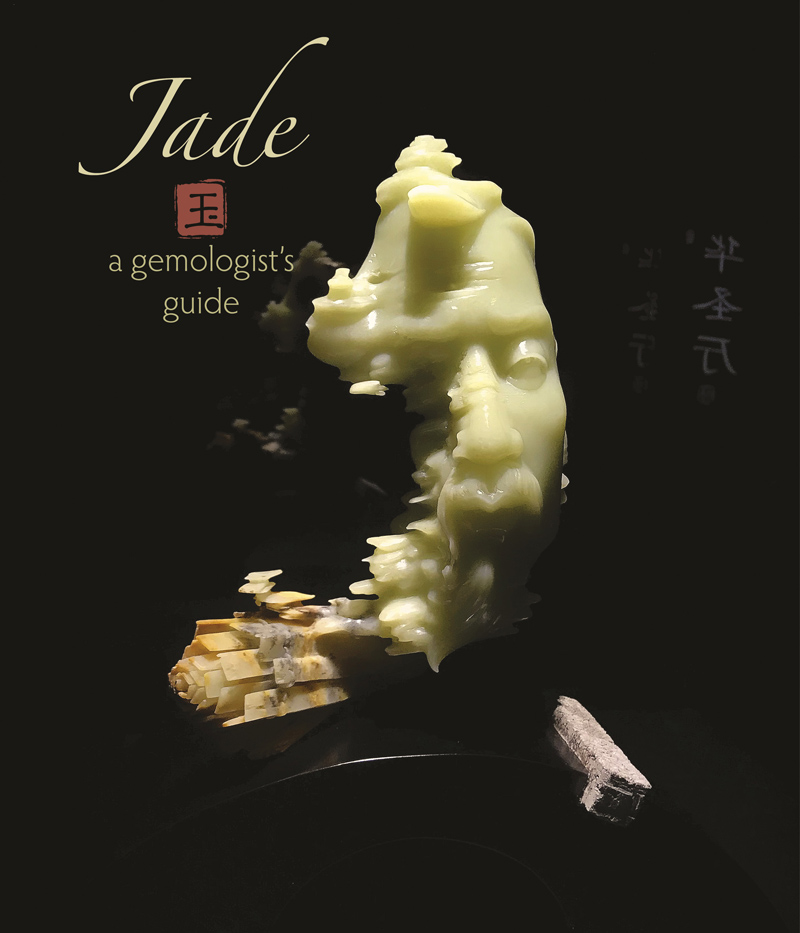
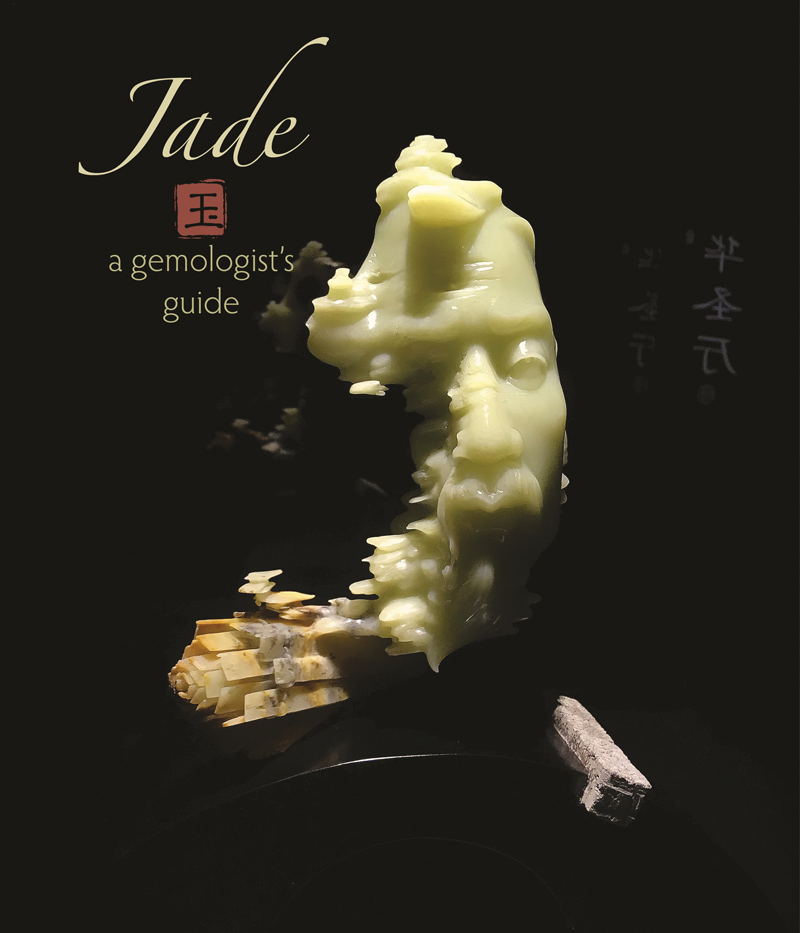
Nephrite jade • Its identification & evaluation

Nephrite jade • Its identification & evaluation

Hoffman, E.J. and Zhou, Z. (2022)

Book Section · Source: Jade | A Gemologist’s Guide · Publisher: Lotus Publishing · Pages: pp. 268–295

Abstract
The essentials of identifying nephrite and separating it from treated stones and simulants.
Keywords
gems, jade, nephrite, nephrite identification, Broken Bangle
Glossary • Jades & lookalikes

Glossary • Jades & lookalikes

Schluessel, R. (2022)

Book Section · Source: Jade • A Gemologist’s Guide · Publisher: Lotus Publishing · Pages: pp. 480–485

Keywords
gems, jade, nephrite, jadeite, fei cui, jade nomenclature, jade identification, jade misnomers
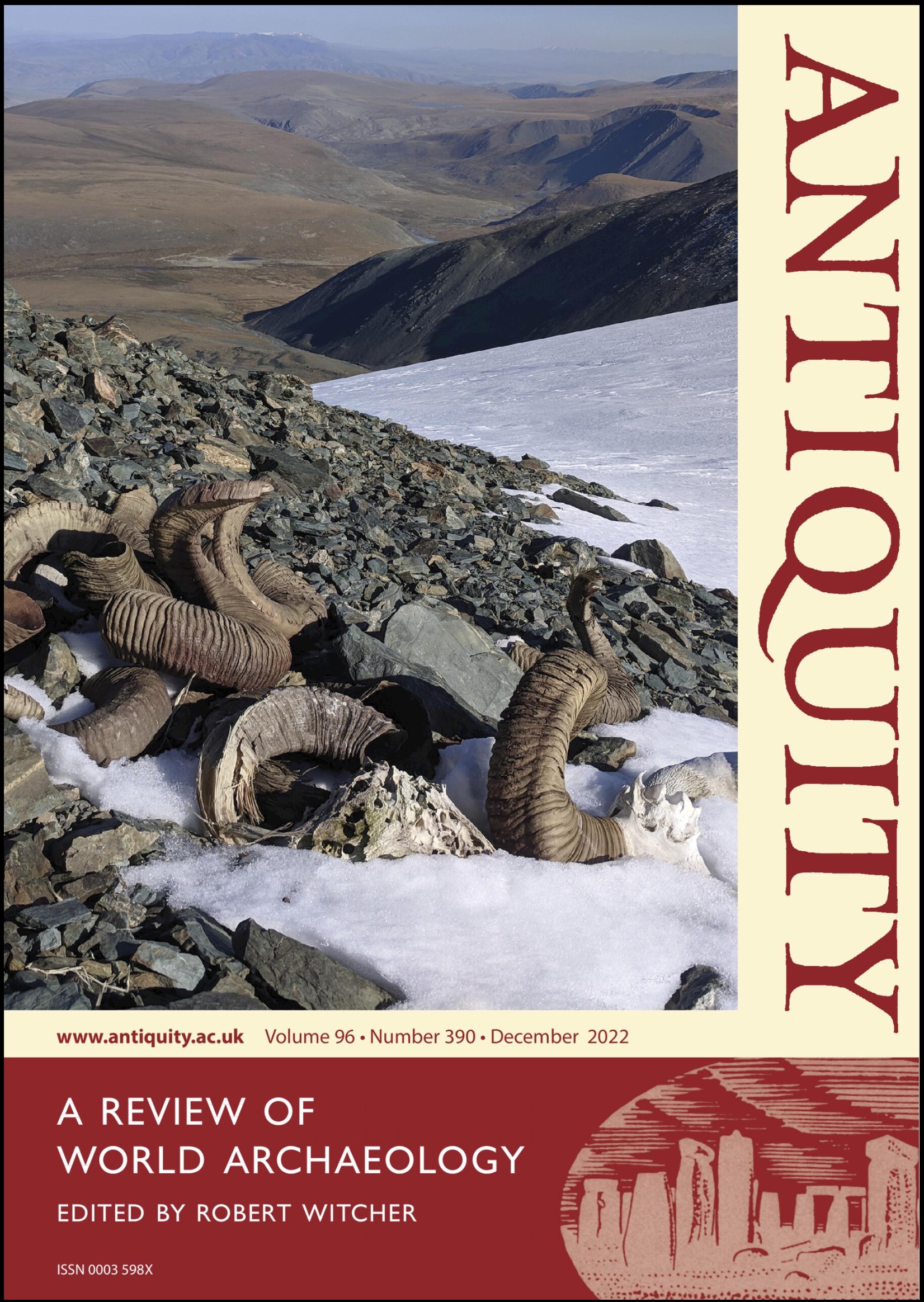
Burnt jade sacrifices in the Chinese Neolithic: the Liangzhu cemetery at Sidun

Burnt jade sacrifices in the Chinese Neolithic: the Liangzhu cemetery at Sidun

Wang, R., Mai, Y. and Lin, L. (2022)

Journal Article · Source: Antiquity · Volume: Vol. 96 · Issue: No. 390 · Pages: pp. 1495–1514

Abstract
Oracle bone inscriptions of the late Shang Dynasty (1250–1046 BC) record the burning of jade as a ceremonial sacrifice, a practice now corroborated archaeologically. The origins of ceremonial jade burning, however, are unclear. Using archaeometric methods and experimental archaeology, the authors examine an assemblage of jade objects from the late Liangzhu-period (2600–2300 BC) cemetery of Sidun. The cause of the jades’ variable surface colours has been long debated. The results presented here demonstrate that the colour changes relate to alterations in chemical composition due to exposure to fire. The evidence from Sidun confirms that the burning of jade in China commenced more than a millennium earlier than previously documented.
Keywords
gems, jade, nephrite, China, neolithic jade, Liangzhu culture
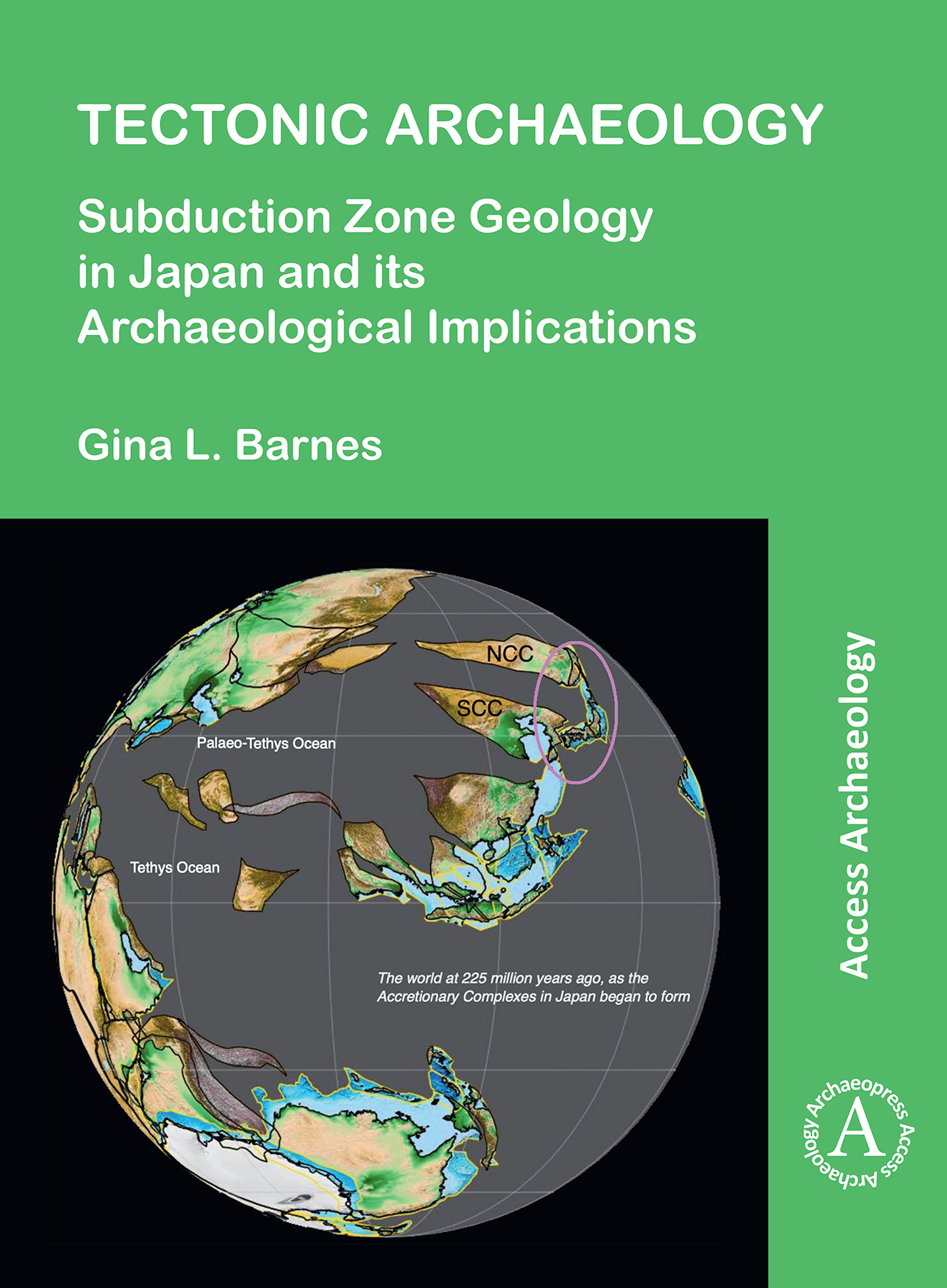
Tectonic Archaeology: Subduction Zone Geology in Japan and its Archaeological Implications

Tectonic Archaeology: Subduction Zone Geology in Japan and its Archaeological Implications

Barnes, G.L. (2022)

Book · Publisher: Archaeopress · Pages: 554 pp.

Abstract
The effects of tectonic processes on archaeological sites are evidenced by earthquake damage, volcanic eruptions, and tsunami destruction, but these processes also affect a broader sphere of landform structures, environment, and climate. An overview of tectonic archaeology is followed by a detailed summary of geoarchaeological fieldwork in Japan. The effects of tectonic processes on archaeological sites are evidenced by earthquake damage, volcanic eruptions, and tsunami destruction. However, these processes affect a far broader sphere of landform structures, environment, and even climate that envelops an archaeological site and triggers human behavioural activities. Tectonic processes derive directly or indirectly from Plate Tectonics and associated magmatic activity of the Earth’s mantle. This volume thus provides a primer on crucial subduction- and suprasubduction-zone processes due to Plate Tectonics, where many earthquakes and volcanic eruptions are generated. After a general survey of how tectonic effects are dealt with in geoarchaeology, Part I details how these processes are applied to understand the Japanese landmass’s development, from continental accretion to volcanic archipelago, as a world-standard example. A full glossary of geological terms is included for easy reference. This is followed by detailed examinations of Japan’s tectonic archaeologies in Part II: TephroArchaeology, Earthquake Archaeology, and Tsunami Archaeology. Part III summarizes and critiques the authors’ own geoarchaeological fieldwork in Japan which was underwritten by a clear exposition of its geological and geomorphological background. Looking holistically at a locale and its development through geological time is fruitful in understanding the lay of the land, its resources, and its hazards that affect human occupation potential.
Keywords
gems, jade, geology, nephrite, jadeite, fei cui, Japan, China, Burma, Myanmar, Russia
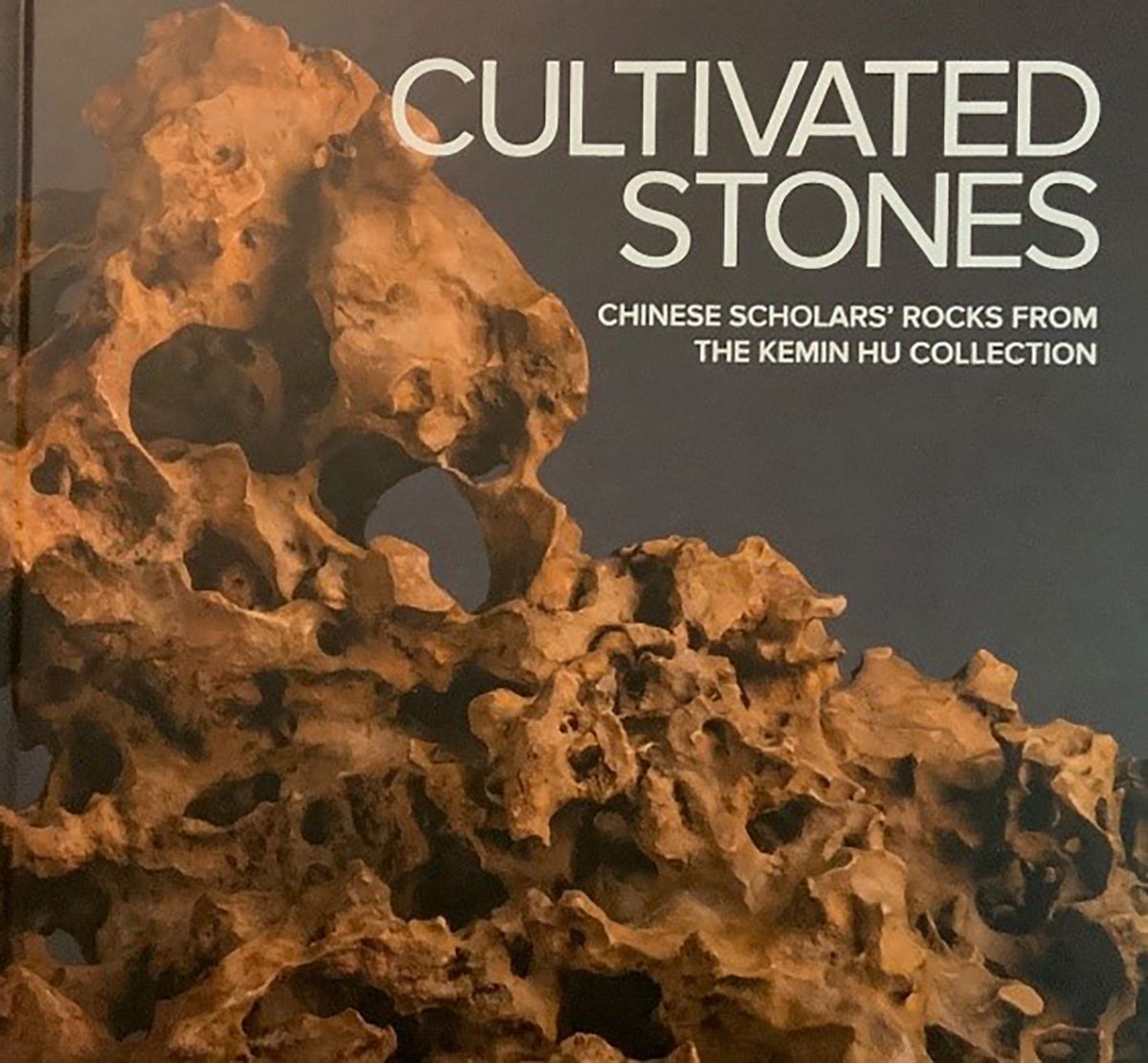
Cultivated Stones | Chinese Scholar’s Rocks from the Kemin Hu Collection

Cultivated Stones | Chinese Scholar’s Rocks from the Kemin Hu Collection

Emerson-Dell, K. (2022)

Book · Publisher: National Bonsai Foundation · Pages: 145 pp.

Abstract
VSANA: This is a significant publication, perhaps the most important book on Chinese Scholars’ rocks published in 2022. It is more than just a documentation of the gift of 112 Chinese stones presented to the U.S. National Arboretum (USNA) in Washington, D.C. by Kemin Hu. Hu is a well-known stone collector, dealer, and author of several books about classical and modern Chinese viewing stones. Last year, Hu decided to present many of her stones along with 17 stones that were originally in her father’s collection in an eventual effort to establish a Chinese Scholars’ Rock museum within the National Bonsai and Penjing Museum at the USNA. Several features in this book combine to make it an outstanding volume. First and foremost is the catalog section that divides the 112 stones into nine sections. Stones with shared characteristics are grouped in each group. This is an immense aid to readers. It can be difficult for people to experience difficulty in understanding the breadth of stone appreciation in China, with more than 600 different types of viewing stones recognized by the View Stone Association of China. However, Kathleen Emerson-Dell’s grouping of the Hu donation into nine sections is a good educational aid. The first section, Honorable stones, features 17 stones from Hu Zhaokang, Kemin’s father. A second section, Distance Mountains, brings together those stones reminiscent of faraway mountains. Narrow, vertically oriented stones are brought together in the Towering Peaks section; while colorful stones are assembled into another section Stones of Color. A small section is devoted to fossils that have long been a part of Chinese stone appreciation practices for many centuries. It is nice to see that enhanced stones, which have been carved, shaped, and polished, are recognized along with the natural stones that have only been cleaned in preparation for display. Enhancing stones has been integral to Chinese stone appreciation from ancient times to the present. Not all students of Chinese stone will agree with the statement that carved stones are differentiated from natural stones by adding the Chinese term ling long. The Chinese words, ling long, have long been used for delicate or graceful stones, especially with rocks that possess many holes. This term has been applied to completely natural stones and to enhanced stones. Scholars have shown that the ling long has different meanings over time. The carefully researched article about the appeal of Chinese Scholars’ Rocks by Phillip Bloom is an important scholarly contribution to understanding the complex nature of Asian stone from ancient to modern times. He succeeds in dissecting and explaining the appeal of scholars’ rocks. It appears that Bloome may represent the next generation of scholarship on Chinese viewing stones by adding to the immense contributions of the earlier generation of scholars—Hay, Mowery, Stuart & Little. Cultivated Stones is a beautifully designed volume with a sharp layout and stunning and evocative photographs of the one-hundred-plus stones Illustrated. It is a quality publication from all aspects of production—paper quality, binding, and binding.
Keywords
gems, jade, Chinese scholar’s rocks, scholar’s studio
The evolution of Chinese feicui jewelry design and culture

The evolution of Chinese feicui jewelry design and culture

Xu, J., Zhang, R. and Yang, S. (2022)

Journal Article · Source: Frontiers in Art Research · Volume: Vol. 4 · Issue: No. 16 · Pages: pp. 32–43

Abstract
The introduction of western jewelry culture has a profound and lasting influence on the rise and evolution of Chinese Feicui jewelry design and culture. The evolution of Chinese Feicui jewelry culture has changed from taking the aesthetic and political needs of the imperial family in Qing dynasty as the core to taking the modern aesthetics of life and philosophy as its core. The pioneer of the local Feicui jewelry design trend is committed to finding the contemporary value of Chinese traditional culture, and actively thinking about how to complete the contemporary transformation of Chinese traditional culture and make it integrate with the international aesthetic. The emerging jewelry brand, created by Chinese jewelry designers, has successfully entered the international high-end market by relying on the independently developed Feicui jewelry products. What is important is that the power of Chinese Feicui jewelry culture has two-way potential. The research and development of Feicui jewelry products are also a long-term window for international designers and jewelry brands to enter the Chinese jewelry market, and it is the best entry point to build a close connection and emotional resonance between themselves and Chinese consumers.
Keywords
gems, jade, jadeite, fei cui, pyroxene jade, fei cui
Lü Dalin and the jades from the Song dynasty

Lü Dalin and the jades from the Song dynasty

Xu, X. (2022)

Journal Article · Source: Transactions of the Oriental Ceramic Society · Volume: Vol. 85 • 2021 · Pages: pp. 58–73

Abstract
This paper examines characteristics of the Northern Song jades, in order to discuss the influence of archaism on them and also on the jades of the Southern Song. It will also discuss the interaction between jades of the Northern Song (960–1127) and Liao (816–1125), and the Southern Song (1127–1279) and Jin (1115–1234). Archaism in the Northern Song attracts scholarly attention to the burial objects from Lü Dalin’s tomb and those from the tombs. of other members of the Lü family in the same cemetery. Unearthed archaistic bronzes and jades, a large number of stone objects made after Zhou and Han bronzes and jades in particular, provide physical information for studying literati taste for, and interest in, archaism during the Northern Song. Author and compiler of the Kaogutu, Lü Dalin and his family should recognised as among the earliest enthusiastic advocates of archaism.
Keywords
gems, jade, nephrite, China, Chinese jade carving, archaic jade
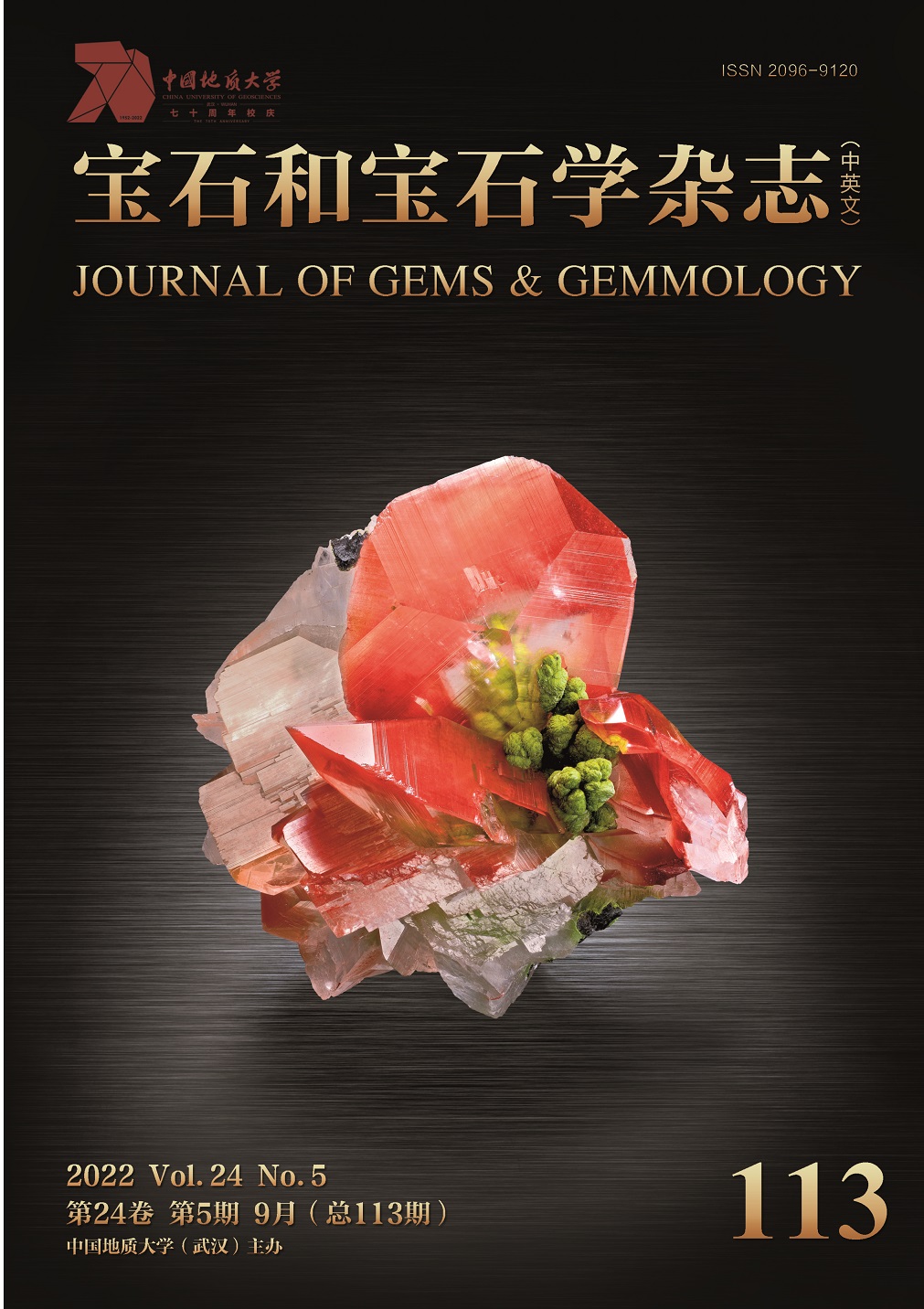
Mineral component and genesis of high-grade green jadeite jade from Guatemala

Mineral component and genesis of high-grade green jadeite jade from Guatemala

Wang, L., Zhang, H., Liu, J., Wang, L., Ouyang, Q., Liu, D. and Liu, W. (2022)

Journal Article · Source: Journal of Gems & Gemmology · Volume: Vol. 24 · Issue: No. 5 · Pages: pp. 11–30 · Language: in Chinese with English abstract

Abstract
High-grade green jadeite jade samples from Guatemala were selected as the research objects. Gem microscope, polarizing microscope, microscopic laser Raman spectrometer, and electron probe microanalyser were used to analyze the appearance characteristics, magnification features, constituent minerals, microstructures, Raman spectra, and mineral chemical compositions of the samples. Based on constituent minerals and their evolution, three periods of mineralization were observed. The product of the early mineralization period is jadeite with coarse-grained, hypautomorphic–automorphic granular-columnar texture and very pure chemical composition. The main mineralization period is characterized by metasomatism, with earlier-stage products being fine-grained jadeite containing relatively higher FeO, Cr₂O₃, MgO, and CaO contents compared to jadeite from the early period, and later-stage products being fine-grained omphacite with high MgO and CaO contents, whose green color shades correspond to Cr₂O₃ variation. The late mineralization period products consist of jadeite (or albite) + titanite in a filling texture, with titanite mainly distributed in reticulated veins between jadeite/omphacite particles or in microfractures. The combination of jadeite (or albite) + titanite + fluid inclusions formed during this late stage appears as white cotton-like zones in jadeite jade, representing fluid-melt inclusions. The fluid phase in these inclusions contains CO₂ and CO, with a strong characteristic Raman shift peak at 2,145 cm⁻¹, indicating a highly reductive formation environment with high CO content, corroborated by the presence of amorphous carbon in the samples. Jadeite is the main or one of the main minerals in most of the high-grade Guatemalan green jadeite jade samples studied. In such samples, the late-stage assemblage of jadeite + reticulated titanite + CO-dominated fluid inclusions commonly found in white “cotton” areas serves as an important reference feature for distinguishing Guatemalan high-grade green jadeite jades from Burmese green jadeite jades.
Keywords
gems, jade, jadeite, fei cui, Guatemala jadeite, fei cui, imperial jade

Exploring the Literature of Jade

Jade literature spans gemology, mineralogy, archaeology, art history, mining, carving and connoisseurship, and includes works on both jadeite and nephrite from around the world.

For an introduction to collecting books on this subject, read Hidden Treasure — Collecting the Literature of Jade.

About Four Treasures

Four Treasures is Lotus Gemology's freely accessible gemological reference database. Use the full database to search by author, title or keyword and explore literature on gemology, mineralogy, jewelry and related fields. Where available, hyperlinks on titles may lead directly to the full publication.

Search the Complete Four Treasures Database