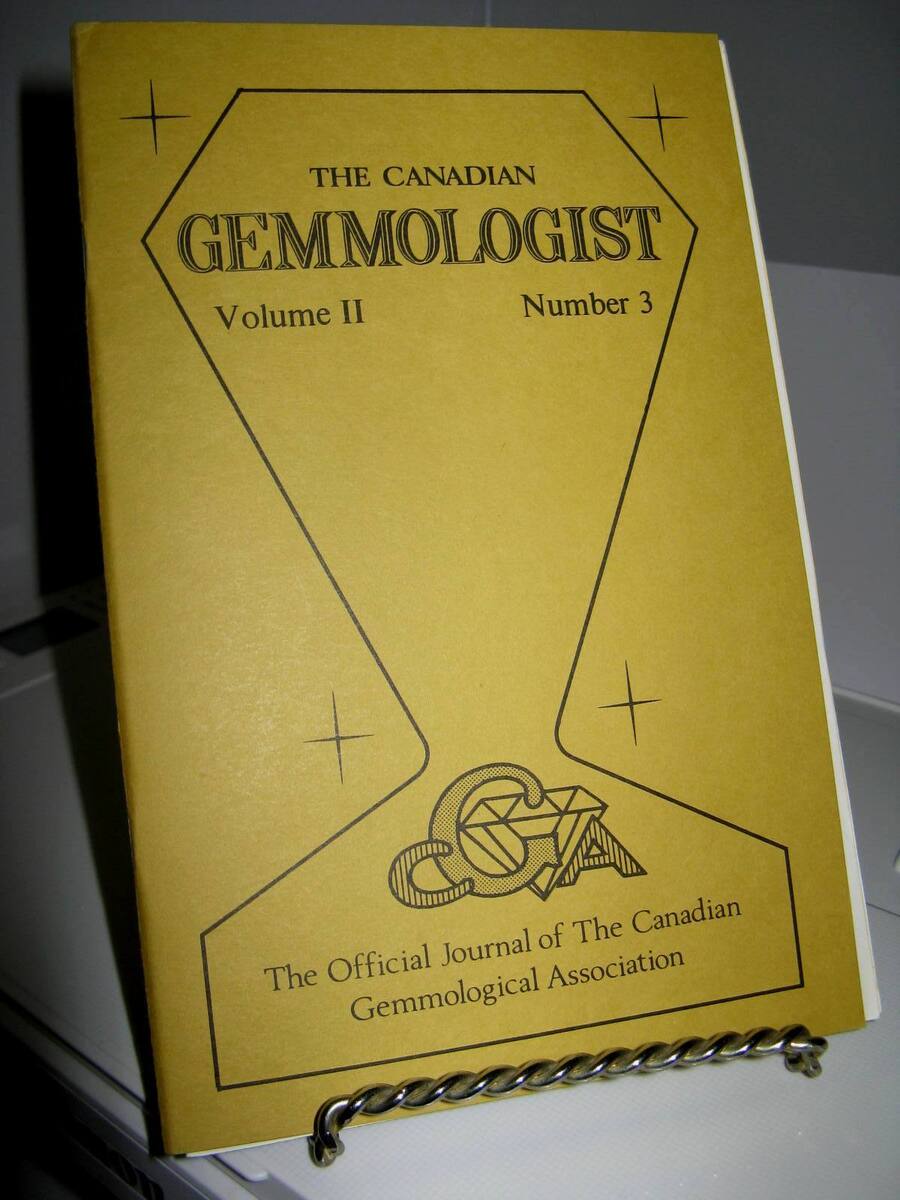
Ruby & Sapphire Bibliography

Ruby & Sapphire Bibliography

Explore books, articles and historical sources on ruby, sapphire and corundum in Four Treasures, the Lotus Gemology reference database. This bibliography brings together matching records from the collection, with publication details, abstracts and cover images where available.

Ruby & Sapphire References

The list below matches the terms ruby, rubies, sapphire or corundum in the database's searchable fields. Some references discuss these gems as part of a broader subject. Linked titles take you to external links where you may find the full reference.

161–180 of 4,669 matching references
Surface repaired rubies

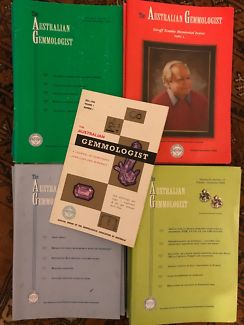
Surface repaired rubies

Hughes, R.W. (1984)

Journal Article · Source: Australian Gemmologist · Volume: Vol. 15 · Issue: No. 8 · Pages: pp. 279–280

Abstract
Description of rubies treated by filling surface cavities with glass.
Keywords
ruby, surface repair, treatments.6, gems
Archaeogemmology and ancient literary sources on gems and their origins

Archaeogemmology and ancient literary sources on gems and their origins

Thoresen, L. (2017)

Book Section · Source: Gemstones in the First Millennium AD: Mines, Trade, Workshops and Symbolism · Publisher: Römisch-Germanischen Zentralmuseum (RGZM) · Volume: RGZM Tagungen 30 · Pages: pp. 155–217

Abstract
The gemstones believed to have been known in Classical Antiquity – their mineralogical identities and their geographic sources – were inferred almost exclusively from literary sources until the turn of the 20th century. Typological and thematic classifications of ancient glyptic were first proposed in Adolph Furtwängler’s monumental work, Die antiken Gemmen (1900), and for the first time objective empirical criteria were employed to organise gemstones according to their materials. Furtwängler set a standard that gem scholars would follow and develop further. Gem catalogues came to feature a materials index, comparanda of materials related to engraved subjects, and typologies of gem and jewellery shape, toolwork, and carving style. Analysis of distribution patterns of gem materials revealed cultural preferences for specific gemstones and also artists’ and workshop associations, which improved the overall picture of the gemstones used in different periods of Classical Antiquity. Gems and jewellery recovered from archaeological contexts enabled firmer dating and cultural attribution of glyptic otherwise based on iconographic or stylistic features. This is a superb article. Highly recommended.
Keywords
corundum, History.1, gems
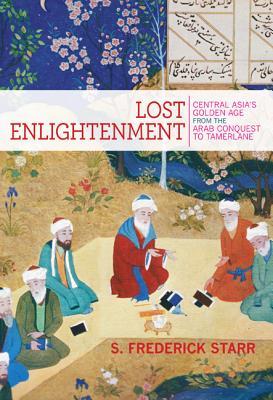
Lost Enlightenment: Central Asia's Golden Age from the Arab Conquest to Tamerlane

Lost Enlightenment: Central Asia's Golden Age from the Arab Conquest to Tamerlane

Starr, S.F. (2013)

Book · Publisher: Princeton University Press · Pages: 680 pp.

Abstract
In this sweeping and richly illustrated history, S. Frederick Starr tells the fascinating but largely unknown story of Central Asias medieval enlightenment through the eventful lives and astonishing accomplishments of its greatest minds--remarkable figures who built a bridge to the modern world. Because nearly all of these figures wrote in Arabic, they were long assumed to have been Arabs. In fact, they were from Central Asia--drawn from the Persianate and Turkic peoples of a region that today extends from Kazakhstan southward through Afghanistan, and from the easternmost province of Iran through Xinjiang, China. Lost Enlightenment recounts how, between the years 800 and 1200, Central Asia led the world in trade and economic development, the size and sophistication of its cities, the refinement of its arts, and, above all, in the advancement of knowledge in many fields. Central Asians achieved signal breakthroughs in astronomy, mathematics, geology, medicine, chemistry, music, social science, philosophy, and theology, among other subjects. They gave algebra its name, calculated the earths diameter with unprecedented precision, wrote the books that later defined European medicine, and penned some of the worlds greatest poetry. One scholar, working in Afghanistan, even predicted the existence of North and South America--five centuries before Columbus. Rarely in history has a more impressive group of polymaths appeared at one place and time. No wonder that their writings influenced European culture from the time of St. Thomas Aquinas down to the scientific revolution, and had a similarly deep impact in India and much of Asia. This is a must-read for all those interested in the history of science.
Keywords
corundum, history.1, treatments.6, gems, Arabic mineralogy, Indian lapidary
Photographing gems

Photographing gems

Koivula, J.I. (2007)

Journal Article · Source: InFocus · Issue: No. 7, September · Pages: pp. 24–59

Abstract
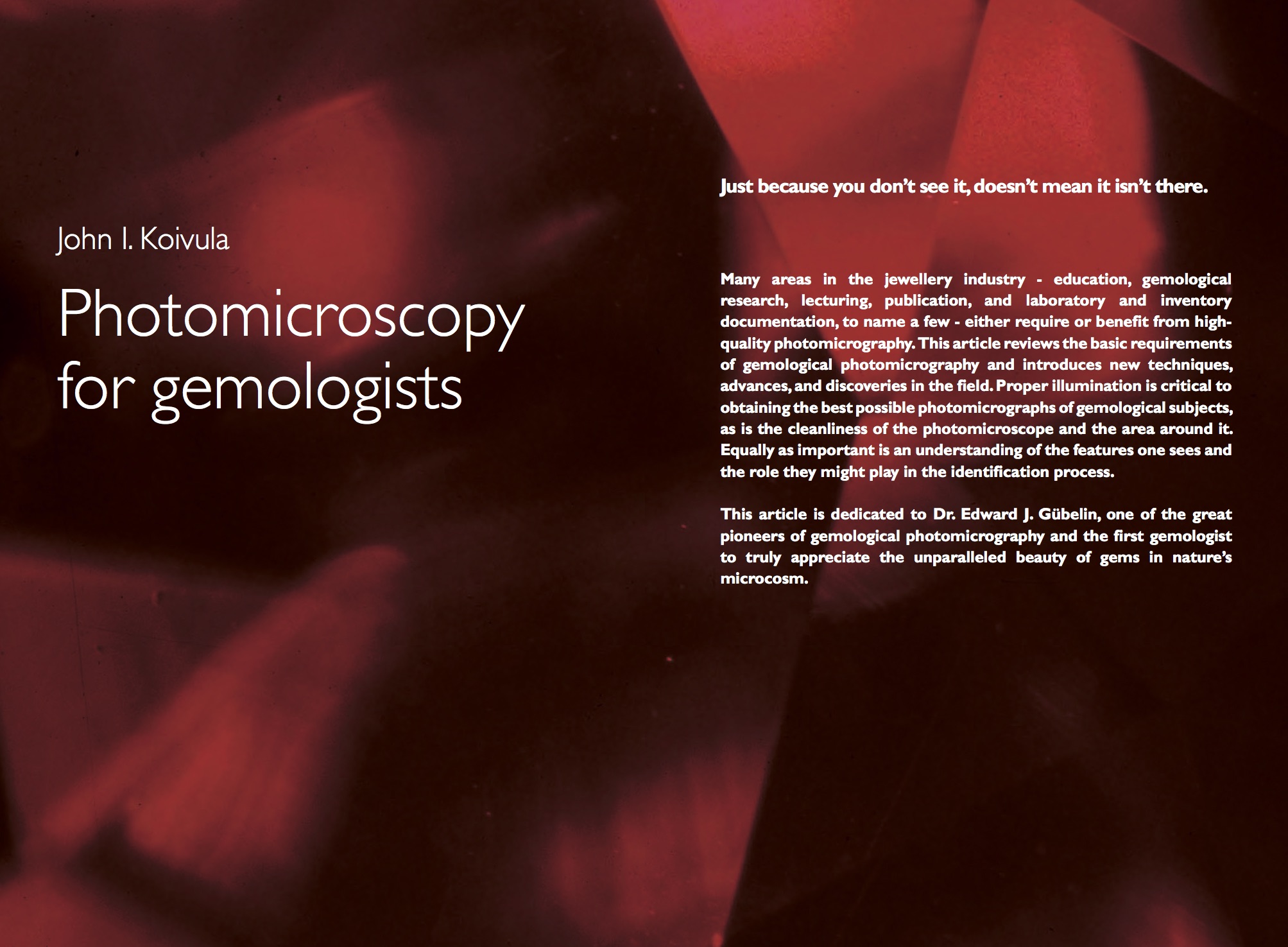
Without photomicrography, gemology as we know it would be virtually nonexistent. The photomicrographer explores the surfaces and interiors of gems with a microscope, and prepares images that record and convey information that is normally hidden from view. Today, nearly all professional gemological researchers take and publish their own photomicrographs. When researchers report the identifying features of new synthetics, treatments, and natural gems from new geographic localities, they include photomicrographs that are instrumental to the jeweller/gemologist in identifying these new materials. One needs only to look through issues of Gems & Gemology, or any of the various international gemological journals, to see how dependent gemology has become on these illustrations of the microscopic features of gems. Via the printed page, these photomicrographs instantly update the reader.
Keywords
corundum, inclusions.5, gems
The history and importance of heat treatment of Australian sapphire

The history and importance of heat treatment of Australian sapphire

Coldham, T.S. (2003)

Journal Article · Source: Australian Gemmologist · Volume: Vol. 21 · Issue: No. 11, July–September · Pages: pp. 450–462

Abstract
The late Geoff Tombs was always interested in heat treatment, publishing several papers on the subject (Tombs 1978, 1979, 1991). However the paper that sticks in my mind the most was written in 1974 and titled ‘Synthetic-like fluorescence in a natural sapphire’ Tombs 1974. At the time of writing I suspect Geoff While describing a Fine blue Ceylon sapphire submitted for testing………., Geoff was surprised by the results he obtained when examining the stone under UV light, summing up his report: Microscopic examination proved the stone to be natural. This stone is particularly interesting as it is the first naturai sapphire I have examined in which blue sections showed fluorescence characteristics exactly the same as those exhibited by the typical Verneuil synthetic blue corundum. The fluorescing areas (under S/W) were curious in that they did not follow the blue colour zoning. (Tombs 1974). In hindsight I believe Geoff was examining a heat-treated Ceylon blue sapphire a few years before such a treatment became generally known amongst the gemmological community. Most importantly, he recognised that here was something different enough to be worth reporting in his favourite magazine, The Australian Gemmologist. I dedicate this paper to him. I would like you to join me in tracing the lives and interests of several people associated with Australian sapphire. They come from widely differing backgrounds and cultures. Some are university educated, while some never went to school. Some are even still alive today. It is through their fascinating testimonies that I have been able to put this story together.
Keywords
gems, corundum, treatments.6, Australia.12
Gemology: An Annotated Bibliography

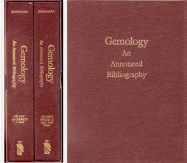
Gemology: An Annotated Bibliography

Sinkankas, J. (1993)

Book · Publisher: The Scarecrow Press, Inc. · Pages: 1179 pp.

Abstract
It is difficult to overstate the importance of this two-volume work, which was the product not just of John’s writing career, but also of his home business, Peri Lithon, which he operated for decades with his wife, Marge. No authors ever worked harder on a single work. Over 6,000 entries, virtually all of which are annotated. There is a limited edition in fake leather with a siipcase. My pick for the greatest gem book of all time.
Keywords
corundum, ruby, sapphire, history.1, chemistry.2, properties.3, geology.11, inclusions.5, sources.12, synthetic corundum.7, treatments.6, assembled stones.8, color.4, fashioning.9, quality.10, introduction.0, bibliography, books on books, jade, jadeite, fei cui, nephrite, gems
Colour

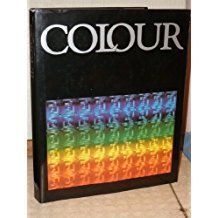
Colour

Varley, H. (1983)

Edited Book · Publisher: Marshall Editions Ltd. · Pages: 256 pp.

Abstract
Outstanding survey of various aspects of color. Each two-page spread examines a different aspect of color. This book cannot be recommended highly enough.
Keywords
corundum, color.4, quality.10, gems, jade, color, color science, color theory
The Book of the Pearl

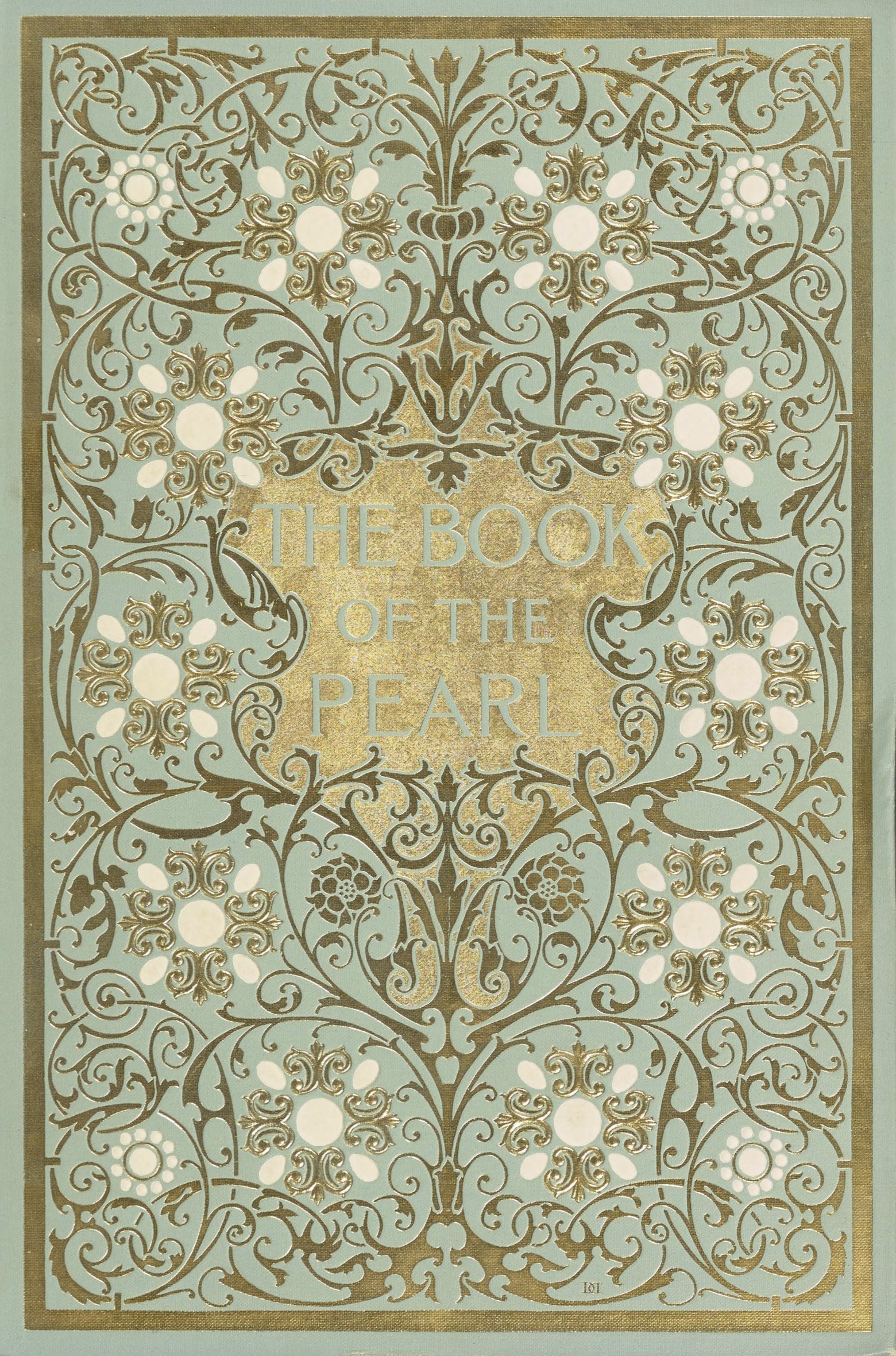
The Book of the Pearl

Kunz, G.F. and Stevenson, C.H. (1908)

Book · Publisher: Century Co. · Pages: 548 pp.

Abstract
Sinkankas: This beautiful example of modern book design, executed in high-quality materials, is prized not only for the enormous amount of reliable information that it contains, indeed still unmatched in any work since, but also for the large number of high-quality illustrations in color and in black-and-white. The lavish use of gilding on the binding imparts a particularly opulent appearance. The text covers the entire span of ancient to modern knowledge of the pearl, its host, formation, the natural history of the several shellfish, salt- and fresh-water, methods of fishing, preparation of pearls, marketing, fashion, lore, and many other topics directly or indirectly related to the central theme. Scarcely any aspect is neglected in this truly monumental work, which remains indispensable both for the student interested in the strictly scientific aspects and the one interested in the sociological/cultural aspects. There is a very large bibliography, with all important works in any language brought together to form a still useful place for the commencement of a literature search on pearl. While well-made, and consequently somewhat costly for the time, the popularity of the book was instantaneous, and a number of reprintings had to be resorted to satisfy demand. In general, these closely resemble the first issue, but the “pearls” on the cover are omitted, the top edge is not gilt, and the fore and bottom edges are cut but not smoothly. The use of slightly thicker paper caused thickening of the volume, from ca. 5.7 cm to ca. 6.2 cm.
Keywords
corundum, introduction.0, history.1, gems
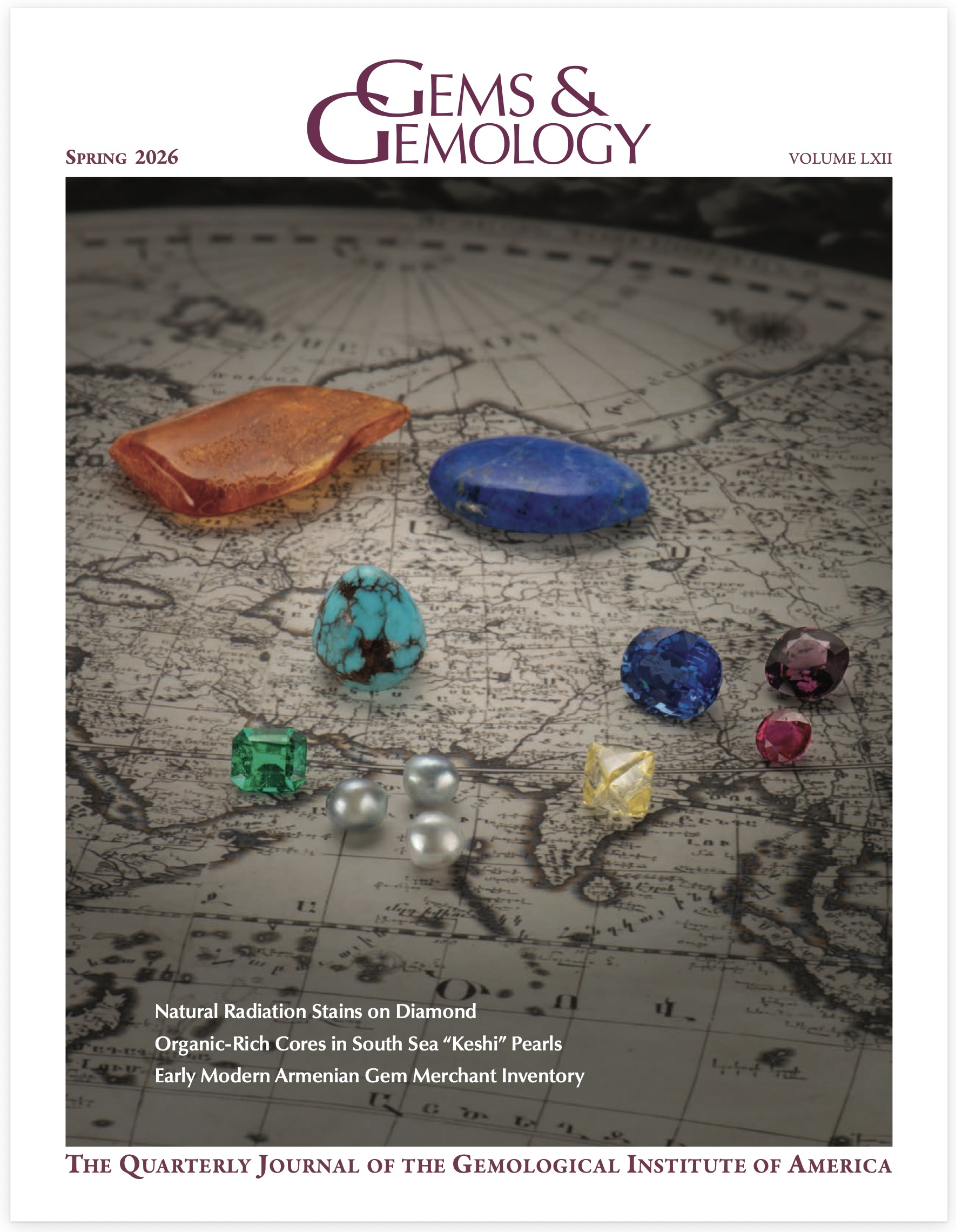
Records from a luxurious past: Gem inventory of a seventeenth-century Armenian merchant

Records from a luxurious past: Gem inventory of a seventeenth-century Armenian merchant

Tajiryan, S. (2026)

Journal Article · Source: Gems & Gemology · Volume: Vol. 62 · Issue: No. 1, Spring · Pages: pp. 38–66

Abstract
A rare 1688 probate inventory documents the extensive gem collection of Gregorio di Girach-Mirman (1612–1688), a prominent Armenian merchant active in Venice and Livorno, Italy. Originally written in Armenian and later translated into Italian, this archival record lists more than 100,000 gemstones, including diamonds, sapphires, emeralds, and pearls, as well as more than 1,700 kilograms of rough amber, garnet, lapis lazuli, and turquoise. Housed in the State Archives of Venice, the inventory offers a uniquely detailed window into the early modern luxury trade and highlights the global commercial reach of Armenian merchant families like the Girach-Mirmans. Drawing on this previously unstudied source, along with a broader set of archival documents from across Europe and Armenia, the present article reconstructs the world of seventeenth-century gem dealing and collecting. It argues that Armenian merchants were central figures in the global trade of luxury goods, operating alongside and sometimes in competition with better-known European contemporaries. The provenance and diversity of Gregorio’s gem holdings, likely sourced from as far as modern-day Colombia, Sri Lanka, Iran, and Myanmar, attest to the geographic reach of Armenian trading networks and the sophistication of their market knowledge. By placing this inventory in its global and material context, the article contributes to ongoing discussions around early modern economic history, material culture, and global commodity flows across Eurasia and the New World. It demonstrates that gem inventories, often overlooked as solely bureaucratic and estate documents, can illuminate the complexity of merchant strategies, the transcontinental mobility of luxury goods, and the dynamics of status and prestige in the early modern period. Finally, one of the central aims of this article is to illuminate the inner workings of gem dealing in this period, including practices of sourcing and collecting, through a rare body of obscure commercial correspondence. These materials offer an exceptional view into a dimension of the trade that remains largely inaccessible and nearly absent from existing historiography.
Keywords
gems, gem trade in Asia, gem business, trade between Europe and Asia, corundum, history.1, Early Modern trade, Armenia, Armenians, Iran, Myanmar, Sri Lanka, India, Turkey
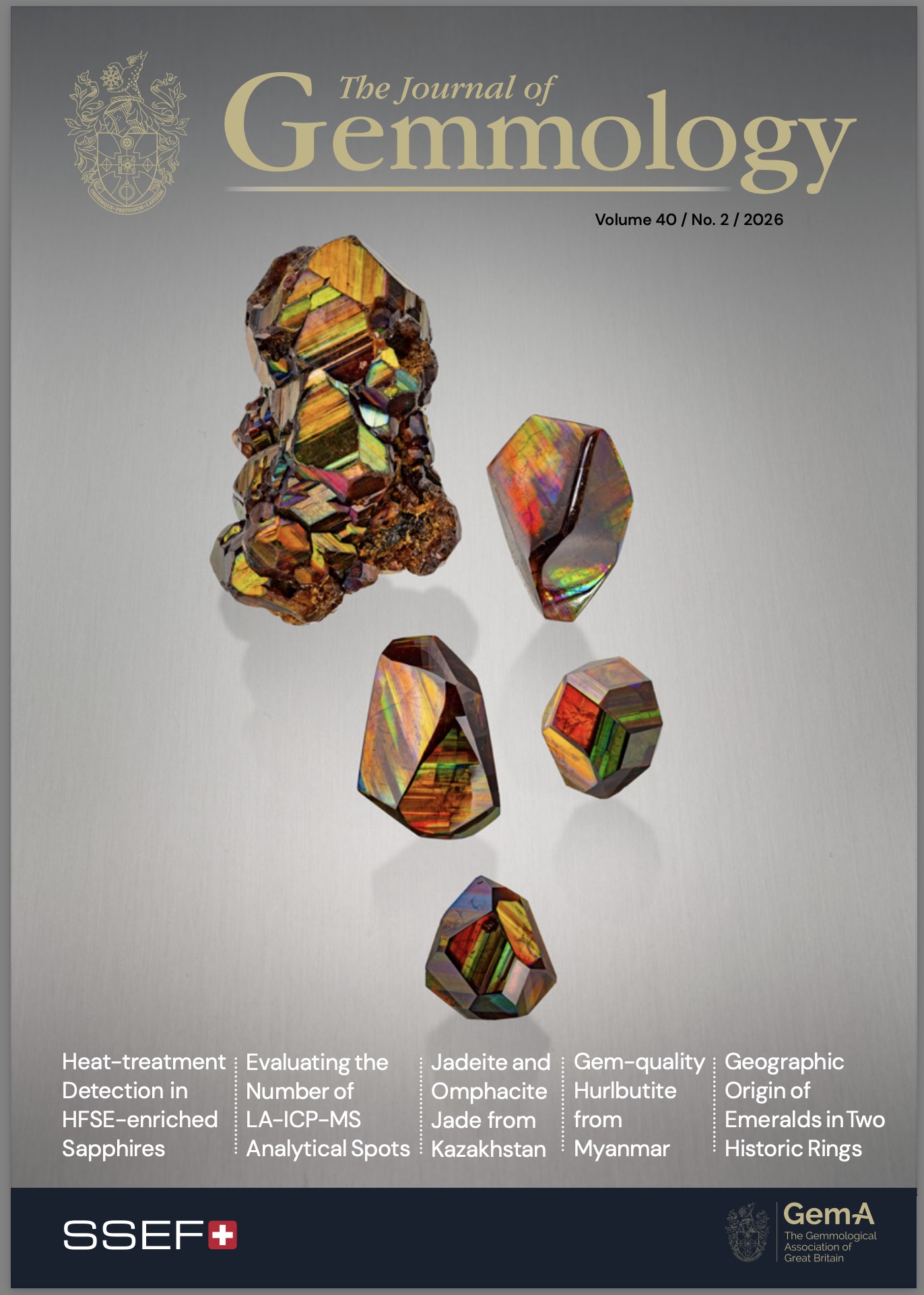
HFSE-enriched metamorphic blue sapphires: FTIR and trace-element study, and implications for heat-treatment detection

HFSE-enriched metamorphic blue sapphires: FTIR and trace-element study, and implications for heat-treatment detection

Hardman, M.F., Shigley, J.E., Sun, Z. and Palke, A.C. (2026)

Journal Article · Source: Journal of Gemmology · Volume: Vol. 40 · Issue: No. 2 · Pages: pp. 157–169

Abstract
This study examines sapphires naturally enriched in high-field-strength elements (HFSE) from metamorphic origins in Sri Lanka and Madagascar. These sapphires display distinctive chemical inhomogeneities and microscopic growth features, as well as variable FTIR spectra, often including a broad absorption band near 3300 cm–1. Some of the studied samples also show FTIR spectral characteristics and short-wave UV luminescence typically associated with heat-treated stones, although all were unheated. Our findings demonstrate that commonly used indicators—such as specific FTIR band patterns (mainly the 3309 cm–1 triplet) and chalky bluish white short-wave UV fluorescence—are not always reliable for identifying heat treatment. Accurate distinction between heated and unheated sapphires requires detailed microscopic examination combined with advanced trace-element analysis and spectroscopic techniques, including Raman micro-spectroscopy of inclusions such as zircon, goethite and diaspore.
Keywords
gems, corundum, treatments.4, Sri Lanka.12, Madagascar.12, heat treatment, FTIR
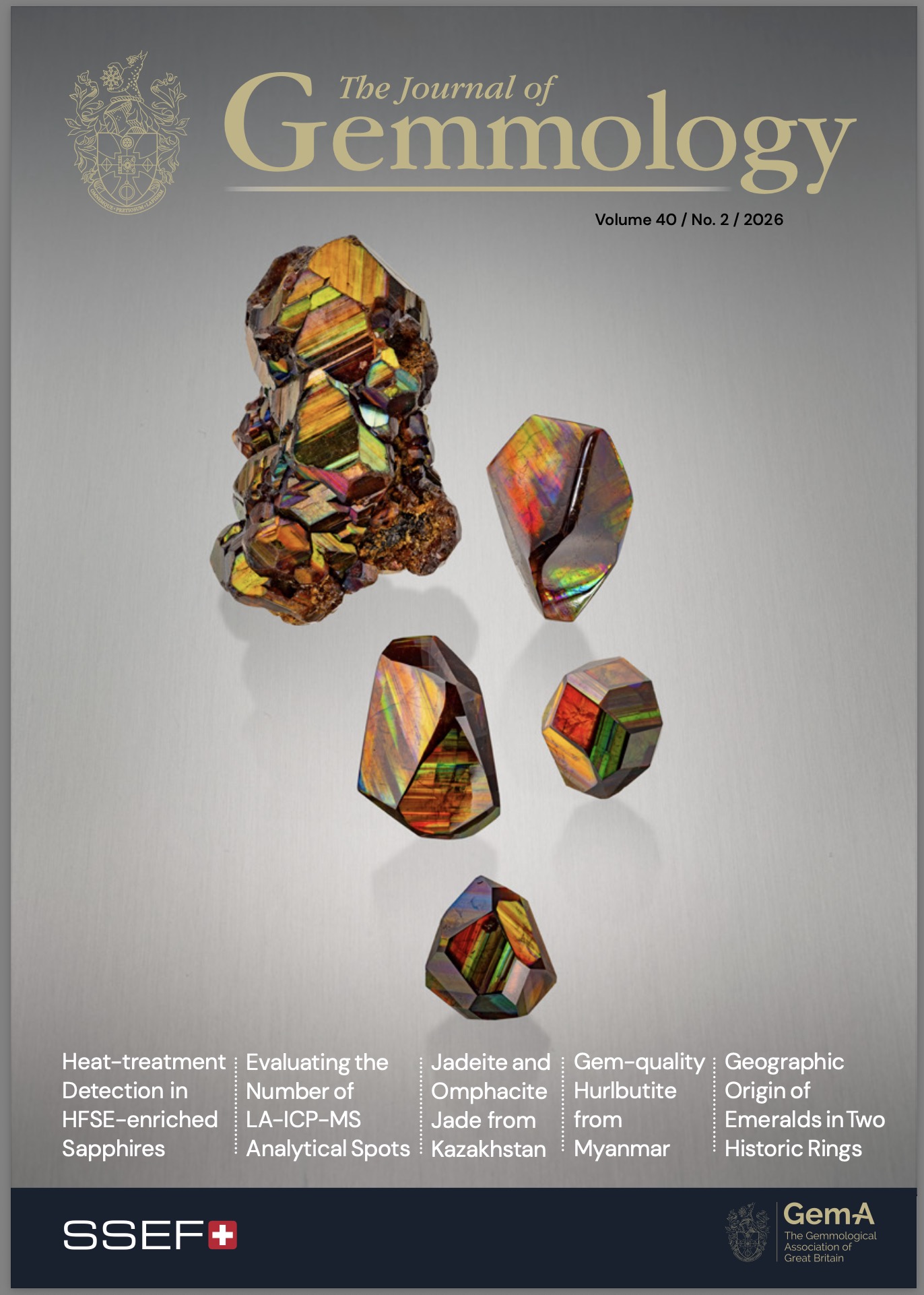
HFSE-enriched metamorphic blue sapphires: FTIR and trace-element study, and implications for heat-treatment detection

HFSE-enriched metamorphic blue sapphires: FTIR and trace-element study, and implications for heat-treatment detection

Krzemnicki, M.S., Cartier, L.E., Zhou, W., Lefèvre, P., Wälle, M., Wang, H.A.O. and Braun, J. (2026)

Journal Article · Source: Journal of Gemmology · Volume: Vol. 40 · Issue: No. 2 · Pages: pp. 142–156

Abstract
This study examines sapphires naturally enriched in high-field-strength elements (HFSE) from metamorphic origins in Sri Lanka and Madagascar. These sapphires display distinctive chemical inhomogeneities and microscopic growth features, as well as variable FTIR spectra, often including a broad absorption band near 3300 cm–1. Some of the studied samples also show FTIR spectral characteristics and short-wave UV luminescence typically associated with heat-treated stones, although all were unheated. Our findings demonstrate that commonly used indicators—such as specific FTIR band patterns (mainly the 3309 cm–1 triplet) and chalky bluish white short-wave UV fluorescence—are not always reliable for identifying heat treatment. Accurate distinction between heated and unheated sapphires requires detailed microscopic examination combined with advanced trace-element analysis and spectroscopic techniques, including Raman micro-spectroscopy of inclusions such as zircon, goethite and diaspore.
Keywords
gems, corundum, treatments.4, Sri Lanka.12, Madagascar.12, heat treatment, FTIR
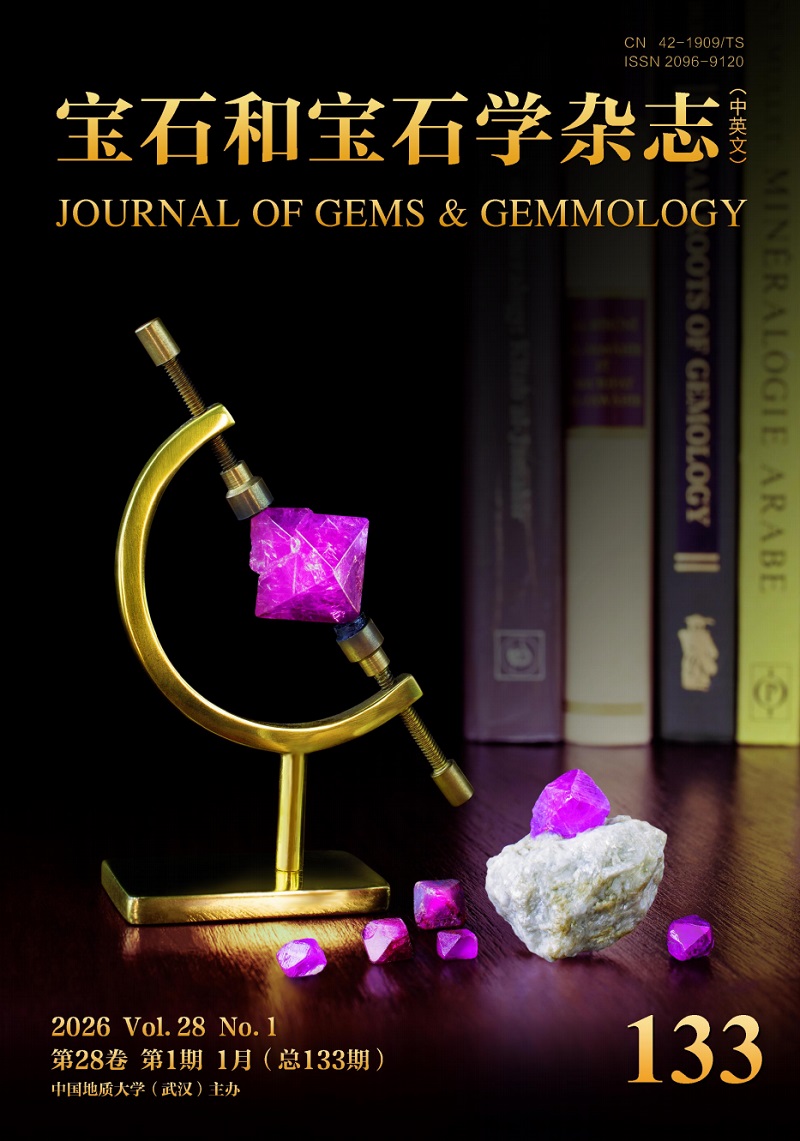
A puzzle almost as old as the modern science of gemology itself

A puzzle almost as old as the modern science of gemology itself

Saul, J.M. (2026)

Journal Article · Source: Journal of Gems & Gemmology · Volume: Vol. 28 · Issue: No. 1 · Pages: pp. 103–105

Abstract
A puzzle, almost as old as the modern science of gemology itself, concerns metamorphic minerals such as garnet and corundum that normally crystallize in an opaque, stony manner. Under rare circumstances, however, such minerals crystallize as transparent gems. Why should that be? An area in the Kenyan-Tanzanian border region provides clues to why, where, and when gem-quality crystallization occurs. Higher than usual temperature at depth permits metamorphic minerals to crystallize at shallower levels. and thus with less than usual constraining pressure, hence potentially as transparent gems. A source of short-lived excess heat in the Penny Lane area (Kenyan-Tanzanian border) is furnished by friction produced by nearby thrust faults.
Keywords
gems, geology, East Africa, Gondwana, Detrital zircons, Tectonics, Cambrian Explosion, John Saul, Penny Lane, ruby, Kenya
Inclusions in Burmese gems

Inclusions in Burmese gems

Renfro, N. (2026)

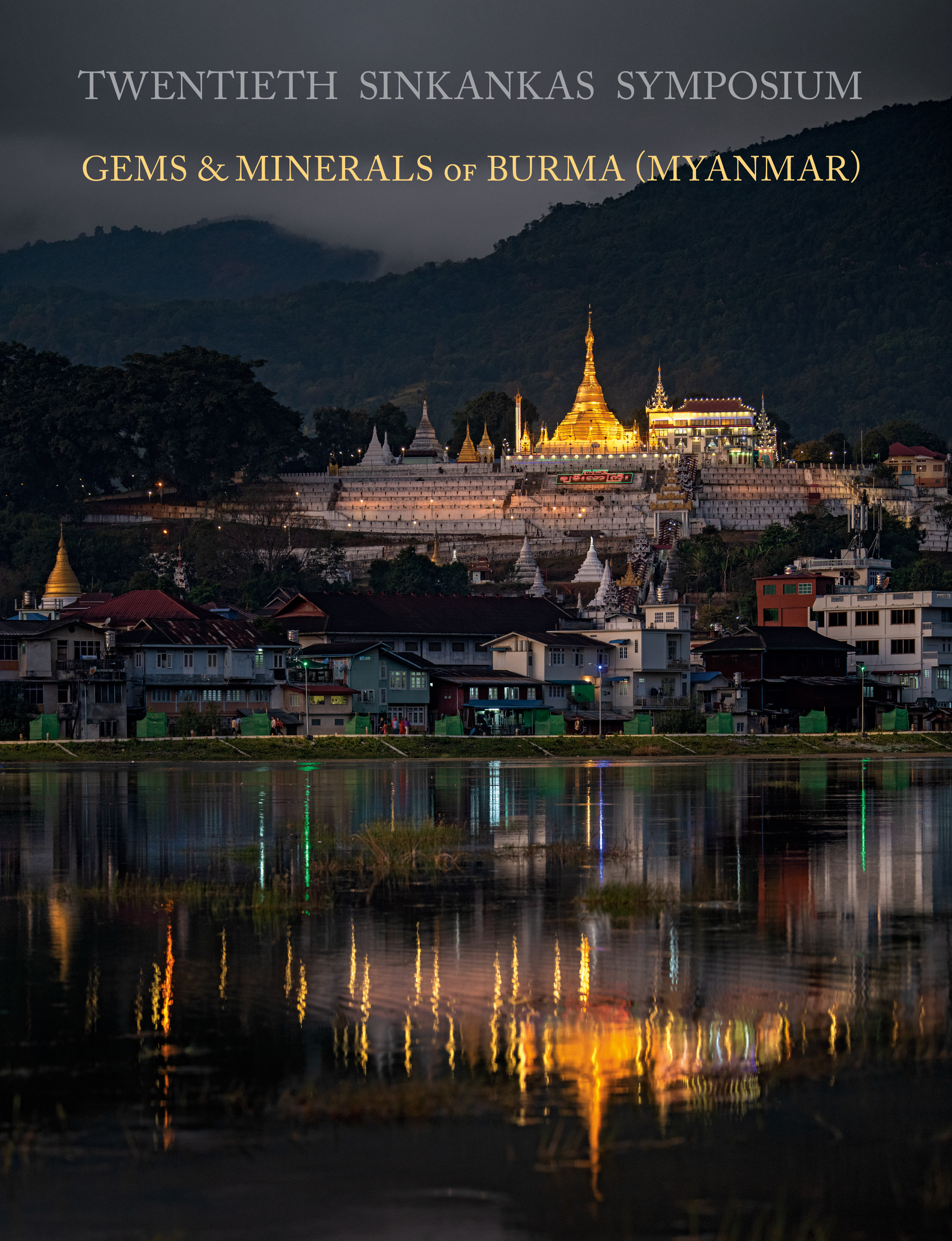
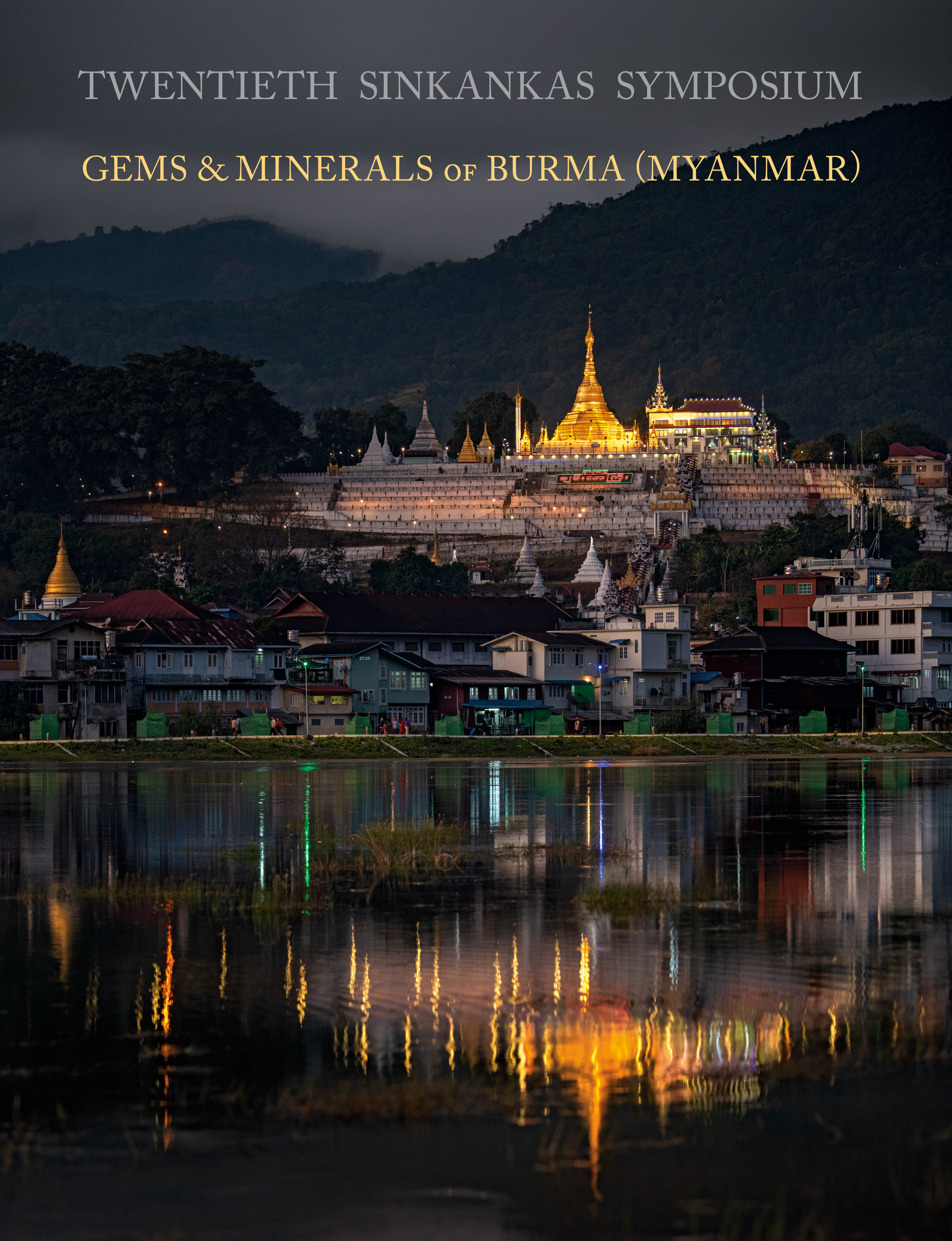
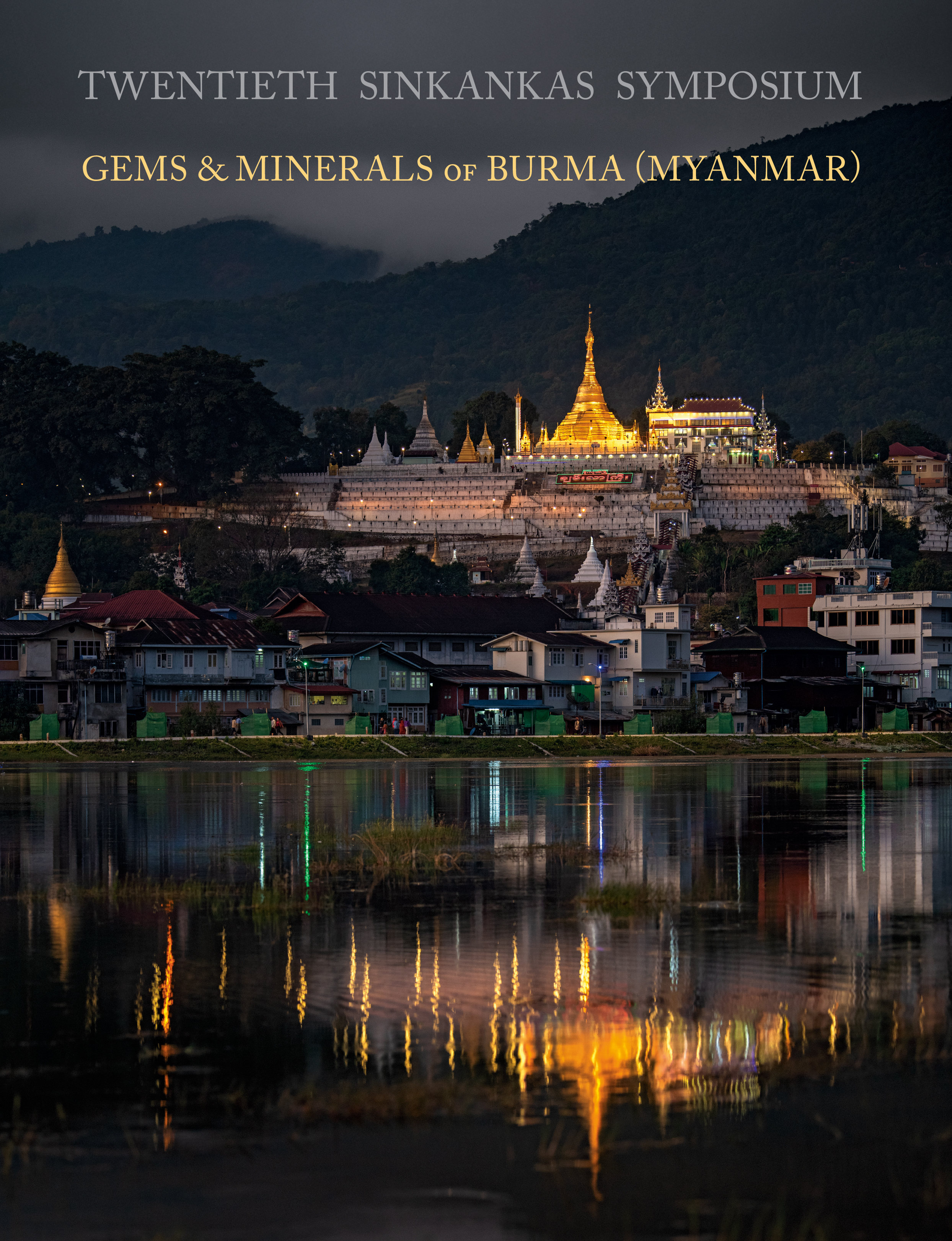
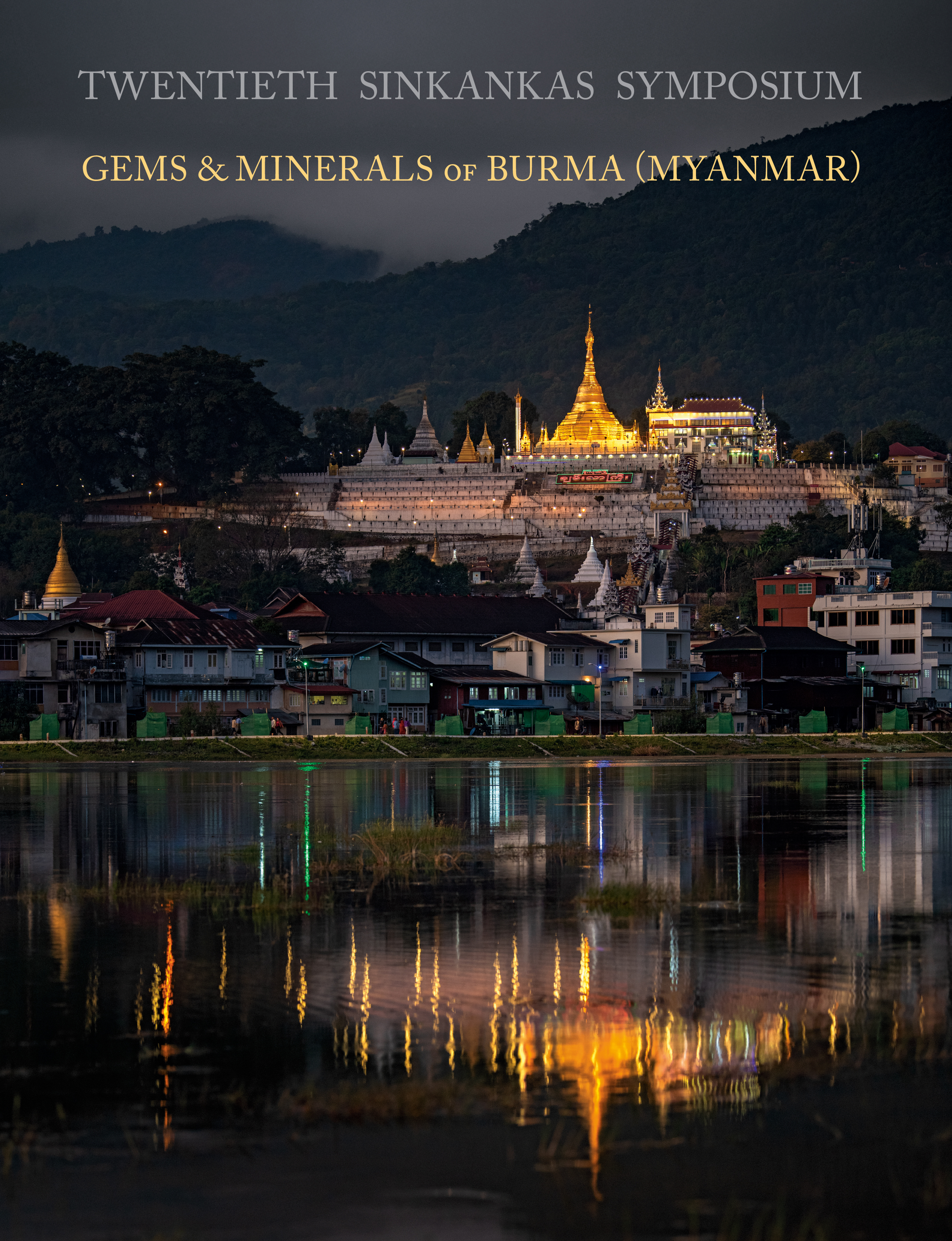
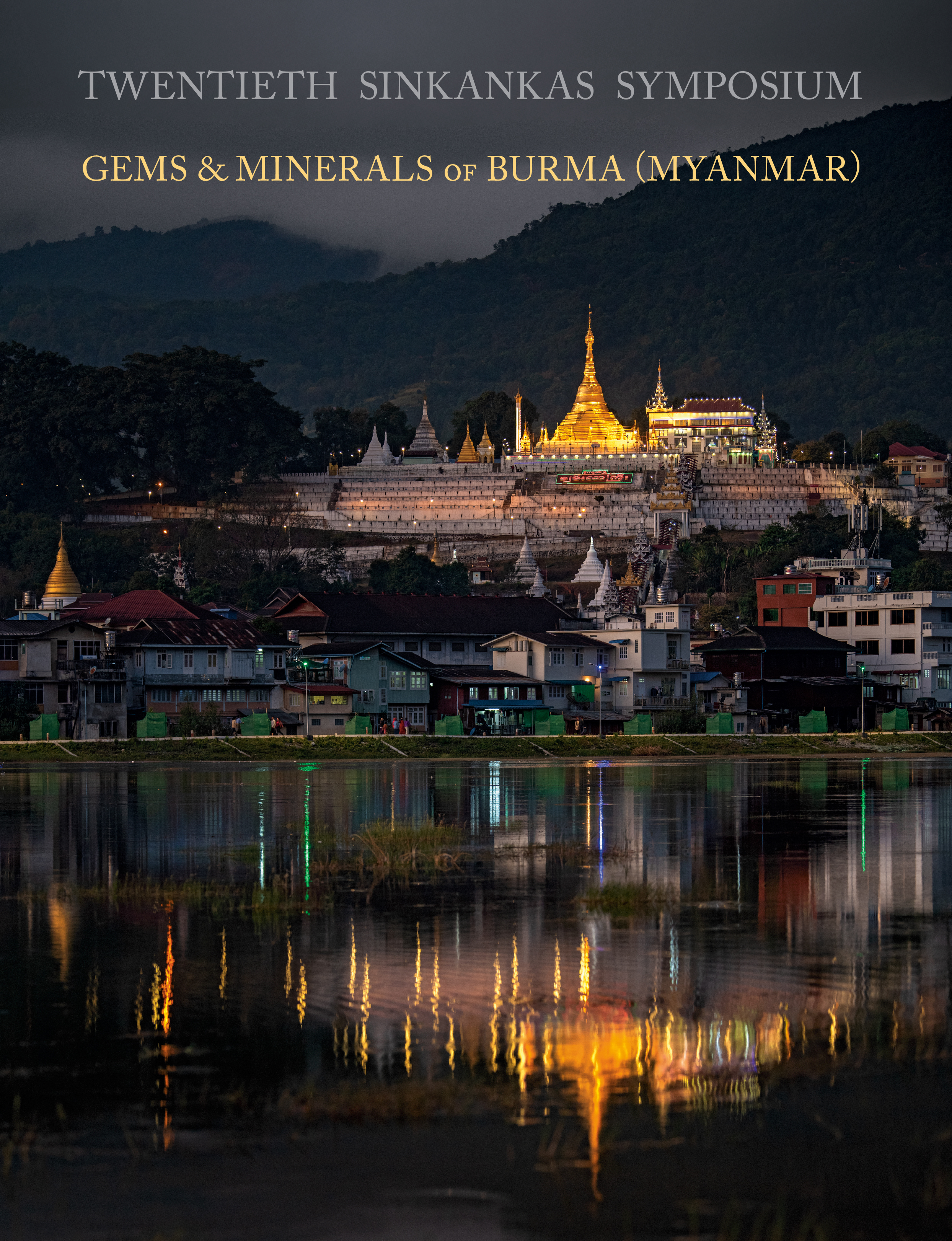
Conference Paper · Source: Twentieth Sinkankas Symposium • Gems & Minerals of Burma (Myanmar) · Publisher: Pala International · Pages: pp. 42–48

Abstract
Inclusions of various gems found in Burma's Mogok Stone Tract.
Keywords
gems, corundum, inclusions.5, photomicrography, inclusions, Burma, Burmee gems, ruby, sapphire, spinel, tourmaline, peridot, topaz
Gems of Mogok

Gems of Mogok

Schluessel, R. (2026)

Conference Paper · Source: Twentieth Sinkankas Symposium • Gems & Minerals of Burma (Myanmar) · Publisher: Pala International · Pages: pp. 30–40

Abstract
Discussion of various gems found in Burma's Mogok Stone Tract.
Keywords
gems, corundum, geology.11, Burma.12, Mogok, ruby, sapphire, spinel, peridot
General geology of gem deposits from the Mogok Stone Tract

General geology of gem deposits from the Mogok Stone Tract

Palke, A.C. (2026)

Conference Paper · Source: Twentieth Sinkankas Symposium • Gems & Minerals of Burma (Myanmar) · Publisher: Pala International · Pages: pp. 16–21

Abstract
Discussion of the gem deposits in Burma's Mogok Stone Tract.
Keywords
gems, corundum, geology.11, Burma.12, Mogok, ruby, sapphire, spinel, peridot
Geochemical and temporal variations among Mogok sapphires

Geochemical and temporal variations among Mogok sapphires

Turnier, R.B., Blum, T., Kitajima, K., Palke, A.C. and Valley, J.W. (2026)

Conference Paper · Source: Twentieth Sinkankas Symposium • Gems & Minerals of Burma (Myanmar) · Publisher: Pala International · Pages: pp. 10–14

Abstract
Discussion of sapphire formation in Burma's Mogok Stone Tract.
Keywords
gems, corundum, geology.11, Burma.12, Mogok, ruby, sapphire
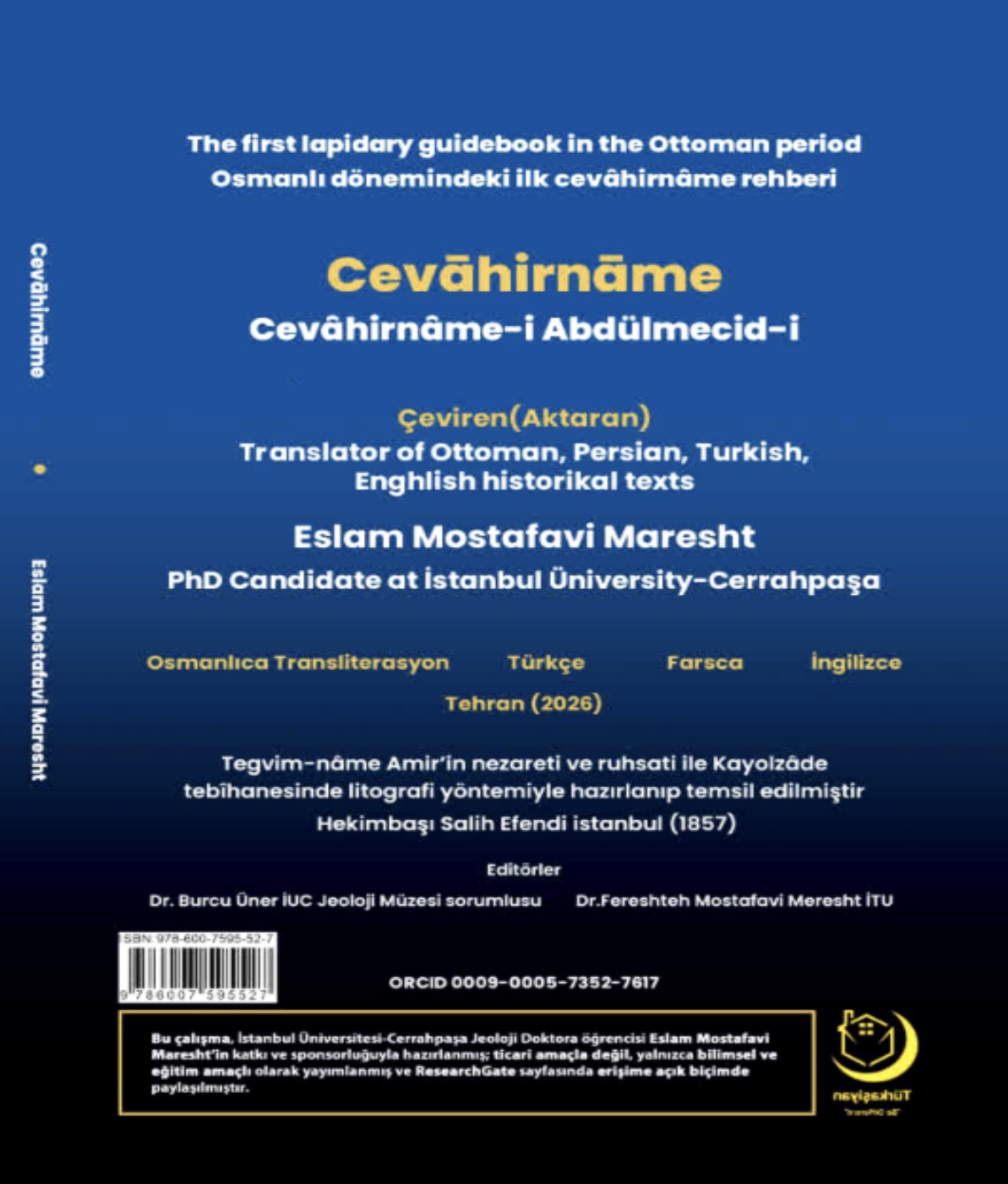
Cevâhirnâme-i Abdülmecid-i: The First Lapidary Guidebook in the Ottoman period

Cevâhirnâme-i Abdülmecid-i: The First Lapidary Guidebook in the Ottoman period

Maresht, E.M. (2026)

Book · Publisher: Novin Kushan · Pages: 148 pp. · Language: In Turkish, Farsi and English

Abstract
Cevâhirnâmes are significant scientific and cultural texts within the Islamic intellectual tradition, particularly during the Ottoman period. Precious and semi-precious stones were valued not only for their aesthetic and economic importance but also for their perceived medical and therapeutic properties. Numerous works titled Cevâhirnâme were produced to describe the origin, classification, physical and chemical characteristics, and healing qualities of these stones. One of the most important examples of this tradition is the Cevâhirnâme-i Abdülmecid-i (Guidebook), compiled in 1857 by Chief Physician Salih Efendi under the patronage of Sultan Abdülmecid. Considered the first systematic gemological study in the Turkish-Islamic world, the work represents one of the final examples of the classical cevâhirnâme tradition. The book consists of twelve chapters devoted to stones such as diamond, ruby, emerald, pearl, turquoise, amber, coral, agate, and jade, examining their physical properties alongside their temperaments (mizaj) and effects on the human body. By combining traditional humoral medicine with empirical observations of gemstones, the Cevâhirnâme-i Abdülmecid-i serves as a valuable historical source that bridges traditional Islamic medicine and early modern gemology, reflecting the scientific, medical, and cultural knowledge of the late Ottoman period.
Keywords
gems, history of gemology, Arabic mineralogy, gem prices, corundum, ruby, sapphire, diamond, emerald, pearl, turquoise, amber, coral, agate, jade
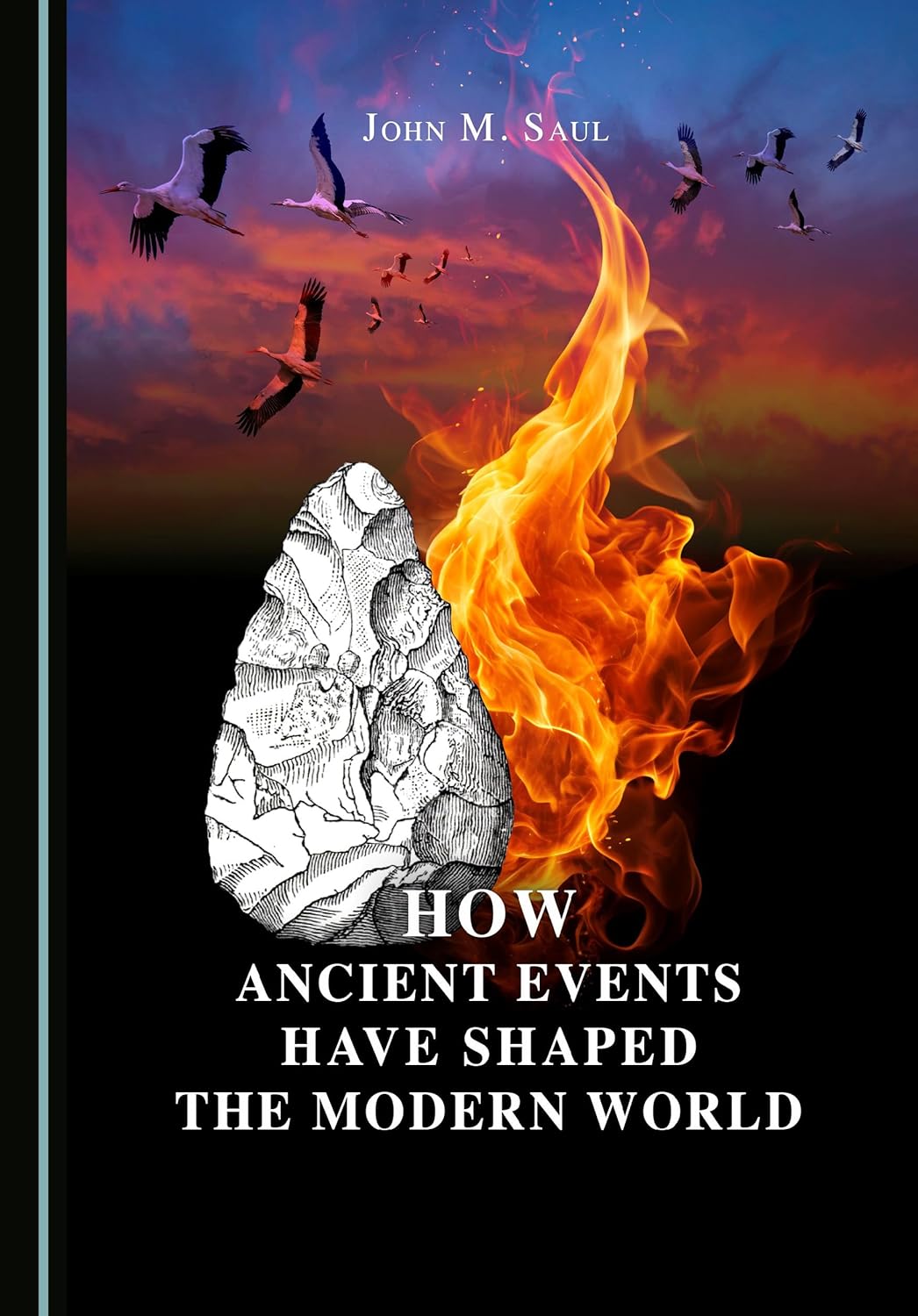
How Ancient Events have Shaped the Modern World

How Ancient Events have Shaped the Modern World

Saul, J.M. (2026)

Book · Publisher: Cambridge Scholars Publishing · Pages: 242 pp.

Abstract
This book is basically a retrospective of the writings/musings of John Saul, the noted geologist who discovered the John Saul ruby mine in Kenya. These essays touch on the great questions of Origins. The human adventure began when people first started to share complex ideas. A very early set of shared ideas provided a reasoned scheme that was both religious and scientific that would enable souls to take the Milky Way to the domain of the immortal gods. Other essays present cancer as originating when damaged tissues lose control over individual cells. Liberated cells multiply and may vary in ways that are incompatible with the functioning of multi-celled creatures, of humans in particular. Cancer first emerged during the Cambrian Explosion itself. Four essays discuss the survival of deep terrestrial impact-scars akin to those on the Moon, but far less easy to see. Such scars provide our planet's initial conditions. Fractures on the rim-zones of the scars guide plate tectonics and the deposition of minerals, and are implicated in at least one mass extinction.This book touches on little-discussed aspects of prehistory, history, the explosion of life during the late Precambrian, cancer research, and regional geology. Saul's writings and ideas represent some of the most original in the field of gemology, tying together not just the origins of gems, but the origins of human civilization itself. Highly recommended!
Keywords
gems, geology

Exploring the Literature of Corundum

Ruby and sapphire research spans mineralogy, gem deposits, identification, treatments, synthesis and the history of the gem trade. Older publications can also be useful for tracing terminology, early observations and accounts of mining localities. Publication dates and the original source should be considered when using historical descriptions.

For an introduction to collecting books on this subject, read Ruby & Sapphire Books: Collecting the Literature of Corundum.

About Four Treasures

Four Treasures is Lotus Gemology's freely accessible gemological reference database. Use the full database to search by author, title or keyword and explore literature on gemology, mineralogy, jewelry and related fields. Where available, hyperlinks on titles may lead directly to the full publication.

Search the Complete Four Treasures Database