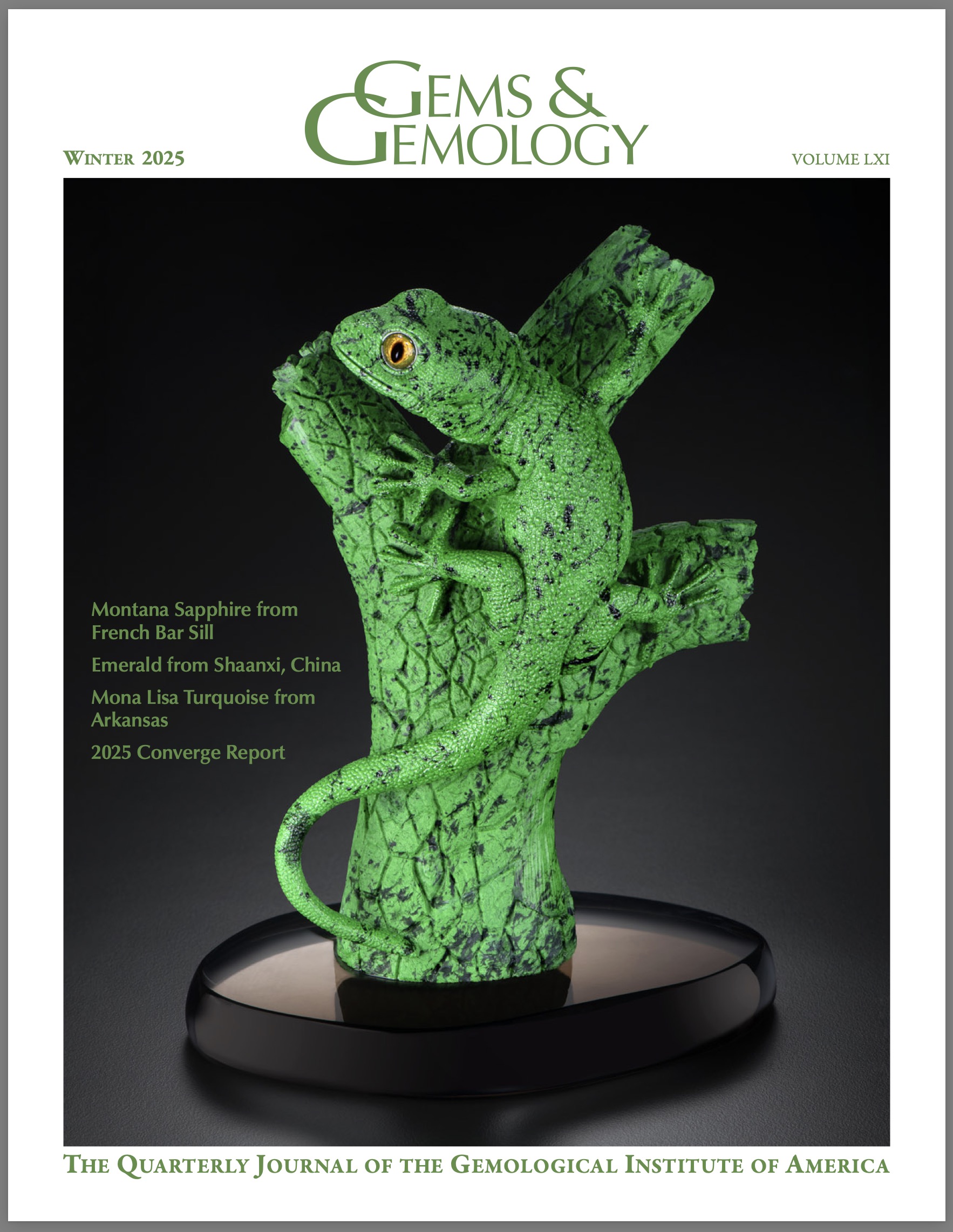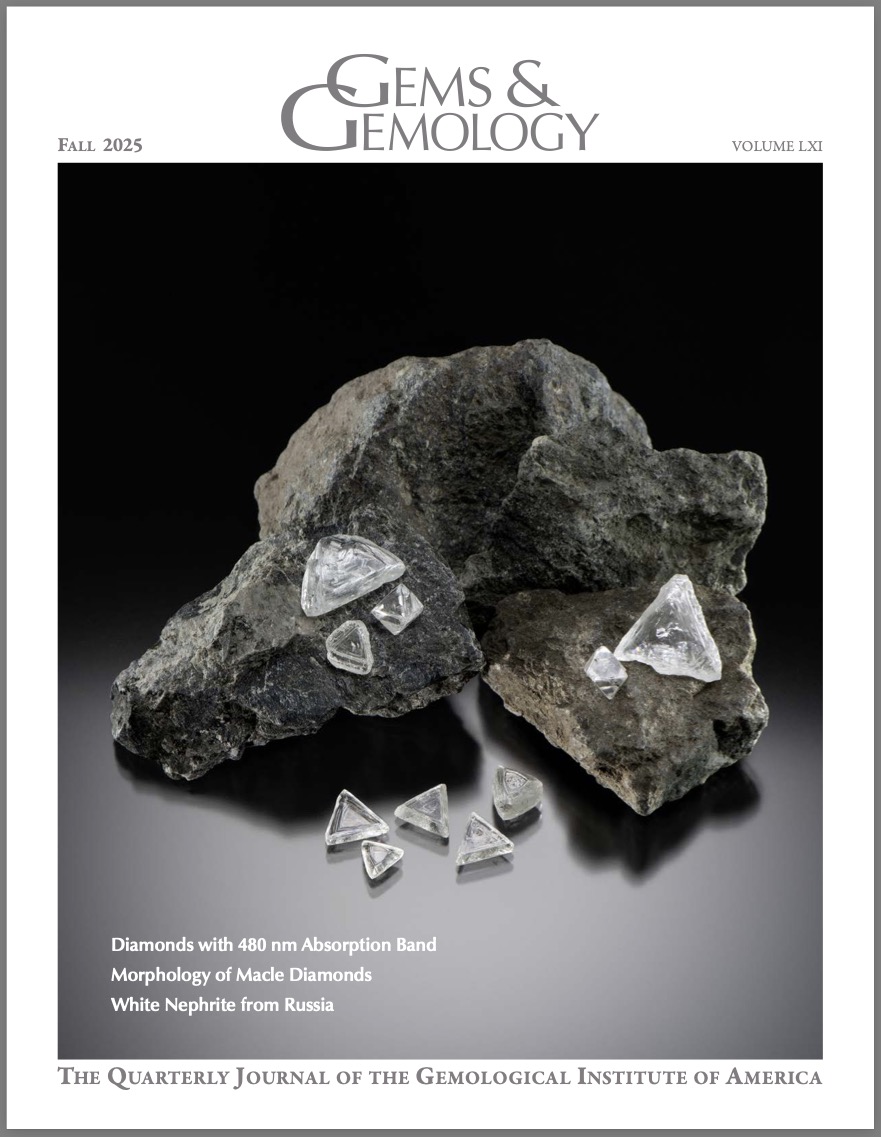
Ruby & Sapphire Bibliography

Ruby & Sapphire Bibliography

Explore books, articles and historical sources on ruby, sapphire and corundum in Four Treasures, the Lotus Gemology reference database. This bibliography brings together matching records from the collection, with publication details, abstracts and cover images where available.

Ruby & Sapphire References

The list below matches the terms ruby, rubies, sapphire or corundum in the database's searchable fields. Some references discuss these gems as part of a broader subject. Linked titles take you to external links where you may find the full reference.

181–200 of 4,669 matching references
Unheated pink sapphire from Madagascar with OH-related 3232 and 3185 cm⁻¹ FTIR bands

Unheated pink sapphire from Madagascar with OH-related 3232 and 3185 cm⁻¹ FTIR bands

Krzemnicki, M.S., Wang, H.A.O., Sun, Y., Beney, I. and Wälle, M. (2025)

Journal Article · Source: Journal of Gemmology · Volume: Vol. 39 · Issue: No. 8 · Pages: pp. 734–736

Abstract
Describes the appearance of a 3232 FTIR peak in a pink sapphire from Madagascar that appeared to be unheated. This peak is typically associated with gems that have been heat treated.
Keywords
gems, corundum, treatments.4, heat treatment detection, FTIR, 3232
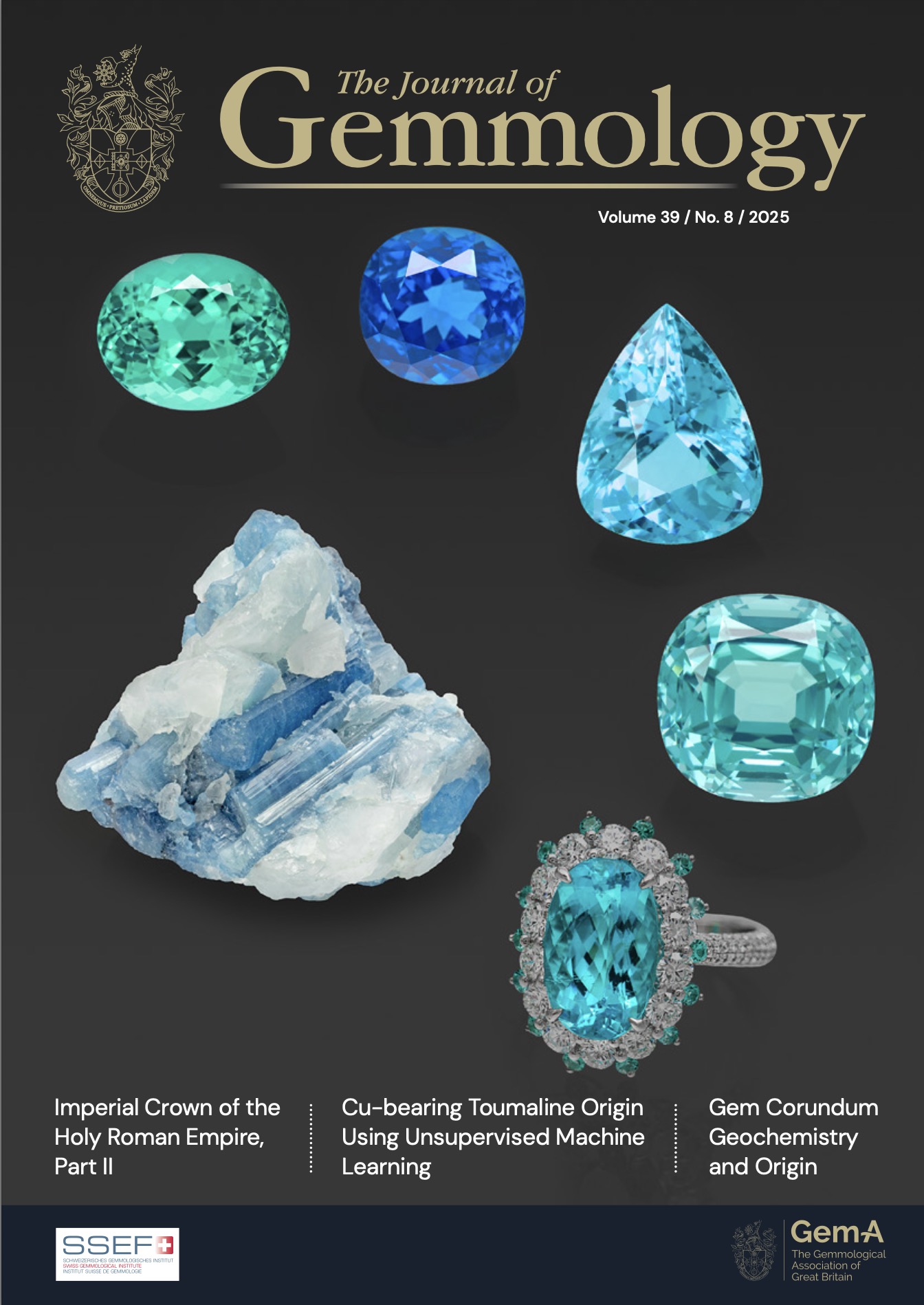
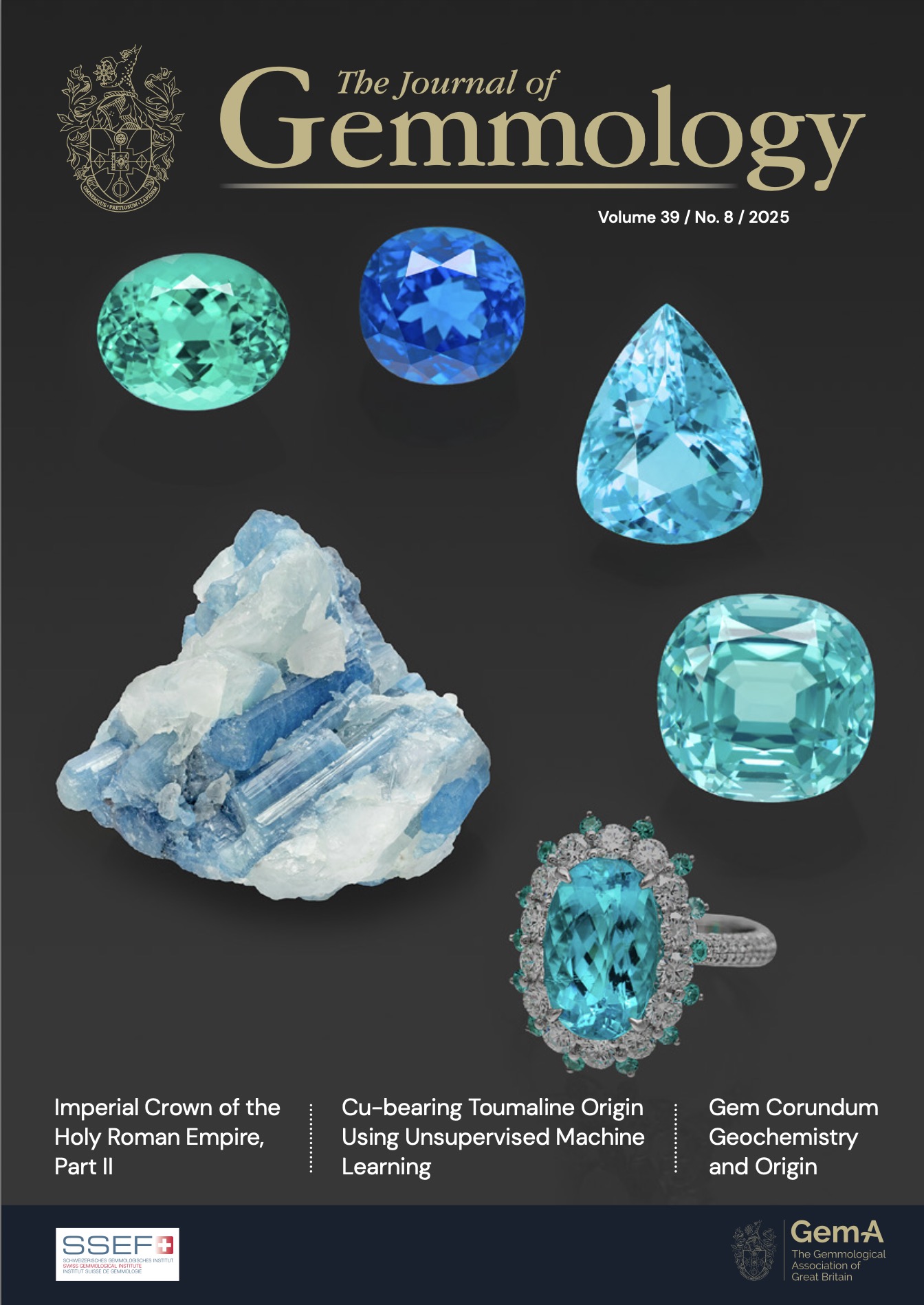
The Imperial Crown of the Holy Roman Empire, Part II: Origin determination of the gemstones and pearls

The Imperial Crown of the Holy Roman Empire, Part II: Origin determination of the gemstones and pearls

Gilg, H.A., Karampelas, S., Lamers, T., Uhlir, K., Griesser, M. and Kirchwegner, F. (2025)

Journal Article · Source: Journal of Gemmology · Volume: Vol. 39 · Issue: No. 8 · Pages: pp. 740–770

Abstract
The medieval Imperial Crown of the Holy Roman Empire preserved in the Imperial Treasury in Vienna, Austria, has been the focus of an ongoing study (e.g. Nasdala et al. 2023). Here, we report on geographic origin determinations of its gems, which can offer new insights into the gem trade of the Early and High Middle Ages. We examined the 172 gemstones and 233 selected pearls in the crown using a combination of high-magnification digital microscopy, μ-EDXRF analysis, and UV-Vis-NIR spectroscopy with mobile instruments. The gemmological characteristics of most of the sapphires (including four stones over 100 ct) were consistent with a Sri Lankan origin. Most of the almandine and pyrope garnets were from South Asian deposits, while the emeralds were attributed to Egyptian sources, except for two from Swat, Pakistan. All these deposits have likely been exploited since Antiquity. Several stones, including three antique amethyst intaglios, were reused antique gems. The two spinels on the front plate of the circlet came from Kuh-i-Lal in Tajikistan, and six small (< 1 ct) basalt-related sapphires may have originated from deposits in France. Six faceted sapphires with steep, four-sided, and trigonal pyramids mark the onset of faceting of hard gemstones. The pearls were predominantly of saltwater origin from the Indian Ocean, but a significant number were most likely European freshwater pearls. The assemblage of gem materials in the crown’s removable arch and cross suggests that they are of later manufacture than the circlet.
Keywords
gems, corundum, quality.10, crown jewels, auction, diamond, pearl, beryl, emerald, spinel, Tajikistan, Kuh-i-Lal, Swat, Pakistan, France.12
Gem News International: Reconstructed specimens and the rise of deceptive practices in Pakistan

Gem News International: Reconstructed specimens and the rise of deceptive practices in Pakistan

Bakht, T.H. and Shah, M.M. (2025)

Journal Article · Source: Gems & Gemology · Volume: Vol. 61 · Issue: No. 4, Winter · Pages: pp. 450–452

Abstract
Recent field observations in Pakistan have revealed that specimens circulating in local gem markets and near mine sites have increasingly been artificially assembled or altered. Local dealers and prospectors from the Hunza and Gilgit mining areas offered “Frankenstein” specimens, pieces assembled by gluing together fragments of crystals and host rock (figure 6). While adhesives can sometimes be seen under magnification, many joints are subtle enough to mislead buyers or tourists. Crystals such as aquamarine are often skillfully mounted onto matrices to imitate natural specimens, with some pieces further polished, dyed, or even oiled to enhance their appearance (figure 7). In certain cases, resins mixed with crushed marble or host rock are applied, making detection even more difficult. For example, in Peshawar’s Namak Mandi gem market, a ruby reportedly from Jegdalek was identified as a synthetic crystal mounted on natural host rock. In addition to this deceptive practice of adhering specimens to host rock, broken specimens are also repaired with adhesives, often without disclosure. With time, the quality of assembly is improving, making detection more challenging. The close proximity of these reconstructed specimens to the mines is a reminder that “from the mine” does not automatically guarantee authenticity. Collectors and gemologists should be aware that stones described as directly sourced may have undergone significant human intervention. Similar practices are common in neighboring regions, including Afghanistan.
Keywords
gems, corundum, ruby, Pakistan.12, assembled stones.8, beryl, emerald, assembled specimens
Gem News International: Fuchsite-bearing dolomite aggregate as a new jadeite imitation

Gem News International: Fuchsite-bearing dolomite aggregate as a new jadeite imitation

Yang, T., Huang, K., Chou, Y. and Lin, S. (2025)

Journal Article · Source: Gems & Gemology · Volume: Vol. 61 · Issue: No. 4, Winter · Pages: pp. 449–450

Abstract
Recently, a carved green snuff bottle was submitted as jadeite jade for identification at the Taiwan Union Lab of Gem Research (TULAB) (figure 1). The surface of the bottle displayed a white matrix with dense mottled green areas. A spot refractive index was approximately 1.68–1.69, which was noticeably higher than the typical range of values for jadeite jade. However, such results may occur if jadeite contains kosmochlor. Under microscopic observation, the surface of the carving revealed a white matrix with green patches (figure 2). Interestingly, these green patches appeared red when viewed through a Chelsea filter. To further identify the material, Raman spectroscopy (785 nm laser) was performed and compared with the RRUFF database (B. Lafuente et al., 2015, https://rruff.info/about/downloads/HMC1-30.pdf). The results indicated that the white matrix was dolomite, while the dark green patches were muscovite (figure 3). With the assistance of energy-dispersive X-ray fluorescence (EDXRF) analysis, the green portions were confirmed to be fuchsite (chromium muscovite). All testing indicated that the snuff bottle was composed of a dolomite aggregate with fuchsite. Although its appearance resembled jadeite jade, the bottle’s refractive index and Chelsea filter reaction clearly distinguished it from jadeite jade. Raman spectroscopy and EDXRF were used as more precise methods to confirm the material, which appears to be a new jadeite simulant that has recently appeared on the market.
Keywords
gems, corundum, geology.11, Burma.12, Mogok, beryl, emerald, Russia, Malysheva, Ural Mountains, alexandrite, chrysoberyl, pegmatite
Colored Stones Unearthed: The diversity of gemstone deposits

Colored Stones Unearthed: The diversity of gemstone deposits

Palke, A.C., Shigley, J.E. and Vertriest, W. (2025)

Journal Article · Source: Gems & Gemology · Volume: Vol. 61 · Issue: No. 4, Winter · Pages: pp. 408–414

Abstract
It is widely recognized that some gem minerals often occur together in various localities—either in the same host rock or in the same deposit. Gem minerals each require a certain set of physical and chemical conditions for their formation. This edition of the Colored Stones Unearthed column will explore where specific gem minerals are found together and the conditions that produce these distinct geological settings.
Keywords
gems, corundum, geology.11, Burma.12, Mogok, beryl, emerald, Russia, Malysheva, Ural Mountains, alexandrite, chrysoberyl, pegmatite
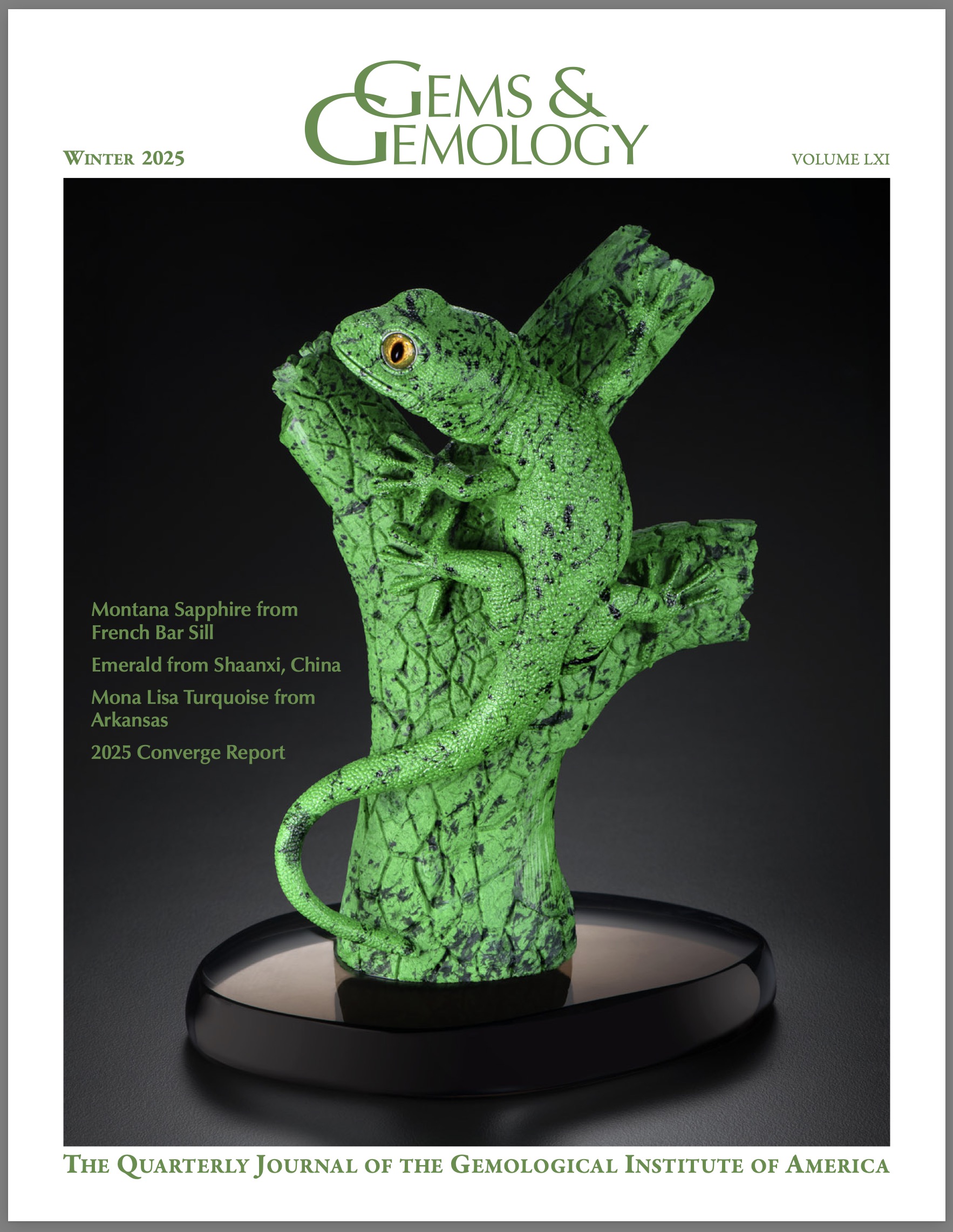
The primary sapphire occurrence at French Bar Sill along the Missouri River, near Helena, Montana

The primary sapphire occurrence at French Bar Sill along the Missouri River, near Helena, Montana

Kane, R.E., Pettman, K.L., Palke, A.C., Turnier, R.B., Berg, R.B., Renfro, N.D. and Smith, C.P. (2025)

Journal Article · Source: Gems & Gemology · Volume: Vol. 61 · Issue: No. 4, Winter · Pages: pp. 332–353

Abstract
Sapphires have been mined in Montana since being discovered at Eldorado Bar, along the Missouri River, in 1865. The most valuable gold deposit in the area was mined near the top of the French Bar complex from 1867 to 1869. On portions of the Virginia terrace and the Center terrace, the French Bar sill, which sparsely contained sapphires in a host rock—identified here as a basaltic trachyandesite, but described elsewhere as a minette—was reported by Kunz in 1891. Other than Yogo Gulch, where the sapphires are in a lamprophyre dike, the French Bar sill is Montana’s only other source of gem-quality in situ sapphire. New ownership of the property in 2020 has resulted in the largest production to date, although it is still sparse. In this study, the authors examined 80 French Bar sill sapphires in matrix; 16 sapphires removed from the matrix, ranging from very small to 17.99 ct; 4 faceted stones; and 5 partly polished crystals. Trace element chemistry and inclusions were consistent with—and generally indistinguishable from—faceted Montana sapphires from the secondary deposits of the Missouri River, Rock Creek, and Dry Cottonwood Creek. This indicates that while the magmatic material (Eocene volcanism) that transported the sapphires from deep within the earth was different in certain cases, such as with French Bar sill, the genesis of the sapphires may be the same or similar. Many of the surface resorption features are similar, but one important distinction exists. Around 25% of Missouri River alluvial sapphires have encrustations of spinel, likely a result of reaction during transport by a mafic magma. Primary French Bar sill sapphires always have an encrustation of biotite (phlogopite) mica, but never spinel. The French Bar sill itself is certainly too small in extent to have supplied all the alluvial sapphires found at the Missouri River.
Keywords
gems, corundum, USA.12, Montana.12, Missouri River, French Bar, Eldorado Bar, sapphire, geology.11
Gem News International: Low-temperature heat treatment of corundum and the behavior of the 3161 cm⁻¹ infrared band

Gem News International: Low-temperature heat treatment of corundum and the behavior of the 3161 cm⁻¹ infrared band

Soonthorntanikul, W. and Palke, A.C. (2025)

Journal Article · Source: Gems & Gemology · Volume: Vol. 61 · Issue: No. 3, Fall · Pages: pp. 328–330

Abstract
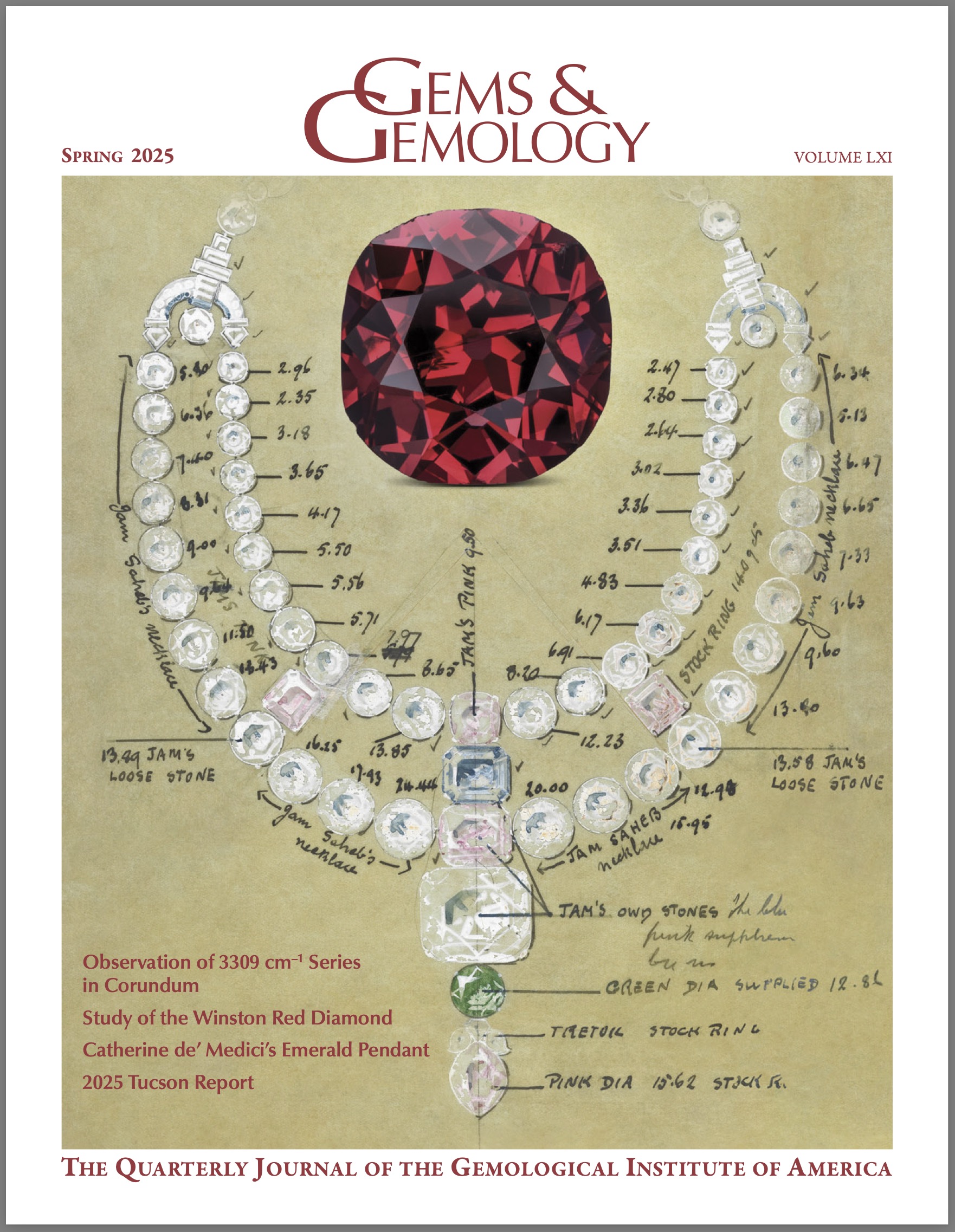
The 3161 cm⁻¹ infrared (IR) band can be observed in variously colored natural corundum, most commonly in yellow sapphire. The presence of this feature is used frequently as supporting evidence to conclude that a sapphire has not been heat treated (C. M. Breeding and N. J. Ahline, “Infrared spectroscopy and its use in gemology,” Winter 2024 G&G, pp. 474–492). This 3161 cm⁻¹ band is often present with other less intense side bands known as the “3161 cm⁻¹ series” and includes features at ~3355, 3242, 3100 (shoulder), 2460, and 2420 cm⁻¹ (C. P. Smith and C. van der Bogert, “Infrared spectra of gem corundum,” Fall 2006 G&G, pp. 92–93). The exact origin of the 3161 cm⁻¹ band is not well understood, although it is thought to be related to stretching vibrations of hydroxyl groups caused by interstitial H⁺ ions present as charge compensation for Fe²⁺ substituting for Al³⁺ in the corundum structure (M. C. Jollands et al., “Vibrational properties of OH groups associated with divalent cations in corundum (α-Al₂O₃),” European Journal of Mineralogy, Vol. 35, No. 5, 2023, pp. 873–890).
Keywords
gems, corundum, color.4
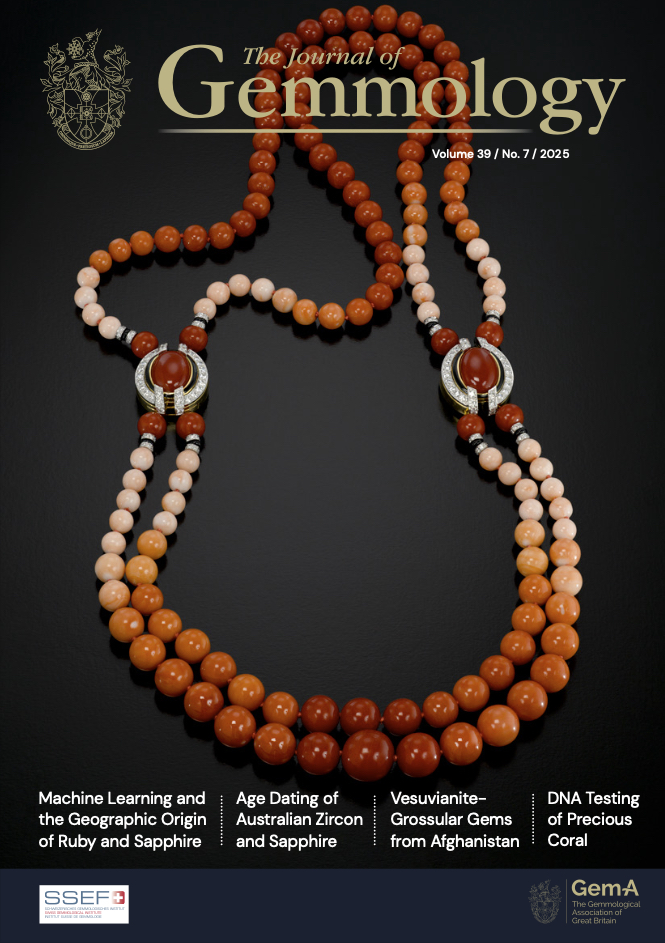
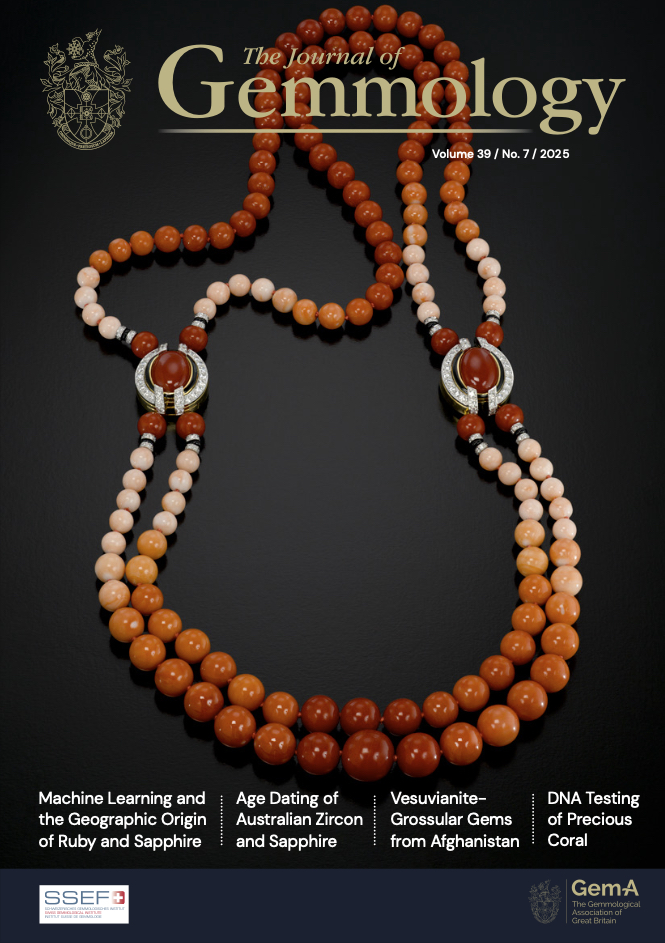
Age dating of gem-quality zircon and sapphire from the New England gem fields, New South Wales, Australia, and its application to the geological origin of the sapphires

Age dating of gem-quality zircon and sapphire from the New England gem fields, New South Wales, Australia, and its application to the geological origin of the sapphires

Abduriyim, A., Sutherland, F.L., Coldham, T.S. and Belousova, E. (2025)

Journal Article · Source: Journal of Gemmology · Volume: Vol. 39 · Issue: No. 7 · Pages: pp. 656–671

Abstract
Transparent pale yellow to brown zircon megacrysts occur with gem corundum in alluvial deposits linked to alkali basalts of the Inverell–Glen Innes District, New South Wales, Australia. Previous LA-ICP-MS analyses of zircons from Kings Plains, Mary Anne Gully, and Swan Brook showed chemical homogeneity and yielded two age groups: 216–174 Ma (Late Triassic–Early Jurassic) and 45–37.7 Ma (Eocene). New U-Pb dating of zircon inclusions in gem-quality blue sapphires produced concordant ages of 37 ± 1.7 Ma (Kings Plains) and 35.1 ± 1.6 Ma (Mary Anne Gully), matching the 38–33 Ma K-Ar ages of the Maybole volcanic suite and aligning with the younger zircon population. These results, together with gemmological and chemical evidence, demonstrate a genetic connection between sapphire crystallisation in the deep crust or mantle and subsequent transport to the surface by alkali basaltic magmas.
Keywords
gems, corundum, Australia.12, zircon, geology.11, New England District
Machine-learning applications in gemmology: Classifying the geographic origin of ruby and sapphire using chemical data

Machine-learning applications in gemmology: Classifying the geographic origin of ruby and sapphire using chemical data

Seneewong-Na-Ayutthaya, M., Sripoonjan, T., Wanthanachaisaeng, B., Leelawatanasuk, T., Lhuaamporn, T. and Suwanmanee, W. (2025)

Journal Article · Source: Journal of Gemmology · Volume: Vol. 39 · Issue: No. 7 · Pages: pp. 634–655

Abstract
Determining the geographic origin of ruby and sapphire is vital for their valuation, authentication, and ethical sourcing, yet traditional methods relying on expert assessment of visual, chemical, and spectroscopic traits can be subjective and inconclusive when deposits share overlapping features. This study applies machine learning to trace-element geochemical data from rubies and sapphires analyzed by EDXRF and LA-ICP-MS. Models trained on LA-ICP-MS data, with its superior sensitivity, achieved markedly higher classification accuracy than those based on EDXRF. Among the algorithms tested, random forests and artificial neural networks exceeded 90% accuracy for both ruby and sapphire, though metamorphic sapphires remained the most difficult to classify due to overlapping chemical profiles. The findings highlight machine learning’s potential to revolutionize gemmology by providing a scalable, reproducible, and objective framework for origin determination, paving the way for more standardized gem certification.
Keywords
gems, corundum, origin determination
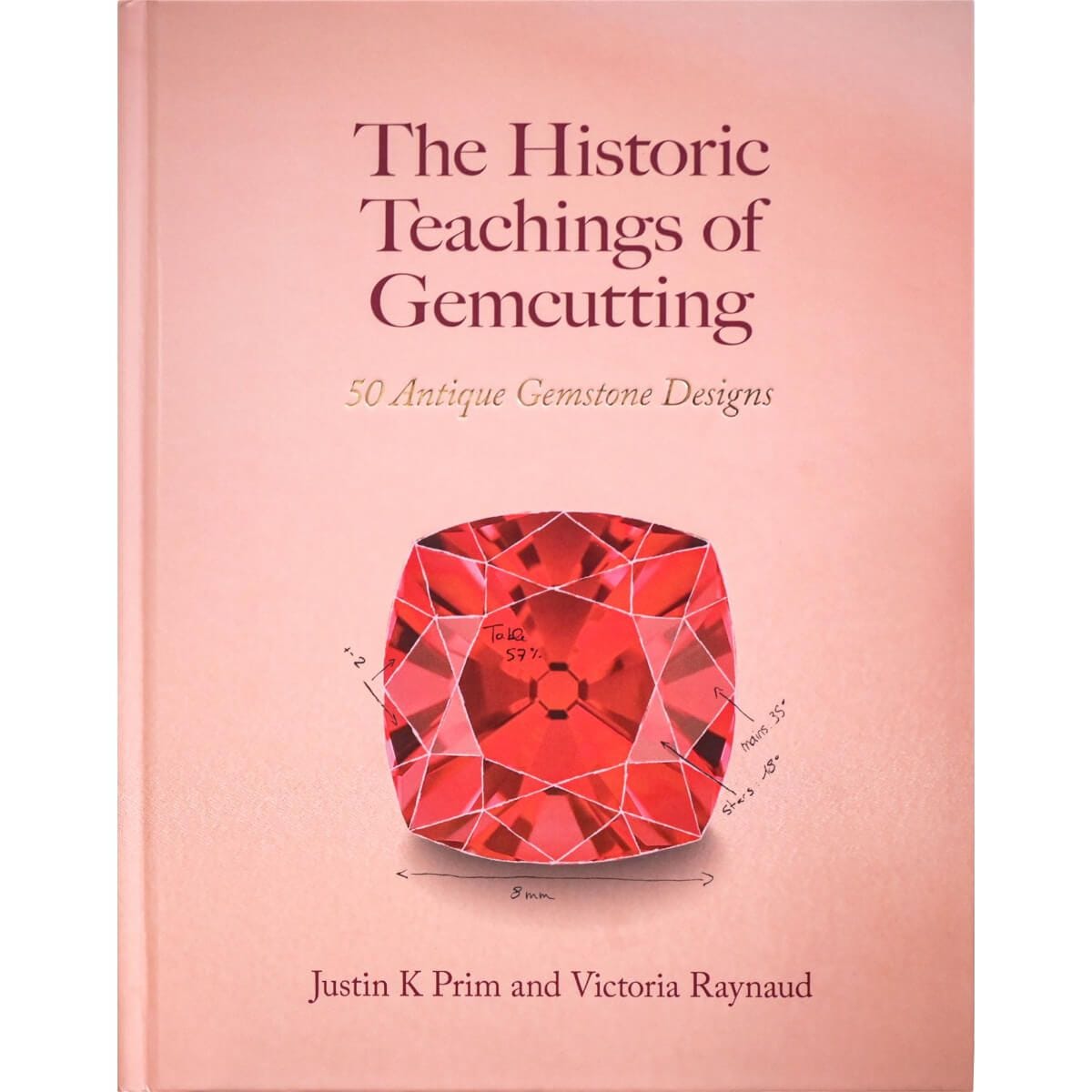
The Historic Teachings of Gemcutting — 50 Antique Gemstone Designs

The Historic Teachings of Gemcutting — 50 Antique Gemstone Designs

Prim, J.K. and Raynaud, V. (2025)

Book · Publisher: Magus Publishing · Pages: 222 pp.

Abstract
Justin Prim and Victoria Raynaud have made it their lives' work documenting the history of gem cutting. This, their second book, spans more than six centuries of gemstone artistry. The Historic Teachings of Gemcutting gathers rare faceting designs, historical insight, and practical cutting guidance in one beautifully produced volume. It revives forgotten traditions and frames them for modern practice—equally useful to working gemcutters, bench jewelers, and collectors seeking authentic vintage character in contemporary work. Highly recommended!
Keywords
gems, lapidary arts, gem cutting, history, corundum, fashioning.8
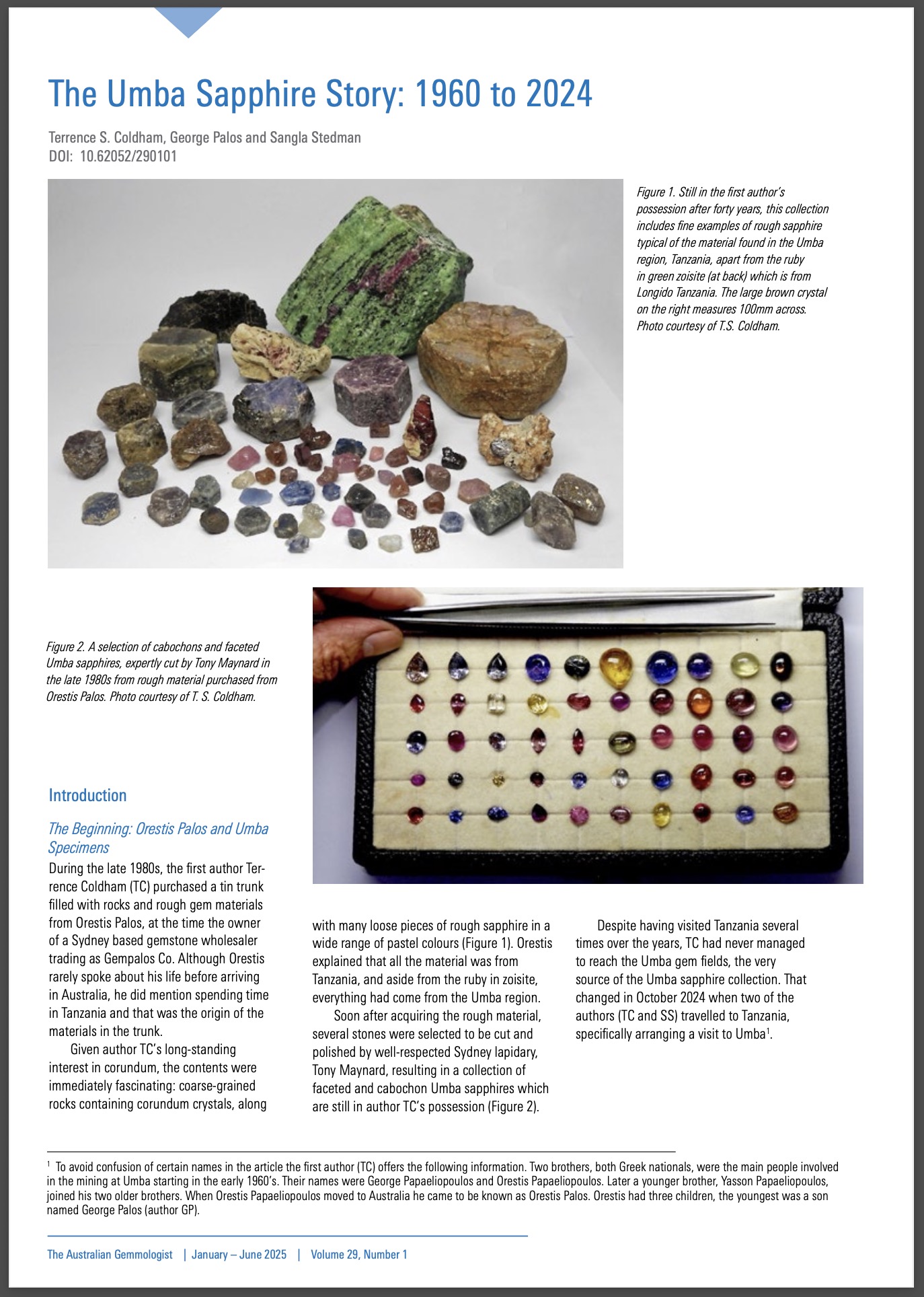
The Umba sapphire story: 1960 to 2024

The Umba sapphire story: 1960 to 2024

Coldham, T.S. (2025)

Journal Article · Source: Australian Gemmologist · Volume: Vol. 29 · Issue: No. 1, January–June · Pages: pp. 22–38

Abstract
During the late 1980s, the first author Terrence Coldham (TC) purchased a tin trunk filled with rocks and rough gem materials from Orestis Palos, at the time the owner of a Sydney-based gemstone wholesaler trading as Gempalos Co. Although Orestis rarely spoke about his life before arriving in Australia, he did mention spending time in Tanzania, and that was the origin of the materials in the trunk. Given author TC’s long-standing interest in corundum, the contents were immediately fascinating: coarse-grained rocks containing corundum crystals, along with many loose pieces of rough sapphire in a wide range of pastel colours. Orestis explained that all the material was from Tanzania, and aside from the ruby in zoisite, everything had come from the Umba region. Soon after acquiring the rough material, several stones were selected to be cut and polished by well-respected Sydney lapidary Tony Maynard, resulting in a collection of faceted and cabochon Umba sapphires which are still in author TC’s possession. Despite having visited Tanzania several times over the years, TC had never managed to reach the Umba gem fields, the very source of the Umba sapphire collection. That changed in October 2024 when two of the authors (TC and SS) travelled to Tanzania, specifically arranging a visit to Umba.
Keywords
gems, corundum, Tanzania.12, Umba, East Africa, ruby, sapphire, fancy sapphire
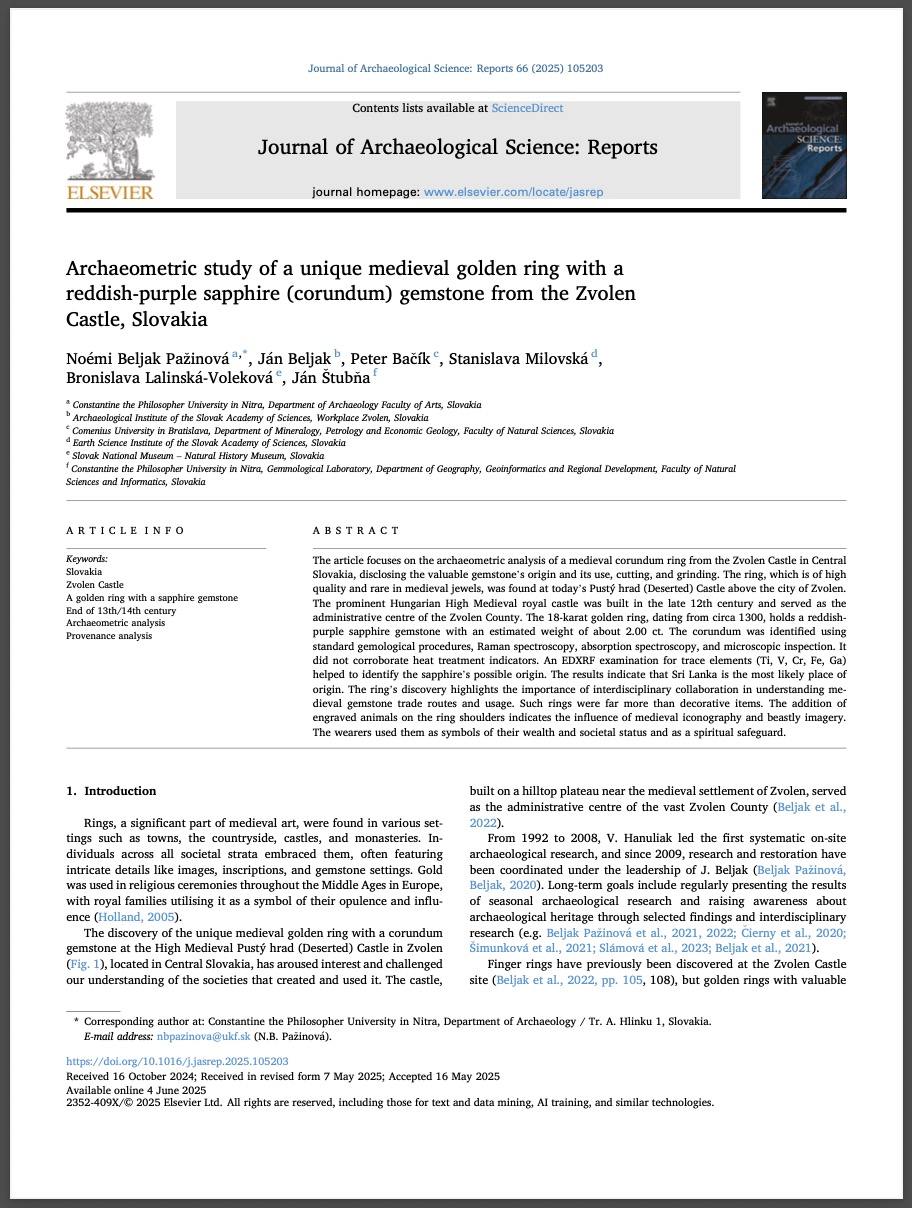
Archaeometric study of a unique medieval golden ring with a reddish-purple sapphire (corundum) gemstone from the Zvolen Castle, Slovakia

Archaeometric study of a unique medieval golden ring with a reddish-purple sapphire (corundum) gemstone from the Zvolen Castle, Slovakia

Pažinová, N.B., Beljak, J., Bačík, P., Milovská, S., Lalinská-Voleková, B. and Štubňa, J. (2025)

Journal Article · Source: Journal of Archaeological Science: Reports · Issue: No. 66 · Pages: 16 pp.

Abstract
This article presents an archaeometric study of a medieval corundum ring discovered at Pustý hrad (Deserted Castle) above Zvolen in Central Slovakia, shedding light on the gemstone’s origin, use, and craftsmanship. The ring, dating to around 1300, is an 18-karat gold piece set with a rare reddish-purple sapphire estimated at approximately 2.00 carats—an exceptional find in the context of medieval jewellery. Identified as corundum through standard gemological methods, Raman and absorption spectroscopy, and microscopic inspection, the stone showed no evidence of heat treatment. EDXRF analysis of trace elements (Ti, V, Cr, Fe, Ga) points to Sri Lanka as the probable source. The ring’s origin and quality underscore the sophistication of medieval trade networks and the symbolic value of such objects, which were not merely ornamental but also conveyed wealth, status, and spiritual protection. The engraved animal motifs on the ring’s shoulders reflect the influence of medieval iconography, illustrating the broader cultural and symbolic dimensions of gem-set jewellery in the High Middle Ages.
Keywords
gems, ancient gemology, ancient jewelry, Medieval sapphire ring, Sri Lanka, Ceylon
G&G Micro-World: Prismatic zircon in Kashmir sapphire

G&G Micro-World: Prismatic zircon in Kashmir sapphire

Estrella, A. and Smith, T. (2025)

Journal Article · Source: Gems & Gemology · Volume: Vol. 61 · Issue: No. 1, Spring · Pages: p. 80

Abstract
Recently, the author examined a faceted blue oval sapphire. Standard gemological properties and chemical analysis indicated a geographic origin of Kashmir. Microscopic examination revealed internal graining, fine particle banding, and fingerprint inclusions. Interestingly, elongated zircon inclusions were also observed, displaying attractive birefringent interference colors under cross-polarized filters caused by the splitting of light in the doubly refractive crystals. Kashmir sapphire is one of the rarest and most valuable gemstones in the world, renowned for its beauty and quality, and this stone was no exception. [RWH: With brief notes like this, one should not place too much confidence in the origin determination]
Keywords
gems, advanced testing, cathodoluminescence, CL
Le traitement thermique des gemmes: Histoire d’un savoir-faire ancestral, de l’expérience à la science

Le traitement thermique des gemmes: Histoire d’un savoir-faire ancestral, de l’expérience à la science

The heat treatment of gemstones: The history of an ancestral skill, from experience to science

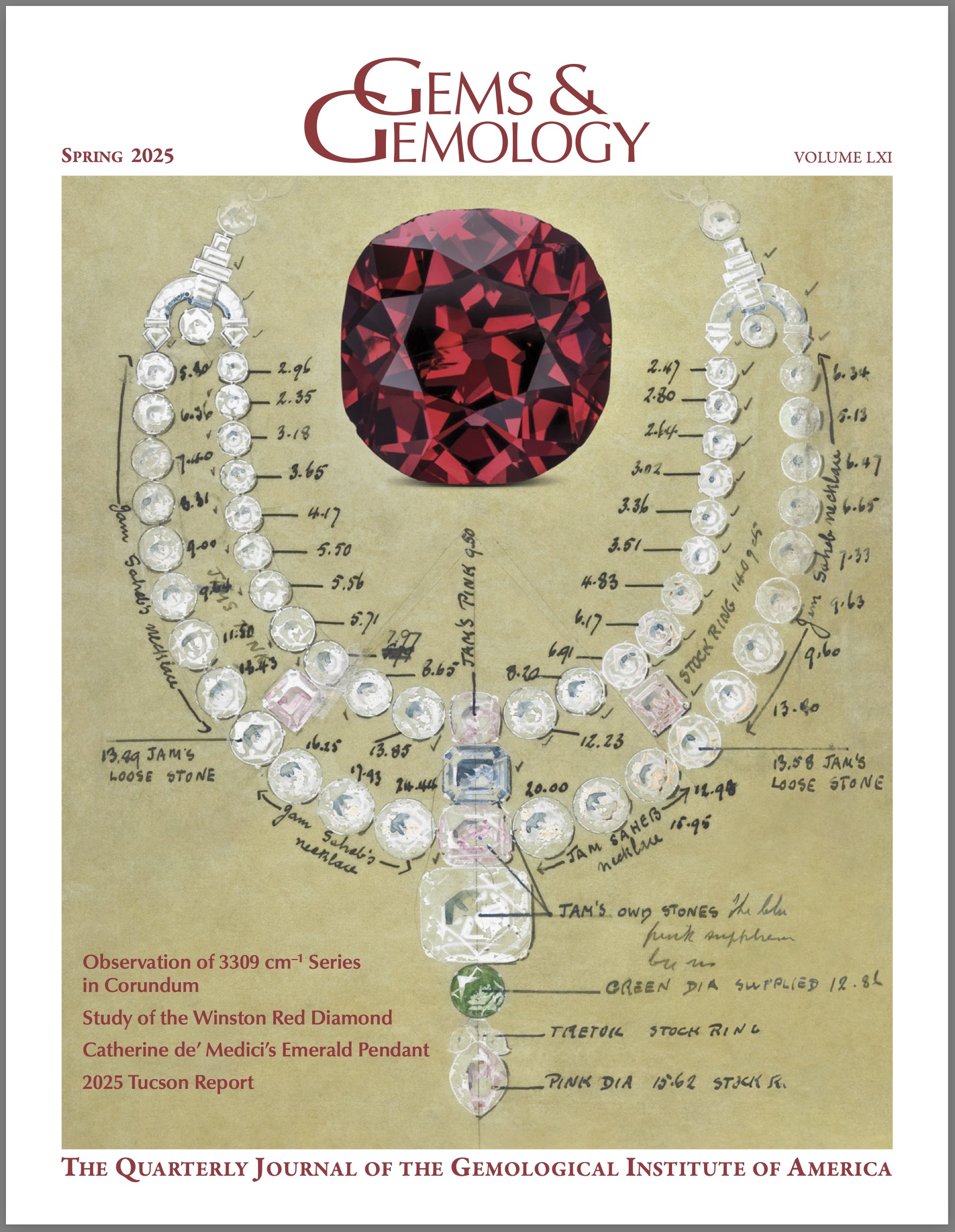
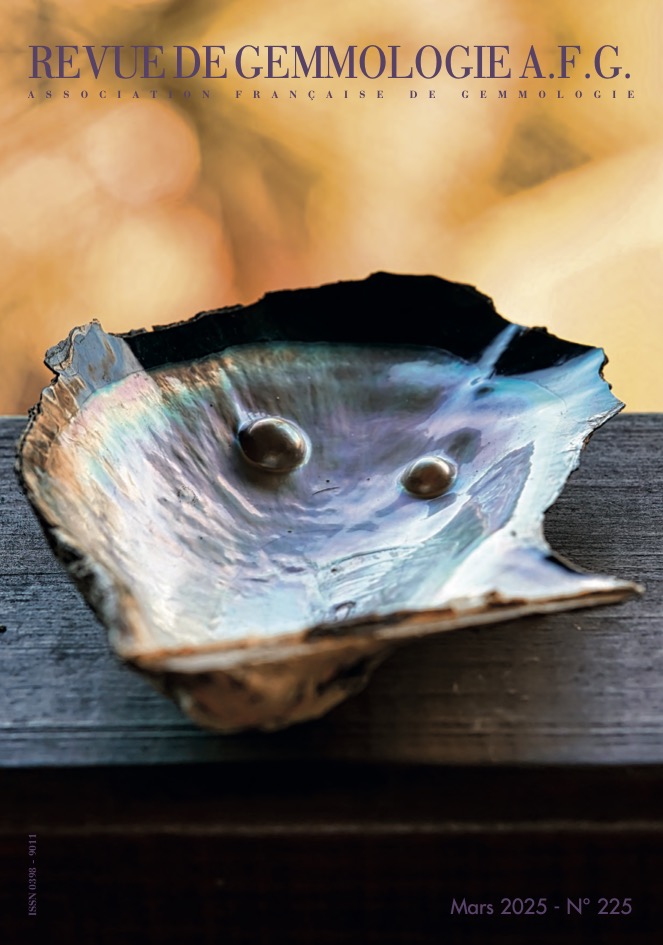
Cassius-Duranton, M.-L. (2025)

Journal Article · Source: Revue de Gemmologie A.F.G. · Issue: No. 225, March · Pages: pp. 16–20 · Language: in French

Abstract
The history of heat treatment falls within an interdisciplinary field of inquiry, involving the reconstruction of know-how from archaeological discoveries; drawing on pre-scientific written sources, when available—chiefly lapidaries, alchemical treatises, and technical recipe books; experimenting with the methods described in those texts; and conducting gemological analyses to determine whether the gemstones have been heat-treated. Until now, experiments and analyses have mainly been carried out in the archaeological sphere, primarily in prehistoric and protohistoric contexts, as part of research into the lithic industry. In contrast, this question has been scarcely addressed for later periods such as the Middle Ages and the modern era (5th century to the end of the 18th century). It is important to emphasize that in ancient texts, one finds both practices with actual effectiveness and magical practices rooted in belief and ritual—such as the use of goat’s blood to cut diamond, first mentioned by Pliny the Elder in Natural History (Book 37, Chapter 15, Section 3) in the 1st century, and later repeated in treatises on gems, even during the Renaissance. Furthermore, reconstructing these recipes is not always easy, as those who wrote them were not necessarily those who practiced them, and one must not underestimate the secretive nature of these valuable skills.
Keywords
gems, ancient gems, corundum, treatments.6
Streeter of Bond Street: A Victorian Jeweller

Streeter of Bond Street: A Victorian Jeweller

Streeter, P. (2024)

Book · Publisher: Matching Press · Pages: 270 pp.

Abstract
Edwin Streeter was a leading Victorian jeweller of his day who, rising from humble beginnings, masterminded the exploitation of the Burma Ruby Mines and opened up the Pearl Fisheries of Western Australia. Other expeditions, seeking diamonds in South Africa, sapphires in Montana and emeralds in Egypt, were disastrous. After a long, controversial and colourful career, he was to die in genteel poverty in Hampstead in 1923. This edition is extensively revised from the 1993 original.
Keywords
corundum, Burma.12, Montana.12, USA.12, gems, pearls, diamond
Petrogenesis of Montana, USA sapphires inferred from oxygen isotopes and zircon inclusions

Petrogenesis of Montana, USA sapphires inferred from oxygen isotopes and zircon inclusions

Turnier, R.B., Berg, R.B., Kitajima, K., Palke, A.C. and Valley, J.W. (2024)

Journal Article · Source: Journal of Petrology · Volume: Vol. 65 · Issue: No. 10 · Pages: pp. 1–19

Abstract
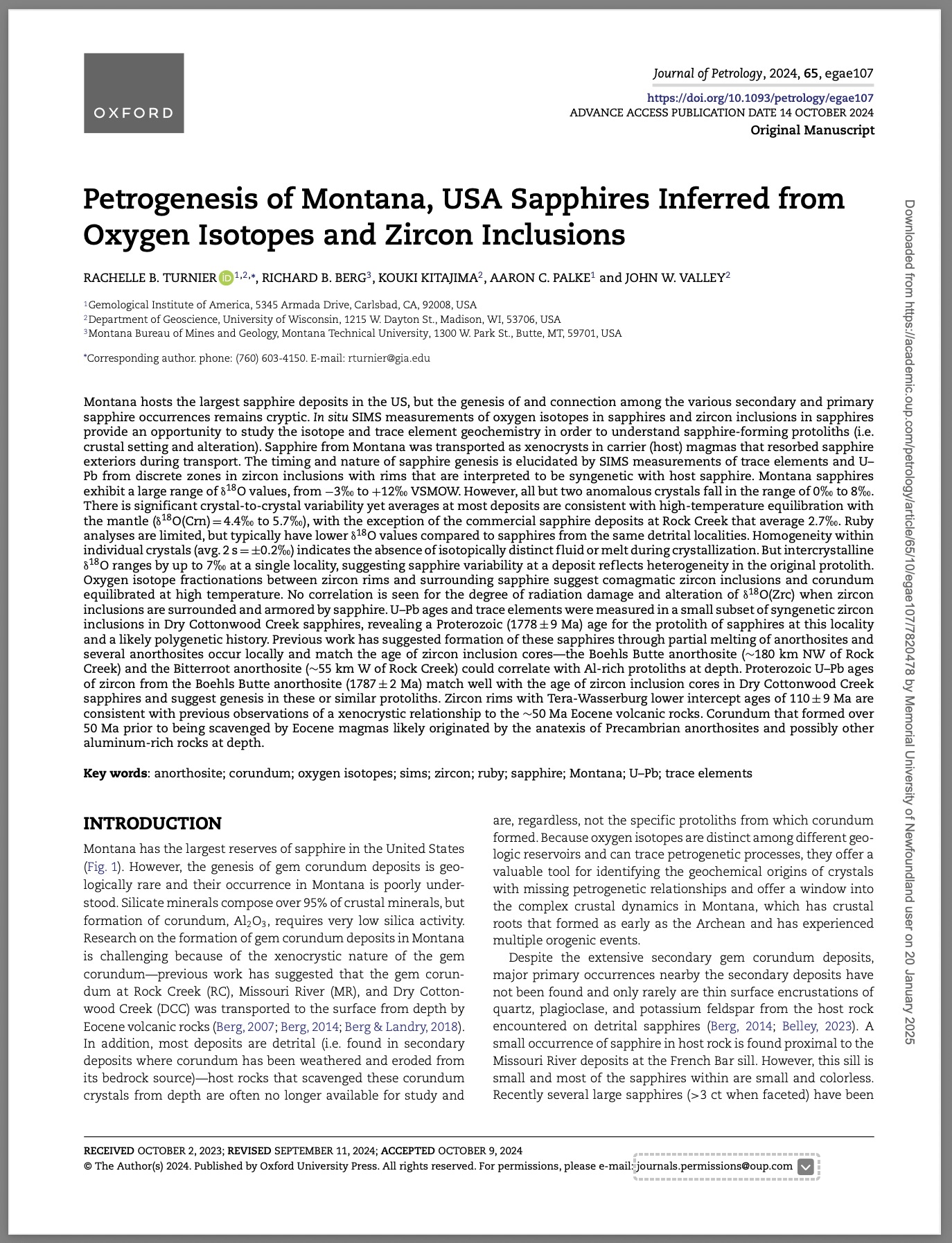
Montana hosts the largest sapphire deposits in the US, but the genesis of and connection among the various secondary and primary sapphire occurrences remain cryptic. In situ SIMS measurements of oxygen isotopes in sapphires and zircon inclusions in sapphires provide an opportunity to study the isotope and trace element geochemistry in order to understand sapphire-forming protoliths (i.e. crustal setting and alteration). Sapphire from Montana was transported as xenocrysts in carrier (host) magmas that resorbed sapphire exteriors during transport. The timing and nature of sapphire genesis is elucidated by SIMS measurements of trace elements and U–Pb from discrete zones in zircon inclusions with rims that are interpreted to be syngenetic with host sapphire. Montana sapphires exhibit a large range of δ¹⁸O values, from −3‰ to +12‰ VSMOW. However, all but two anomalous crystals fall in the range of 0‰ to 8‰. There is significant crystal-to-crystal variability yet averages at most deposits are consistent with high-temperature equilibration with the mantle (δ¹⁸O(Crn) = 4.4‰ to 5.7‰), with the exception of the commercial sapphire deposits at Rock Creek that average 2.7‰. Ruby analyses are limited, but typically have lower δ¹⁸O values compared to sapphires from the same detrital localities. Homogeneity within individual crystals (avg. 2σ = ±0.2‰) indicates the absence of isotopically distinct fluid or melt during crystallization. But intercrystalline δ¹⁸O ranges by up to 7‰ at a single locality, suggesting sapphire variability at a deposit reflects heterogeneity in the original protolith. Oxygen isotope fractionations between zircon rims and surrounding sapphire suggest comagmatic zircon inclusions and corundum equilibrated at high temperature. No correlation is seen for the degree of radiation damage and alteration of δ¹⁸O(Zrc) when zircon inclusions are surrounded and armored by sapphire. U–Pb ages and trace elements were measured in a small subset of syngenetic zircon inclusions in Dry Cottonwood Creek sapphires, revealing a Proterozoic (1778 ± 9 Ma) age for the protolith of sapphires at this locality and a likely polygenetic history. Previous work has suggested formation of these sapphires through partial melting of anorthosites and several anorthosites occur locally and match the age of zircon inclusion cores — the Boehls Butte anorthosite (∼180 km NW of Rock Creek) and the Bitterroot anorthosite (∼55 km W of Rock Creek) could correlate with Al-rich protoliths at depth. Proterozoic U–Pb ages of zircon from the Boehls Butte anorthosite (1787 ± 2 Ma) match well with the age of zircon inclusion cores in Dry Cottonwood Creek sapphires and suggest genesis in these or similar protoliths. Zircon rims with Tera-Wasserburg lower intercept ages of 110 ± 9 Ma are consistent with previous observations of a xenocrystic relationship to the ∼50 Ma Eocene volcanic rocks. Corundum that formed over 50 Ma prior to being scavenged by Eocene magmas likely originated by the anatexis of Precambrian anorthosites and possibly other aluminum-rich rocks at depth.
Keywords
gems, corundum, USA.12, Montana.12, chemistry, geology.11
Gem News International: Update on inclusion scenes in Mozambican rubies

Gem News International: Update on inclusion scenes in Mozambican rubies

Vertriest, W. (2024)

Journal Article · Source: Gems & Gemology · Volume: Vol. 60 · Issue: No. 1, Spring · Pages: pp. 137–138

Abstract
In August 2022, a team of GIA gemologists visited the ruby mines near Montepuez in the Cabo Delgado province of northern Mozambique (Fall 2022 GNI, pp. 383–386). This included a visit to the deposits farther west in the region, near the village of Caraia. This mining area is north of the N14 road, while most of the previously known productive ruby deposits are southeast of this highway. Ruby mining near Caraia has been ongoing for more than a decade but was mostly limited to artisanal mining activity until 2017. In the last few years, the ruby deposits have been developed on a larger scale by Fura Gems. The first official sale of this material took place in late 2021, and regular auctions have been organized since then (Fall 2021 GNI, pp. 276–277). During GIA’s visit in August 2022, gemologists collected a large suite of rough rubies directly from the wash plant and sort house at the mine site. The samples ranged from 0.1 to 1.2 g and were transparent and fracture-free. The vast majority contained some crystal inclusions, and an extensive inclusion study of this material matched well with the known data from Mozambican ruby, with one exception. The most common inclusions are bands of fine silk, short needles, and particles, including reflective platelets. Mozambican rubies typically show three distinctive types of solid crystals: transparent greenish amphibole crystals with a stubby to elongated shape; pseudohexagonal frosty mica crystals with small expansion fractures; and black opaque sulfide crystals with a metallic luster. All of these features were prevalent in the rubies mined near Caraia. However, one observation stood out: in 8 of the 85 studied samples, zircon crystal inclusions were found. While zircon crystals are also transparent, their relief is higher than that of the more common amphibole crystals. They also tend to be smaller and are rarely elongated in rubies. The most efficient way to identify them is by viewing the stones between crossed polarizers, which highlights the obvious stress halos around the slightly radioactive zircon crystals (figure 1). In all of GIA’s samples, the identification was also confirmed by confocal Raman spectroscopy. To our knowledge, zircon crystals have not been previously documented in rubies from Mozambique. They are, however, a hallmark for rubies from Madagascar (A.C. Palke et al., “Geographic origin determination of ruby,” Winter 2019 G&G, pp. 580–613). The presence of zircon crystal inclusions is often a decisive discriminator in the origin determination of rubies. The inclusion scenes of high-quality Mozambican and Malagasy rubies can look very similar, but only the latter were known to have abundant zircon inclusions. This is no longer true now that zircon inclusions have also been identified in rubies from Mozambique.
Keywords
gems, corundum, ruby, Mozambique.12, Madagascar.12, inclusions.5, zircon, primary rutile
Glowing gems: Fluorescence and phosphorescence of diamonds, colored stones, and pearls

Glowing gems: Fluorescence and phosphorescence of diamonds, colored stones, and pearls

Haenens-Johansson, U.F.S., d’, Eaton-Magaña, S., Towbin, W.H. and Myagkawa, E. (2024)

Journal Article · Source: Gems & Gemology · Volume: Vol. 60 · Issue: No. 4, Winter · Pages: pp. 560–580

Abstract
The use of photoluminescence imaging for gemstone characterization is reviewed, considering both fluorescence and its time-delayed counterpart, phosphorescence. Luminescence results from the excitation of atomic impurities and defects by an external source. Fluorescence can be excited by ultraviolet, visible, or infrared light, or even X-rays. Fluorescence to long-wave UV light is a characteristic included in diamond grading reports issued by major gemological laboratories. This article provides a comprehensive overview of the principles, mechanisms, and characteristics of luminescence that create the impressive and memorable glow of gemstones. Although diamond is the focus, a variety of colored stones and pearls are reviewed as well. This article is intended to foster a deeper appreciation of the complexity necessary to understand these natural wonders.
Keywords
gems, gemology, basic gemology, advanced gemology, gem testing, spectroscopy, chemistry, chemical analysis, corundum, X-ray diffraction
Chemical analysis in the gemological laboratory: XRF and LA-ICP-MS

Chemical analysis in the gemological laboratory: XRF and LA-ICP-MS

Sun, Z., Jollands, M.C. and Palke, A.C. (2024)

Journal Article · Source: Gems & Gemology · Volume: Vol. 60 · Issue: No. 4, Winter · Pages: pp. 518–535

Abstract
One of the fundamental tasks in a modern gemological laboratory is identifying the species of a gemstone. Laboratories apply many different approaches, from routine methods used for almost every gemstone to more advanced techniques on a case-by-case basis. While standard gemological testing can accurately identify the most common gemstone species, additional testing is often required for unusual or rare stones. Two advanced analytical tools for phase identification are reviewed in this article: Raman spectroscopy and X-ray diffraction. Both methods harness photon scattering to characterize the atomic-scale structures of materials. Raman spectroscopy relies on inelastic light scattering from crystal lattice or molecular vibrations. X-ray diffraction relies on constructive interference of X-rays “reflected” from regularly spaced atomic layers of a crystal lattice. In addition to identifying mineral species, these techniques can capture information about composition, degree of crystallinity, strain, and other factors that affect a material’s structure. The applications of these techniques are summarized first, followed by technical details regarding the underlying physics and instrumentation.
Keywords
gems, gemology, basic gemology, advanced gemology, gem testing, spectroscopy, chemistry, chemical analysis, corundum, X-ray diffraction

Exploring the Literature of Corundum

Ruby and sapphire research spans mineralogy, gem deposits, identification, treatments, synthesis and the history of the gem trade. Older publications can also be useful for tracing terminology, early observations and accounts of mining localities. Publication dates and the original source should be considered when using historical descriptions.

For an introduction to collecting books on this subject, read Ruby & Sapphire Books: Collecting the Literature of Corundum.

About Four Treasures

Four Treasures is Lotus Gemology's freely accessible gemological reference database. Use the full database to search by author, title or keyword and explore literature on gemology, mineralogy, jewelry and related fields. Where available, hyperlinks on titles may lead directly to the full publication.

Search the Complete Four Treasures Database