Gemology Books Bibliography

Gemology Books Bibliography

Explore books on gems, gemology, jewelry and mineralogy in Four Treasures, the Lotus Gemology reference database. This bibliography brings together matching book records from the collection, with publication details, abstracts and cover images where available.

Gemology Book References

The list below matches books concerning gemology and related subjects in the database's searchable fields. Some works cover several branches of gems, jewelry or mineralogy.
2,081–2,100 of 3,681 matching references

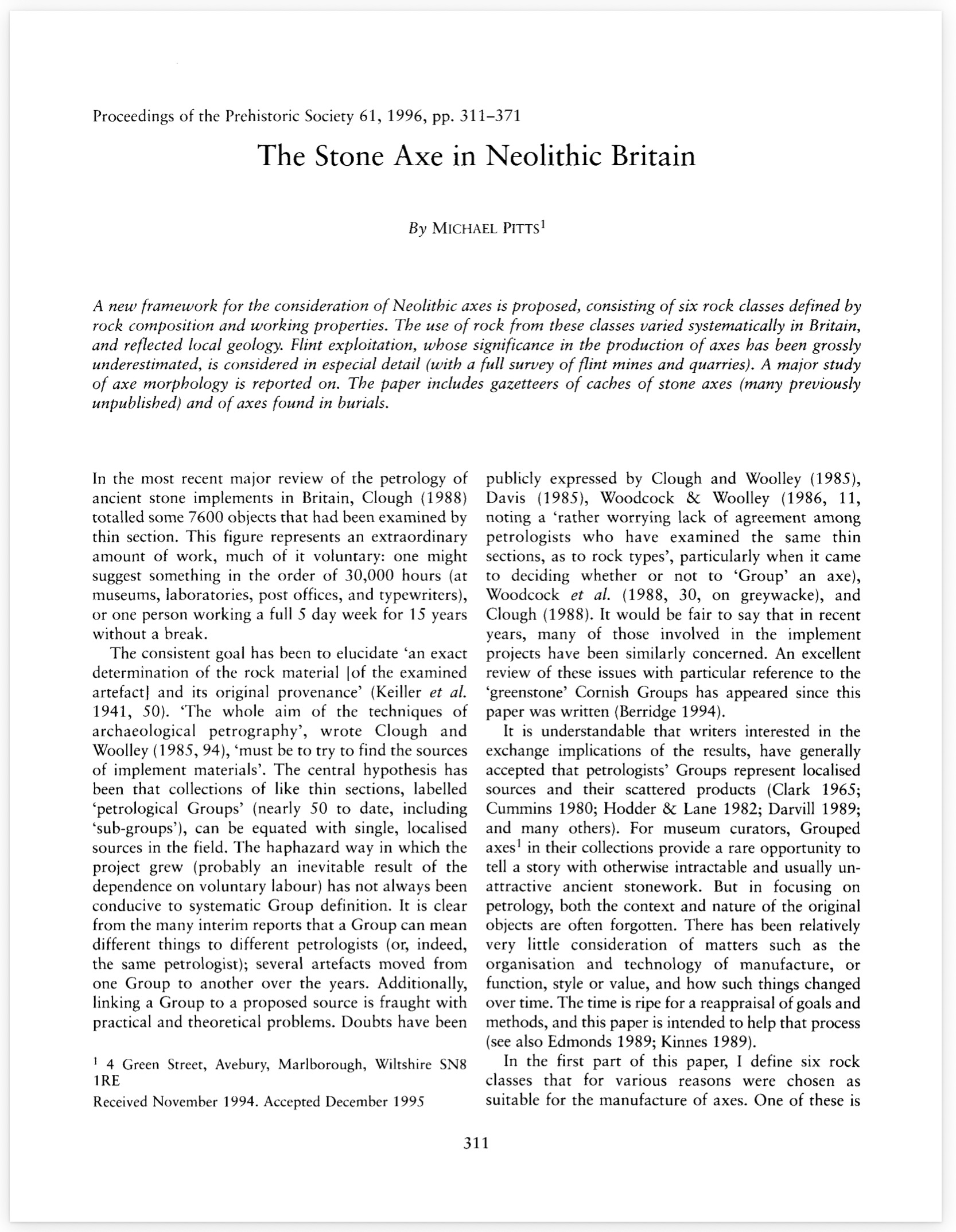
The stone axe in Neolithic Britain

Journal Article
Pitts, M. (1996) The stone axe in Neolithic Britain. Proceedings of the Prehistoric Society, Vol. 62, pp. 311–371.
Record No. 28340  |  ISBN/ISSN: 0079-497X  |  DOI: https://doi.org/10.1017/S0079497X00002838  |  Sinkankas/Born No.: NIS / NIB  |  RWHL
View Individual Record ↗
A new framework for the consideration of Neolithic axes is proposed, consisting of six rock classes defined by rock composition and working properties. The use of rock from these classes varied systematically in Britain, and reflected local geology. Flint exploitation, whose significance in the production of axes has been grossly underestimated, is considered in especial detail (with a full survey of flint mines and quarries). A major study of axe morphology is reported on. The paper includes gazetteers of caches of stone axes (many previously unpublished) and of axes found in burials.

The Eauze treasure: Questions of workshop
Book Section
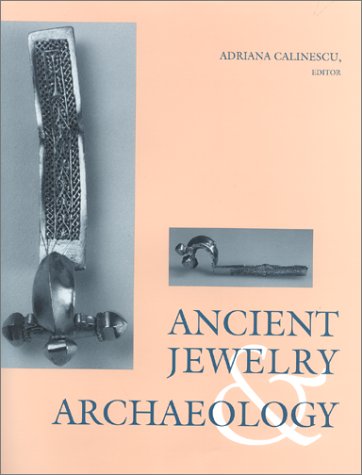
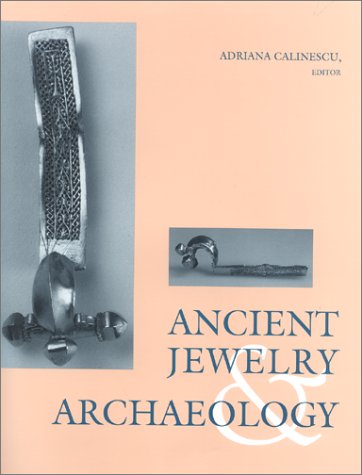
Guiraud, H. (1996) The Eauze treasure: Questions of workshop. In: Ancient Jewelry and Archaeology, Bloomington: Indiana University Press, pp. 62–72.
Record No. 27467  |  ISBN/ISSN: 9780250000000  |  Sinkankas/Born No.: NIS / NIB  |  RWHL
View Individual Record ↗
Today Eauze is a small town in the southwest of France. It was formerly civitas Elusa, in the province of Aquitania; at the end of the fourth century A.C., it became the capital of Novempopulania, one of the first seats of Christianity in Gaul. In October 1985, a treasure was discovered at Eauze by the Direction des Antiquités Historiques during a salvage dig conducted before the area was converted into an industrial zone (fig. 1). The treasure had been placed in a circular pit, about 50 cm in diameter; it comprised a great number of coins, jewelry, and a few other objects. The whole ensemble had been carefully deposited: the coins were stored in bags, apparently four in number (the shape of one bag, containing about 7,000 coins, was still visible to the excavators); in all, there were 28,000 pieces, including 4,500 denarii and 23,000 antoniniani; two-thirds of the coins are later than A.D. 249. Over the bags, the other objects were arranged in three groups (each had been wrapped in an unidentified material): one group contained the jewelry and six gold coins; another contained the silver and ivory pieces; and lastly there were the bronze coins, a small lot of 45 pieces. These latest coins date from A.D. 261–262. The significance of the find lies not only in its securely dated context, but also in the conditions of its retrieval, which insured control over the areas in proximity to the cache and the preservation of the treasure in its entirety. Unlike the case of the great coin hoards discovered in France in the nineteenth century, we are able here to observe a closed and intact context.

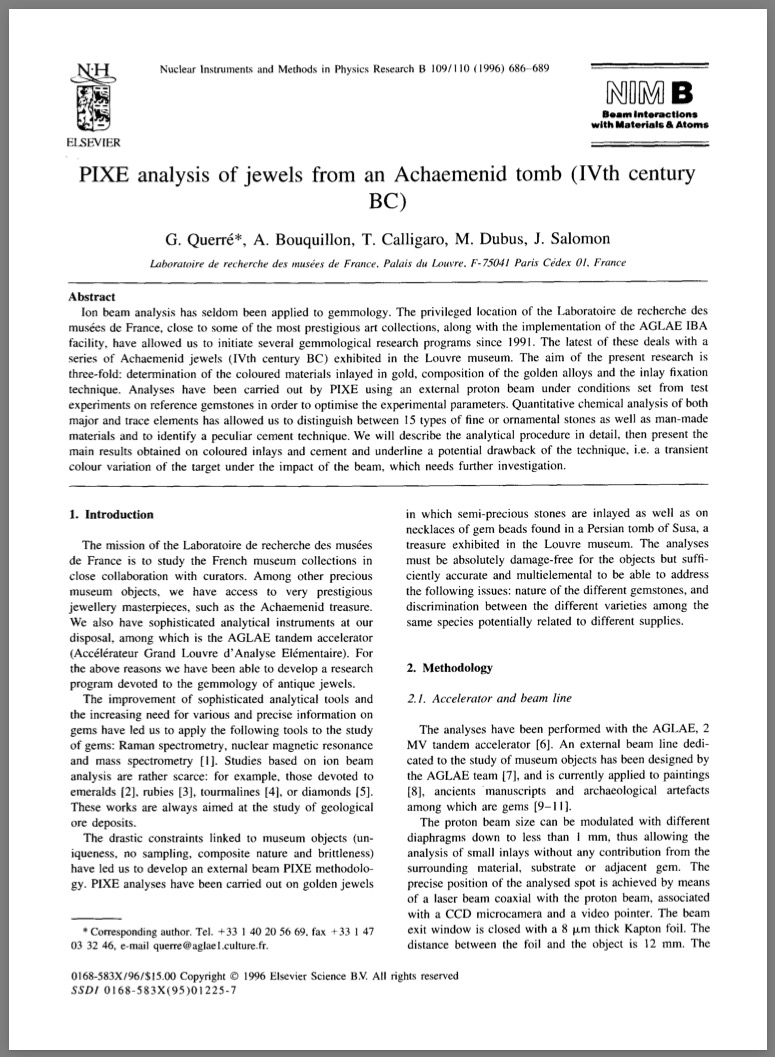
PIXE analysis of jewels from an Achaemenid tomb (4th-century BC)
Journal Article
Querré, G., Bouquillon, A., Calligaro, T., Dubus, M. and Salomon, J. (1996) PIXE analysis of jewels from an Achaemenid tomb (4th-century BC). Nuclear Instruments and Methods in Physics Research B, Vol. B109/110, pp. 686–689.
Record No. 27063  |  DOI: https://doi.org/10.1016/0168-583X(95)01225-7  |  Sinkankas/Born No.: NIS / NIB  |  RWHL
View Individual Record ↗
Ion beam analysis has seldom been applied to gemmology. The privileged location of the Laboratoire de recherche des musées de France, close to some of the most prestigious art collections, along with the implementation of the AGLAE IBA facility, have allowed us to initiate several gemmological research programs since 1991. The latest of these deals with a series of Achaemenid jewels (IVth century BC) exhibited in the Louvre museum. The aim of the present research is three-fold: determination of the coloured materials inlayed in gold, composition of the golden alloys and the inlay fixation technique. Analyses have been carried out by PIXE using an external proton beam under conditions set from test experiments on reference gemstones in order to optimise the experimental parameters. Quantitative chemical analysis of both major and trace elements has allowed us to distinguish between 15 types of fine or ornamental stones as well as man-made materials and to identify a peculiar cement technique. We will describe the analytical procedure in detail, then present the main results obtained on coloured inlays and cement and underline a potential drawback of the technique, i.e. a transient colour variation of the target under the impact of the beam, which needs further investigation.

The archaeology of jewelry

Book Section
Boardman, J. (1996) The archaeology of jewelry. In: Ancient Jewelry and Archaeology, Bloomington: Indiana University Press, pp. 3–13.
Record No. 26953  |  ISBN/ISSN: 9780250000000  |  Sinkankas/Born No.: NIS / NIB  |  RWHL
View Individual Record ↗
Of all the range of archaeological studies, that of jewelry holds a special place for both its content and the techniques of study it requires. Closest perhaps is the study of gem engraving, which is in some respects a branch of jewelry, but engraved gems offer subjects which can be treated as any other corpus of images, and they may depend less on the value of the materials used. In jewelry, design is everything, combined necessarily with the intrinsic value of the materials. Iconography is of only occasional importance, but perhaps too easily neglected. This essay reviews in a summary way, and from the point of view of an archaeologist who is no specialist in jewelry studies, some aspects of the subject which seem to relate it most closely to other areas of classical archaeology. Jewelry is luxury, but unlike real luxury, it is not completely useless, since it can serve the purpose of displaying status and wealth. These were presumably still its functions when used in antiquity for dedication to the gods or to the dead, or when it served as a prize or was honorific, as is the case with wreaths. Indeed, the question might legitimately be asked whether in antiquity it ever served any other purposes; whether it was much enjoyed privately, per se, for quality and beauty. In the Greek period I doubt whether it was often collected for its own sake, but it could be hoarded or hidden away, much as it is today in bank vaults. It would then have been treated as was much silver plate, simply as bullion, but its value went far beyond its weight, a point to which I shall return. Alcibiades’ mother Deinomache was said to have owned a set of jewelry worth 50 minae (5,000 drachmae); I doubt whether she could have worn it all at once. Eupolis mocks even the poorer dandies of Cyrene who owned seals, sphragides, worth 10 minae, more than they were likely to be able comfortably to wear on necklaces and fingers; but it would be silly to take such a remark from a comic poet at all seriously. The chorus in Aristophanes’ Lysistrata (1190–94) say that they make their gold jewelry available whenever any neighbor’s daughter does duty as kanephoros, basket-carrier in a procession. Ordinary Greeks were practical; they made their jewelry work for them. In every period and place these functions must be expected to be of considerable importance in the production and design of jewelry, and the archaeologist-historian must try to identify and explain them. Yet it is for quality and what we take for beauty that it has attracted the attention of most scholars and all collectors. I vividly remember attending a lecture in Cyprus given by Professor Andronikos soon after the discovery of the tomb of Philip II. The strong, almost emotional response of the whole audience to the sheer quality and beauty of the jewelry was almost physical; it could move them to tears. It was subjective, yet I doubt whether any Western audience at any period or place would have reacted much differently. This is in part a tribute to the pervasive effect of classical art in Western culture, but it also mitigates to a large extent the sheer subjectivity of such a response. Can we free ourselves of this response in our studies; do we need to free ourselves of it?

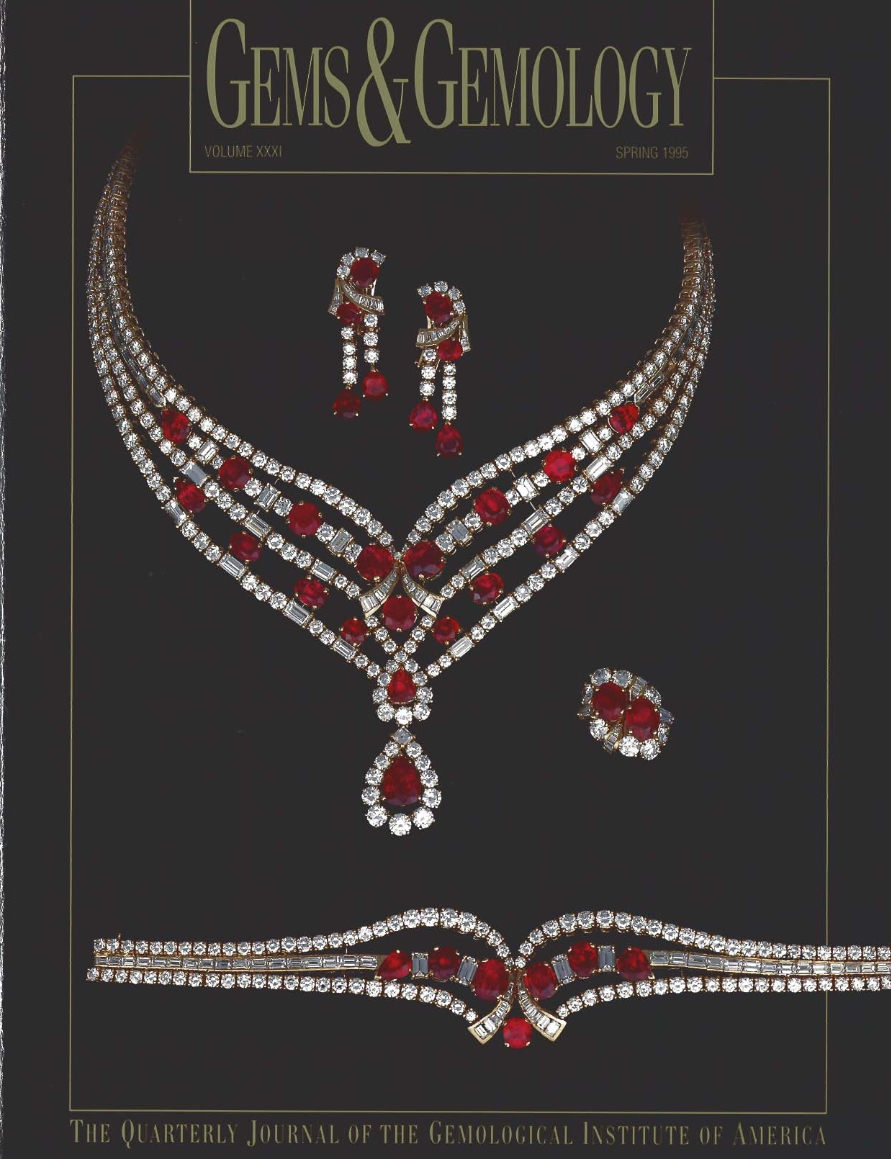
Gem News: “Golden” tourmaline from Kenya
Journal Article
Johnson, M.L. and Koivula, J.I. (1996) Gem News: “Golden” tourmaline from Kenya. Gems & Gemology, Vol. 32, No. 2, Summer, pp. 135–136.
Record No. 26763  |  Sinkankas/Born No.: NIS / NIB  |  RWHL
View Individual Record ↗
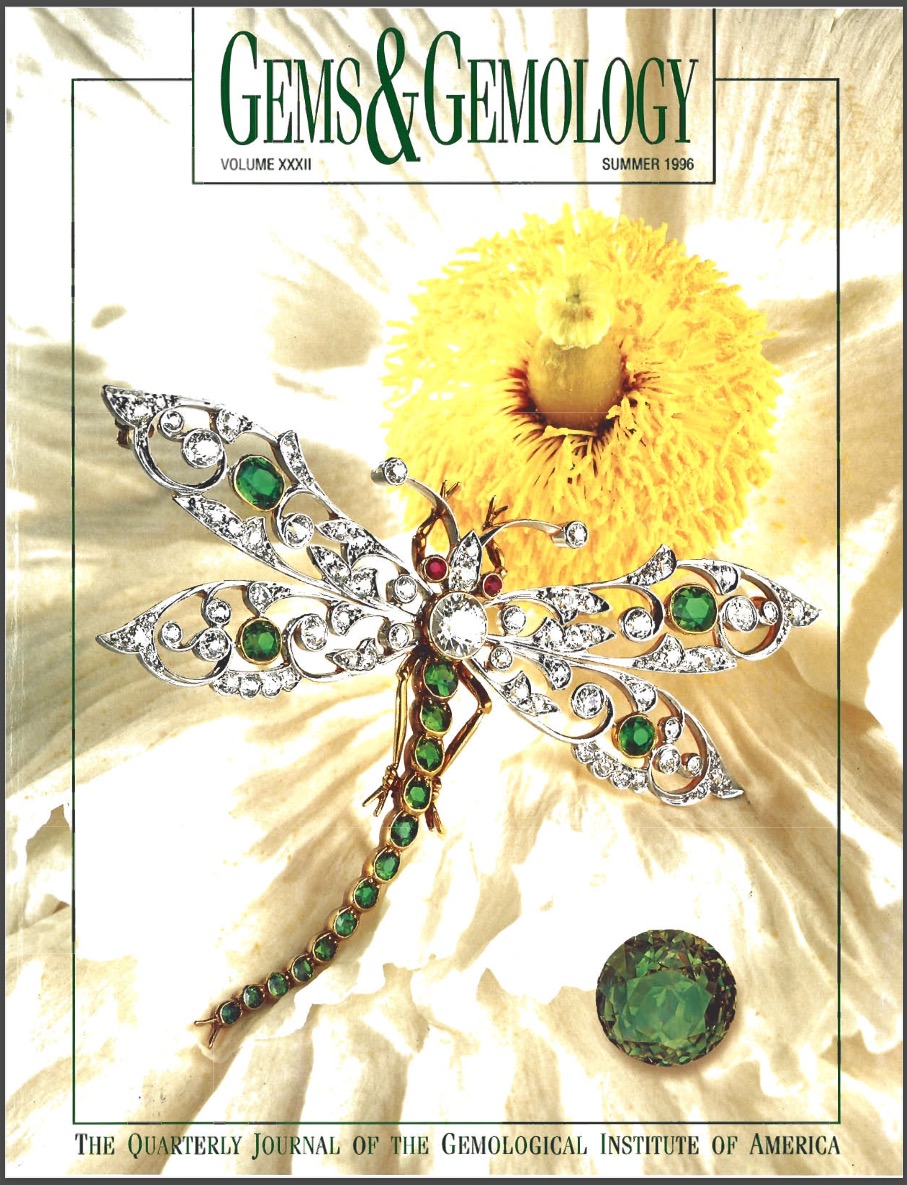
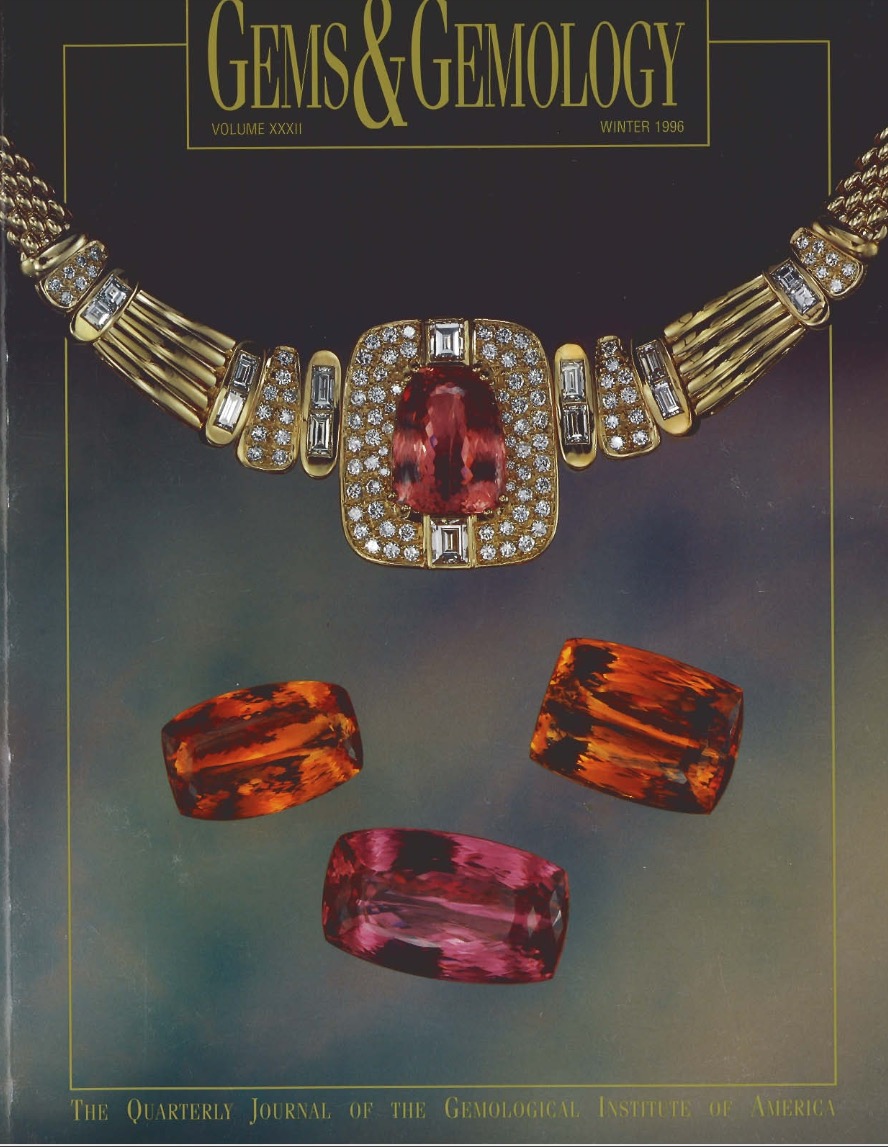
Tourmaline from a recent find in Kenya, referred to as “savannah” or “golden” tourmaline, has attracted attention for its distinctive coloration. Gemologist Yianni Melas submitted two rough samples for examination: a 4.50 ct transparent brownish orangy yellow piece with green areas, and a 3.06 ct crystal section showing a brownish orangy yellow core with a green rim. The broken crystal section displayed only prism faces, lacking striations parallel to the c-axis. Gemological properties recorded include pleochroism from brownish orange to yellow in the yellow regions and dark green to light yellowish green in the green areas, uniaxial optic character, refractive index of 1.630–1.650 with a birefringence of 0.020 (on the green rim), and specific gravity of 3.05. Under long-wave UV, the stones were inert, but showed moderately chalky yellow fluorescence under short-wave UV, stronger in the green rim. Spectroscopic analysis showed general absorption to ~480 nm, with additional bands between 590–630 nm and lines at 650 and 680 nm in the green rim. Inclusions observed included anhedral crystals, needles or tubes, two-phase inclusions, and hollow tubes. EDXRF spectroscopy revealed Mg, Al, Si, K, Ca, Ti, Fe, Zn, Ga, and Sr in both samples, with one showing a small Mn peak. Chromium was detected in the green rim, consistent with the observed color-filter and absorption data, indicating Cr as the chromophore for the green. Reported sources for this material include the Kasigau Mine in Tsavo West National Park, the Mangari area in the same park, and M’gama Ridge south of the Taita Hills in southeastern Kenya.

Gem News: International conference on Raman spectroscopy and geology
Journal Article
Fritsch, E. (1996) Gem News: International conference on Raman spectroscopy and geology. Gems & Gemology, Vol. 32, No. 4, Winter, pp. 290–291.
Record No. 26761  |  Sinkankas/Born No.: NIS / NIB  |  RWHL
View Individual Record ↗
Prof. Emmanuel Fritsch of the Institut des Matériaux, University of Nantes, France, reported on the Georaman 96 conference held in Nantes in June, which focused on the applications of Raman spectroscopy to geological materials. One session was dedicated to gemology, with many presentations centered on the use of Raman spectroscopy for identifying inclusions within gemstones.

A new portrait of Antonia Minor

Journal Article
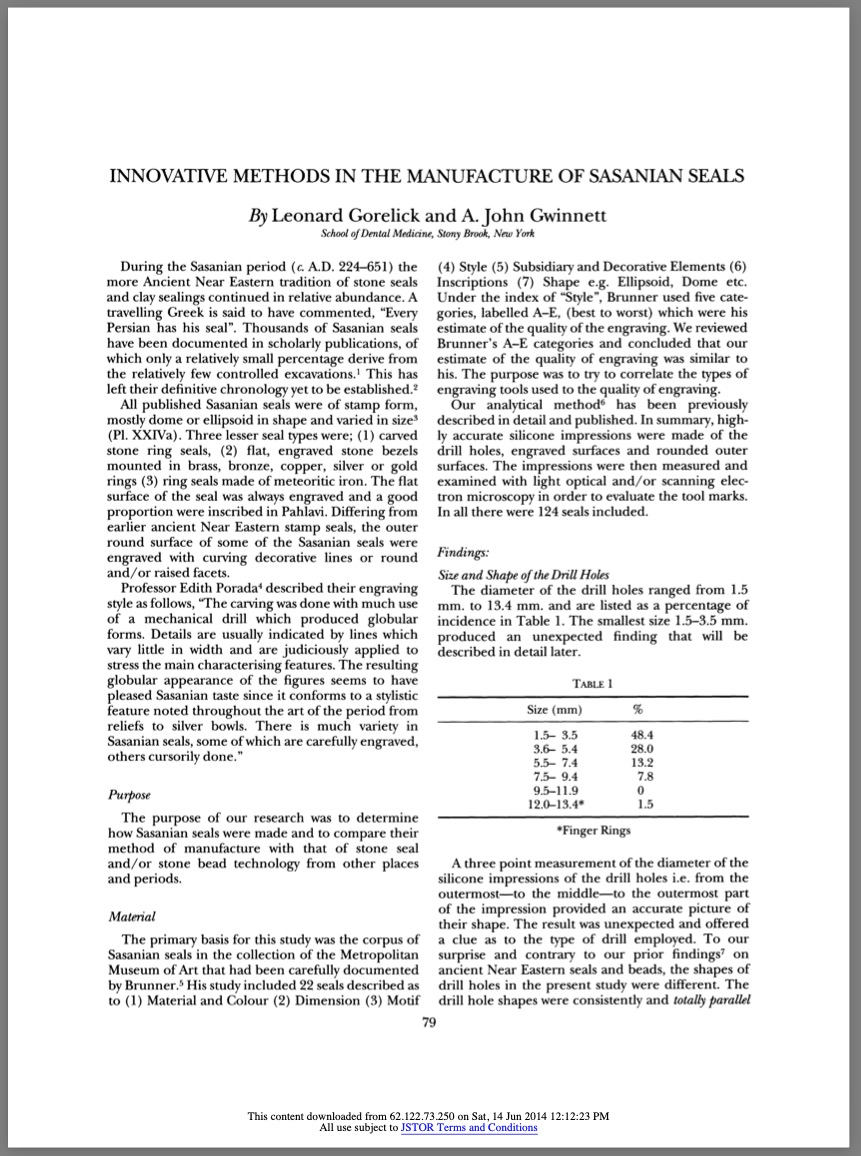
Henig, M. and Wilkins, R. (1996) A new portrait of Antonia Minor. Oxford Journal of Archaeology, Vol. 15, No. 1, pp. 109–111.
Record No. 26472  |  DOI: https://doi.org/10.1111/j.1468-0092.1996.tb00077.x  |  Sinkankas/Born No.: NIS / NIB  |  RWHL
View Individual Record ↗
Features a chromian chalcedony carved head.

Recognition and nomenclature of quartz materials with specific reference to engraved gemstones
Journal Article
Sax, M., Cavey, C.R., Jobbins, E.A. and Seidmann, G. (1996) Recognition and nomenclature of quartz materials with specific reference to engraved gemstones. Jewellery Studies, Vol. 7, pp. 63–72.
Record No. 26352  |  Sinkankas/Born No.: NIS / NIB  |  RWHL
View Individual Record ↗
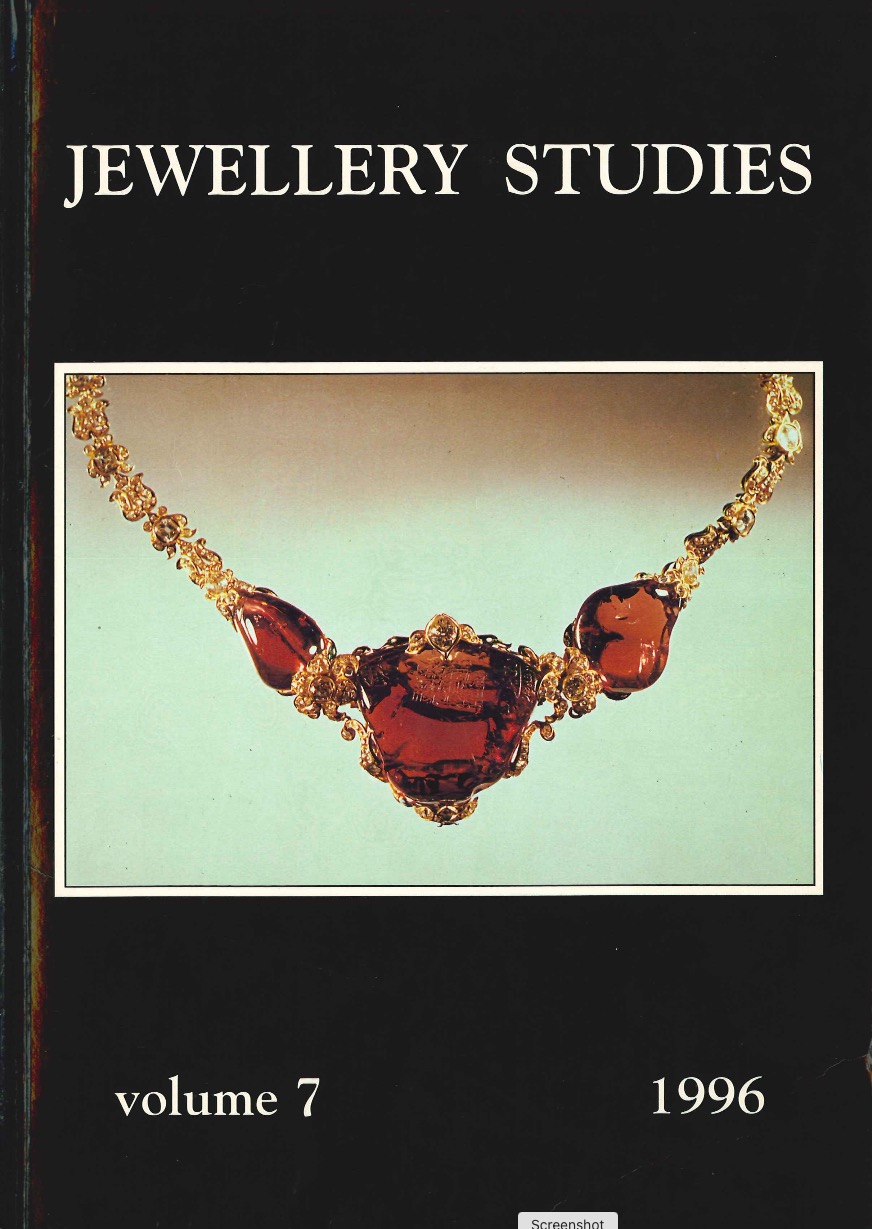
Scholars of glyptics frequently face two related problems; firstly, naming the materials of gems they wish to describe and secondly, understanding the terms used by other scholars, past and present. Ideally materials should be scientifically identified by gemmological or laboratory techniques, such as refractive index or specific gravity measurements, X-ray powder diffraction or X-ray fluorescence analysis, but this is seldom possible. It is perhaps fortunate that many intaglios and cameos of Classical and post-Classical periods have been worked from quartz. This mineral is of common occurrence and its distinctive physical properties ofhardness, compact structure, lack of cleavage and vitreous to subvitreous lustre make it a most suitable material for engraving. These properties also enable it to be easily identified and often scholars can be confident of recognising quartz by simple visual inspection. However, it is not always easy to differentiate between quartz and some other materials such as glass. Furthermore, distinguishing between the many varieties of quartz which are identified by variations in colour, translucency and patterning etc, may be problematic leading to confusion and inconsistencies in terminology; these problems are perhaps most acute for the almost innumerable varieties of microcrystalline quartz. The situation is further complicated by the widespread occurrence of quartz, which has led to regional traditions in naming varieties from local sources and to broader geographical differences in approach. In addition, the approaches and requirements of different eroups ofscholars, suchas gemmologists, mineralogistsand geologists, to the complex subject of quartz nomenclature are diverse; for instance, the terminology applied to a specimen at source may not be appropriate for a small part of it worked as a gemstone.

Innovative methods in the manufacture of Sasanian seals
Journal Article
Gorelick, L. and Gwinnett, A.J. (1996) Innovative methods in the manufacture of Sasanian seals. Iran, Vol. 34, pp. 79–84.
Record No. 26325  |  Sinkankas/Born No.: NIS / NIB  |  RWHL
View Individual Record ↗
During the Sasanian period (c. A.D. 224–651), the longstanding Near Eastern tradition of using stone seals and clay sealings persisted in notable abundance. A traveling Greek reportedly remarked, “Every Persian has his seal,” highlighting the ubiquity of this practice. Thousands of Sasanian seals have been documented, though only a small percentage come from controlled excavations, leaving aspects of their precise chronology unresolved. All published examples are stamp seals—typically dome- or ellipsoid-shaped and varying in size—with three additional forms noted: carved stone ring seals; flat, engraved stone bezels mounted in metal rings (brass, bronze, copper, silver, or gold); and rarer examples made from meteoritic iron. The engraved flat surfaces often bear inscriptions in Pahlavi, while some seals also feature curved decorative lines or facets on their outer edges, distinguishing them from earlier stamp seals. Professor Edith Porada described the Sasanian engraving style as heavily reliant on the mechanical drill, which produced globular forms. Lines of uniform width defined key features, contributing to the rounded, stylized look characteristic of Sasanian art across various media—from stone reliefs to silver vessels. The seals themselves show considerable variety, ranging from finely executed pieces to more hastily carved examples.

“Et l’homme créa la pierre”: Les synthèses de cristaux
“And Man Created the Stone”: The Synthesis of Crystals
Book
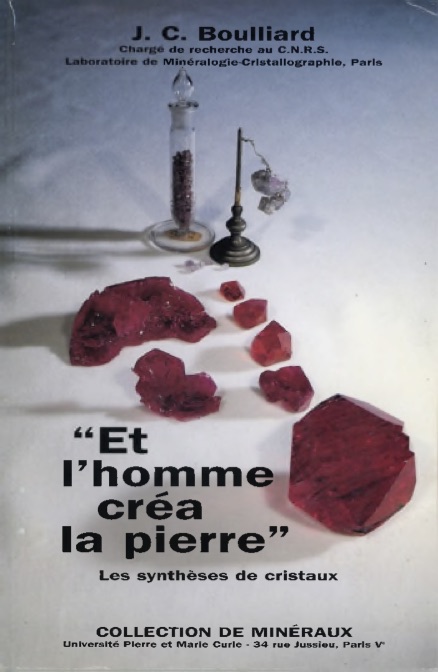
Boulliard, J.-C. (1996) “Et l’homme créa la pierre”: Les synthèses de cristaux. [“And Man Created the Stone”: The Synthesis of Crystals] Paris, Collection de Minéraux, Université Pierre eet Marie Curie, 64 pp.
Record No. 6386  |  Sinkankas/Born No.: NIS / NIB  |  Language: in French  |  RWHL
View Individual Record ↗
Boulliard presents an illustrated introduction to the artificial growth of crystals, explaining how humans learned to reproduce in the laboratory minerals that form naturally under geological conditions. The booklet reviews the historical development of crystal synthesis and the principal techniques used to grow crystals, relating each method to the physical and chemical conditions necessary for crystallization. Particular attention is given to synthetic materials of gemological and technological importance and to the distinction between crystal synthesis and simple imitation. The work places modern crystal growth within the longer history of experimental mineralogy, showing how laboratory synthesis has contributed both to understanding natural crystallization and to producing crystals for jewelry, science and industry.

Introduction to analyzing internal growth structures: Identification of the negative d plane in natural ruby
Journal Article
Smith, C.P. (1996) Introduction to analyzing internal growth structures: Identification of the negative d plane in natural ruby. Gems & Gemology, Vol. 32, No. 3, Fall, pp. 170–184.
Record No. 5641  |  ISBN/ISSN: 0016626X  |  Sinkankas/Born No.: NIS / NIB  |  RWHL
View Individual Record ↗
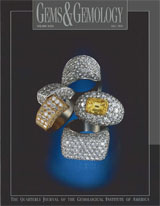
Growth-structure analysis has become increasingly important as a gemological tool for locality classification and distinguishing between natural and synthetic gemstones. This article presents the methods and instruments needed to analyze the internal growth structures of corundum. As an application of this testing procedure, the negative rhombohedral d (0112) plane is documented as part of the crystal habit in a small number of natural rubies—both as a subordinate form and, for the first time in natural rubies, as a dominant crystal form. Until recently, this crystal face was primarily associated with flux-grown synthetic rubies and sapphires.

Gem News: Gem materials from the new locality at Tunduru, Tanzania
Journal Article
Johnson, M.L. and Koivula, J.I. (1996) Gem News: Gem materials from the new locality at Tunduru, Tanzania. Gems & Gemology, Vol. 32, No. 1, Spring, pp. 58–59.
Record No. 5203  |  ISBN/ISSN: 0016626X  |  Sinkankas/Born No.: NIS / NIB  |  RWHL
View Individual Record ↗
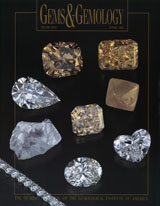
Finds of gem materials in Tanzania were reported in the Spring 1995 (pp. 64–65) and Summer 1995 (pp. 133–134) Gem News sections. At Tucson this year, we saw a broad variety of gem materials from the region near the town of Tunduru, in the far south of Tanzania. Many dealers have likened the wealth of gem species in the area to that of Sri Lanka. Steve Ulatowski of New Era Gems, Grass Valley, California, said that among the gem materials from Tunduru are: ruby; blue, pink, and other colored sapphires; spinel; chrysoberyls, including an unusual mint" green (vanadium) variety, as well as alexandrites and cat's-eyes, garnets, including chrome pyrope, rhodolite, color-change, and light pink garnets; tourmaline, topaz; amethyst; tsavorite, zircon; and even some diamonds. Horst Krupp, of La Costa, California, confirmed this list and added that aquamarine – as well as green, white, and yellow beryls – have also been found in this area along arteries of the Ruvuma River. (He also noted that gem materials are being recovered across the border, in Mozambique. Especially notable at Tucson was a 7.19 ct alexandrite from Tunduru [figure 10], shown by Michael Couch and Associates of Cumming, Iowa."

Compositional characteristics of sapphire from a new find in Madagascar
Journal Article
Milisenda, C. and Henn, U. (1996) Compositional characteristics of sapphire from a new find in Madagascar. Journal of Gemmology, Vol. 25, No. 3, July, pp. 177–184.
Record No. 5158  |  ISBN/ISSN: 221252  |  Sinkankas/Born No.: NIS / NIB  |  RWHL
View Individual Record ↗
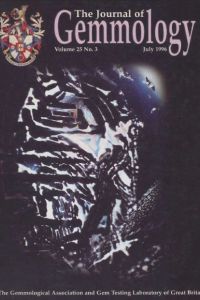
Milisenda and Henn describe the geological setting, gemological properties, inclusions and chemical composition of blue sapphires from the newly commercialized Andranondambo occurrence in southeastern Madagascar. The deposit lies approximately 100 km north of Fort Dauphin, within altered marbles and calc-silicate gneisses of the Tranomaro formation. These rocks belong to a high-grade metamorphic terrain extensively reworked during the Pan-African event. Regional geochronological evidence leads the authors to infer that corundum formation accompanied granulite-facies metamorphism approximately 600 million years ago. Sapphires are recovered with simple hand tools from small pits in residual gravels, and the occurrence is considered promising for commercial development. Studied samples are slightly to moderately included and commonly display conspicuous colour zoning, with intense blue concentrated in broad central bands. Alternating darker and paler layers and growth structures follow basal and bipyramidal planes. Heat treatment can substantially reduce the visible zoning and improve appearance. Crystal fragments preserve rhombohedral and pyramidal forms consistent with metamorphic sources, contrasting with the etched or partly dissolved surfaces often associated with basalt-transported corundum. Refractive indices are 1.761–1.763 and 1.769–1.771, maximum birefringence is approximately 0.008, and specific gravity ranges from 3.91 to 3.98. Distinct to strong dichroism combines green-blue and violet-blue hues. All samples are inert under long-wave ultraviolet radiation; most are also inert under short-wave radiation, although weak greenish-blue or uneven orange fluorescence occurs occasionally. Polarized absorption spectra show ferric-iron features and iron–titanium intervalence charge transfer responsible for blue colour. The approximately 850 nm absorption commonly observed in sapphires from basaltic sources is absent. Preliminary microprobe work identifies apatite, calcite, dolomite and an incompletely characterized clay mineral among the inclusions. Other features include probable mica platelets, apatite associated with parallel hollow tubes, negative crystals, healed fractures containing fluid inclusions and occasional lamellar twinning. Electron microprobe analyses of three sapphires identify iron as the principal trace constituent, followed by titanium, with smaller measurable amounts of silicon, gallium and chromium. The combined evidence closely resembles that of metamorphic sapphires from Sri Lanka and Myanmar, supporting the classification of Andranondambo as a significant new source of metamorphic blue sapphire.

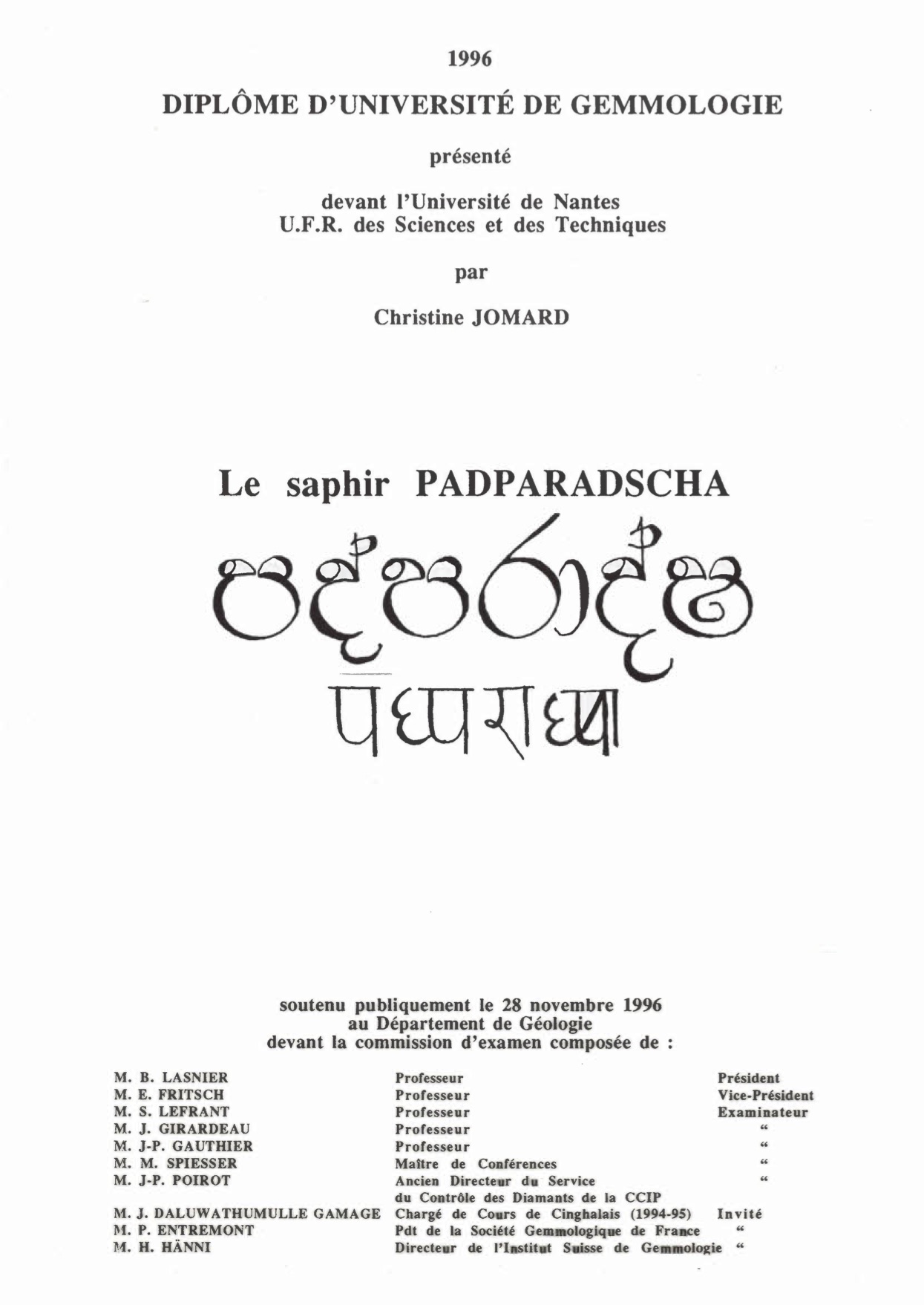
Le Saphir Padparadscha

The Padparadscha Sapphire.
Thesis
Jomard, C. (1996) Le Saphir Padparadscha. [The Padparadscha Sapphire.]., Nantes, France: Université de Nantes, 64 pp.
Record No. 3041  |  Sinkankas/Born No.: NIS / NIB  |  Language: in French  |  RWHL
View Individual Record ↗
Examines the linguistic, historical, and cultural meaning of padparadscha sapphire through gemmological literature, botanical references, ancient texts, and enquiries in Sri Lanka. The study traces the name to Sanskrit padmarāga and related Sinhalese terminology, comparing the varied spellings and colour descriptions adopted in Western publications. Particular attention is given to the sacred lotus, Nelumbo nucifera, whose changing colours and numerous cultivated varieties complicate its use as a precise colour reference. Indian and Sri Lankan traditions are compared with Western interpretations, revealing differences in the boundaries of the designation. The author argues that the ancient term referred to an exceptional Ceylon ruby before becoming associated with sapphires of more delicate pink–orange colour. Further sections consider the gem’s market, museum representation, attributed powers, astrology, and legends, documenting how cultural associations and commercial usage have shaped its identity.

Gem Reference Guide for the GIA Colored Stones Course
Book
Gemological Institute of America (1995) Gem Reference Guide for the GIA Colored Stones Course. Santa Monica, Gemological Institute of America, 270 pp.
Record No. 29715  |  ISBN/ISSN: 0-87311-019-6  |  Sinkankas/Born No.: NIS/NIB  |  RWHL
View Individual Record ↗
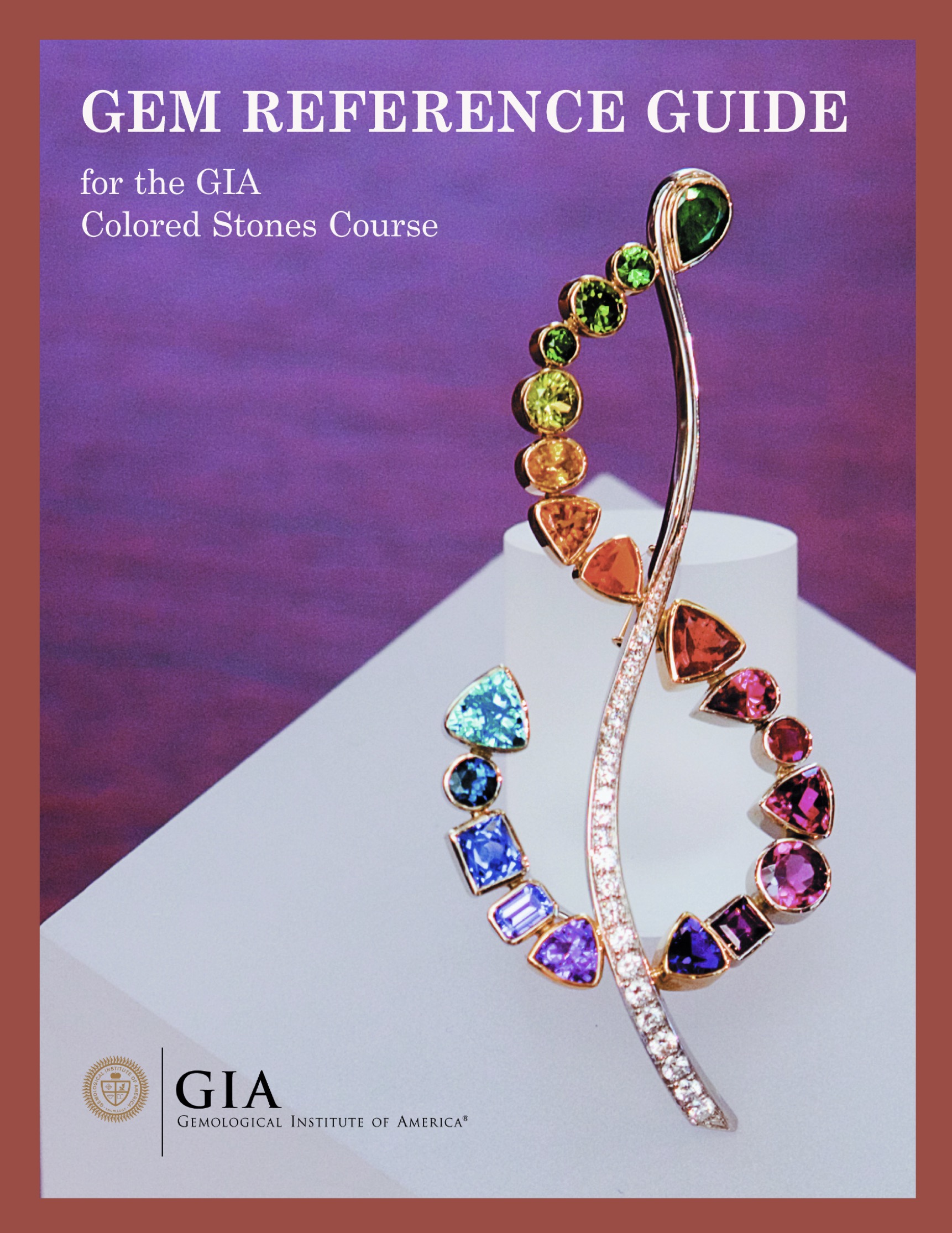
The Gemological Institute of America’s Gem Reference Guide for the GIA Colored Stones Course, first published in 1995 and issued electronically in 2009, is an extensive illustrated reference designed to support the identification, grading, evaluation, and care of colored gemstones and related ornamental materials. Organized alphabetically by gem species, varieties, and commercial categories, the guide provides standardized information on natural gemstones, organic gem materials, synthetic stones, simulants, and assembled products. Each entry follows a consistent format covering chemical composition, crystal system, appearance, color range, transparency, optical properties, refractive index, birefringence, dispersion, pleochroism, ultraviolet fluorescence, absorption spectra, specific gravity, hardness, fracture, cleavage, characteristic inclusions, and crystal habit. Additional sections describe gemstone enhancements, diagnostic separations, durability, cleaning recommendations, commercial availability, geographic sources, and disclosure requirements. The introductory chapters explain GIA’s system for describing gemstone color through hue, tone, and saturation, supplemented by ColorMaster notations, and distinguish the different approaches required for grading transparent and translucent materials. Particularly useful are the numerous illustrated absorption spectra, crystal diagrams, gemstone photographs, and comparative identification tables that assist in separating visually similar materials. Corundum receives extensive treatment, with separate entries for ruby, blue sapphire, fancy sapphire, star ruby, star sapphire, and synthetic corundum. The guide documents diagnostic optical properties, typical inclusions, color mechanisms involving chromium, iron, and titanium, and the effects of heating, diffusion, irradiation, fracture filling, and other treatments. Ruby and sapphire deposits in Myanmar, Sri Lanka, Thailand, Cambodia, Australia, Kenya, Tanzania, and other countries are identified as important commercial sources. Emerald and other beryl varieties receive similarly detailed treatment, including characteristic inclusions, optical properties, geographic origins, oil impregnation, and the identification of synthetic emeralds produced by flux and hydrothermal methods. The garnet group is subdivided into almandine, andradite, grossular, hydrogrossular, malaia, pyrope, rhodolite, and spessartine, with particular attention to color variations, diagnostic spectra, and the separation of related species. Other substantial entries cover chrysoberyl, alexandrite, cat’s-eye chrysoberyl, spinel, tourmaline, topaz, zircon, quartz, opal, pearl, turquoise, and ornamental stones. The sections entitled “Jadeite Jade” and “Nephrite Jade” reflect the terminology employed by GIA in 1995. The former describes jadeite-bearing gem material, including commercially recognized color and quality varieties, while the latter concerns the felted tremolite–actinolite material known as nephrite. From a modern mineralogical standpoint, the jadeite-bearing gem rock is more appropriately termed fei cui, which may contain jadeite, omphacite, and kosmochlor in varying proportions. The guide also examines related ornamental materials such as maw-sit-sit, serpentine, hydrogrossular garnet, and saussurite, emphasizing their separation through refractive index, specific gravity, absorption spectra, and microscopic examination. Treatments discussed throughout the volume include heating, irradiation, dyeing, bleaching, impregnation, coating, diffusion, and fracture filling, with attention to treatment detection, stability, and consumer disclosure. Synthetic gemstones and diamond simulants are treated separately, including synthetic corundum, spinel, quartz, opal, emerald, cubic zirconia, synthetic rutile, YAG, and GGG. Organic materials such as amber, coral, ivory, shell, and natural and cultured pearls are also included. Although some nomenclature, locality information, treatment technology, and gemological interpretations have subsequently changed, the volume remains a useful historical reference for the identification practices, commercial terminology, and instructional standards employed by GIA during the mid-1990s.

Geology of Pakistan

Book
Bender, F., Raza, H.A. and Bannert, D.N. (1995) Geology of Pakistan. Berlin, Gebrüder Borntraeger, 331 pp.
Record No. 29707  |  Sinkankas/Born No.: NIS / NIB  |  RWHL
View Individual Record ↗
A multi-author synthesis of Pakistan’s geology and natural resources, this volume integrates regional geological descriptions with accounts of energy, mineral, water and soil resources. Its framework relates the country’s geological diversity to the interaction of the Arabian, Eurasian and Indo-Pakistan plates, including collision, mountain building, magmatism and the development of sedimentary basins. Introductory chapters outline physiography, climate, vegetation and the history of geological research. Regional descriptions distinguish the Chagai–Ras Koh area, the Makran–Khojak–Pishin flysch zone, the West Pakistan Foldbelt, the Indus Basin and the Tethyan mountain belt, including the Himalayas, Kohistan island arc, Karakoram and Hindu Kush. Separate chapters review the Precambrian to Quaternary sedimentary succession, igneous and metamorphic rocks, tectonic structures, and palaeogeographical and geodynamic evolution. The resource surveys consider hydrocarbons by basin, bituminous rocks, coal, nuclear fuels and geothermal systems, followed by metallic mineralisation, industrial minerals, building materials, salts and gemstones. Of particular gemmological interest is the gemstone section, which groups occurrences into suture-associated deposits, pegmatites, hydrothermal veins and miscellaneous settings. It describes emerald occurrences associated with the Indus suture zone, including the Swat deposits, and ruby, spinel and pargasite in the crystalline marbles of Hunza and neighbouring areas. Northern pegmatites yield aquamarine, tourmaline, topaz, feldspar and quartz, with locality descriptions covering the Gilgit–Skardu region and Chitral. Pink topaz at Katlang is related to calcite and quartz veins in fractured limestone. Other accounts include agate, garnet, turquoise, serpentinite, rodingite and ornamental carbonate rocks. The discussion combines geological setting and mineral associations with information on appearance, mining and economic significance, and recognises the importance of collectible mineral specimens alongside material suitable for cutting. Subsequent chapters describe surface water, snow and ice, hydrogeological basins, groundwater and thermal springs, followed by soil formation, classification and distribution. Maps, cross-sections, photographs, tables, an extensive bibliography and a subject index support the text. The editors acknowledge uneven geological coverage, particularly in northern and western Pakistan, and the concentration of subsurface information in hydrocarbon exploration areas. The work thus provides both a regional geological synthesis and a resource inventory reflecting the investigations available at publication.

Gem Trade Lab Notes: Jadeite bleached and impregnated, with distinctive surface texture; treated and untreated beads in one necklace; dyed green nephrite
Journal Article
Johnson, M.L., DeGhionno, D.G. and Kammerling, R.C. (1995) Gem Trade Lab Notes: Jadeite bleached and impregnated, with distinctive surface texture; treated and untreated beads in one necklace; dyed green nephrite. Gems & Gemology, Vol. 31, No. 1, Spring, p. 55.
Record No. 28110  |  Sinkankas/Born No.: NIS / NIB  |  RWHL
View Individual Record ↗
JADEITE — Bleached and impregnated, with distinctive surface texture: The West Coast laboratory received for identification a 6.78-ct translucent, mottled-green cabochon that revealed properties typical for jadeite jade, with an R.I. of 1.66 (by the spot method) and an S.G. of 3.34. Chromium lines, seen with a spectroscope, proved that the green color was natural. The stone was inert to short-wave UV radiation, but some areas fluoresced a faint green to long-wave UV. The gemstone had an unusual, etched appearance in reflected light (figure 6): the aggregate structure of the cabochon appeared to be made up of many interlocking grains in various orientations, with certain grains preferentially eroded. Because of this surface texture, we suspected that the stone had been bleached and polymer impregnated. Infrared spectroscopy confirmed this treatment by revealing several peaks between 2800 and 3200 cm⁻¹; the relative positions and intensities of these peaks matched those of “polymer 5” in ICA (International Colored Gemstone Association) Laboratory Alert No. 75, 1993, issued by S. McClure and E. Fritsch. Therefore, we identified the stone as impregnated jadeite jade, natural green color, sometimes known in the trade as “B jade.” Interestingly, the S.G. of this stone was higher than that of most polymer-treated jadeites we have encountered thus far. JADEITE — Treated and untreated beads in one necklace: A comprehensive report on bleached and impregnated jadeite in the Fall 1992 Gems & Gemology (Fritsch et al., pp. 176–187) described features diagnostic of this treatment. The Lab Notes section has also reported on jade objects treated in this fashion, including entries on necklaces constructed of treated beads (see, e.g., Fall 1994, p. 187). Until recently, however, our testing had shown that all of the beads in these necklaces were treated. In November 1994, the West Coast lab was asked to identify a double-strand necklace with 69 beads (7.88–5.08 mm) on one strand and 74 beads (8.18–5.49 mm) on the other. Standard gemological testing proved that the translucent to semi-translucent, mottled green-and-white beads were jadeite jade. A desk-model prism spectroscope showed chrome lines, proving that the green color was natural. One unusual feature was noted during testing: some of the beads on both strands fluoresced a weak-to-moderate, mottled yellow to long-wave UV radiation, while others were inert. Most polymer-impregnated jadeite fluoresces. However, some untreated material may also fluoresce a weak yellow to long-wave UV. In our experience, we usually do not get such varied reactions from beads on one necklace. Further testing, using infrared spectroscopy, proved that there were treated (impregnated) and untreated beads in both strands. This was our first encounter with such mixed strands. Dyed green nephrite. Of the two jades (jadeite and nephrite), jadeite is much more commonly color enhanced (usually dyed green). Nevertheless, we occasionally find evidence of green dye in nephrite submitted for identification (see, e.g., Spring and Summer 1984 Gem Trade Lab Notes, pp. 48 and 108, respectively). In December 1994, the West Coast lab was asked to identify five oval, translucent, mottled-green cabochons, which ranged from 6.38 to 7.12 ct. All had an appearance similar to that of good-quality jadeite. However, standard gemological testing—including a 1.61 spot R.I. and an S.G. of 2.95 or 2.96—identified the five stones as nephrite. Magnification revealed dye concentrations (figure 7) like those seen in dyed jadeite and other similarly treated gem materials. The absorption spectrum observed with a desk-model prism spectroscope revealed a broad dye band in the red region, much like that seen in dyed-green jadeite and quartzite. In these stones, the diagnostic absorption band was centered at about 660 nm. All five specimens were therefore identified as dyed nephrite.

The Peopling of Africa: A Geographic Interpretation
Book
Newman, J.L. (1995) The Peopling of Africa: A Geographic Interpretation. New Haven, CT, Yale University Press, 252 pp.
Record No. 27373  |  ISBN/ISSN: 300060033  |  Sinkankas/Born No.: NIS / NIB  |  RWHL
View Individual Record ↗
Discovering the African past takes one on a journey back to the origins of humanity over four million years ago, which is where James L. Newman begins his account of the continent's peoples. He ends it at the onset of the colonial era in the late nineteenth century, noting that Africa and Africans deserve to be known on their own terms, and to achieve this goal we need to improve our understanding of what took place before colonialism rewrote many of life's rules." African identities constitute one of Newman's main themes, and thus he discusses the roles played by genetic background, language, occupation, and religion. Population distribution is the other main theme running through the book. As a geographer, the author uses regions, spaces, and places as his filters for viewing how Africans have responded through time to differing natural and human environmental circumstances. Drawing on the fields of biology, archaeology, linguistics, history, anthropology, and demography, as well as geography, Newman describes the richness and diversity of Africa's inhabitants, the technological changes that transformed their lives, how they formed polities from small groups of kin to states and empires, and how they were influenced by external forces, particularly the slave trade. Maps are an important part of the book, conveying information and helping readers interrelate local, regional, continental, and global contexts."

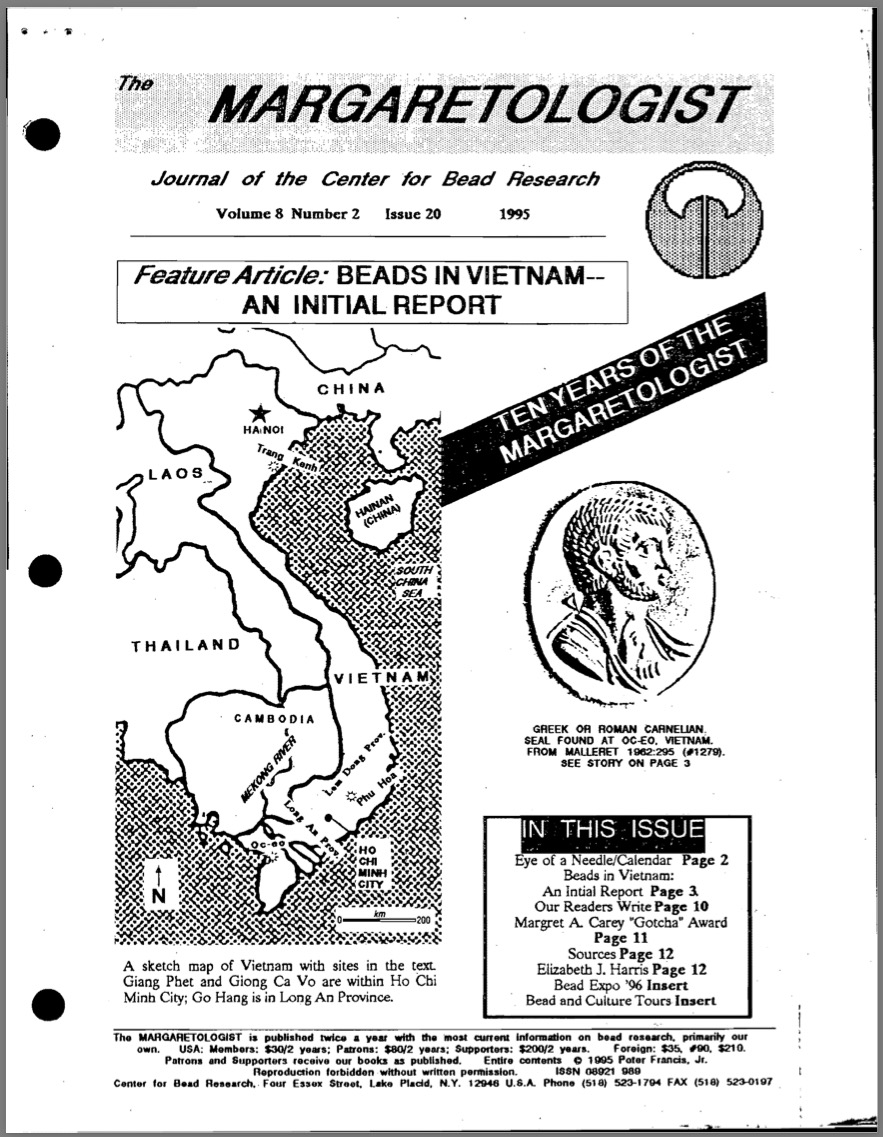
Beads in Vietnam: An initial report

Journal Article
Francis, P. (1995) Beads in Vietnam: An initial report. The Margaretologist, Vol. 8, No. 2, pp. 3–9.
Record No. 27371  |  Sinkankas/Born No.: NIS / NIB  |  RWHL
View Individual Record ↗
Enam for the first time. While things were not quite so easy for the visitor as they are in much of Southeast Asia, they will certainly get easier now that a quarter century of isolation has been broken by American recognition of its government. My visits took me to four institutions where I saw and studied beads: the Institute of Archaeology and the History Museum in Hanoi, the History Museum in Ho Chi Minh City (HCMC; consisting of Saigon, Cholon and the surrounding area), and the Museum of Oc-Eo Culture in Tan An, Long An province, south of HCMC. I am especially grateful to Ian Glover, Institute of Archaeology, City College, London, who put me in touch with some of the people involved; Allison and Victor Diem of Manila, who made other recommendations; Nguyen Thi Kim Dung of the Institute of Archaeology, Hanoi; and the staff of the institutes I visited.

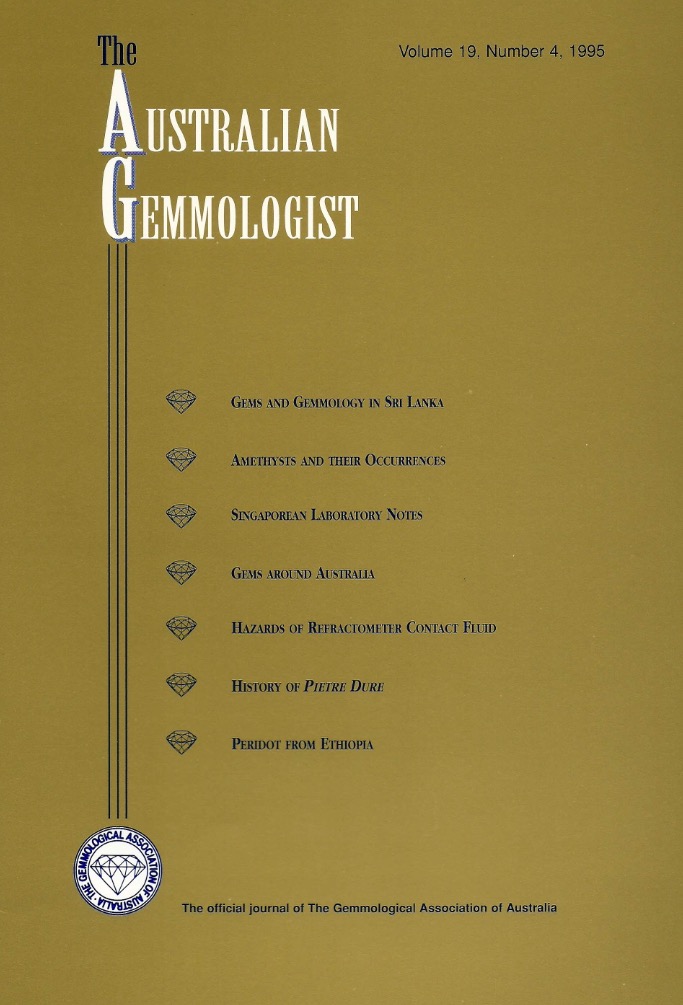
An examination of peridot from Ethiopia

Journal Article
Kammerling, R.C. and Koivula, J.I. (1995) An examination of peridot from Ethiopia. Australian Gemmologist, Vol. 19, No. 4, pp. 190–194.
Record No. 26921  |  Sinkankas/Born No.: NIS / NIB  |  RWHL
View Individual Record ↗
Peridot has been found in basaltic 'bombs' scattered on a desert plain near the villages of Mega and Magado in the southern part of Ethiopia. This article focuses on the gemmological properties of the peridot from this new locality.

Building a Gemological Library

Gemological books range from general identification manuals and textbooks to specialized works on individual gems, mineralogy, jewelry, treatments, synthesis, history and gem-producing regions.

For a curated selection of particularly useful books, read The Gemologist's Core Library — Classic Books on Gemology, Jewelry and Mineralogy.

About Four Treasures

Four Treasures is Lotus Gemology's freely accessible gemological reference database. Use the full database to search by author, title or keyword and explore literature on gemology, mineralogy, jewelry and related fields. Where available, hyperlinks on titles may lead directly to the full publication.

Search the Complete Four Treasures Database