Gemstone Inclusions Bibliography

Gemstone Inclusions Bibliography

Explore books, articles and historical sources on inclusions in gemstones in Four Treasures, the Lotus Gemology reference database. This bibliography brings together matching records from the collection, with publication details, abstracts and cover images where available.

Gemstone Inclusion References

The list below matches the terms inclusion or inclusions in the database's searchable fields. Some references discuss inclusions as part of a broader subject.

981–1,000 of 1,111 matching references
The diagnostic importance of inclusions in gemstones

The diagnostic importance of inclusions in gemstones

Gübelin, E.J. (1948)

Journal Article · Source: Journal of Gemmology · Volume: Vol. 1 · Issue: No. 7, July · Pages: pp. 1–23

Abstract
COULD they do it again? It was with this thought in m y mind that I walked into It was with this thought in my mind that I walked into the Goldsmiths' Hall on May 4th ,the opening day of the the Goldsmiths' Hall on May 4th, the opening day of the second exhibition by the Gemmological Association. I was second exhibition by the Gemmological Association. I was wondering if the Association could repeat t h e success of their first wondering if the Association could repeat the success of their first big exhibition. Had that been partially obtained because it had big exhibition. Had that been partially obtained because it had never been done on that scale before? After alll,, there wass little fresh that could be shown in gems. No startling discovery of a new variety could be expected, no novelty for the next season. In a few moments I realised that the Association had done it again and better. An exhibition of gemstones had been presented which was not only fresh butt lovelier, more interesting than the previous one. A year ago I had been fascinated by the beauty off many of the exhibits. Now I was fascinated by the beauty of thee whole exhibition. Queen Mary was an early visitor and the officers of the Association were presented to her. It was no wonder that she, with her expert knowledge of jewels and antiques, spent almost an hour looking at the exhibits. Or that she wanted to handle and feel the perfection of some of the delicate pieces of carved jade.
Keywords
corundum, ruby, sapphire, inclusions.5, gems
Inclusions as a means of identification

Inclusions as a means of identification

Gübelin, E.J. (1945–46)

Journal Article · Source: Gems & Gemology · Volume: Vol. 5 · Issue: 1945: No. 2, Summer, pp. 226–231 (garnet); No. 3, Fall, pp. 242–247 (garnet); No. 4, Winter, pp. 270–274 (garnet)

Keywords
inclusions, garnet, gems
Gemstone inclusions

Gemstone inclusions

Gübelin, E.J. (1944–46)

Journal Article · Source: Gems & Gemology · Volume: Vol. 4–5 · Pages: Vol. 4, No. 10, Summer, pp. 142–149 (sapphire); No. 11, Fall, pp. 158–163 (ruby); No. 12, Winter, pp. 174–179 (emerald); Vol. 5, No. 1, Spring, pp. 205–210 (diamond); No. 5, Spring, p. 294; No. 6, Summer, pp. 318–323 (various gems)

Keywords
corundum, beryl, emerald, inclusions, synthetic beryl, emerald, gems
Local peculiarities of sapphires

Local peculiarities of sapphires

Gübelin, E.J. (1942–43)

Journal Article · Source: Gems & Gemology · Volume: Vol. 4 · Pages: No. 3, Fall, pp. 34–39; No. 4, Winter, pp. 50–54; No. 5, Spring, pp. 66–69

Keywords
corundum, inclusions.5, Burma.12, Sri Lanka.12, Thailand.12, gems
The synthetic emerald

The synthetic emerald

Gübelin, E.J. (1941)

Journal Article · Source: Gems & Gemology · Volume: Vol. 3 · Issue: No. 10, Summer · Pages: pp. 146–150

Keywords
beryl, emerald, synthetic beryl, emerald, inclusions, gems
Bergkristall, Glas und Glasflüsse nach dem Steinbuch von el-Bērūnī

Bergkristall, Glas und Glasflüsse nach dem Steinbuch von el-Bērūnī

Rock crystal, glass, and glass fluxes according to Al-Biruni's Book of Stones

Kahle-Bonn, P. (1936)

Journal Article · Source: Zeitschrift der Deutschen Morgenländischen Gesellschaft · Volume: Vol. 90 · Pages: pp. 322–356 · Language: in German

Abstract
Kahle presents and translates sections of al-Bīrūnī’s eleventh-century Kitāb al-jamāhir fī maʿrifat al-jawāhir dealing with rock crystal, glass, enamel/glass fluxes (mīnā), and ruby glass (adrak), using two manuscripts and emphasizing the value of al-Bīrūnī’s account for understanding the materials and techniques represented among the Fatimid treasures. Rock crystal is described as a transparent, colorless stone prized for vessels, hardness, clarity, and resemblance to water and air; al-Bīrūnī discusses its sources, working, value, inclusions, and supposed formation, including contemporary observations and historical anecdotes concerning valuable crystal vessels. Glass is described as produced by melting quartz or sand with alkali, prolonged firing increasing its clarity and hardness; properly made colorless glass could approach rock crystal in transparency, though its greater abundance and softness reduced its value. Particularly important is al-Bīrūnī’s treatment of mīnā, explicitly described as a type of glass, softer and heavier according to its lead content. He records recipes employing finely powdered quartz or rock crystal with red lead or tin oxide, together with natron or borax-type fluxes, and gives coloring materials: lead compounds for yellow, copper compounds for green, burned brass for red, iron residues for black, manganese for wine-purple, lead white for white, burned gold for ruby color, and lapis lazuli and carnelian for violet. Kahle notes that these descriptions strongly support the interpretation of mīnā in Fatimid inventories primarily as enamel or vitreous flux. The final section discusses adrak, an ancient Alexandrian red or garnet-colored glass reportedly comparable in appearance and value to ruby and whose manufacture was said already to have been lost by the ninth century; al-Bīrūnī preserves several recipes or traditions for attempting its production, along with observations on other artificial colored materials, mosaics, and objects recovered from ancient Egyptian and Yemeni burials.
Keywords
gems, Arabic mineralogy, al-Biruni, rock crystal, glass
New facts about Siam rubies

New facts about Siam rubies

Halford-Watkins, J.F. (1934)

Journal Article · Source: The Gemmologist · Volume: Vol. 4 · Issue: No. 41, December · Pages: pp. 147–149

Keywords
corundum, ruby, Thailand.12, Cambodia.12, Siam, inclusions.5, gems
Le rubis

Le rubis

The ruby

Escard, J.-G. (1913)

Journal Article · Source: Cosmos · Volume: Vol. 62 · Issue: No. 1481 · Pages: pp. 655–660 · Language: in French

Abstract
Escard provides a concise survey of the ruby, describing its varieties, physical properties, geographical sources, mining, cutting, valuation, and methods of distinguishing natural stones from imitations and artificial products. [655] He identifies ruby as red corundum and discusses differences in color among rubies from Burma, Siam, and Ceylon, noting that terminology such as “Oriental ruby” and “Siam ruby” was often applied inconsistently in commerce. [656] Particular attention is given to microscopic examination: natural rubies may contain crystalline inclusions and other internal features, while differences in color and dichroism can help separate stones from different sources; illustrations show characteristic inclusions and a Ceylonese lapidary at work. [657] Escard discusses the distinctive internal structure of Burmese and Siamese rubies, differences observed with the dichroscope, and variations in specific gravity, accompanied by photomicrographs and a map of the ruby-bearing district of Burma. [658] Fluorescence and phosphorescence are described as useful diagnostic properties, Burmese rubies showing particularly strong fluorescence; the principal ruby deposits are said to occur in Burma and Ceylon, where ruby-bearing gravels are washed and sorted, with an account of mining and recovery methods in the Mogok district and illustrations of the Burmese mines. [659] The article gives production and value figures for Burmese ruby mining, mentions occurrences in Ceylon, Siam, Afghanistan, and elsewhere, discusses the considerable variation in value according to color, quality, and size, and briefly describes cutting practices, including the preference for the oval form. [660] Escard concludes with remarks on celebrated rubies, including stones associated with European collections, and emphasizes the commercial importance of distinguishing natural rubies from artificial stones, illustrating a certificate of authenticity for a natural Burmese ruby.
Keywords
corundum, inclusions.5, Burma.12, Sri Lanka.12, Thailand.12, gems
The production and identification of artificial precious stones

The production and identification of artificial precious stones

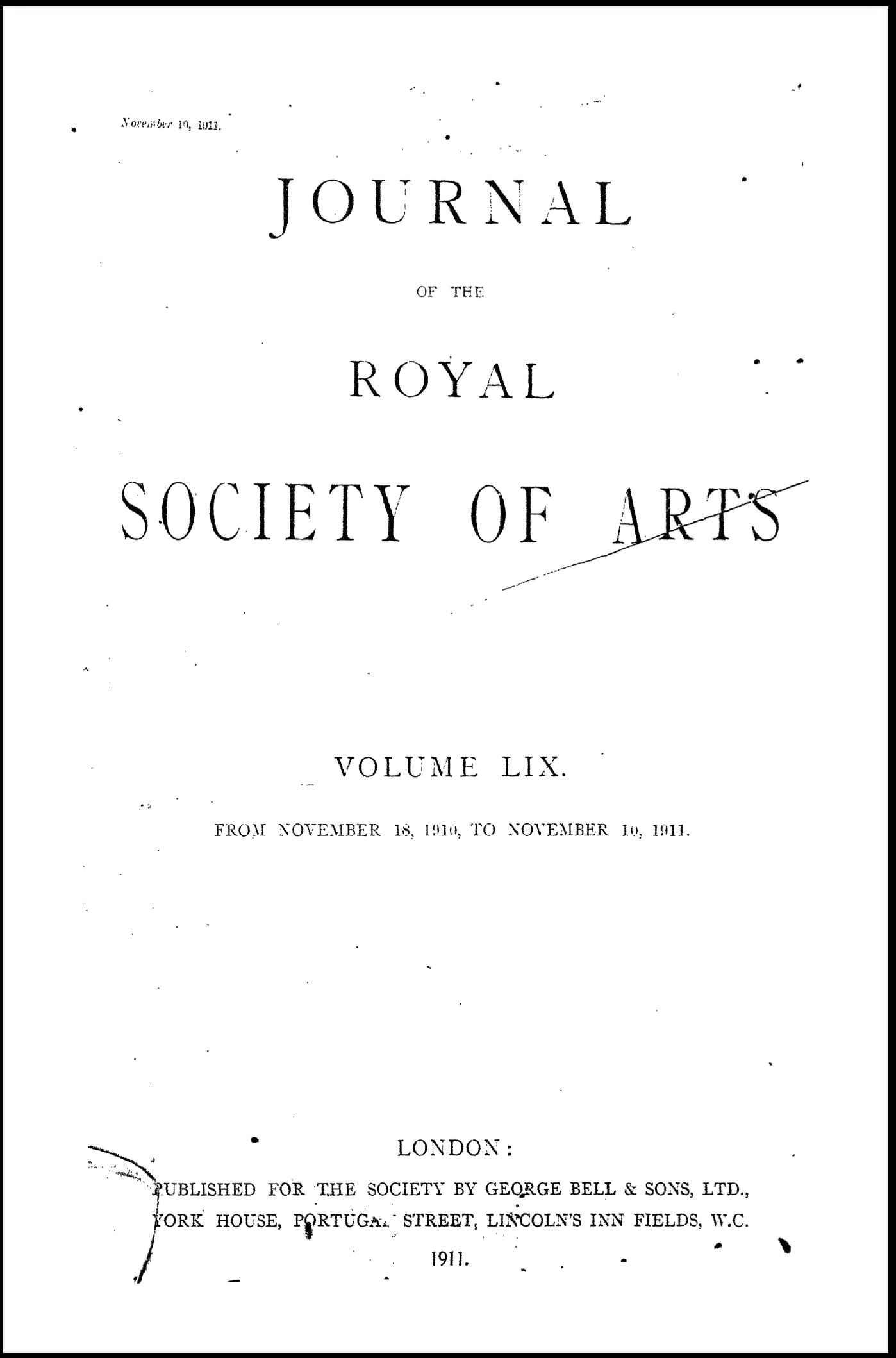
Heaton, N. (1911)

Journal Article · Source: Journal of the Royal Society of Arts · Volume: Vol. 59 · Issue: No. 3049, April 28 · Pages: pp. 574–597

Abstract
Heaton reviews the contemporary production of artificial precious stones and the methods available for distinguishing them from their natural counterparts. Particular attention is given to synthetic ruby and sapphire, including the processes developed by Frémy and Verneuil, the materials and apparatus employed, and the physical and optical properties of the resulting products. The paper discusses the identification of artificial stones by microscopic examination, inclusions, internal structure, and other diagnostic characteristics, and considers imitation and reconstructed stones alongside true synthetic products. Published at a time when flame-fusion corundum was becoming commercially important, it provides a useful contemporary account of the problems that synthetic gemstones posed for jewelers and gemologists.
Keywords
corundum, synthetic corundum.7, gems
Sur la nature des oxydes qui colorent le saphir oriental

Sur la nature des oxydes qui colorent le saphir oriental

On the nature of the oxides that color the oriental sapphire

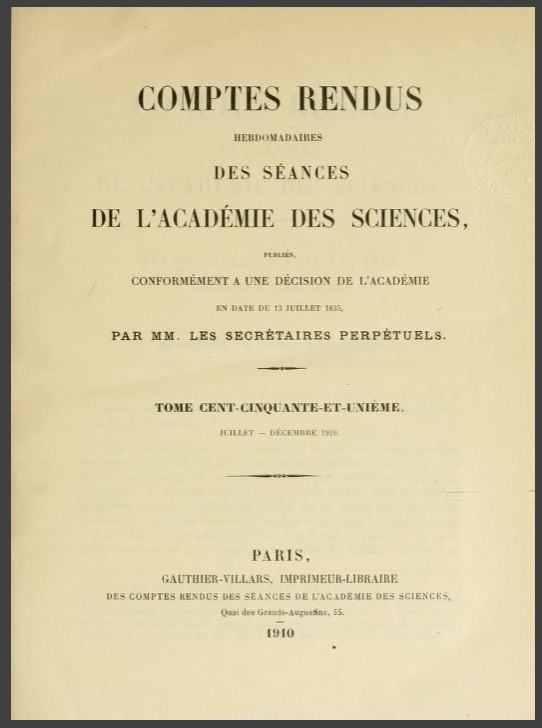
Verneuil, A. (1910)

Journal Article · Source: Comptes rendus hebdomadaires des séances de l'Académie des sciences · Volume: Vol. 151 · Issue: No. 23, 5 December · Pages: pp. 1063–1066 · Language: in French

Abstract
Verneuil investigates the causes of the blue coloration of sapphire, prompted by his successful reproduction of “oriental sapphire” by fusing alumina with titanic acid and iron oxide. Earlier analyses had generally attributed sapphire’s color to iron oxide and had not detected titanium in clear, inclusion-free material. Verneuil therefore analyzed carefully selected natural blue sapphires from Australia, Burma, and Montana, finding iron oxide together with small but consistent quantities of titanium: Australian sapphire contained 0.92% iron oxide and 0.031% titanic acid; Burmese sapphire 0.72% and 0.04%; and Montana sapphire 0.56% and 0.058%, respectively. Chromium oxide was absent, while silica occurred only in traces and phosphoric acid was absent from the Australian and Montana stones. From the close similarity of these results in sapphires from widely separated localities, and from the fact that his synthetic sapphire reproduced the natural blue using the same elements, Verneuil concludes that the color results from the combined presence of iron oxide and a titanium oxide. He leaves unresolved whether the principal coloring agent is blue titanium oxide, present in extremely small quantity, or a compound of titanium and ferrous iron, noting that further synthetic experiments might resolve the question.
Keywords
corundum, synthetic corundum.7, gems
Le Rubis • Communication faite aux Chambres Syndicales des Marchands de Diamants et Lapidaires, Joailliers et Bijoutiers, réunies le 21 juin 1904

Le Rubis • Communication faite aux Chambres Syndicales des Marchands de Diamants et Lapidaires, Joailliers et Bijoutiers, réunies le 21 juin 1904

The Ruby • Communication made to the Syndical Chambers of Diamond Merchants and Gem Cutters, Jewelers, and Goldsmiths, gathered on June 21, 1904

Chaumet, J. (1904)

Book · Publisher: Imprimerie Petit · Pages: 15 pp. · Language: in French

Abstract
Small booklet describing how to separate natural rubies from the newly developed synthetic rubies.
Keywords
gems, corundum, inclusions.5, synthetic.7
Der ägyptische Smaragd nebst einer vergleichenden mineralogischen Untersuchung der Smaragde von Alexandrien, vom Gebel Sabara und vom Ural

Der ägyptische Smaragd nebst einer vergleichenden mineralogischen Untersuchung der Smaragde von Alexandrien, vom Gebel Sabara und vom Ural

The Egyptian emerald together with a comparative mineralogical study of the emeralds of Alexandria, the Gebel Sabara and the Urals

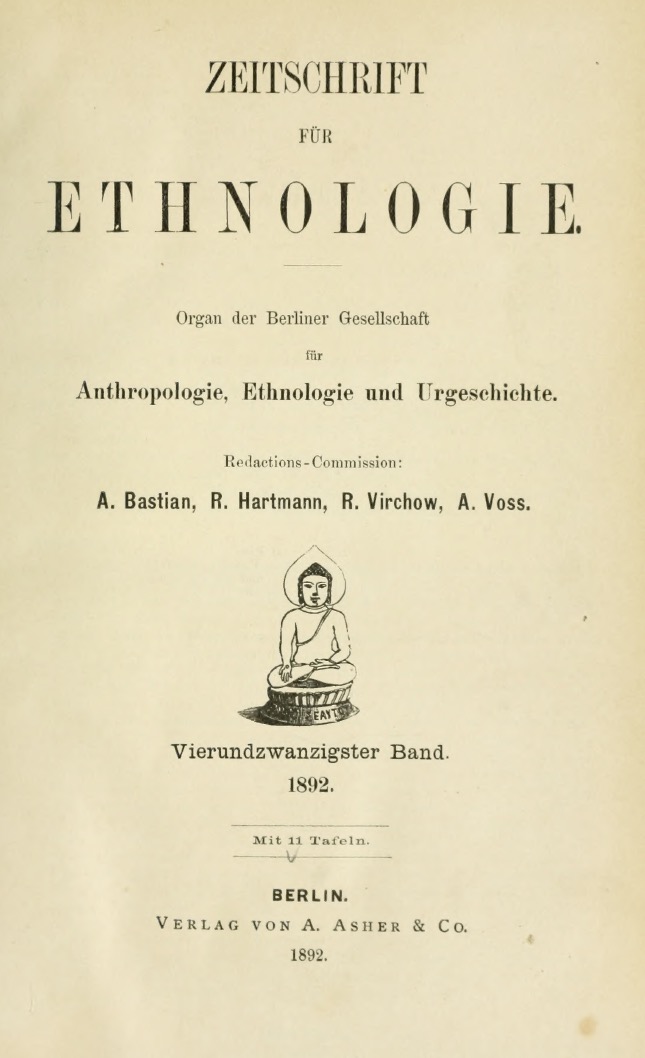
Schneider, O. and Arzruni, A. (1892)

Journal Article · Source: Zeitschrift für Ethnologie · Volume: Vol. 24 · Pages: pp. 41–100 · Language: in German

Abstract
Sinkankas: The discovery of the Alexandrian hoard of gemstones and other materials, including glasses, enamels, partly-worked, and finished gemstones during 1867–9, inspired the present study of Egyptian emeralds in a monograph of great historical and archaeological value, not to mention the numerous gleanings of pertinent information from ancient writers who mentioned Egyptian emerald. As a result of the discovery of the hoard, a controversy arose concerning the origin of the emeralds—were they from Egypt or were they from the Urals? Andreas Arzruni, the eminent European mineralogist, was called in to examine the specimens and compare them to emeralds from Gebel Sabara in Egypt and from the Urals. From his examinations, especially of inclusions, he concluded that the Alexandrian stones were from Gebel Sabara. In the course of his study, Schneider examined works by K.R. Lepsius (1810–1884), a German Egyptologist, Leo Africanus, Diodorus Siculus, Ptolemy Philadelphus, Solinus Polyhistor, Aelian, Lucian, Strabo, Olympiodorus, and other ancient writers, and took much from a treatise on gemstones by Masudi (Abu-al-Hasan Ali al-Masudi, d. 956 AD) and Achmed Teifaschi (13th c. Cairo gem dealer), not to mention much later accounts of travelers, explorers, and visitors to the Gebel Sabara emerald mines. Among the latter may be mentioned Frederic Cailliaud (1787–1869), whose account is referenced elsewhere in the present bibliography, and who rediscovered the emerald mines in 1816. [919] The present account by Schneider is of great importance but is rarely mentioned in the ordinary gemological bibliographies; it deserves translation into English and other languages. USGS Kunz Coll, GS 34-1005.
Keywords
gems, beryl, emerald, Egypt, Russia
Precious stones

Precious stones

Kunz, G.F. (1888)

Book Section · Source: Mineral Resources of the United States | Calendar Year 1887 · Publisher: Govt. Printing Office · Pages: pp. 555–579

Abstract
Kunz reviews the precious-stone industry and trade in 1887, beginning with American gem mining and estimated U.S. production, then describing recent discoveries and developments involving diamond, zircon, beryl, phenacite, garnet, tourmaline, hiddenite, rock crystal, chrysoprase, agate, pectolite, feldspars, rhodonite, turquoise, cyanite, labradorite, and ornamental stones. Kunz-1888-Precious stones.pdf A substantial section treats foreign sources, particularly the rapidly expanding South African diamond mines, their mining and sorting methods, production, values, consolidation, and effects on the international diamond trade; Kunz also discusses Brazilian, Indian, and Australian diamond production and the growth of diamond imports, cutting, and consumption in the United States. Of particular gemological interest are detailed accounts of the Kashmir sapphire deposit, discovered in 1882 in the Zanskar Range, and the Mogok ruby mines of Burma, including British attempts to lease the mines, contemporary mining practices, royalties, and trade. Kunz also surveys changing fashions in gems, including cat’s-eye, alexandrite, moonstone, opal, and amber, and notes the rapidly growing American interest in carved jade and other hardstone objects. He discusses Alaskan jade, Central American jadeite artifacts, Burmese jadeite, and Māori jade objects, while recording contemporary theories concerning the provenance of American jadeite. The report concludes with accounts of important gem collections and their dispersal or acquisition, including the Hope collection, the French Crown jewels, C.W. King’s engraved gems, the Sommerville collection, W. Hayes Ward’s ancient cylinders, and Isaac Lea’s collection of gems studied for microscopic inclusions.
Keywords
corundum, USA.12, North Carolina.12, Montana.12, gems
Nephritoid-Beile des Britischen Museums

Nephritoid-Beile des Britischen Museums

Nephrite-like axes of the British Museum

Schoetensack, O. (1887)

Journal Article · Source: Zeitschrift für Ethnologie · Publisher: Dietrich Reimer Verlag GmbH · Volume: Vol. 19 · Pages: pp. 119–148 · Language: in German

Abstract
After we had subjected the nephritoids of the Freiburg University Museum to a detailed examination and discussion in this journal (1885, Vol. XVII), it appeared appropriate to extend this study to other major museums as well. For, as has often been emphasized by others, only through the inclusion of all accessible material shall we finally be placed in a position to draw secure conclusions regarding this question, which since the appearance of the fundamental work of Heinrich Fischer has so vividly interested prehistorians. We directed our attention first to the British Museum because it was known to us that its prehistoric-ethnological treasures had now been made accessible in their entirety, whereas previously, owing to lack of space, a large part of them could not be inspected. Since the Department of British Antiquities has now acquired the halls formerly occupied by the natural history collections, it has been able to display appropriately its enormous wealth, particularly of ethnologically valuable objects. Especially the collection of stone axes, a large part of which had never yet passed through the hands of a mineralogist, is extraordinarily extensive. Valuable contributions concerning a great number of these objects have indeed already been made from various quarters, yet it would require a lifetime to investigate in every respect the mass of material accumulated here.
Keywords
gems, jade, nephrite, nephrite axes, British museums,

Exploring the Literature of Gemstone Inclusions

The literature of gemstone inclusions covers identification, origin determination, treatments, synthesis, mineral inclusions, fluid inclusions and other internal features of natural and synthetic gems.

For a curated selection of important sources, read Inclusions in Gemstones — Hyperion Literature Sources.

About Four Treasures

Four Treasures is Lotus Gemology's freely accessible gemological reference database. Use the full database to search by author, title or keyword and explore literature on gemology, mineralogy, jewelry and related fields. Where available, hyperlinks on titles may lead directly to the full publication.

Search the Complete Four Treasures Database