Ruby & Sapphire Bibliography

Ruby & Sapphire Bibliography

Explore books, articles and historical sources on ruby, sapphire and corundum in Four Treasures, the Lotus Gemology reference database. This bibliography brings together matching records from the collection, with publication details, abstracts and cover images where available.

Ruby & Sapphire References

The list below matches the terms ruby, rubies, sapphire or corundum in the database's searchable fields. Some references discuss these gems as part of a broader subject. Linked titles take you to external links where you may find the full reference.

201–220 of 4,669 matching references
Infrared spectroscopy and its use in gemology

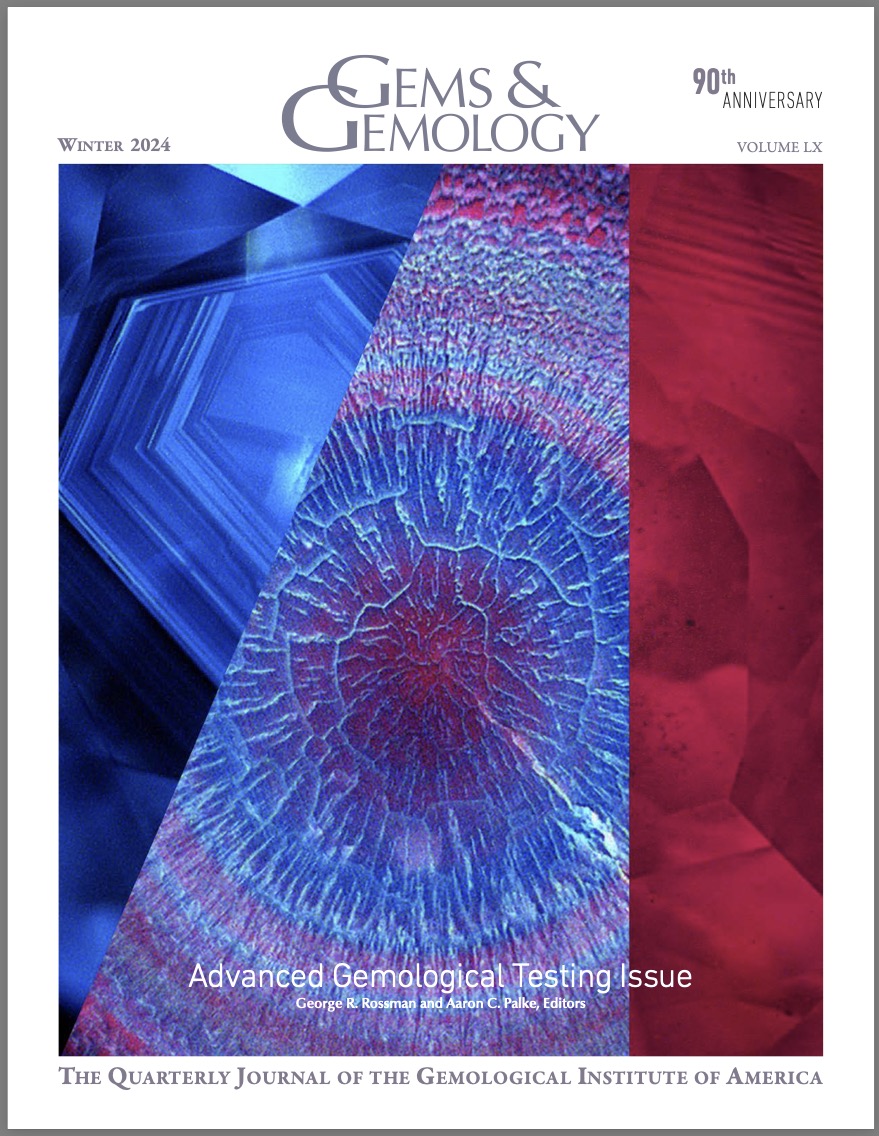
Infrared spectroscopy and its use in gemology

Breeding, C.M. and Ahline, N.J. (2024)

Journal Article · Source: Gems & Gemology · Volume: Vol. 60 · Issue: No. 4, Winter · Pages: pp. 474–492

Abstract
Since its discovery at the beginning of the nineteenth century, infrared light has proven to be a versatile tool for scientists, industrialists, and consumers. The gem industry has benefited from the power of infrared spectroscopy in gemstone identification for more than 30 years. By measuring the frequencies of vibrations of bonds between atoms in the structure of a gemstone, scientists can determine the composition and atomic arrangement of many important defects that indicate whether a gem is natural, laboratory-grown, or treated. Clever adaptations of instrument hardware and sampling techniques have allowed for efficient and accurate analysis of diamonds and many of the most important colored gems such as ruby, sapphire, emerald, and jadeite. No gemologist’s toolbox is complete without an understanding of the power of infrared spectroscopy for gem identification.
Keywords
gems, gemology, basic gemology, advanced gemology, gem testing, spectroscopy, infrared, FTIR
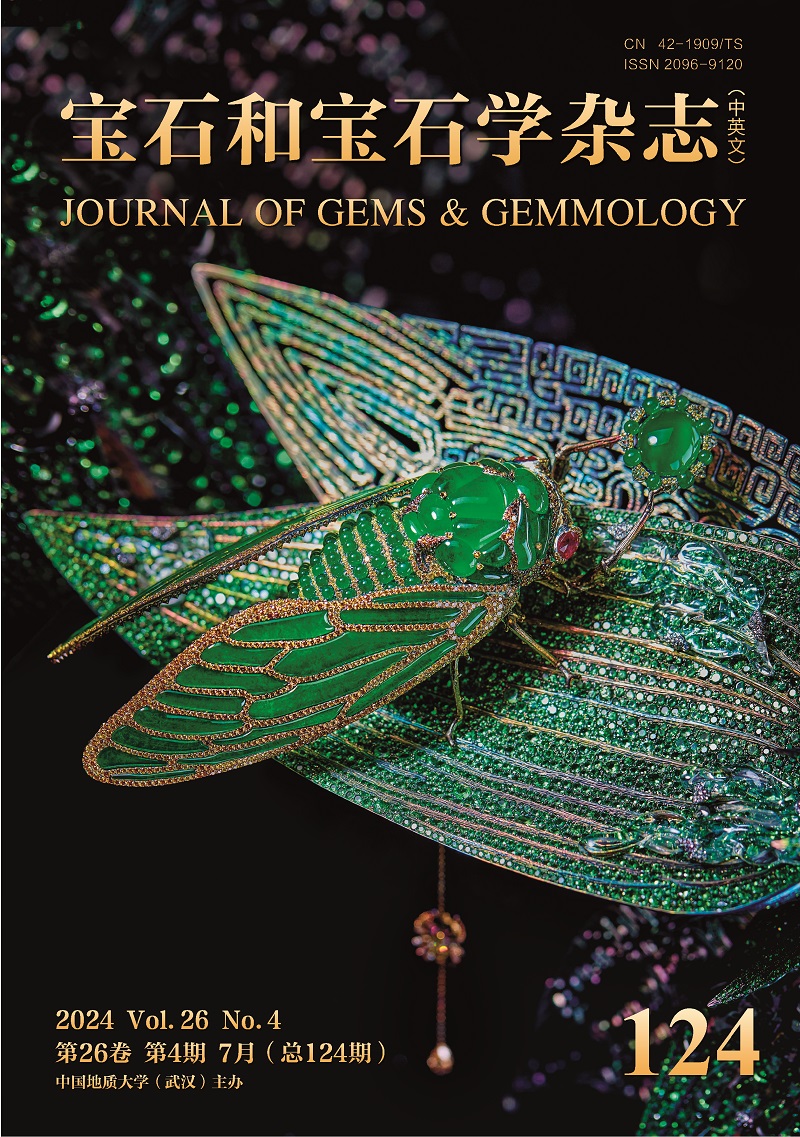
The spectral characterization of blue spinel and other blue gemstones with the alexandrite effect

The spectral characterization of blue spinel and other blue gemstones with the alexandrite effect

Zhou, J., Wang, C., Zhao, X., Yang, Y. and Shen, A. (2024)

Journal Article · Source: Journal of Gems & Gemmology · Volume: Vol. 26 · Issue: No. 4 · Pages: pp. 69–76

Abstract
In gemmology, the term Alexandrite effect" is used to describe colour change phenomenon when a gemstone is observed under different light sources, usually between daylight and incandescent light. The definition of the Alexandrite effect is constantly being broadened with new discovery of gem resource. The traditional definition of the Alexandrite effect attributing the colour change phenomenon to the presence of two maximum transmission regions and a maximum absorption region in the absorption spectra. In this study, 7 blue spinels and 5 blue gemstones (including tanzanite, kyanite, fluorite, and 2 sapphires) showing the Alexandrite effect were investigated. The goal is to explain the cause of blue-to-violet alexandrite effect and the spectral features causing such colour change. In the UV-Vis spectra, all samples showed a maximum absorption peak in the range of 534-610 nm, within the green region to orange region. The traditional explanation of green to red Alexandrite effect required a transmission window in the red region; however, some of our samples did not show this transmission window and the blue-to-violet alexandrite effect was still visible. Therefore, it is incomplete to explain the mechanism of the Alexandrite effect according to their characteristic absorption spectra, a systematic study based on modern colour science and colour perception in human vision is required to elucidate the blue-to-violet alexandrite effect."
Keywords
gems, spinel, color in spinel, cobalt spinel, color change, alexandrite effect, color science
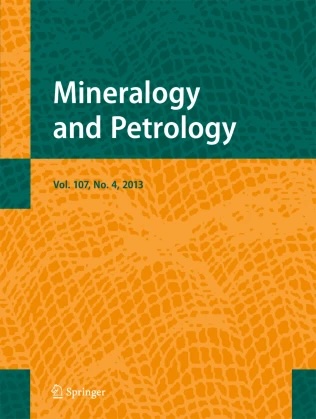
Basal twinning of Greenland corundum

Basal twinning of Greenland corundum

Pignatelli, I., Nespolo, M., Pardieu, V., Giuliani, G. and Morlot, C. (2024)

Journal Article · Source: Mineralogy and Petrology

Abstract
Natural corundum shows two types of twins: “basal twin,” by reflection on the (0003) pinacoid, which is very rare, and “rhombohedral twin,” by reflection on the (10̅11) plane, which is more frequent. The analysis of the structural continuity across the composition plane does not reveal any inherent reason for such a large difference in occurrence frequency, which is likely related to the limited development of the (0003) plane in the characteristic morphology of corundum. “Basal twins” occur with unusually high frequency in samples from Greenland, which also present an atypical platy morphology, where the (0003) face is well developed. This observation appears to confirm a morphological control on the occurrence of the “basal twin.” All analysed twinned samples show macrosteps on their pinacoidal faces, a feature associated with the high-temperature conditions and intense fluid–rock interactions of the Greenland deposit. This clearly suggests a strong relationship between “basal twin” occurrence, the development of basal faces, and the formation conditions. However, due to the complex geological context and differing features of the samples (e.g. two individuals with almost the same size versus several lamellae stacked along the c-axis), it is not possible to determine with certainty whether the “basal twins” observed in Greenland samples are growth twins or mechanical twins.
Keywords
gems, corundum, chemistry.2, properties.3, Greenland.12
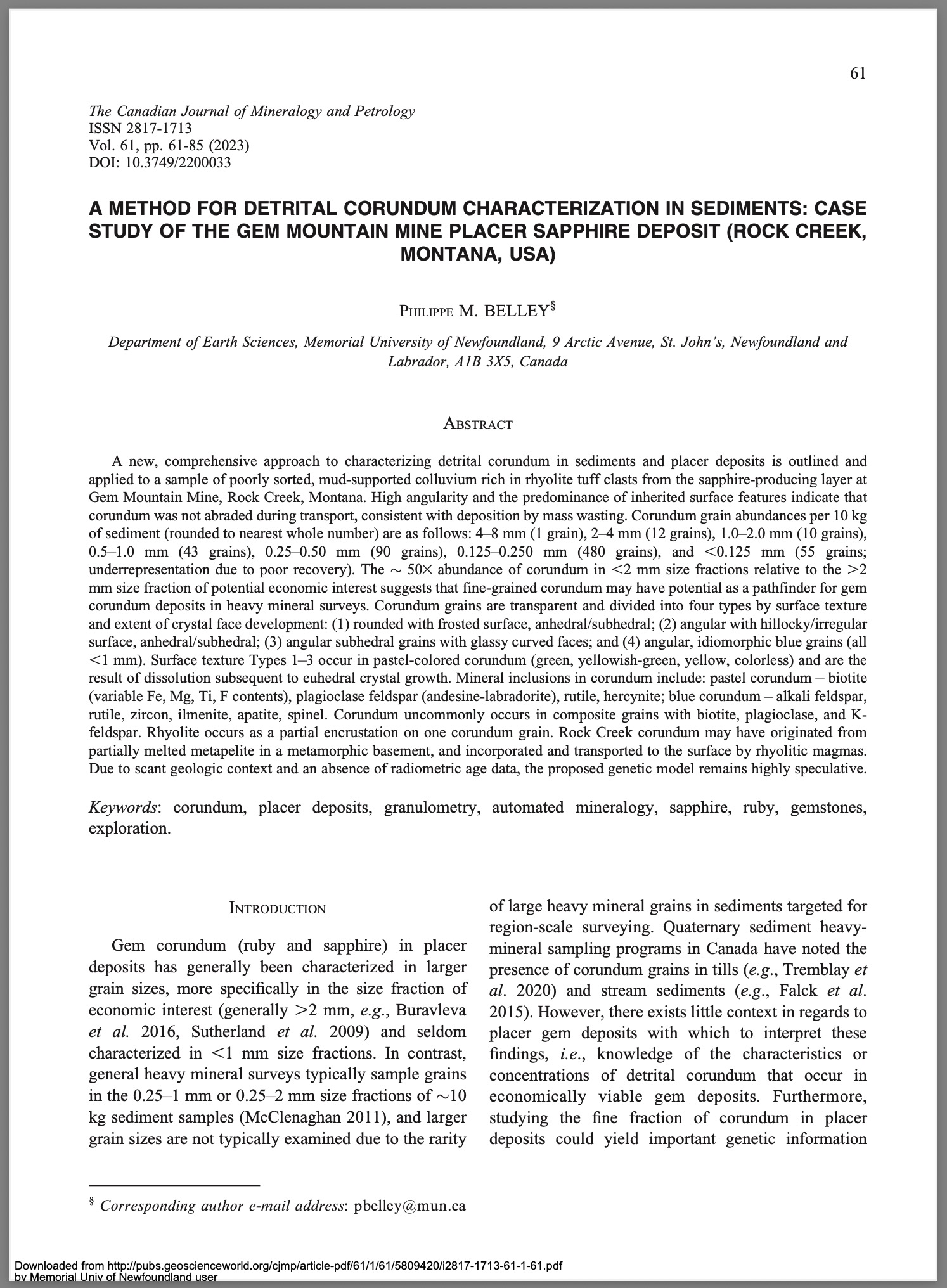
A method for detrital corundum characterization in sediments: Case study of the Gem Mountain mine placer sapphire deposit (Rock Creek, Montana, USA)

A method for detrital corundum characterization in sediments: Case study of the Gem Mountain mine placer sapphire deposit (Rock Creek, Montana, USA)

Belley, P.M. (2023)

Journal Article · Source: The Canadian Journal of Mineralogy and Petrology · Volume: Vol. 61 · Issue: No. 1 · Pages: pp. 61–85

Abstract
A new, comprehensive approach to characterizing detrital corundum in sediments and placer deposits is outlined and applied to a sample of poorly sorted, mud-supported colluvium rich in rhyolite tuff clasts from the sapphire-producing layer at Gem Mountain Mine, Rock Creek, Montana. High angularity and the predominance of inherited surface features indicate that corundum was not abraded during transport, consistent with deposition by mass wasting. Corundum grain abundances per 10 kg of sediment (rounded to nearest whole number) are as follows: 4–8 mm (1 grain), 2–4 mm (12 grains), 1.0–2.0 mm (10 grains), 0.5–1.0 mm (43 grains), 0.25–0.50 mm (90 grains), 0.125–0.250 mm (480 grains), and
Keywords
gems, corundum, USA.12, Montana.12, chemistry, geology.11, inclusions.5
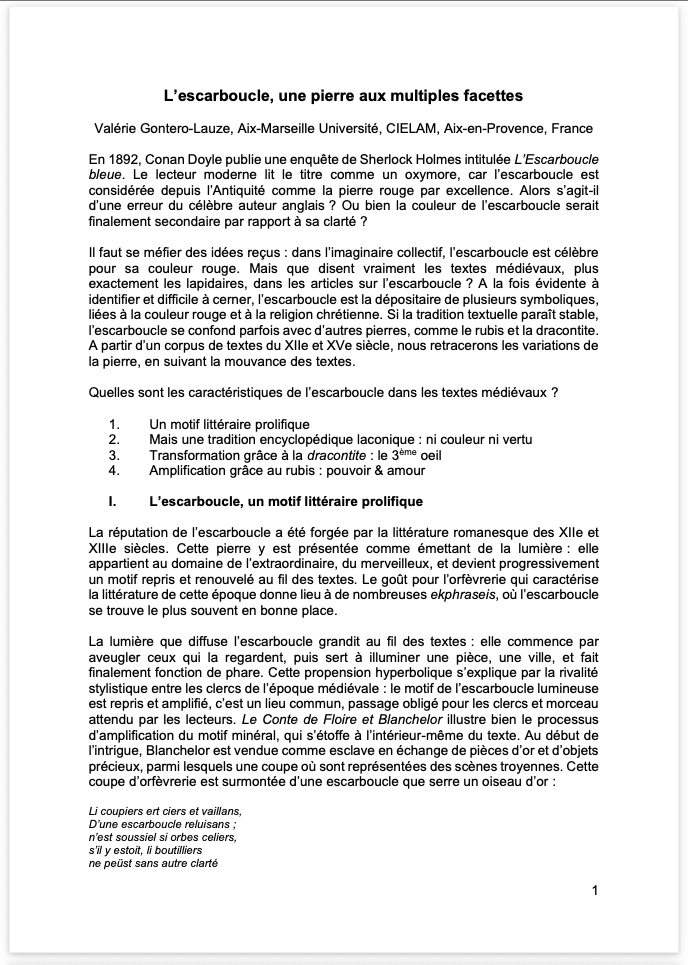
L’escarboucle, une pierre aux multiples facettes

L’escarboucle, une pierre aux multiples facettes

The carbuncle, a multifaceted stone

Gontero-Lauze, V. (2023)

Book Section · Source: L’Ornement Précieux [1] · Publisher: L’École des Arts Joailliers | De Luca Editori d'Arte · Pages: 11 pp. · Language: in French

Abstract
In 1892, Conan Doyle published a Sherlock Holmes mystery titled The Blue Carbuncle. To the modern reader, the title reads like an oxymoron, since the carbuncle has been regarded since Antiquity as the red gemstone par excellence. So is this a mistake by the famous English author? Or is the color of the carbuncle ultimately secondary to its brilliance? One must be wary of received ideas: in the collective imagination, the carbuncle is renowned for its red hue. But what do the medieval texts—more precisely, the lapidaries—actually say in their entries on the carbuncle? At once easy to identify and hard to define, the carbuncle carries multiple symbolic meanings, linked to the color red and to Christian religion. While the textual tradition appears stable, the carbuncle is sometimes confused with other stones, such as the ruby and the dracontite. Drawing on a corpus of texts from the 12th to the 15th century, we will trace the variations of the stone, following the shifting contours of the texts.
Keywords
gems, corundum, History.1, carbuncle, legends, lore, garnet, spinel, Rome, carbuncle in Roman literature, definition of carbuncle
Shortwave UV blue luminescence of some minerals and gems due to titanate groups

Shortwave UV blue luminescence of some minerals and gems due to titanate groups

Vigier, M., Fritsch, E., Cavignac, T., Latouche, C. and Jobic, S. (2023)

Electronic Article · Source: Minerals · Volume: Vol. 13 · Issue: No. 1

Abstract
This article reviews blue shortwave-excited luminescence (BSL) in natural and synthetic materials, focusing on seven minerals and gems—such as beryl (morganite), dumortierite, hydrozincite, pezzotaite, and elbaite—as well as three reference materials where BSL is linked to titanate groups (TiO₆): benitoite, Ti-doped synthetic sapphire, and spinel. Under 254 nm excitation, these materials exhibit broad blue emission centered at 420–480 nm, with excitation spectra peaking at 230–290 nm and luminescence decay times around 20 μs. The study proposes that this BSL is due to TiO₆ groups present at concentrations ≥20 ppmw, with no other known luminescence activators matching this behavior.
Keywords
gems, luminescence, titanate, beryl, pezzotaite, tourmaline, synthetic opal, lead glass, hydrozincite, dumortierite
Geological, archaeological and natural heritage of Union Territory of Jammu & Kasmir: Its prospects and challenges

Geological, archaeological and natural heritage of Union Territory of Jammu & Kasmir: Its prospects and challenges

Kumar, R. (2023)

Journal Article · Source: International Journal of Science and Research · Volume: Vol. 12 · Issue: No. 4, April · Pages: 13 pp.

Abstract
Jammu and Kashmir Union Territory is rich in geological, archaeological, and natural heritage, a treasure inherited from our ancestors through their creations, assemblages, and productions. It is the right time to explore, identify, and conserve this heritage for future generations. Various geo-heritage sites include the Siwaliks, which contain fossils of ancient animals; the extremely rare Bentonite deposits of Purmandal in District Samba; gold flakes or placer deposits of Nathal Khad and the adjoining area of Chowki Choura in Tehsil Akhnoor; the magnesite deposits of Panthal in District Reasi; the coal mines of Kalakot and nearby areas in Districts Rajouri, Reasi, and Udhampur; the bone bed of Siyal Sui in District Rajouri, which holds another set of fossils; and the world-famous sapphire mines in Paddar, District Kishtwar, among many others. Archaeological heritage sites consist of well-constructed and intricately designed age-old monuments, including forts, palaces, buildings, temples, tombs, ponds, dug wells, and various other structures created by our ancestors. The natural heritage of Jammu and Kashmir includes lakes, caves, springs, waterfalls, and areas of scenic beauty, all of which hold immense significance for both living organisms and human beings. To ensure global accessibility for tourists and pilgrims, the Tourism Department of J&K, along with other associated agencies and the Government of India, must put these remarkable sites on the tourist map. Timely conservation through exploration and development will not only preserve these invaluable treasures but also generate employment opportunities for the unemployed youth and contribute significantly to the revenue of the Government of Jammu and Kashmir. The bibliography lists a number of unpublished reports on the Kashmir sapphire mines.
Keywords
gems, corundum, India.12, Kashmir, sapphire, Indian lapidary
Dehydration of diaspore and goethite during low-temperature heating as criterion to separate unheated from heated rubies and sapphires

Dehydration of diaspore and goethite during low-temperature heating as criterion to separate unheated from heated rubies and sapphires

Krzemnicki, M.S., Lefèvre, P., Zhou, W., Braun, J. and Spiekermann, G. (2023)

Electronic Article · Source: Minerals · Volume: Vol. 13 · Issue: No. 12 · Pages: 17 pp.

Abstract
Gem-quality rubies and sapphires are often commercially heat treated at about 800°C or higher to enhance their color and clarity, and hence quality. For this study, selected corundum samples containing diaspore and goethite inclusions were heated step-by-step to a maximum of 1000°C with the aim of monitoring the dehydration and phase transformation of these oxyhydroxides to corundum and hematite during heating. Based on our experiments and in agreement with the literature, the dehydration of diaspore in corundum occurs between 525 and 550°C, whereas goethite transforms to hematite between 300 and 325°C. As both diaspore and goethite may be present as inclusions in rubies, sapphires, and other corundum varieties (e.g., pink sapphires, padparadscha), these dehydration reactions and phase transformations can be considered important criteria to separate unheated from heated stones, specifically in cases in which other methods (e.g., microscopy, FTIR) are unsuccessful.
Keywords
gems, corundum, treatments.6, ruby, sapphire, low-temperature heating, diaspore, goethite, Raman
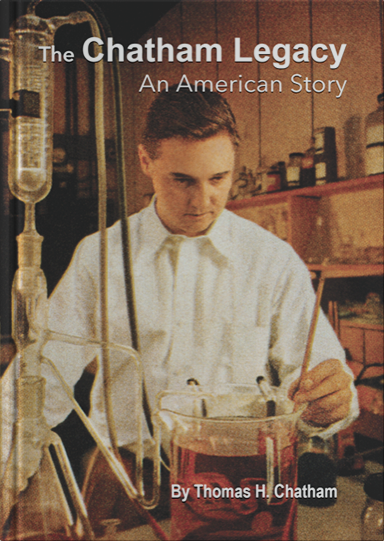
The Chatham Legacy | An American Story

The Chatham Legacy | An American Story

Chatham, T.H. (2023)

Book · Publisher: Thomas H. Chatham · Pages: 233 pp.

Abstract
The Chatham Legacy’ book chronicles the work that was needed to first grow emerald in the Lab. No one had successfully done so on a commercial basis before Carroll Chatham. The jewelry trade was not overly receptive to this concept and Carroll Chatham had to legally fight for his right to market his gems as emerald. The book represents one of the rare firsthand accounts of the manufacturing and marketing of laboratory grown gemstones.
Keywords
gems, corundum, Synthetic corundum.7, flux ruby, flux sapphire, flux beryl, emerald, synthetic diamond
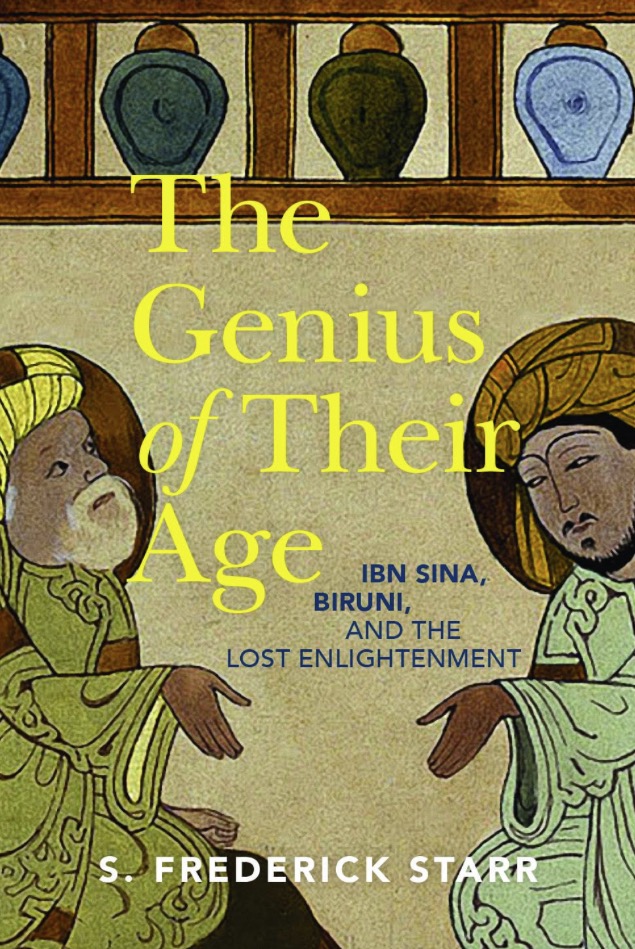
The Genius of Their Age | Ibn Sina, Biruni, and the Lost Enlightenment

The Genius of Their Age | Ibn Sina, Biruni, and the Lost Enlightenment

Starr, S.F. (2023)

Book · Publisher: Oxford University Press · Pages: 301 pp.

Abstract
In The Genius of their Age, S. Frederick Starr follows up his acclaimed Lost Enlightenment: Central Asia's Golden Age with a portrait of the Arab enlightenment and its key figures--Abu-Ali al-Husayn ibn-'Abdallah Ibn-Sina and Abu al-Rayhan Muhammad ibn Ahmad al-Biruni. A thousand years ago, these two intellectual giants--known as Ibn Sina and Biruni for short--achieved stunning breakthroughs in fields as diverse as medicine, astronomy, mathematics, philosophy, geography, and physics. Biruni measured the earth more precisely than anyone else down to the sixteenth century, pondered a heliocentric universe, and hypothesized the existence of North and South America as inhabited continents. Ibn Sina's writing on philosophy and metaphysics enriched the writings of countless European thinkers, including St. Thomas Aquinas, while Sina's grand synthesis of medical knowledge became the standard for the next six hundred years in Europe, the Middle East, and India. They both also commented extensively on the works of ancient Greeks and earlier Muslim thinkers, whose works they aspired to synthesize--and to transcend. Contemporaries, Ibn Sina and Biruni were born within the borders of what is now Uzbekistan and spent their lives in Central Asia. They also became rivals, launching a correspondence and commentary that galvanized them despite sometimes bitter disagreement. Centuries before the West caught up with them, Ibn Sina and Biruni reflected their age's feats and its intellectual high point, persisting with their inquiries and their independence amid turmoil and rapid change. Though scholars have long dissected the works of Ibn Sina and Biruni, S. Frederick Starr focuses also on their lives and the times in which they lived. By contextualizing their work and by making the age palpable to the reader, S. Frederick Starr gives the achievements of Ibn Sina and Biruni a holistic and unforgettably human dimension.
Keywords
gems, corundum, History.1, Arab gemology, Arabic mineralogy, pearl, spinel, Indian lapidary
Yellow sapphire: Natural, heat-treated, beryllium-diffused, and synthetic

Yellow sapphire: Natural, heat-treated, beryllium-diffused, and synthetic

Emmett, J.L., Atikarnsakul, U., Stone-Sundberg, J. and Sangsawong, S. (2023)

Journal Article · Source: Gems & Gemology · Volume: Vol. 59 · Issue: No. 3, Fall · Pages: pp. 268–297

Abstract
Natural yellow sapphires derive their coloration from either Fe³⁺ or h•–Fe³⁺ chromophores, or a combination of both, with Sri Lankan sapphires typically colored by h•–Fe³⁺ alone, while high-iron sapphires from basaltic terrains like Australia and Thailand may show contributions from both chromophores; the color saturation from Fe³⁺ shows a non-linear relationship with areal density, in contrast to five other natural corundum chromophores, and weakly yellow or colorless sapphires can be intensified through heat treatment that generates h•–Fe³⁺ by altering one of two specific internal chemistries—distinct processes that are discussed—whereas beryllium diffusion can shift donor- to acceptor-type chemistry, facilitating the formation of h• and enhancing yellow color, though synthetic yellow sapphires typically rely on Ni³⁺ or Ni³⁺ plus Cr³⁺ for color, with Czochralski-grown Ni-doped specimens occasionally exhibiting enhanced saturation via heat treatment.
Keywords
gems, corundum, color.4
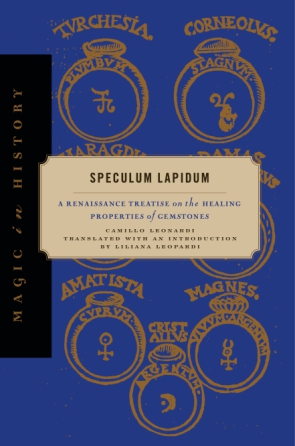
Speculum Lapidum: A Renaissance Treatise on the Healing Properties of Gemstones

Speculum Lapidum: A Renaissance Treatise on the Healing Properties of Gemstones

Leopardi, L. (2023)

Book · Publisher: Pennsylvania State University Press · Pages: 240 pp.

Abstract
In early modern Europe precious and semiprecious stones were valued not only for their beauty and rarity but also for their medical and magical properties. Lorenzo de’ Medici, Philip II of Spain, and Popes Leo X and Clement VII were all treated with expensive potions incorporating ground gems such as rubies, diamonds, and emeralds. Medical and magical/astrological lapidaries, texts describing the stones’ occult and medical qualities as well as their abilities to ward off demons and incantations, were essential resources for their use. First published in Venice in 1502, Camillo Leonardi’s Speculum Lapidum is an encyclopedic summary of all classical and medieval sources of lithotherapy. In describing the natural, manifest, and occult properties of precious and semiprecious stones as well as their graven images and applications, the Speculum Lapidum provides tremendous insight into the role that medical astrology and astral magic played in the life of an Italian court in the early modern period. Liliana Leopardi’s English translation, complete with critical apparatuses, gives unprecedented access to this key text within the magical lapidary genre. A vital addition to the existing canon of lapidaria in translation, Leopardi’s work will be of special importance for students and scholars of the history of magic, medicine, religion, and Renaissance humanism, and it will fascinate anyone interested in the occult properties of precious and semiprecious stones.
Keywords
gems, corundum, history.1, ancient lapidaries
Pink to purple sapphires from Ilakaka, Madagascar: Insights to separate unheated from heated samples

Pink to purple sapphires from Ilakaka, Madagascar: Insights to separate unheated from heated samples

Karampelas, S., Hennebois, U., Mevellec, J.-Y., Pardieu, V., Delaunay, A. and Fritsch, E. (2023)

Journal Article · Source: Minerals · Volume: Vol. 13 · Issue: No. 5 · Pages: 14 pp.

Abstract
The present study is focused on the analysis of zircon inclusions found in pink to purple sapphires from Ilakaka (Madagascar) with an optical microscope, Fourier-transform infrared (FTIR), and micro-Raman spectroscopy in order to update previous knowledge and find insights to separate heated from unheated samples. In total, 157 zircon inclusions in 15 unheated samples and 74 zircon inclusions in 6 heated samples are analysed using micro-Raman spectroscopy with standardised parameters. The full width at half maximum (FWHM) of the main Raman band due to anti-symmetric stretching vibration ν₃ of the SiO₄ tetrahedron in the zircon structure has been carefully measured. In the unheated samples, it ranges from 6.26 to 21.73 cm⁻¹ with an average of 10.74 cm⁻¹, a median of 10.04 cm⁻¹, and a standard deviation of 2.84 cm⁻¹. On the other hand, it is lower in the heated samples, ranging from 4.83 to 14.97 cm⁻¹ with an average of 7.23 cm⁻¹, median of 7.06 cm⁻¹, and standard deviation of 1.63 cm⁻¹. In our unheated samples, the FWHM was rarely below 7 cm⁻¹. In our heated samples, the FWHM was rarely above 12 cm⁻¹ but mostly below 8 cm⁻¹, with a variation restricted to less than 3 cm⁻¹ in the same sample. The present work will hopefully further contribute to more accurately identifying the low-temperature heat treatment of pink sapphires from Ilakaka, Madagascar.
Keywords
gems, corundum, treatments.6, Madagascar.12, heat treatment, Ilakaka, zircon inclusions, microraman
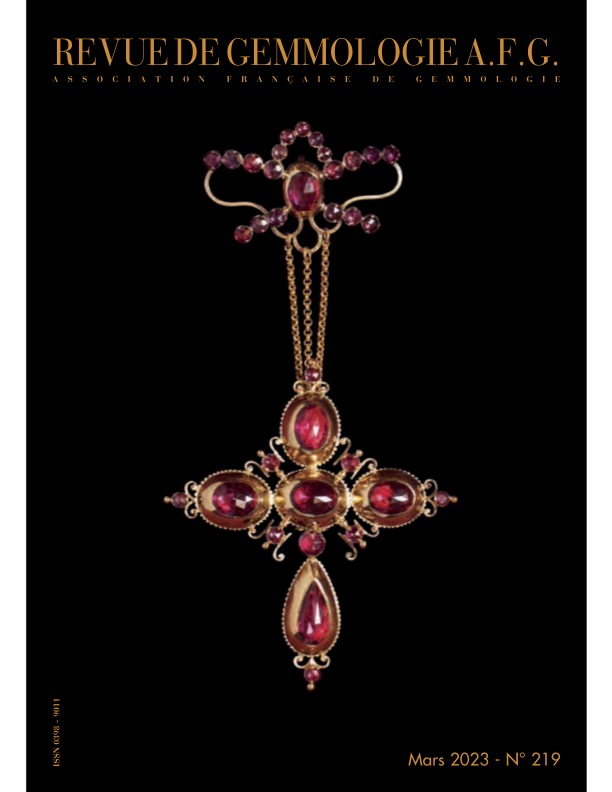
Escarboucles & dragons, lexicologie des gemmes rouges

Escarboucles & dragons, lexicologie des gemmes rouges

Garnets & dragons, lexicology of red gemstones

Zylberman, N. (2023)

Journal Article · Source: Revue de Gemmologie A.F.G. · Issue: No. 219, Mars · Pages: pp. 27–30 · Language: in French

Abstract
This study traces the linguistic, literary, and gemmological history of the escarboucle or carbuncle over approximately three millennia. Beginning with the red stones odem and nophek in the biblical breastplate, it follows their translation and reinterpretation through the Greek anthrax, Latin carbunculus, and French escarboucle. Ancient and medieval lapidaries associated the carbuncle with a fiery brilliance supposedly capable of illuminating darkness, while legends placed the luminous stone in the heads of dragons, griffins, eagles, and the serpent-like vouivre. Accounts by Theophrastus, Pliny, Marbode, Albertus Magnus, Jean de Mandeville, Cardan, Cellini, de Boodt, and others demonstrate how the term came to encompass sardonyx, carnelian, garnet, ruby, and spinel, whose reflected light could be intensified by polishing, rounded forms, metal foils, and controlled illumination. The development of crystallography and chemical mineralogy during the late eighteenth and early nineteenth centuries finally separated these materials into distinct species. The article also examines the origins and evolution of such names as ruby, pyrope, almandine, rhodolite, Bohemian garnet, spinel, and zircon, presenting the carbuncle as a historical category founded upon the appearance of fiery red light rather than a single mineral species.
Keywords
gems, corundum, spinel, history.1, carbuncle, garnet
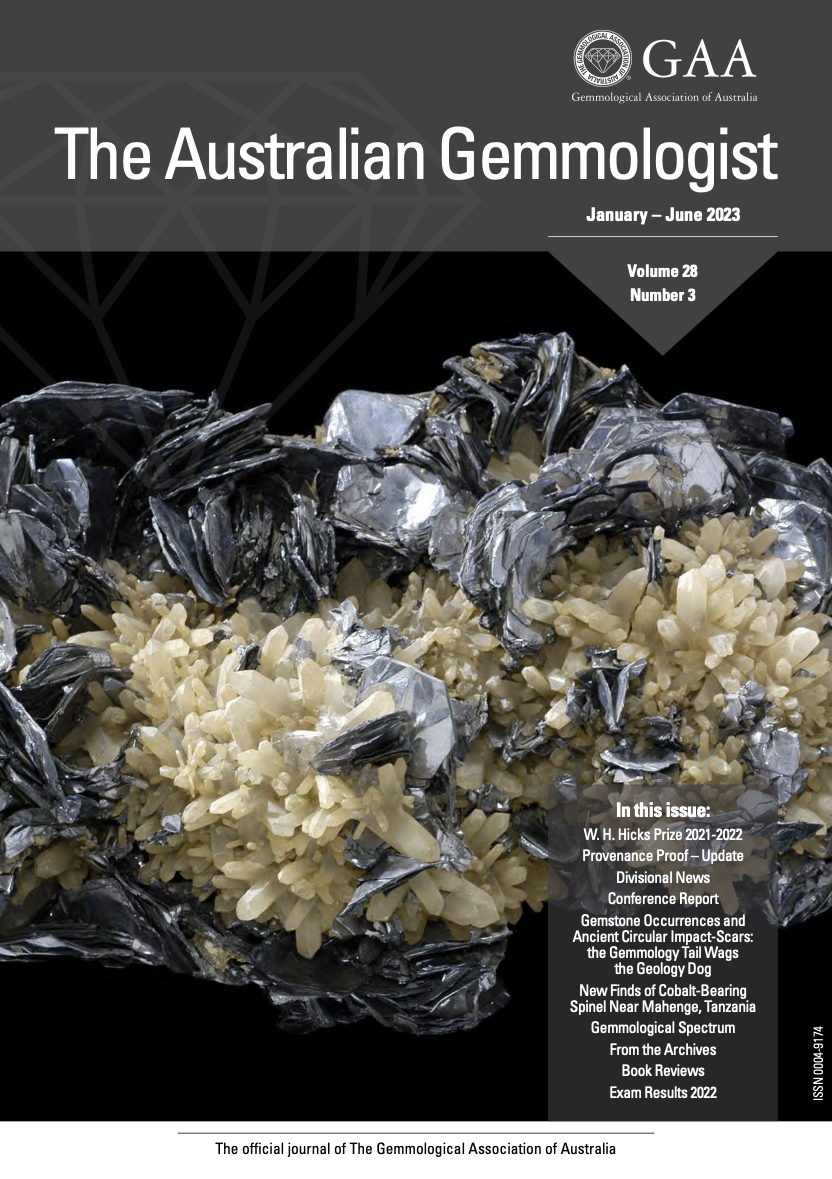
Gemstone occurrences and ancient circular impact-scars: The gemmology tail wags the geology dog

Gemstone occurrences and ancient circular impact-scars: The gemmology tail wags the geology dog

Saul, J.M. (2023)

Journal Article · Source: Australian Gemmologist · Volume: Vol. 28 · Issue: No. 3, January–June · Pages: pp. 130–135

Abstract
Numerous occurrences of transparent gemstones are in diverse ways associated with large circular scar-patterns on the Earth’s surface. These are interpreted as vestiges of the asteroid and meteorite bombardment that also scarred the Moon. Neither the existence of these circular scars nor their identification with 4 billion-year-old impacts can be accommodated by presently held versions of plate tectonic theory.
Keywords
gems, corundum, geology.11
Gemological Characterization of Montana Sapphire from the Secondary Deposits at Rock Creek, Missouri River, and Dry Cottonwood Creek

Gemological Characterization of Montana Sapphire from the Secondary Deposits at Rock Creek, Missouri River, and Dry Cottonwood Creek

Palke, A.C., Renfro, N., Hapeman, J.R. and Berg, R.B. (2023)

Journal Article · Source: Gems & Gemology · Volume: Vol. 59 · Issue: No. 1, Spring · Pages: pp. 2–45

Abstract
Montana has produced large volumes of sapphire from secondary deposits for more than 150 years. While early production was mostly for industrial use as watch and instrument bearings, modern heat treatment technology has enabled the deposits to be worked profitably as gemstone mines, bringing more of this material to the gem and jewelry trade than ever before. Although pale blue and pale green sapphires make up the bulk of the production, fine Montana sapphire comes in nearly every hue, including yellow, orange, purple, and pink, along with very rare finds of ruby. Secondary Montana sapphire shares some similarities with those from Umba and Songea in Tanzania, but it is generally straightforward to separate them on the basis of inclusion scenes and trace element chemistry fingerprints.
Keywords
gems, corundum, inclusions.5, USA.12, Montana.12, Rock Creek, Missouri River, Dry Cottonwood Creek
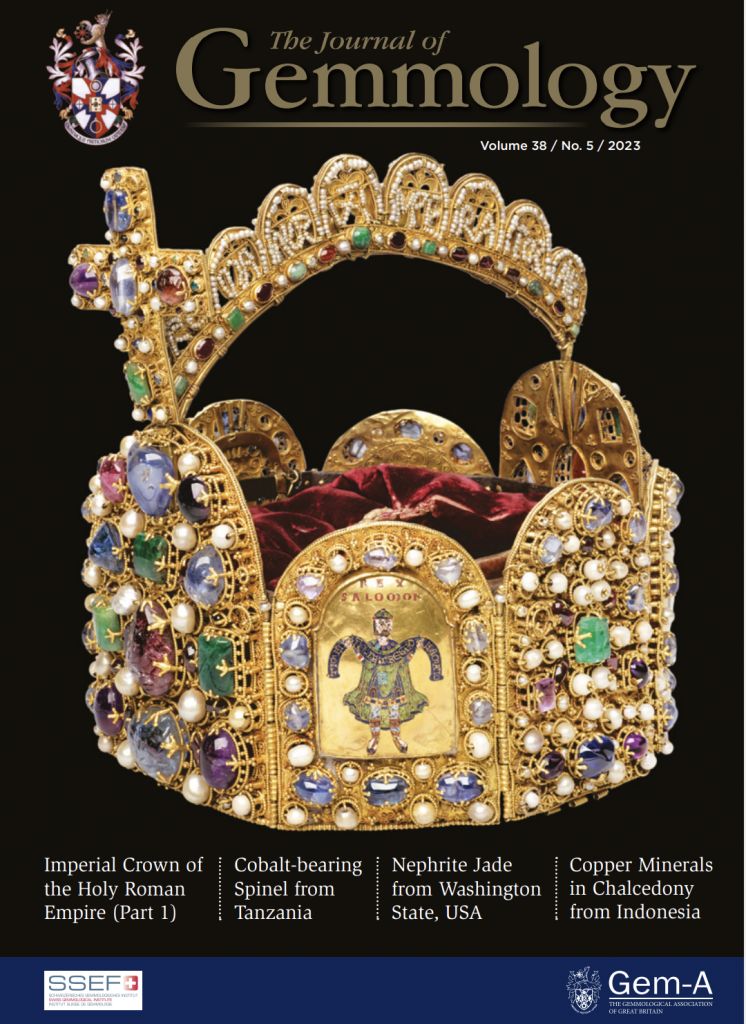
The Imperial Crown of the Holy Roman Empire, Part I: Photoluminescence and raman spectroscopic study of the gemstones

The Imperial Crown of the Holy Roman Empire, Part I: Photoluminescence and raman spectroscopic study of the gemstones

Nasdala, L., Lamers, T., Gilg, H.A., Chanmuang, C., Griesser, M., Kirchwegner, F., Erlacher, A. and Böhmler, M. (2023)

Journal Article · Source: Journal of Gemmology · Volume: Vol. 38 · Issue: No. 5 · Pages: pp. 448–473

Abstract
The Imperial Crown of the Holy Roman Empire is not only a unique and outstanding symbol of European history, it is also one of the most significant works of Western goldsmiths’ art from the High Middle Ages. However, little is known about the gem materials it contains. As part of an interdisciplinary research project led by the Kunsthistorisches Museum Vienna in Austria, the 172 gemstones in the crown were all conclusively identified for the first time using (non-destructive) photoluminescence and Raman spectroscopy. They include 71 blue sapphires, 50 garnets (22 almandines, 22 pyrope-almandines, five pyropes and one grossular), 20 emeralds, 13 amethysts, four chalcedonies and three spinels. In addition, 11 glass imitations of various colours were identified. Raman spectral details and inclusions in the garnets support their assignment to garnet types previously found to be used in antique and early medieval jewellery. The large red spinel in the centre of the crown’s front plate is presumably part of the original crown and, thus, is one of the earliest-known spinels in a historic object, yet it yielded spectroscopic evidence of having been heated.
Keywords
gems, corundum, history.1, sapphire, spinel, garnet, beryl, emerald, amethyst, chalcedony
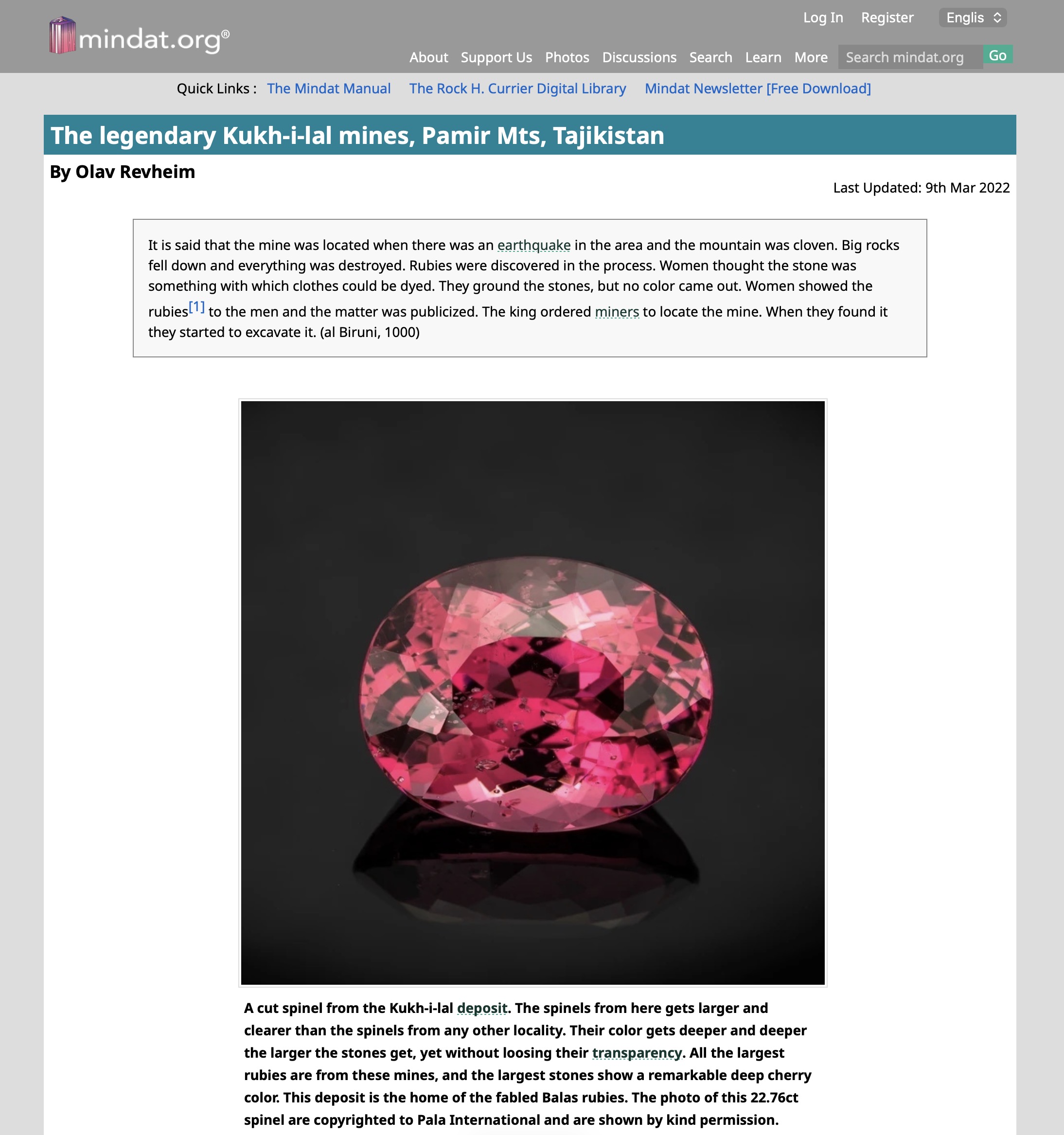
The legendary Kukh-i-lal mines, Pamir Mts, Tajikistan

The legendary Kukh-i-lal mines, Pamir Mts, Tajikistan

Revheim, O. (2022)

Electronic Article · Source: Mindat.org

Abstract
The quote at the top is from Abu Rayhan al-Biruni (973–after 1050), taken from his The Book Most Comprehensive in Knowledge on Precious Stones. This book is a remarkable combination of scholarship, rumors and references to earlier authors, in addition to al-Biruni’s own experiences from his travels and scientific experiments. Al-Biruni’s description of the Kuh-i-Lal mines and their prominent placement in his book provide detailed insight into the geology, mines and operations that produced the magnificent rubies that have made these mines legendary. Timur’s Ruby, the Black Prince’s Ruby, the Samarian Ruby and Catherine the Great’s Ruby, and other magnificent stones in the British, Indian, Iranian, Russian, French and Turkish treasuries, all originate from here. It is believed that the term Balas ruby, which was extensively used in Europe from the Middle Ages up to near modern times, is derived from Badakhshan. Pardieu and Farkhodova (2019) address the historical importance of this locality in their article “Spinel from Tajikistan, The Gem That Made Famous the Word ‘Ruby’.” Following their reasoning, it was the spinel from Kuh-i-Lal, and not the corundum from Mogok, that made ruby a famous gemstone. It was not until the late 19th century that modern science found these mines (the Russian Pamir expedition in 1892–95). At that time, only small-scale mining took place. Serious scientific studies were later carried out by Soviet scientists, and papers on their history and geology were published (see Pardieu and Farkhodova, 2019, for a bibliography). Obviously, given the historical importance and potential value of the mine produce, combined with the geopolitical hotspot location, very little of this research was shared outside the USSR until after its breakup. One of the scientists who visited the mines was the Russian historian Mira Bubnova. She conducted archaeological investigations at the mines in the early 1970s. She found some evidence that the operations may have started as early as the 8th century, and she also confirmed that the most intensive exploitation of the mine took place from the 9th to the 12th centuries, meaning that al-Biruni’s text is a valuable contemporary account from the most prominent period of mining.
Keywords
gems, spinel, Afghanistan, Tajikistan, balas ruby, Kuh-i-Lal
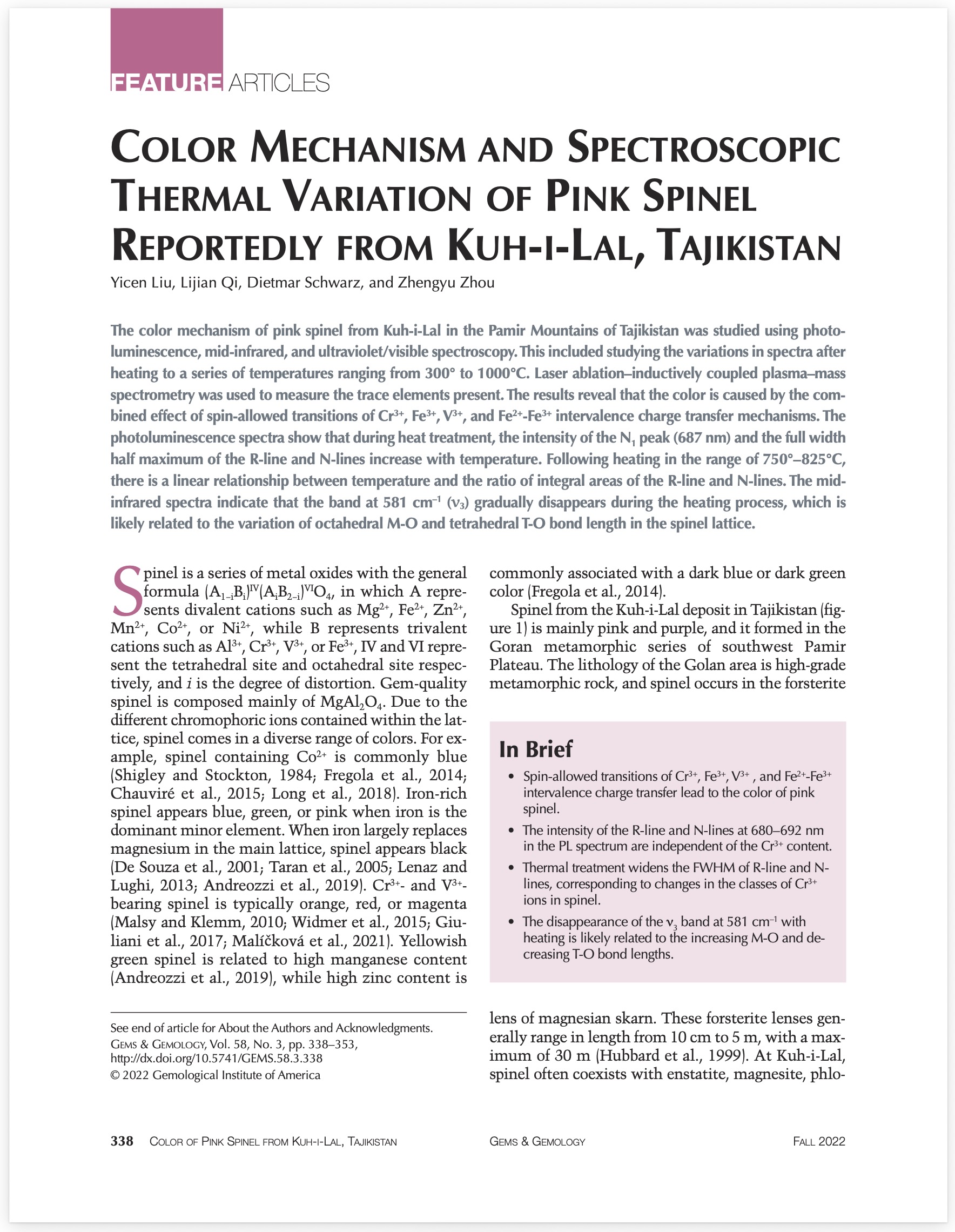
Color mechanism and spectroscopic thermal variation of pink spinel reportedly from Kuh-i-Lal, Tajikistan

Color mechanism and spectroscopic thermal variation of pink spinel reportedly from Kuh-i-Lal, Tajikistan

Liu, Y., Qi, L., Schwarz, D. and Zhou, Z. (2022)

Journal Article · Source: Gems & Gemology · Volume: Vol. 58 · Issue: No. 3, Fall · Pages: pp. 338–353

Abstract
The color mechanism of pink spinel from Kuh-i-Lal in the Pamir Mountains of Tajikistan was studied using photoluminescence, mid-infrared, and ultraviolet/visible spectroscopy. This included studying the variations in spectra after heating to a series of temperatures ranging from 300° to 1000°C. Laser ablation–inductively coupled plasma–mass spectrometry was used to measure the trace elements present. The results reveal that the color is caused by the combined effect of spin-allowed transitions of Cr³⁺, Fe³⁺, V³⁺, and Fe²⁺–Fe³⁺ intervalence charge transfer mechanisms. The photoluminescence spectra show that during heat treatment, the intensity of the N1 peak (687 nm) and the full width at half maximum of the R-line and N-lines increase with temperature. Following heating in the range of 750°–825°C, there is a linear relationship between temperature and the ratio of integral areas of the R-line and N-lines. The mid-infrared spectra indicate that the band at 581 cm⁻¹ (ν₃) gradually disappears during the heating process, which is likely related to the variation of octahedral M–O and tetrahedral T–O bond length in the spinel lattice.
Keywords
gems, spinel, Afghanistan, Tajikistan, balas ruby, Kuh-i-Lal, Pamir, geology, causes of color
Through the lens of Islam: The pre-history of eye-glasses according to Arabic sources

Through the lens of Islam: The pre-history of eye-glasses according to Arabic sources

Benfeghoul, F. (2022)

Journal Article · Source: Zeitschrift für Geschichte der Arabisch-Islamischen Wissenschaften · Volume: Vol. 23 · Pages: pp. 259–315

Abstract
The history of vision aids was hitherto written almost entirely with material gathered only from the West, where there is an unmatched wealth of information. Dealing with the Islamic world, one is struck by how little is known about the origins and early uses of vision aids in the cultures of Islamic lands. This article is an attempt to close this gap by presenting and analysing a few texts produced between the 11th and 14th centuries, in the Eastern and Western parts of the Islamic world, with regard to the knowledge about the use of vision aids. The aim of this paper is (1) to show that, according to reliable Arabic sources that are gradually emerging, vision aids are indeed inscribed in a larger Arabic-Islamic tradition of knowledge and know-how; (2) to provide clear evidence for the use of such tools and present texts that help understand their cultural background; (3) to move the chronology of vision aids a little backward in time; (4) to help write the first chapters in a general history of visions aids in the cultures of Islamic lands; (5) to create an awareness for this subject and spark a critical debate in what looks like a new field of investigation.
Keywords
gems, Arabic mineralogy, al-Biruni, ruby, corundum, history.1

Exploring the Literature of Corundum

Ruby and sapphire research spans mineralogy, gem deposits, identification, treatments, synthesis and the history of the gem trade. Older publications can also be useful for tracing terminology, early observations and accounts of mining localities. Publication dates and the original source should be considered when using historical descriptions.

For an introduction to collecting books on this subject, read Ruby & Sapphire Books: Collecting the Literature of Corundum.

About Four Treasures

Four Treasures is Lotus Gemology's freely accessible gemological reference database. Use the full database to search by author, title or keyword and explore literature on gemology, mineralogy, jewelry and related fields. Where available, hyperlinks on titles may lead directly to the full publication.

Search the Complete Four Treasures Database