Gemstone Inclusions Bibliography

Gemstone Inclusions Bibliography

Explore books, articles and historical sources on inclusions in gemstones in Four Treasures, the Lotus Gemology reference database. This bibliography brings together matching records from the collection, with publication details, abstracts and cover images where available.

Gemstone Inclusion References

The list below matches the terms inclusion or inclusions in the database's searchable fields. Some references discuss inclusions as part of a broader subject.

201–220 of 1,111 matching references
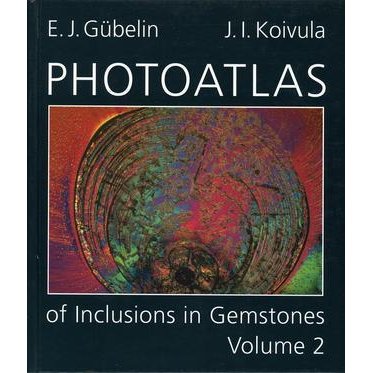
Photoatlas of Inclusions in Gemstones, Volume 2

Photoatlas of Inclusions in Gemstones, Volume 2

Gübelin, E.J. and Koivula, J.I. (2005)

Book · Publisher: Opinio Publishers · Pages: 830 pp.

Abstract
Photoatlas, Volume 2, the long-anticipated successor to Photoatlas, Volume 1, was released in December, 2005. It covers gems other than diamonds, rubies, sapphires, and emeralds, which are covered in Volume 3. Like Photoatlas, Volume 1, which was first published in 1986, the second volume in the series will become a standard reference in the field of gemology. Once again, Dr. Eduard J. Gübelin and John I. Koivula have collaborated to produce an impressive pictorial atlas of gemstone inclusions. Renowned for their unique ability in capturing the beauty of the internal world of gemstones and bringing an artistic sensibility to a scientific subject in their photomicrographs, Dr. Gübelin and Mr. Koivula bring to Photoatlas, Volume 2 their considerable expertise and combined experience in laboratory gemology, mineralogy, geology and chemistry. The second volume in the Photoatlas series complements Photoatlas, Volume 1 with greater depth and scope, featuring inclusion specimens from localities discovered after 1986 and examples of treatment techniques and synthetics that have appeared in the gem market in the last two decades. Each chapter contains current information on the micro-characteristics of natural, synthetic and treated host materials along with a complete selection of photomicrographs and a suggested reference section. The Photoatlas suite is an indispensable resource for gemologists, mineralogists, collectors and jewelers.
Keywords
corundum, inclusions.5, treatments.12, synthetic corundum.7, ruby, sapphire, Australia.12, Burma.12, Cambodia.12, China.12, Colombia.12, Greenland.12, India.12, Kashmir.12, Kenya.12, Malawi.12, Pakistan.12, Sri Lanka.12, Tanzania.12, Thailand.12, USA.12, Montana.12, tanzanite, spinel, gems, jade, jadeite, fei cui, nephrite
Old World jades outside China, from ancient times to the fifteenth century: Section one

Old World jades outside China, from ancient times to the fifteenth century: Section one

Keene, M. (2004)

Journal Article · Source: Muqarnas · Publisher: Brill · Volume: Vol. 21 · Pages: pp. 193–214

Abstract
It is a matter of great satisfaction and fulfillment for [HP] to have been given the opportunity to participate in this celebration of Michael Rogers. His influence has been uniquely important for me: quite simply, it was he who, initially and primarily, introduced me to the enterprise of historical work. Even more particularly, my subject relates to an area with which he has long been concerned, and concerning which we have long since had occasion to communicate. I hope that this present effort will find favor. As the present paper developed, it came to be much too large for inclusion in the planned volume in honor of Professor Rogers. When confronted with the necessity of radically reducing the size of my submission, I found only one viable course of action: that of cutting off and presenting the first part of the work I had written. The larger version naturally dealt with a broad, representative range of the types of pre-Timurid jade objects in the al-Sabah Collection and, in addition to the ancient objects here discussed, covered Islamic jades up through the fourteenth century. The necessary reduction of the present publication is made less painful by the project of a volume on pre-Timurid jades planned for publication by the al-Sabah Collection in the reasonably near future.
Keywords
jade, nephrite, China, Chinese jade, gems
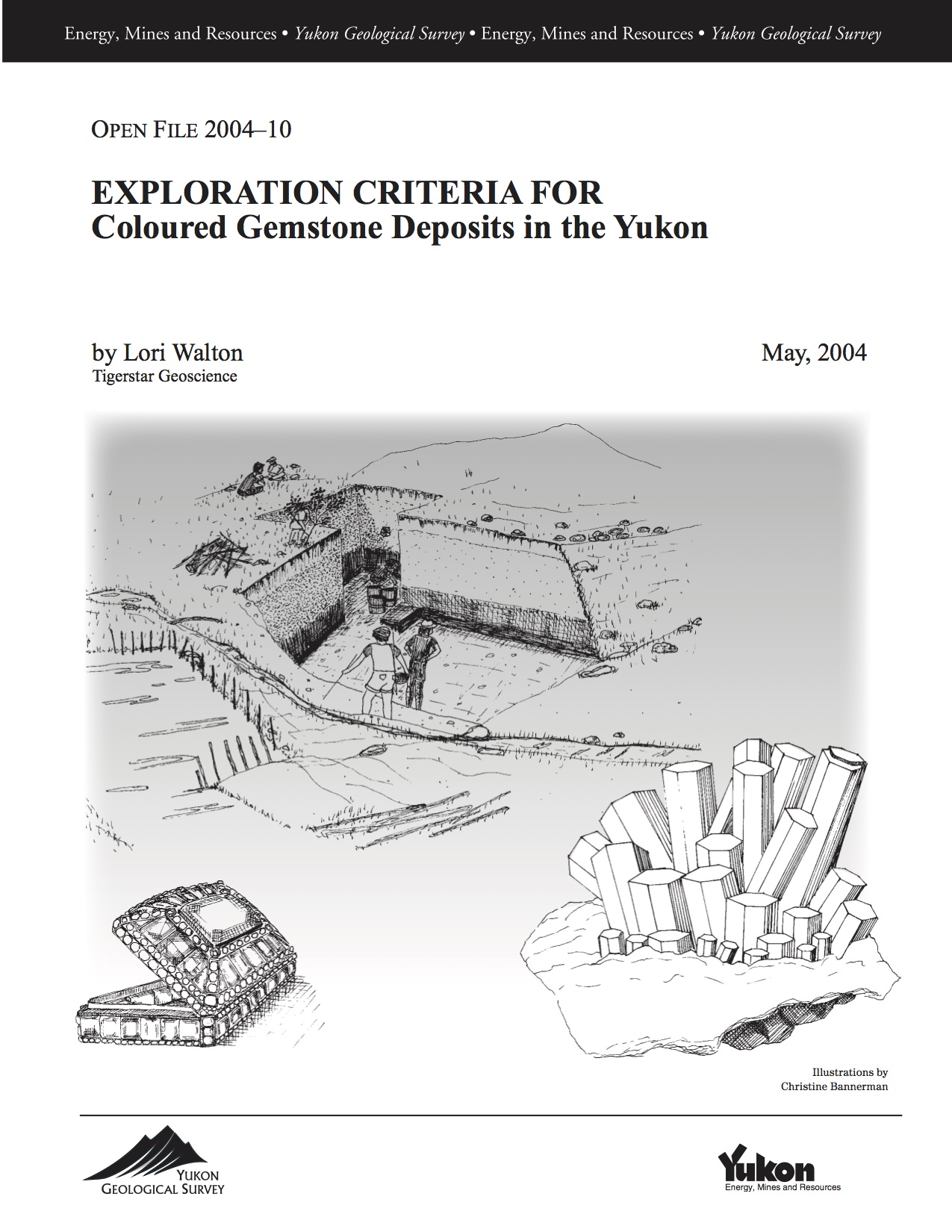
Exploration Criteria for Coloured Gemstone Deposits in the Yukon

Exploration Criteria for Coloured Gemstone Deposits in the Yukon

Walton, L. (2004)

Report · Publisher: Yukon Geological Survey · Pages: 184 pp.

Abstract
The ancient Greeks believed that four elements — fire, air, water and earth — comprised the universe and that metals in ore deposits were water elements. There is some scientific evidence today that the mysterious fifth element first postulated by the Greeks may in fact exist as ‘dark energy’ or ‘dark matter’ comprising 95% of our universe. Ancient Greek philosophers/naturalists/historians were, like all humans thoughout history, fascinated by geology and gemstones, especially the beautiful coloured gems that came from the island of Serendipity, or Sri Lanka. The physico-chemical controls on gem formation were beautifully described in those days by the philosopher Theophrastus who declared gemstones to be ‘solidified lynx urine’ and in fact valuable gem crystals grew wherever this beautiful feline decided to pee. Before scoffing, we must think about how our present day ideas and models for gemstone formation may be viewed not just 100 years in the future, but 1,000 or even 10,000 years. Some of the best and most useful work on gemstone deposits is not the fluid inclusion and stable isotope laboratory work, but the careful, detailed and precise descriptions, sometimes hand drawn, of the geology, mineralogy and general nature of the deposit. So little is known about some of the best gem deposits on our planet, such as the ruby deposits of Burma or the sapphire deposits of Kashmir, India. We must rely on descriptive geology done many years ago until we can unleash our modern scientific arsenal to decode how and why these fabulous gems formed and if there is potential for finding world-class coloured gemstone deposits in Canada.
Keywords
corundum, geology.11, Canada.12, Yukon.12, gems
Aplicações de microscopia eletrônica de varredura (MEV) e sistema de energia dispersiva (EDS) no estudo de gemas: exemplos brasileiros

Aplicações de microscopia eletrônica de varredura (MEV) e sistema de energia dispersiva (EDS) no estudo de gemas: exemplos brasileiros

Applications of scanning electron microscopy (SEM) and energy dispersive system (EDS) in the study of gemstones: Brazilian examples.

Duarte, L.d.C., Juchem, P.L., Pulz, G.M., Brum, T.M.M.d., Chodur, N., Liccardo, A., Fischer, A.C. and Acauan, R.B. (2003)

Journal Article · Source: Pesquisas em Geociências · Volume: Vol. 30 · Issue: No. 2, Sept.–Dec. · Pages: pp. 3–15 · Language: in Portuguese

Abstract
This paper presents results of SEM and EDS study in some Brazilian gemstones. Emerald from Campos Verdes (GO) contains several mineral inclusions as talc, dolomite, chromite, pyrite, magnetite, etc. Sylvite crystals was firstly identified by SEM/EDS. These salt inclusions suggest percolation of K-bearing fluids during emerald crystallization. Emerald from Campos Verdes present higher concentration of Cr+3 in the outer green zones than in the inner colourless zones, showing that ion is a chromophore in this gemstone. SEM and EDS results combined with optical microscopy analyses demonstrate that amethyst from Rio Grande do Sul State (RS) contain needle-like inclusions of goethite and not cacoxenite and rutile as suggest by other workers. By these techniques it was possible to identify pyrolusite and hollandite as late minerals inside agate and quartz geodes from RS. SEM and EDS data of corundum from Barra Velha (SC) show that silk effect is produced by diaspore inclusions. These techniques also reveal that the asterism in this corundum is produced by empty needle-like channels instead of the presence rutile inclusions as commonly observed in other worldwide deposits. Rounded zircon inclusions are common in corundum from Indaiá, Palmeiras, Caputira and Campo Belo (MG). Sillimanite and/or kyanite inclusions in corundum crystals of secondary deposits from Indaiá suggest a metamorphic origin to this gemstone. Corundum from Caputira also contains several rounded rutile inclusions, which are diagnostic for this occurrence.
Keywords
gems, corundum, inclusions.5, Brazil.12, beryl, emerald, inclusions,
Photomicrography for gemologists

Photomicrography for gemologists

Koivula, J.I. (2003)

Journal Article · Source: Gems & Gemology · Volume: Vol. 39 · Issue: No. 1, Spring · Pages: pp. 4–23

Abstract
Many areas in the jewelry industry—education, gemological research, lecturing, publication, and laboratory and inventory documentation, to name a few—either require or benefit from high-quality photomicrography. This article reviews the basic requirements of gemological pho-tomicrography and introduces new techniques, advances, and discoveries in the field. Proper illumination is critical to obtaining the best possible photomicrographs of gemological subjects, as is the cleanliness of the photomicroscope and the area around it. Equally as important is an understanding of the features one sees and the role they might play in the identification process. This article is dedicated to Dr. Edward J. Gübelin, one of the great pioneers of gemological photomicrography and the first gemologist to truly appreciate the unparalleled beauty of gems in nature’s microcosm.
Keywords
corundum, inclusions.5, gems
Geology of an amber locality in the Hukawng Valley, Northern Myanmar

Geology of an amber locality in the Hukawng Valley, Northern Myanmar

Cruickshank, R.D.a.K.K. (2003)

Journal Article · Source: Journal of Asian Earth Sciences · Volume: Vol. 21 · Pages: pp. 441–455

Abstract
Amber (‘Burmite’) from the Hukawng Valley of Myanmar has been known since at least the 1st century AD. It is currently being produced from a hill known as Noije Bum, which was first documented as a source of amber in 1836. Several geologists visited the locality between 1892 and 1930. All of them believed that the host rocks to the amber are Tertiary (most said Eocene) in age, and this conclusion has been widely quoted in the literature. However, recent work indicates a Cretaceous age. Insect inclusions in amber are considered to be Turonian–Cenomanian, and a specimen of the ammonite Mortoniceras (of Middle–Upper Albian age) was discovered during the authors’ visit. Palynomorphs in samples collected by the authors suggest that the amber-bearing horizon is Upper Albian to Lower Cenomanian. The preponderance of the evidence suggests that both rocks and amber are most probably Upper Albian. This determination is significant for the study of insect evolution, indicating that the oldest known definitive ants have been identified in this amber [American Museum Novitates 3361 (2002) 72]. This site occurs within the Hukawng Basin, which is comprised of folded sedimentary (^ volcanic) rocks of Cretaceous and Cenozoic age. The mine exposes a variety of clastic sedimentary rocks, with thin limestone beds, and abundant carbonaceous material. The sediments were deposited in a nearshore marine environment, such as a bay or estuary. Amber is found in a fine clastic facies, principally as disk-shaped clasts, oriented parallel to bedding. A minority occurs as runnels (stalactite-shaped), with concentric layering caused by recurring flows of resin. An Upper Albian age is similar to that of Orbitolina limestones known from a number of locations in northern Myanmar. One of these, at Nam Sakhaw, 90 km southwest of Noije Bum, has also been a source of amber.
Keywords
amber, Burma, gems
Microscopy: an art?

Microscopy: an art?

Orci, L. and Pepper, M.S. (2002)

Journal Article · Source: Nature Reviews | Molecular Cell Biology · Volume: Vol. 3 · Issue: No. 2, February · Pages: pp. 133–136

Abstract
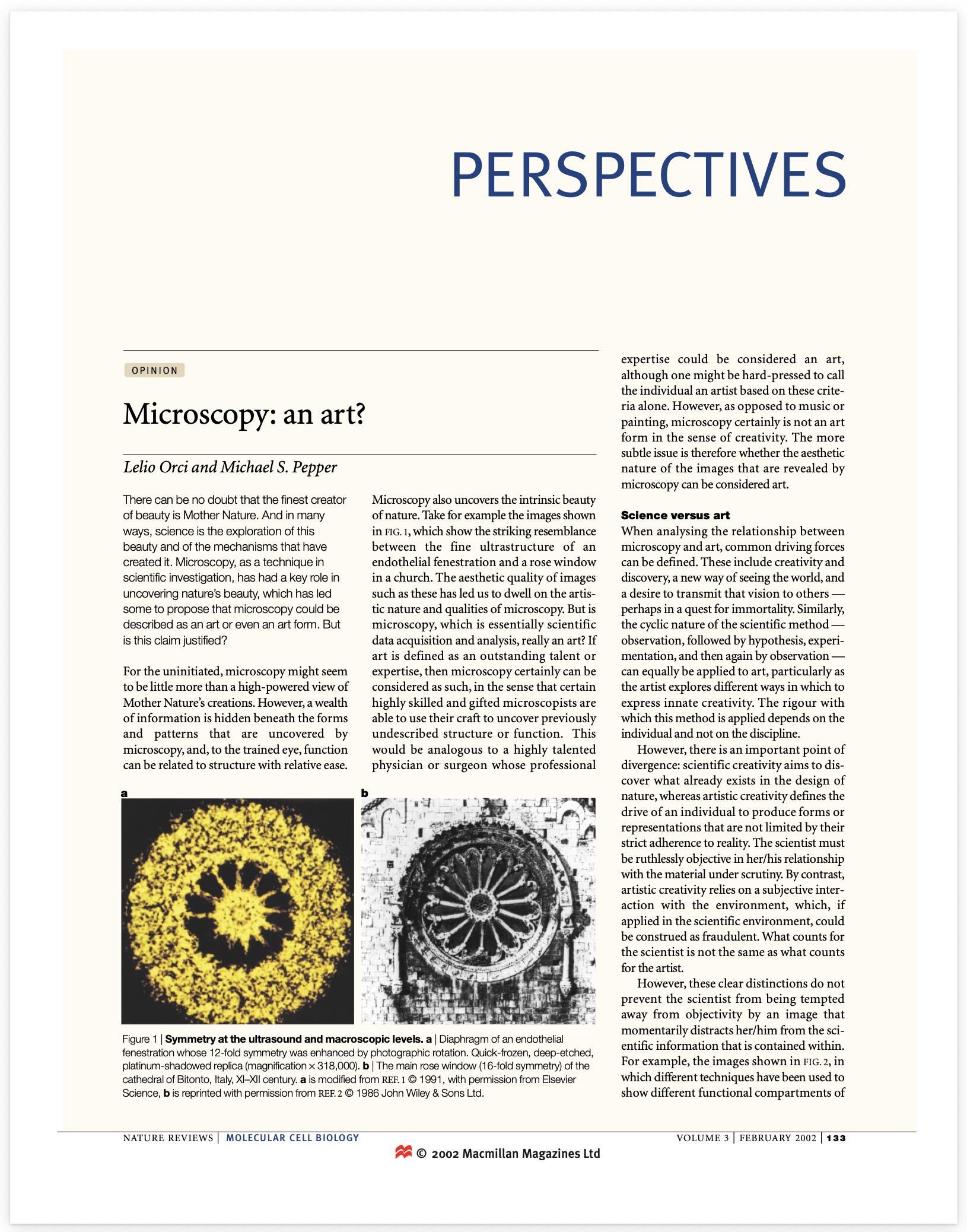
There can be no doubt that the finest creator of beauty is Mother Nature. And in many ways, science is the exploration of this beauty and of the mechanisms that have created it. Microscopy, as a technique in scientific investigation, has had a key role in uncovering nature's beauty, which has led some to propose that microscopy could be described as an art or even an art form. But is this claim justified?
Keywords
gems, inclusions, microscopy, aesthetics, photomicrography, art
World emerald occurrences

World emerald occurrences

Grundmann, G. and Giuliani, G. (2002)

Book Section · Source: Emeralds of the World · Volume: extraLapis English No. 2 · Pages: pp. 24–35

Abstract
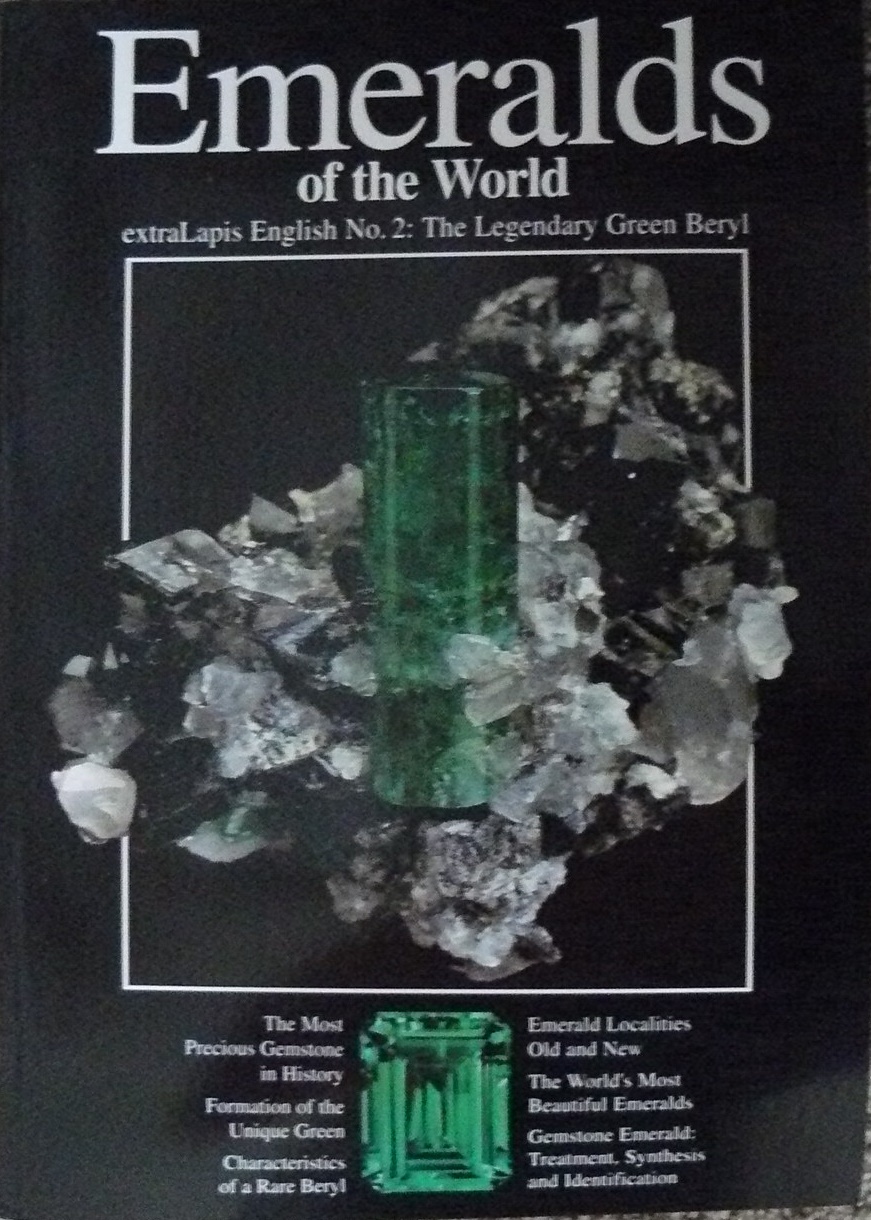
Since antiquity, emerald has been one of the most highly valuated gemstone: the first known mines were those of Cleopatra in ancient Egypt. Two thousand years ago Pliny wrote, Emerald-green is the most beautiful green of all." Leading researchers offer insight into many of the aspects of the world of emerald. -What is emerald? A portrait of a precious and unique member of the beryl family -How does emerald form? The events that conspired to bring about an unlikely outcome; -Where is emerald found? Worldwide localities including Canada, Namibia and China -Where are the richest deposits? Today's market sources: South America, Africa and Asia; -Is it possible to determine the origin of an emerald? Gemstone emerald: characteristics, inclusions and treatments;-What separates green beryl from emerald? The debate over optical, spectroscopic and chemical delineations; -How is emerald created in the lab and how can it be recognized? The history, process and detection of synthetic emerald; Plus etymology, history, legendary giants, local finds and more. extraLapis English No. 2, Emerald, provides a comprehensive look at this magnificent gemstone."
Keywords
beryl, emerald, Colombia, Russia, Afghanistan, Brazil, synthetic beryl, emerald, gems
Emeralds from Asia: Pakistan, Afghanistan and India – historically significant deposits

Emeralds from Asia: Pakistan, Afghanistan and India – historically significant deposits

Schwarz, D. and Giuliani, G. (2002)

Book Section · Source: Emeralds of the World · Volume: extraLapis English No. 2 · Pages: pp. 60–63

Abstract
Since antiquity, emerald has been one of the most highly valuated gemstone: the first known mines were those of Cleopatra in ancient Egypt. Two thousand years ago Pliny wrote, Emerald-green is the most beautiful green of all." Leading researchers offer insight into many of the aspects of the world of emerald. -What is emerald? A portrait of a precious and unique member of the beryl family -How does emerald form? The events that conspired to bring about an unlikely outcome; -Where is emerald found? Worldwide localities including Canada, Namibia and China -Where are the richest deposits? Today's market sources: South America, Africa and Asia; -Is it possible to determine the origin of an emerald? Gemstone emerald: characteristics, inclusions and treatments;-What separates green beryl from emerald? The debate over optical, spectroscopic and chemical delineations; -How is emerald created in the lab and how can it be recognized? The history, process and detection of synthetic emerald; Plus etymology, history, legendary giants, local finds and more. extraLapis English No. 2, Emerald, provides a comprehensive look at this magnificent gemstone."
Keywords
beryl, emerald, Colombia, Russia, Afghanistan, Brazil, synthetic beryl, emerald, gems
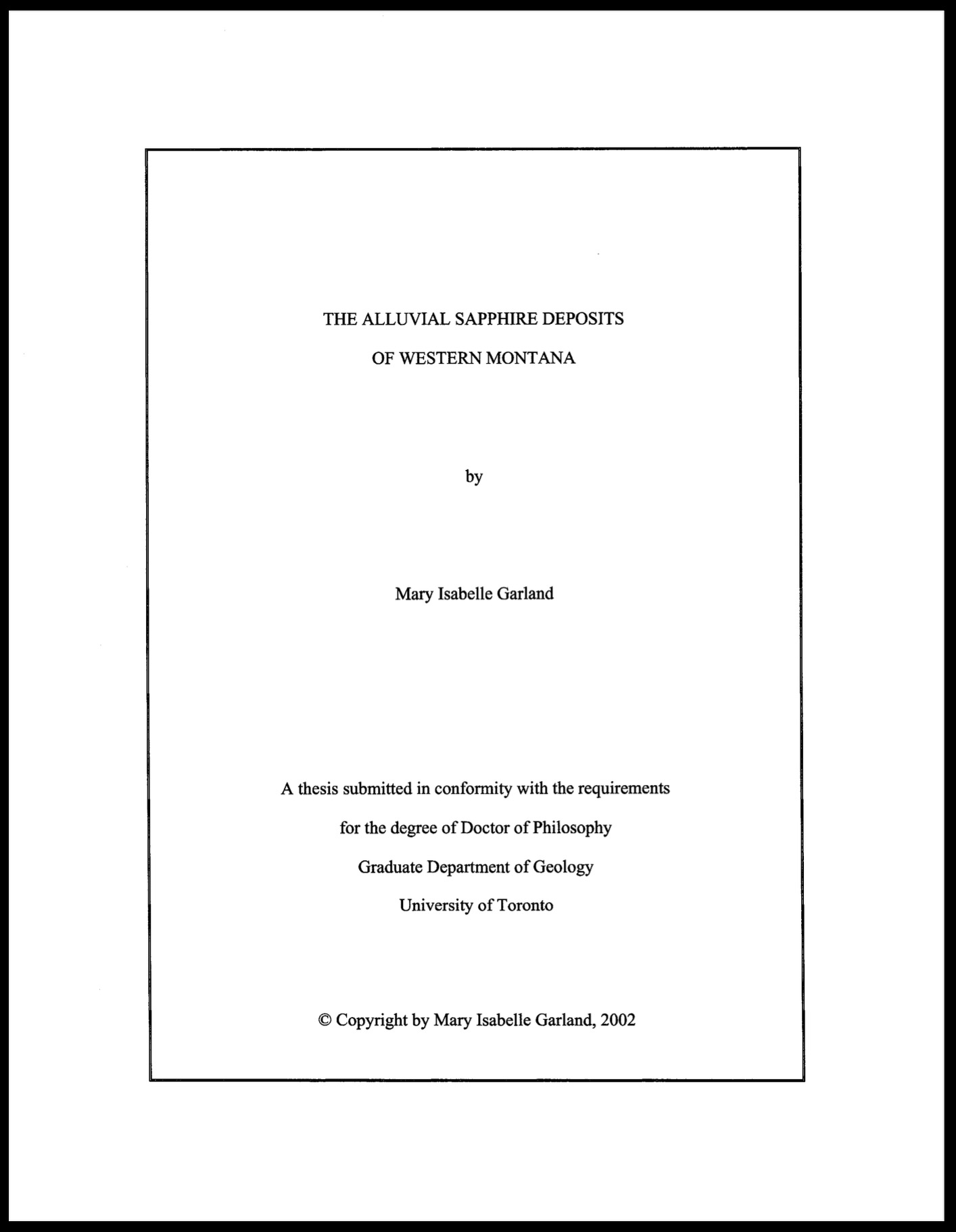
The Alluvial Sapphire Deposits of Western Montana

The Alluvial Sapphire Deposits of Western Montana

Garland, M.I. (2002)

Thesis · Publisher: University of Toronto · Volume: PhD thesis · Pages: 562 pp.

Abstract
Alluvial sapphires in southwestern Montana have supported a mining industry for over 100 years, yet the source rock for the sapphires has never been identified. This study uses geological mapping, trace element analysis and inclusion identification to characterize the Montana alluvial sapphires and extrapolate their origin. The placers occur in three areas in southwestern Montana: along the Missouri River, Rock Creek area, and Dry Cottonwood Creek. Detailed mapping of the placers has established that the present distribution is due to Quaternary reworking of Tertiary alluvium, indicating that the sapphires have been in the alluvial system for a minimum of 2 Ma and that the source area may be distant or completely eroded. Trace element analyses of the alluvial sapphires and a corundum reference suite were done using the proton microprobe. Corundum contains traces of Fe, Cr, Ti, V, and Ga, for which Ga displays significantly different patterns between alkali basalt and metamorphic corundum types. Ga in alkali basalt corundum is typically >100 ppm, with wide variation for samples within one deposit. Metamorphic corundum typically has Ga < 100 ppm, and tightly clustered distributions. The Montana alluvial sapphires have chemistry consistent with a metamorphic origin. The most common inclusions in alkali basalt corundum are ilmenite and hercynite. Metamorphic corundum hosts a wider variety of inclusions. The Montana alluvial sapphires contain plagioclase, muscovite, some clinozoisite, and rarely garnet. Using 'T-P' stability fields for these inclusions, the formation conditions for the Montana sapphires is estimated at 580 to 720°C and 9 to 13 kbar (~30 km depth), consistent with mid-crustal depths. The Bitterroot lobe of the Idaho batholith is proposed as the sapphire source area. It intruded into, and re-metamorphosed, metamorphic rocks of the Bitterroot Core Complex at mid-crustal levels. Exhumation by Cretaceous thrust faulting exposed these rocks at the surface by the early Tertiary, providing a 30-million-year window to erode sapphires into the Tertiary alluvial system. Quaternary reworking of the Tertiary gravel concentrated the sapphires into the present-day placers.Ga
Keywords
gems, corundum, USA.12, Montana.12, Rock Creek, Dry Cottonwood, Missouri River
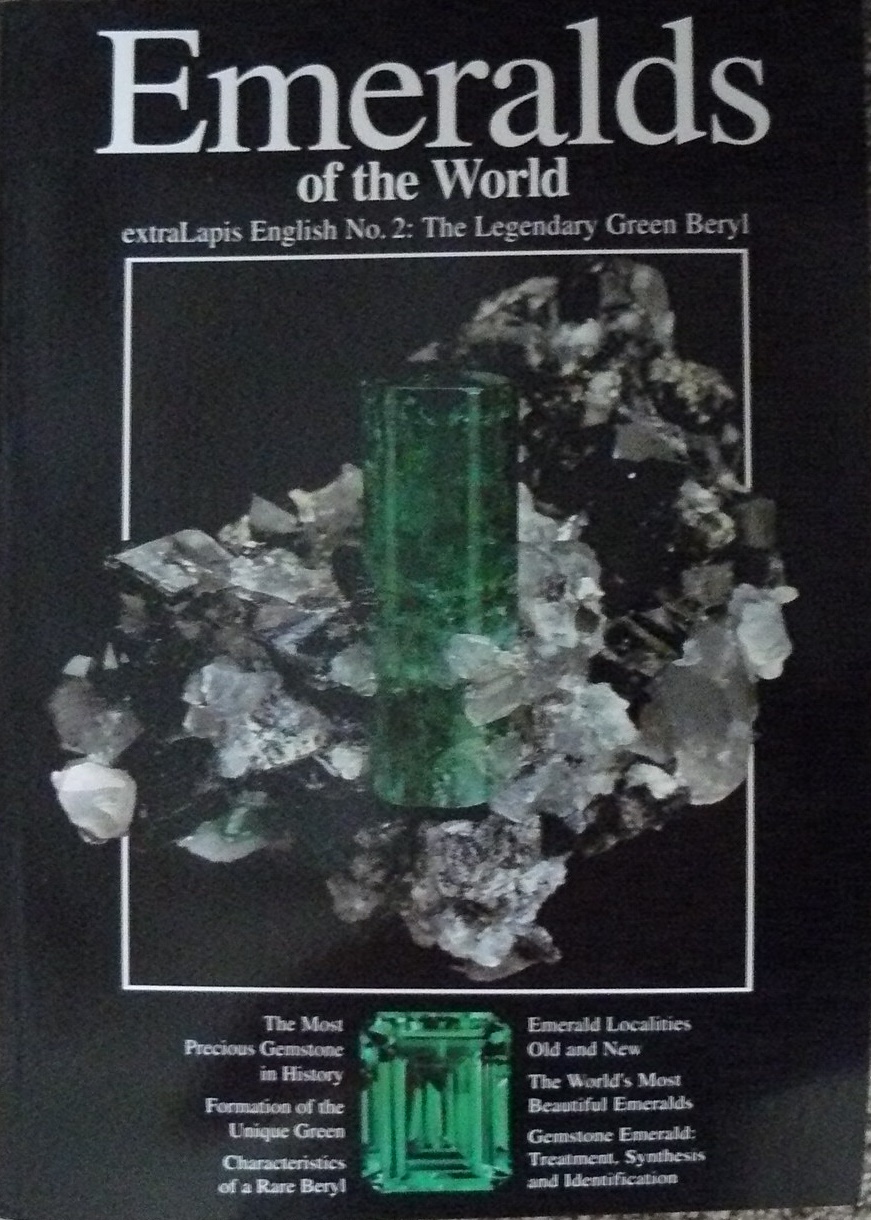
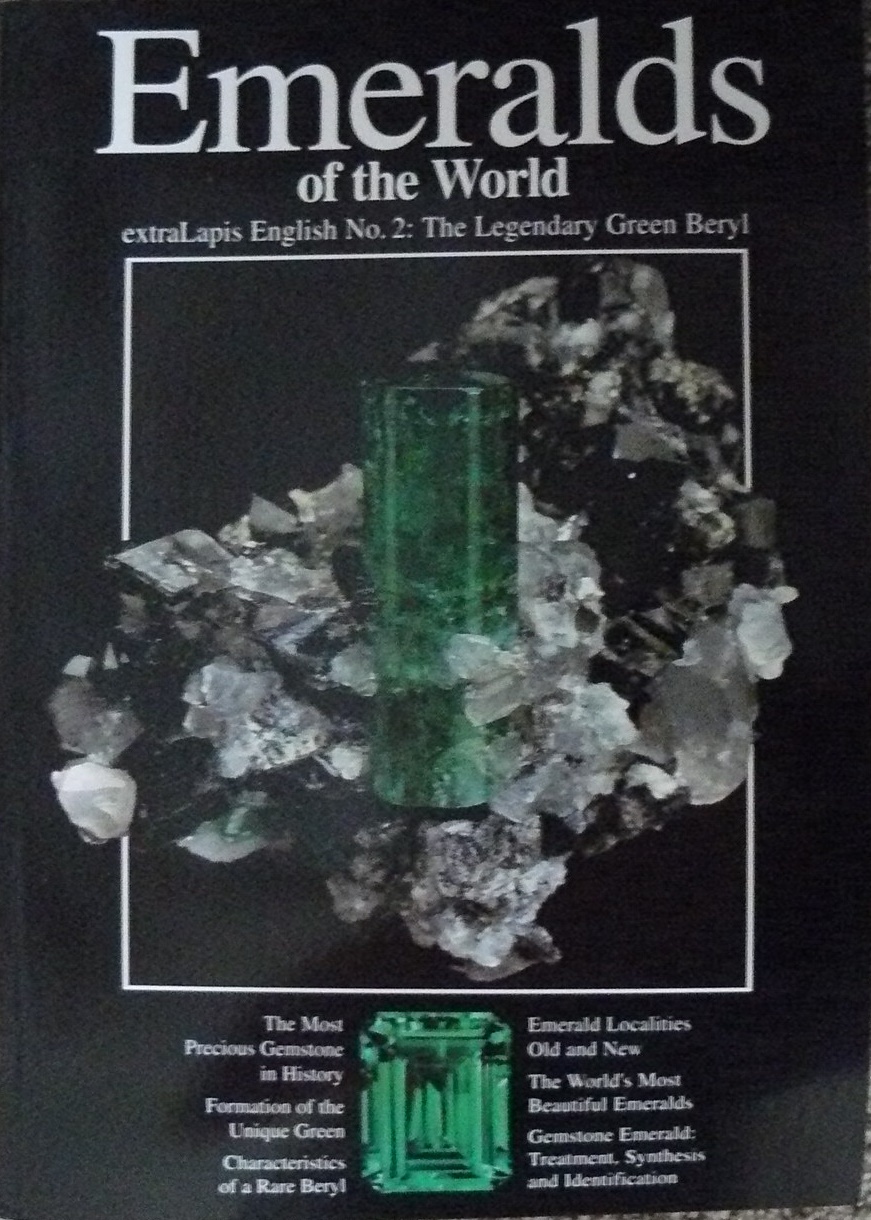
Emeralds of the World

Emeralds of the World

Giuliani, G., Jarnot, M.D., Ottaway, T., Sinkankas, J. and Staebler, G. (2002)

Edited Book · Source: extraLapis English · Volume: No. 2 · Pages: 102 pp.

Abstract
Since antiquity, emerald has been one of the most highly valuated gemstone: the first known mines were those of Cleopatra in ancient Egypt. Two thousand years ago Pliny wrote, Emerald-green is the most beautiful green of all." Leading researchers offer insight into many of the aspects of the world of emerald. -What is emerald? A portrait of a precious and unique member of the beryl family -How does emerald form? The events that conspired to bring about an unlikely outcome; -Where is emerald found? Worldwide localities including Canada, Namibia and China -Where are the richest deposits? Today's market sources: South America, Africa and Asia; -Is it possible to determine the origin of an emerald? Gemstone emerald: characteristics, inclusions and treatments;-What separates green beryl from emerald? The debate over optical, spectroscopic and chemical delineations; -How is emerald created in the lab and how can it be recognized? The history, process and detection of synthetic emerald; Plus etymology, history, legendary giants, local finds and more. extraLapis English No. 2, Emerald, provides a comprehensive look at this magnificent gemstone."
Keywords
beryl, emerald, Colombia, Russia, Afghanistan, Brazil, synthetic beryl, emerald, gems
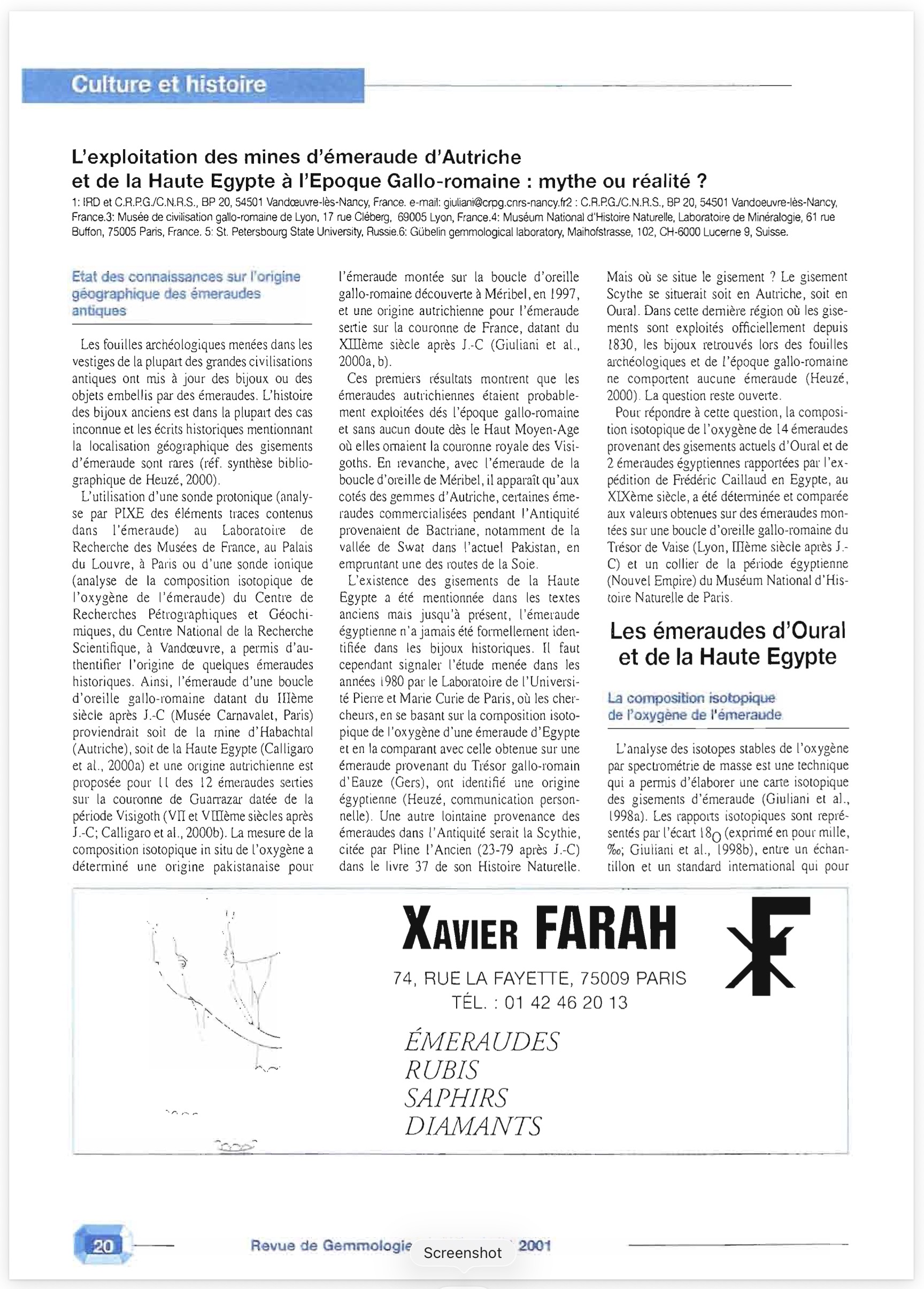
L’Exploitation des Mines d’Emeraude d’Autriche et de la Haute Egypte à l’Epoque Gallo-Romaine; Mythe ou Réalité?

L’Exploitation des Mines d’Emeraude d’Autriche et de la Haute Egypte à l’Epoque Gallo-Romaine; Mythe ou Réalité?

The exploitation of the emerald mines of Austria and Upper Egypt in the Gallo-Roman period: Myth or reality?

Giuliani, G. (2001)

Journal Article · Source: Revue de Gemmologie A.F.G. · Issue: No. 143 · Pages: pp. 20–24 · Language: in French

Abstract
Examines the ancient exploitation and trade of emeralds from Austria and Upper Egypt through oxygen-isotope analysis and inclusion studies of archaeological and historical specimens. Giuliani and co-authors compare emeralds from the Habachtal deposit in Austria, the Ural Mountains, and Egyptian deposits at Zabara, Sikait and Umm Kabo with emeralds from Gallo-Roman and Egyptian jewellery. Oxygen-isotope ratios, supplemented where necessary by the petrography of fluid inclusions, provide distinctive signatures capable of separating the principal ancient sources. An emerald from a third-century AD earring in the Vaise Treasure at Lyon yields an isotopic composition characteristic of Habachtal, demonstrating that Austrian emeralds were being exploited by the Gallo-Roman period. Four emeralds from an Egyptian necklace in the Muséum National d’Histoire Naturelle have isotope values consistent with Upper Egyptian material, while nineteenth-century specimens collected from the Egyptian mines confirm the restricted isotopic range of those deposits. The study also reviews earlier analyses indicating Austrian origins for emeralds in the Visigothic Guarrazar crown and the medieval French crown, an Egyptian origin for other Roman-period stones, and a Pakistani source for an emerald from a Gallo-Roman earring at Méribel. The results support the historical reality of active emerald mining in both Upper Egypt and Austria during Roman times and demonstrate that emeralds from more distant Asian sources also reached the Roman world through long-distance trade routes.
Keywords
gems, beryl, emerald, Egypt, Sikait, Austria, Habachtal, archaeology, geology, ancient gem trade, chemistry, oxygen isotopes
Clinopyroxene–corundum assemblages from alkali basalt and alluvium, eastern Thailand: Constraints on the origin of Thai rubies

Clinopyroxene–corundum assemblages from alkali basalt and alluvium, eastern Thailand: Constraints on the origin of Thai rubies

Sutthirat, C., Saminpanya, S., Droop, G.T.R., Henderson, C.M.B. and Manning, D.A.C. (2001)

Journal Article · Source: Mineralogical Magazine · Volume: Vol. 65 · Issue: No. 2 · Pages: pp. 277–295

Abstract
A clinopyroxene xenocryst with an inclusion of ruby, found in alkali basalt from the Late Cenozoic Chanthaburi-Trat volcanic rocks of eastern Thailand, was chemically similar to clinopyroxene inclusions in rubies from nearby alluvial gem deposits. This suggests a common origin for both minerals. The clinopyroxene is fairly sodic, highly aluminous, and magnesian; sapphirine and garnet also occur as inclusions in the alluvial rubies. Thermodynamic calculations constrain the temperature of clinopyroxene + corundum crystallization to between 800° and 1150°C ± 100°C. Other equilibria indicate a pressure of crystallization of 10–25 kbar, implying depths of formation between 35 and 88 km. The rubies are presumed to have crystallized in rocks of mafic composition (i.e., garnet clinopyroxenites or garnet pyroclasites) within the upper mantle.RAH
Keywords
corundum, geology.11, Thailand.12, gems
Emerald mineralisation in Colombia: Fluid chemistry and the role of brine mixing

Emerald mineralisation in Colombia: Fluid chemistry and the role of brine mixing

Banks, D.A., Giuliani, G., Yardley, B.W.D. and Cheilletz, A. (2000)

Journal Article · Source: Mineralium Deposita · Volume: Vol. 35 · Issue: No. 8 · Pages: pp. 699–713

Abstract
Emerald mineralisation in Colombia occurs in two separate zones along the margins of the Eastern Cordillera, approximately 80 km apart, with the western zone dated to around 35 million years ago and the eastern zone about 30 million years older. Crush-leach analysis of fluid inclusions in minerals such as emerald, quartz, calcite, dolomite, and fluorite from both zones reveals two distinct brine types associated with emerald formation, with many samples showing intermediate compositions. Fluid 1, primarily found in emerald-hosted inclusions, is dominated by NaCl and displays high Cl:Br ratios, indicating salinity from halite dissolution, likely sourced from local salt beds. Fluid 2, notably present in quartz-hosted inclusions, has similar salinity but contains lower Na and higher levels of Ca, K, Fe, and other cations, with lower Cl:Br ratios more typical of formation waters, though it also likely derives salinity in part from halite. Linear trends in bivariate plots of cation concentrations, regardless of host mineral or locality, confirm that mixing between the two fluids occurred. The presence of these same fluid types in both zones, despite differences in age and geography, suggests that fluid chemistry was controlled by similar interactions with evaporites and black shales in both cases. It is proposed that beryllium was transported as Be–F complexes in the NaCl-rich fluid and that emerald precipitated upon mixing with the calcic brine, which also triggered the precipitation of fluorite and parisite.
Keywords
gems, beryl, emerald, Colombia, geology, emerald formation
Sapphires from Antsiranana province, northern Madagascar

Sapphires from Antsiranana province, northern Madagascar

Schwarz, D., Kanis, J. and Schmetzer, K. (2000)

Journal Article · Source: Gems & Gemology · Volume: Vol. 36 · Issue: No. 3, Fall · Pages: pp. 216–233

Abstract
Since 1996, large quantities of yellow to blue sapphires have been recovered from alluvial deposits derived from basaltic rocks in northern Madagascar. The crystal morphology, internal growth patterns, mineral inclusions, absorption spectra, and trace element con-tents of these northern Madagascar sapphires are typical of “basaltic-magmatic” sapphires. Comparison of the properties of these sapphires to those of sapphires from different basaltic sources reveals no significant differences. The northern Madagascar sapphires are distinct from those from Andranondambo, a skarn-related deposit in southeastern Madagascar.
Keywords
corundum, geology.11, Madagascar.12, Ambondromifehy, Diego Garcia, gems
Heat-treated rubies: Glass or not glass?

Heat-treated rubies: Glass or not glass?

Scarratt, K. (2000)

Journal Article · Source: Gems & Gemology · Volume: Vol. 36 · Issue: No. 1, Spring · Pages: pp. 75–76

Abstract
One of the important issues at Tucson this year was the nature of the “fillings” in heat-treated rubies. A major concern was the potential misidentification of a natural surface-reaching inclusion as foreign material (see, e.g., J.L. Emmett, “Fluxes and the heat treatment of ruby and sapphire,” Gems & Gemology, Fall 1999, pp. 90–92). Kenneth Scarratt provided the following information. Since 1984, laboratories and gemologists have identified substances in cavities within ruby and sapphire as “glass” based on visual indicators such as surface luster, bubbles, and evidence of devitrification (see, e.g., R.R. Harding and K. Scarratt, “Glass infilling of cavities in natural ruby,” Journal of Gemmology, October 1984, pp. 293–297; R.E. Kane, “Natural rubies with glass-filled cavities,” Gems & Gemology, Winter 1984, pp. 187–199). Sophisticated techniques have not been used routinely, owing to the high cost of advanced testing and, until recently, the limited quantity of glass-filled rubies. In Bangkok, it has become common practice to use hydrofluoric acid—an aggressive acid that easily dissolves silicates and must be handled with extreme caution—to remove glass residues from rubies after heat treatment. This process is carried out either by the treating company or gem laboratories as an added client service. Typically, rubies are immersed in hydrofluoric acid for a few seconds or minutes to remove glass from surface-reaching cavities. However, in recent years, several instances have emerged in which materials that appeared visually to be glass could not be removed with hydrofluoric acid. These materials shared all the visual characteristics of glass fillings, but their resistance to acid treatment cast doubt on their identity. Consequently, the AGTA Gemological Testing Center in New York has adopted a policy of recording Raman spectra for all “glass-like” substances in ruby cavities. This has been enabled by newer, simplified laser Raman microspectrometers. During implementation, the Center found several fillings that looked like glass under magnification but were not silicate glass. In one case, a cavity featured a plateau of a transparent, slightly undulating, glassy material beneath the ruby’s surface. Raman spectroscopy revealed it was actually corundum with a small area of anatase (a titanium oxide mineral). Both corundum and anatase exhibit sharp peaks at characteristic wavenumbers in their Raman spectra, while true glass does not. This example underscores the importance of caution and proper analytical techniques in identifying substances within ruby cavities. Visual cues alone are insufficient for definitive identification.
Keywords
corundum, treatments.6, gems
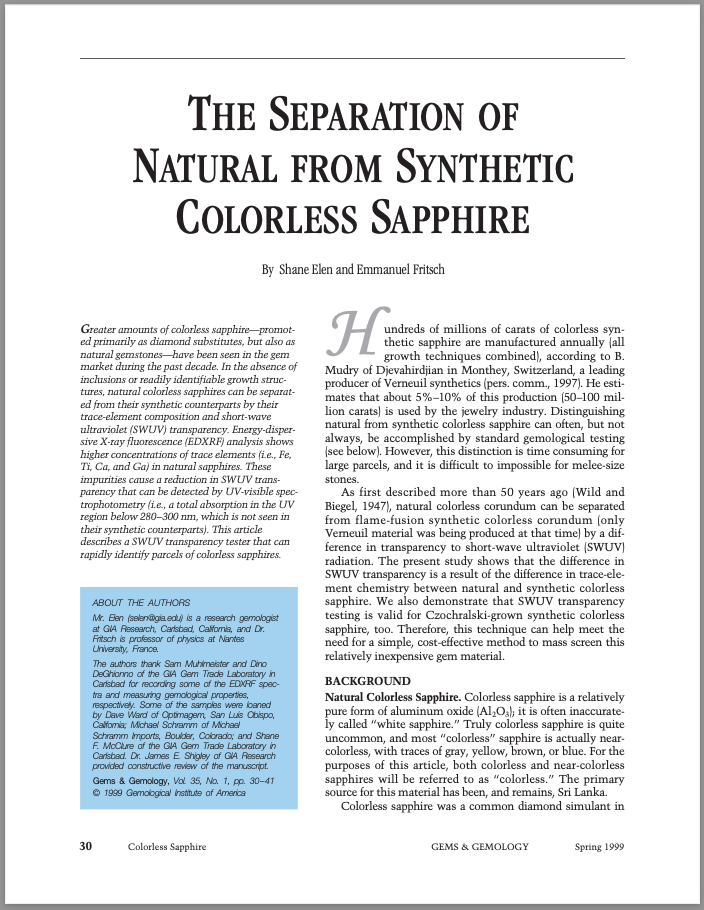
The separation of natural from synthetic colorless sapphire

The separation of natural from synthetic colorless sapphire

Elen, S. and Fritsch, E. (1999)

Journal Article · Source: Gems & Gemology · Volume: Vol. 35 · Issue: No. 1, Spring · Pages: pp. 30–41

Abstract
Greater amounts of colorless sapphire—promoted primarily as diamond substitutes, but also as natural gemstones—have been seen in the gem market during the past decade. In the absence of inclusions or readily identifiable growth structures, natural colorless sapphires can be separated from their synthetic counterparts by their trace-element composition and short-wave ultraviolet (SWUV) transparency. Energy-dispersive X-ray fluorescence (EDXRF) analysis shows higher concentrations of trace elements (i.e., Fe, Ti, Ca, and Ga) in natural sapphires. These impurities cause a reduction in SWUV transparency that can be detected by UV-visible spectrophotometry (i.e., a total absorption in the UV region below 280–300 nm, which is not seen in their synthetic counterparts). This article describes a SWUV transparency tester that can rapidly identify parcels of colorless sapphires.
Keywords
gems, corundum, synthetic corundum.7, SWUV transparency, chemistry, spectra
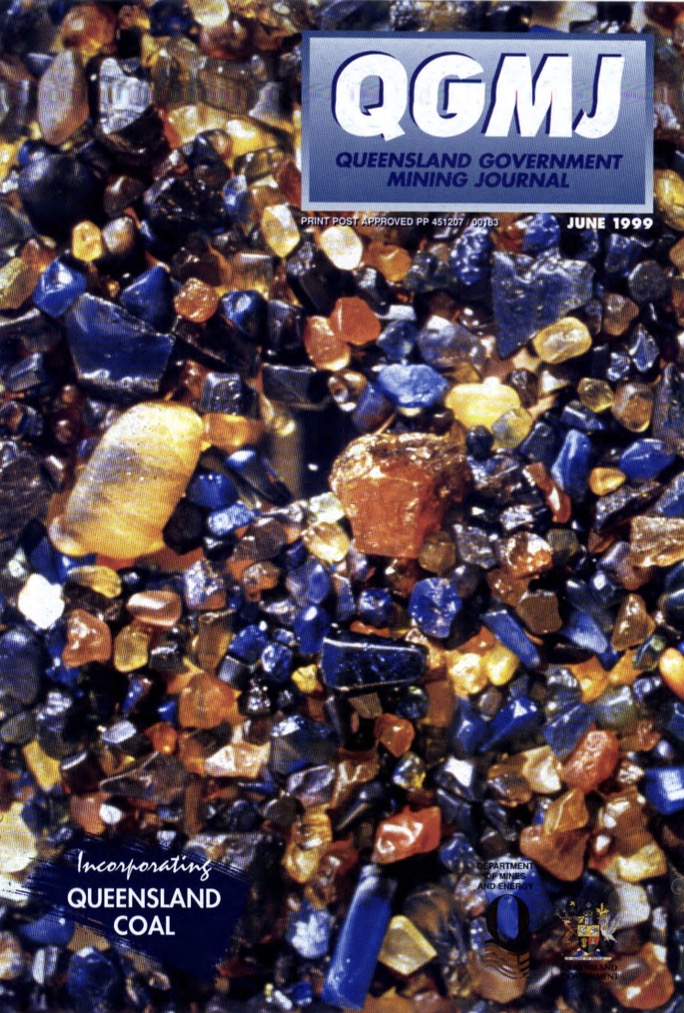
Sapphire and ruby in Australia

Sapphire and ruby in Australia

Neville, B.J. and Gnielinski, F., von (1999)

Journal Article · Source: Queensland Government Mining Journal · Volume: Vol. 100 · Issue: No. 1171, June · Pages: pp. 6–12

Abstract
Sapphires, predominantly medium to dark blue but also in other colors (e.g., green and parti-color), have been mined in eastern Australia for more than 100 years. Most have come from two major fields: Anakie in Queensland and New England in New South Wales. The sapphires are alluvial, derived from the erosion of alkali volcanic rocks (basalt lavas, pyroclastics, and volcaniclastics) of Tertiary and Quaternary age. They are similar in many ways (including gemological properties) to sapphires from Thailand, Cambodia, Nigeria, and China, which also are associated with alkali volcanic rocks of similar ages. The gem properties of Australian sapphires are typical for sapphire, with a broad range of refractive index (nε = 1.761–1.765, nω = 1.769–1.774) and specific gravity (3.97–4.02) values. The diaphaneity varies from transparent to opaque. Most stones exhibit a strong 450 nm iron-related absorption band with a spectroscope, and most are inert to both long- and short-wave UV radiation. Australian sapphires are characterized by their inclusions (e.g., pyrochlore, ilmenite, and spinel), chemistry (high iron content), and strong growth zoning and color banding. Nearly all are heat treated to improve clarity and color. The average size of faceted Australian sapphires is under 2 ct. The largest recorded rough sapphire, which weighed 4,180 ct, was carved into a 3,294 ct bust of Dr. Martin Luther King, Jr. Although numerous alluvial occurrences of ruby have been reported in Australia, gem-quality material is rare, and none of these deposits has ever been economic. The first discovery with significant potential was within gneiss in the Harts Range (Northern Territory). However, mining ceased after only minor production of mostly low-grade cabochon material. Sapphire mining in Australia was minor and sporadic from the 1880s until the early 1960s, except for a few favorable periods—such as immediately preceding World War I, when there was strong demand from Germany and Imperial Russia. Demand for sapphires increased in the 1960s and, with the arrival of buyers from Thailand, there was unprecedented activity in the Anakie and New England fields. Mining reached its peak in the mid-1970s, making Australia a major world producer. Since then, the Australian sapphire industry has declined because of the depletion of known resources, increased costs, and difficult land access. The situation has been further exacerbated by the discovery in recent years of important deposits in countries that have lower mining costs, mainly Madagascar, Tanzania, and Nigeria. Since 1998, sapphire mining in Australia has effectively ceased, and the industry faces an uncertain future.
Keywords
corundum, geology.11, sources.12, Australia.12, gems
Review of recent studies on black jadeite jade

Review of recent studies on black jadeite jade

Ouyang, C.M. and Li, H. (1999)

Journal Article · Source: Journal of Gemmology · Volume: Vol. 26 · Issue: No. 7, July · Pages: pp. 417–424

Abstract
Black jadeite jade, appearing on the Hong Kong market as bangles, beads and pendants, consists mainly of jadeite with small amounts of omphacitic pyroxene and accessory minerals. The colour of the jade is attributed to minute inclusions, largely of amorphous carbon with some metallic oxides and sulphides. In places the colour is patchy and the jade is colloquially known as black-skin-chicken jadeite.
Keywords
jade, jadeite, fei cui, Burma, gems, Broken Bangle

Exploring the Literature of Gemstone Inclusions

The literature of gemstone inclusions covers identification, origin determination, treatments, synthesis, mineral inclusions, fluid inclusions and other internal features of natural and synthetic gems.

For a curated selection of important sources, read Inclusions in Gemstones — Hyperion Literature Sources.

About Four Treasures

Four Treasures is Lotus Gemology's freely accessible gemological reference database. Use the full database to search by author, title or keyword and explore literature on gemology, mineralogy, jewelry and related fields. Where available, hyperlinks on titles may lead directly to the full publication.

Search the Complete Four Treasures Database