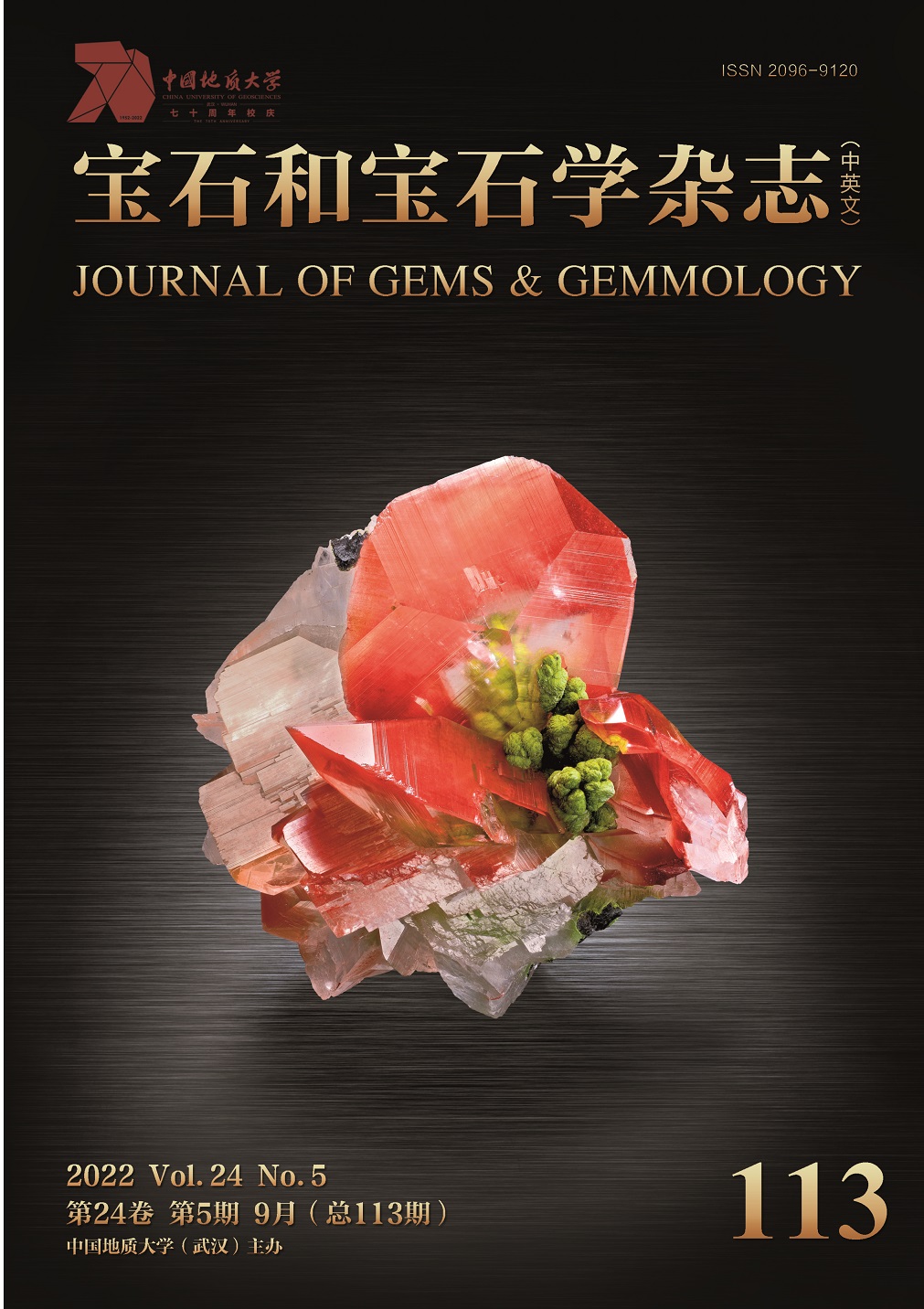
Gemstone Inclusions Bibliography

Gemstone Inclusions Bibliography

Explore books, articles and historical sources on inclusions in gemstones in Four Treasures, the Lotus Gemology reference database. This bibliography brings together matching records from the collection, with publication details, abstracts and cover images where available.

Gemstone Inclusion References

The list below matches the terms inclusion or inclusions in the database's searchable fields. Some references discuss inclusions as part of a broader subject.

1,021–1,040 of 1,111 matching references
Handbook of Planetary Gemology

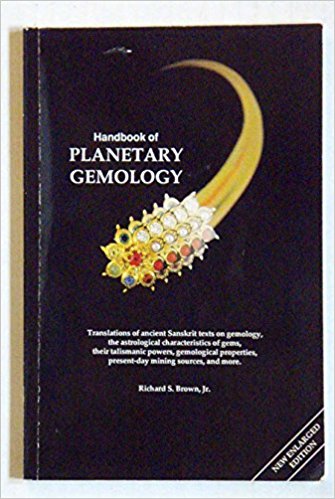
Handbook of Planetary Gemology

Brown, R.S. (n.d., ca. 1988)

Book · Publisher: McKinney International (Publication Concepts) · Pages: 88 pp.

Abstract
Sinkankas: This work presents translations of chapters 68–80 of the Sanskrit Garuḍa Purāṇa, which “elaborately describes the supernatural origin of gems and their mineralogical properties,” along with the Graha-cocāra Jyautiṣa, a text that “gives complete information on the astrological characteristics and effects of the principal gemstones” and “explains how auspicious gems help remove obstructions in various areas of life by appeasing planets that are having unfavorable effects.” The first thirteen chapters focus on planetary gemstones, offering summary translations of relevant Garuḍa Purāṇa passages concerning ruby, pearl, yellow sapphire, hessonite, emerald, diamond, cat’s-eye chrysoberyl, blue sapphire, coral, red garnet, jade (including jadeite), rock crystal, and bloodstone. Secondary planetary gemstones, or uparatnas, such as red spinel, moonstone, yellow topaz, citrine, hyacinth, peridot, tsavorite, green tourmaline, white zircon, turquoise, goshenite, amethyst, apatite cat’s-eye, blue spinel, tanzanite, lapis lazuli, and carnelian, are not directly traced to specific textual sources, and some—like tsavorite, goshenite, and tanzanite—were unknown to the ancients, suggesting these may have been included at the authors’ discretion. Each gemstone description includes its properties and modern sources, and although there is no bibliography, a valuable feature of the work is its inclusion of alternative Sanskrit names for the gemstones.
Keywords
corundum, history.1, India.12, gems, Indian lapidary
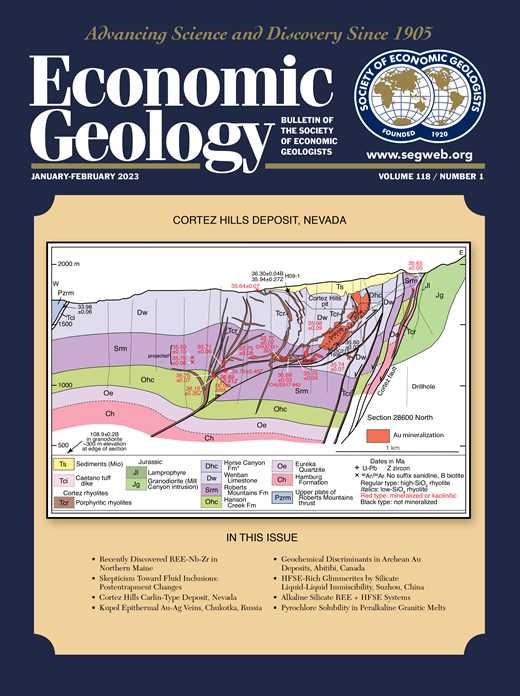
A Plea for More Skepticism Toward Fluid Inclusions: Part I. Postentrapment Changes in Fluid Density and Fluid Salinity Are Very Common

A Plea for More Skepticism Toward Fluid Inclusions: Part I. Postentrapment Changes in Fluid Density and Fluid Salinity Are Very Common

Zhang, D. and Audétat, A. (2023)

Journal Article · Source: Economic Geology · Volume: Vol. 118 · Issue: No. 1 · Pages: pp. 15–41

Abstract
This contribution focuses on fluid inclusions in quartz, which is the most commonly investigated host mineral for fluid inclusions. We demonstrate based on petrographic relationships, cathodoluminescence (CL) images, and microthermometric data that postentrapment migration and/or dismemberment of fluid inclusions in quartz is a very common phenomenon that leads to major changes in the recorded fluid properties. The phenomenon is not restricted to samples that experienced shear stress but is common also in freely grown, euhedral quartz crystals that grew within open-space veins and miarolitic cavities. Generally, both migration and dismemberment lead to substantial increases in fluid density and, thus, in decreased fluid inclusion homogenization temperatures by up to several hundred degrees Celsius. Fluid salinities were commonly less affected, although some high-temperature brine inclusions record salinity increases by up to 30% relative. A good fluid inclusion preservation state is indicated (but not proven) if the inclusions occur on well-defined trails or growth zones, show constant phase proportions, and provide tightly clustered microthermometric data. In contrast, well-developed negative crystal shapes cannot be taken as evidence for a good preservation state. Randomly distributed, regular-shaped fluid inclusions in high-temperature (>300°C) quartz samples are in most cases not of primary origin but rather represent migrated pseudosecondary fluid inclusions. Evidence for fluid inclusion migration and dismemberment includes the occurrence of tiny solid inclusions (mostly mica and rutile) within the host quartz, scattered microthermometric data, and the presence of irregular or c-axis-parallel, dully to nonluminescent quartz patches that depart from healed fracture planes visible in cathodoluminescence images. In summary, pressure-temperature information obtained from fluid inclusions should generally be treated with great caution, unless they meet the above-mentioned criteria for good inclusion preservation.
Keywords
gems, fluid inclusions, quartz, fluid density, fluid salinity
Trace element geochemistry and U-Pb dating of zircon inclusions in sapphire from Southern Vietnam: Indicator of basalt-related sapphire formation

Trace element geochemistry and U-Pb dating of zircon inclusions in sapphire from Southern Vietnam: Indicator of basalt-related sapphire formation

Thi Anh Vu, D., Fanka, A. and Sutthirat, C. (2023)

Journal Article · Source: Journal of Asian Earth Sciences · Volume: Vol. 245 · Pages: 105537

Abstract
Trace element geochemistry of zircon inclusion in sapphire from Southern Vietnam shows a large variation in Hf (1.1 to 2.7 wt%), Y (779 – 4220 ppm), Th (329 – 5199 ppm), U (224 – 3587 ppm), and ∑REE (706 – 2710 ppm) abundances with clearly positive Ce and mildly negative Eu anomalies observed in chondrite-normalized REE patterns. These characteristics suggest that the majority of the host sapphires were crystallized from evolved felsic melt at the lower crustal levels. The U-Pb zircon dating yields the ages ranging between 35.5 ± 1.6 Ma and 14.7 ± 0.29 Ma for Krong Nang sapphire, 5.9 ± 0.13 Ma for Binh Thuan sapphire, 5.6 ± 0.07 Ma for Dak Nong sapphire, and 5.5 ± 0.08 Ma for Di Linh sapphire. Except the Krong Nang sapphire, these ages are coeval with the alkali basalt eruptions in Southern Vietnam. This implies the crystallization of sapphire during early stages of the basaltic magmatism. Sapphire and associated minerals were extensively transported from different depths to the surface during the later stages of basalt magmatism (≤5 Ma).
Keywords
gems, corundum, Vietnam.12, geology.11, Cenozoic basalt, Sapphire, Southern Vietnam, U-Pb, Zircon
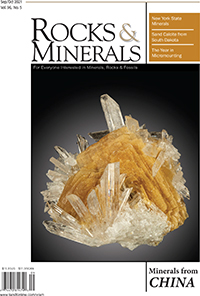
A unique occurrence of nephrite jade with magnetite inclusions in San Bernardino county, California

A unique occurrence of nephrite jade with magnetite inclusions in San Bernardino county, California

Mills, J. (2021)

Journal Article · Source: Rocks & Minerals · Publisher: Taylor & Francis · Volume: Vol. 96 · Issue: No. 5 · Pages: pp. 442–449

Abstract
For well over half a century, Southern California collectors have known about and tried to collect black nephrite jade with sparkling rosettes of magnetite from a unique deposit adjacent to the Verde Antique Marble quarry (Sec. 28, T. 7 N., R. 2 W., San Bernardino base and meridian). This long-inactive quarry is located in the northern extension of the Sidewinder Mountains near Stoddard Well in San Bernardino County, California (fig. 3). I first collected at the site in the early 1960s with Robert Hamblin, proprietor of the North Hollywood Gem and Mineral Shop, who acquired and wholesaled several tons of this material to the lapidary trade for jewelry, spheres, and similar projects. The best material from the find produced striking metallic rosette patterns on a jetblack background.
Keywords
gems, jade, nephrite, California, USA, Stoddard, inclusions
New data on the genetic linkage of beryll and chrisoberyl chromophors of the ural’s emerald mines with chromium-bearing spinels of the Bazhenov ophiolite complex

New data on the genetic linkage of beryll and chrisoberyl chromophors of the ural’s emerald mines with chromium-bearing spinels of the Bazhenov ophiolite complex

Popov, M.P., Sorokina, E.S., Kononkova, N.N., Nikolaev, A.G. and Karampelas, S. (2019)

Journal Article · Source: Доклады Академии наук [Reports of the Academy of Sciences] · Volume: Vol. 486 · Issue: No. 6 · Pages: pp. 699–703 · Language: in Russian

Abstract
The distribution of chromophores and the composition of the chromium-bearing spinels in Uralian emeralds and alexandrites were studied for the first time. It was proved the main source of chromium for the coloring of emeralds and alexandrites from the Mariinsky deposit was the chromium-bearing spinels of the Bazhenov ophiolite complex. The rare mineral zincochromite is described as an inclusion in the Uralian emeralds for the first time.
Keywords
gems, spinel, emerald, alexandrite, Malysheva, Mariinsky deposit, Ural’s emerald mines, geochemical features, optical spectroscopy, Bazhenov ophiolite complex, Russia, inclusions, beryl, chrysoberyl, chromophores, geology
Inclusions of spinel from Burma

Inclusions of spinel from Burma

Zhu, J. and Yu, X. (2018)

Journal Article · Source: Journal of Gems & Gemmology · Volume: Vol. 20 (Supp.) · Pages: pp. 18–23 · Language: in Chinese with English abstract

Keywords
gems, spinel, Burma, inclusions
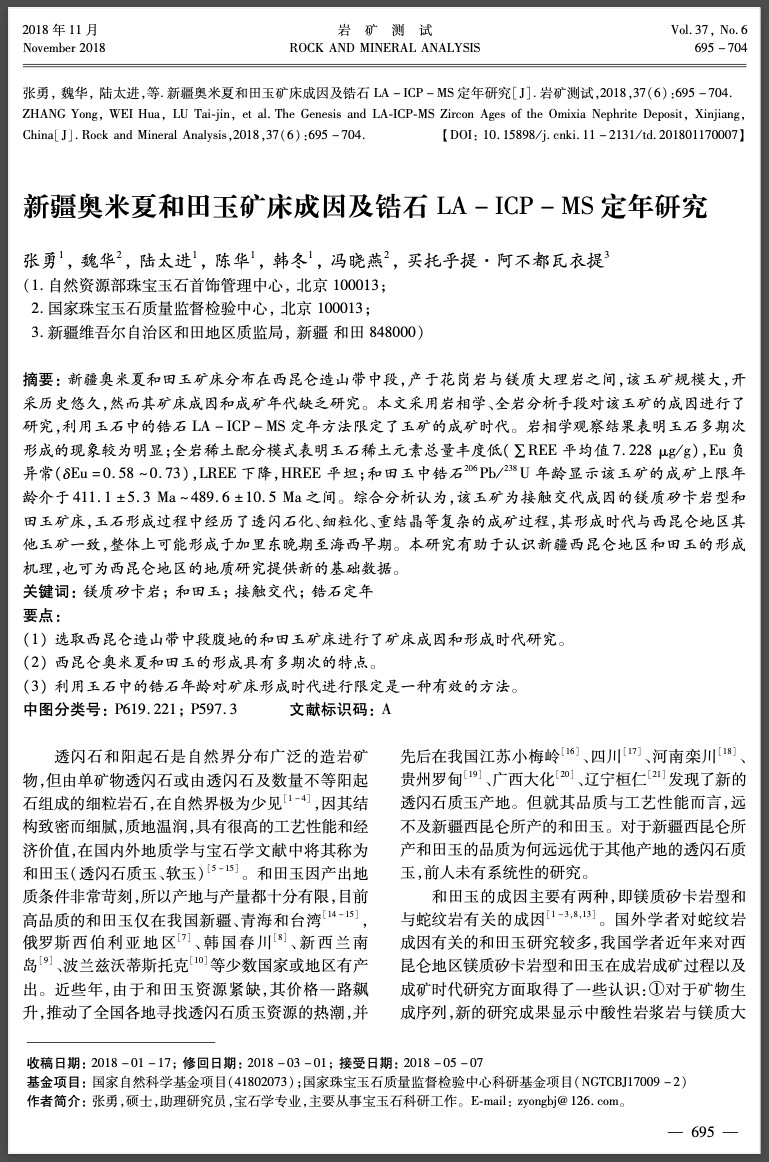
The genesis and LA-ICP-MS zircon ages of the Omixia nephrite deposit, Xinjiang, China

The genesis and LA-ICP-MS zircon ages of the Omixia nephrite deposit, Xinjiang, China

新疆奥米夏和田玉矿床成因及锆石LA-ICP-MS定年研究

Zhang, Y., Wei, H., Lu, T.-j., Chen, H., Han, D., Feng, X.-y. and Maituohuti, A. (2018)

Journal Article · Source: Rock and Mineral Analysis · Volume: Vol. 6 · Pages: pp. 695–704 · Language: in Chinese

Abstract
The Omixia nephrite deposit, situated in the central West Kunlun Orogenic Belt, is hosted in Mg-skarn formed between granite and magnesian marble. Despite its large size and extensive exploration, the ore genesis and precise age of the deposit have remained poorly understood. This study aims to clarify the genesis and constrain the upper age of the deposit through petrological analysis and LA-ICP-MS U-Pb zircon dating. Petrographic observations reveal that nephrite formed in multiple stages, including tremolite mineralization, diapolitization, fine granulation, and recrystallization. Geochemically, the nephrite displays low total rare earth element (ΣREE) content, averaging 7.228 μg/g, with strongly negative Eu anomalies (δEu = 0.58–0.73), declined light REE patterns, and flat heavy REE patterns. U-Pb zircon ages in the nephrite range from 489.6 ± 10.5 Ma to 411.1 ± 5.3 Ma, indicating formation during the Late Caledonian to Early Hercynian periods. These findings confirm that the Omixia deposit is a typical contact metasomatic Mg-skarn nephrite deposit, and they provide valuable insights into the genesis of nephrite in the West Kunlun region of Xinjiang, contributing foundational data for further geological research in the area.
Keywords
gems, jade, nephrite, Xinjiang, Chinese jade, Khotan, inclusions, zircon dating
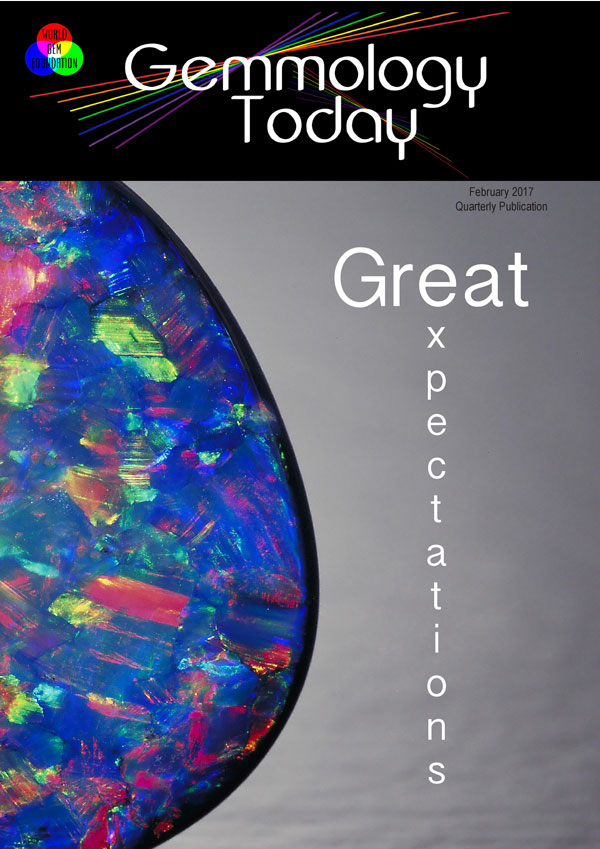
Women in Gemmology: Interview with E. Billie Hughes

Women in Gemmology: Interview with E. Billie Hughes

Dominy, G. (2017)

Journal Article · Source: Gemmology Today · Issue: February · Pages: pp. 14–21

Abstract
Today women are playing an integral role in the jewellery and gemstone industry from the store front to the laboratory. Here we look at the women who are making a difference.
Keywords
gems, corundum, inclusions.5, E. Billie Hughes, Lotus Gemology
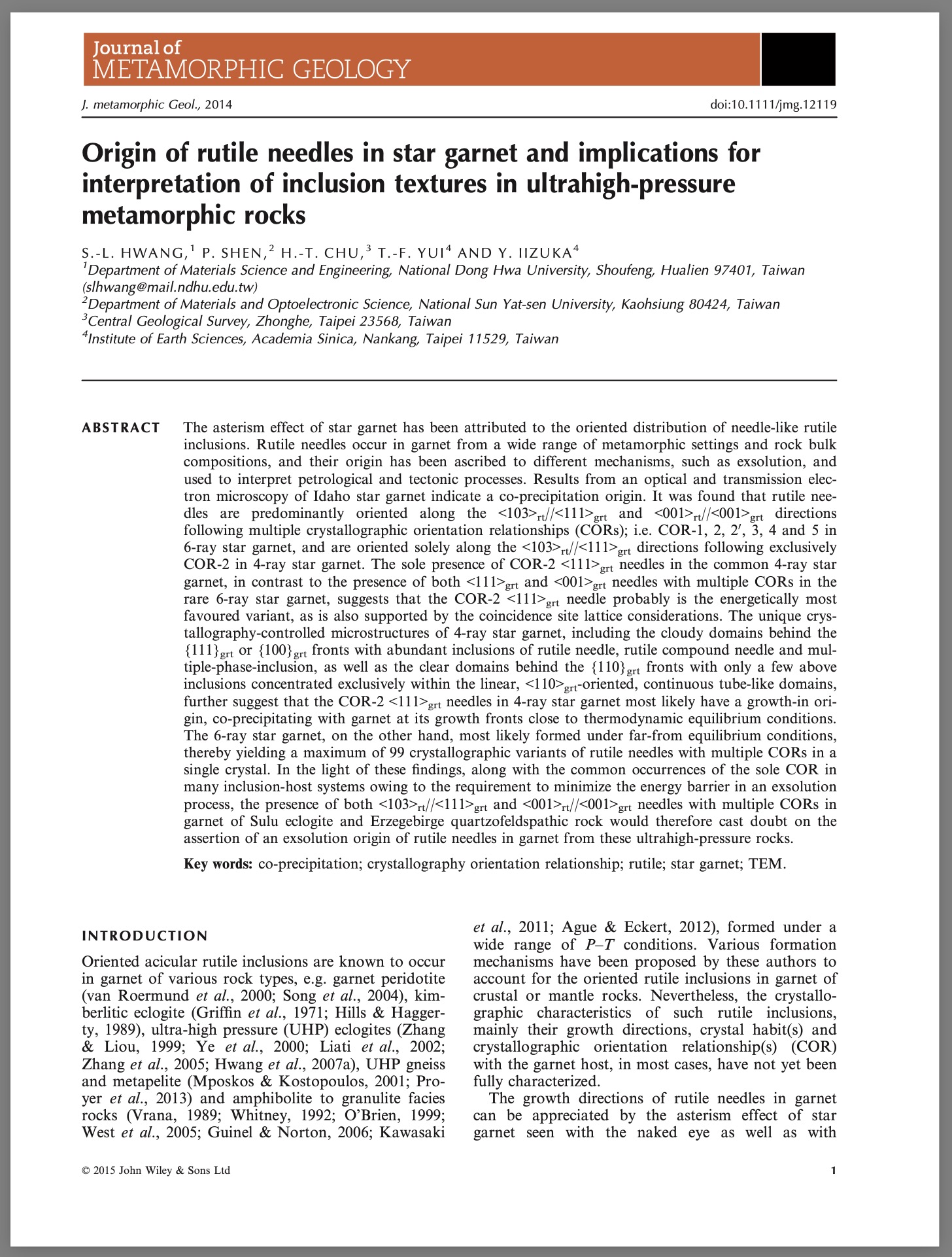
Origin of rutile needles in star garnet and implications for interpretation of inclusion textures in ultrahigh-pressure metamorphic rocks

Origin of rutile needles in star garnet and implications for interpretation of inclusion textures in ultrahigh-pressure metamorphic rocks

Hwang, S.L., Shen, P., Chu, H.T., Yui, T.F. and Iizuka, Y. (2015)

Journal Article · Source: Journal of Metamorphic Geology · Publisher: John Wiley & Sons, Ltd · Volume: Vol. 33 · Issue: No. 3 · Pages: pp. 249–272

Abstract
The asterism effect of star garnet has been attributed to the oriented distribution of needle-like rutile inclusions. Rutile needles occur in garnet from a wide range of metamorphic settings and rock bulk compositions, and their origin has been ascribed to different mechanisms, such as exsolution, and used to interpret petrological and tectonic processes. Results from an optical and transmission electron microscopy of Idaho star garnet indicate a co-precipitation origin. It was found that rutile needles are predominantly oriented along the rt//grt and rt//grt directions following multiple crystallographic orientation relationships (CORs); i.e. COR-1, 2, 2?, 3, 4 and 5 in 6-ray star garnet, and are oriented solely along the rt//grt directions following exclusively COR-2 in 4-ray star garnet. The sole presence of COR-2 grt needles in the common 4-ray star garnet, in contrast to the presence of both grt and grt needles with multiple CORs in the rare 6-ray star garnet, suggests that the COR-2 grt needle probably is the energetically most favoured variant, as is also supported by the coincidence site lattice considerations. The unique crystallography-controlled microstructures of 4-ray star garnet, including the cloudy domains behind the {111}grt or {100}grt fronts with abundant inclusions of rutile needle, rutile compound needle and multiple-phase-inclusion, as well as the clear domains behind the {110}grt fronts with only a few above inclusions concentrated exclusively within the linear, grt-oriented, continuous tube-like domains, further suggest that the COR-2 grt needles in 4-ray star garnet most likely have a growth-in origin, co-precipitating with garnet at its growth fronts close to thermodynamic equilibrium conditions. The 6-ray star garnet, on the other hand, most likely formed under far-from equilibrium conditions, thereby yielding a maximum of 99 crystallographic variants of rutile needles with multiple CORs in a single crystal. In the light of these findings, along with the common occurrences of the sole COR in many inclusion-host systems owing to the requirement to minimize the energy barrier in an exsolution process, the presence of both rt//grt and rt//grt needles with multiple CORs in garnet of Sulu eclogite and Erzegebirge quartzofeldspathic rock would therefore cast doubt on the assertion of an exsolution origin of rutile needles in garnet from these ultrahigh-pressure rocks.
Keywords
gems, garnet, star garnet, asterism, rutile, rutile silk
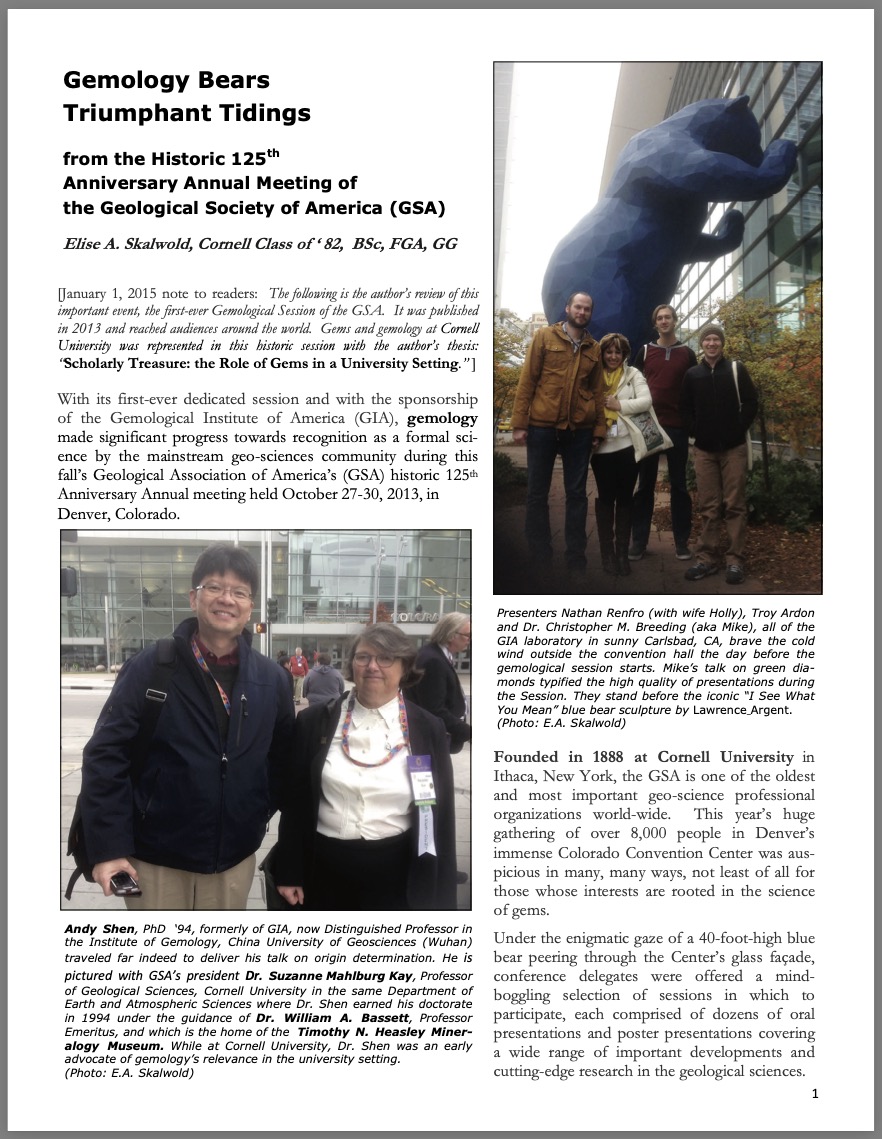
Gemology bears triumphant tidings. A review of the historic 125th Anniversary Annual Meeting of the Geological Society of America (GSA)

Gemology bears triumphant tidings. A review of the historic 125th Anniversary Annual Meeting of the Geological Society of America (GSA)

Skalwold, E.A. (2013)

Conference Paper · Publisher: Geological Society of America

Abstract
With its first-ever dedicated session and with the sponsorship of the Gemological Institute of America (GIA), gemology made significant progress towards recognition as a formal sci- ence by the mainstream geo-sciences community during this fall’s Geological Association of America’s (GSA) historic 125th Anniversary Annual meeting held October 27-30, 2013, in Denver, Colorado.
Keywords
gems, diamond, inclusions
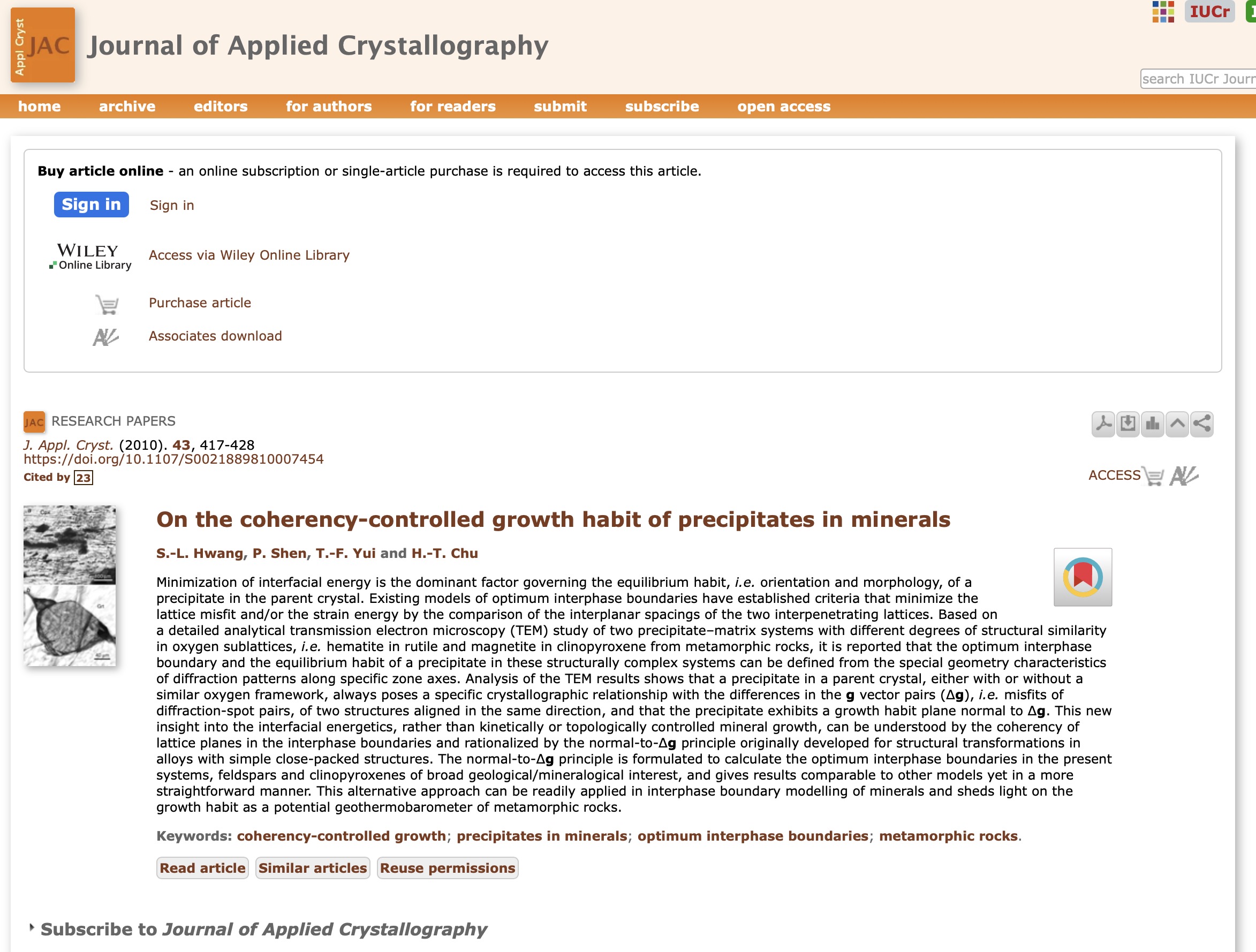
On the coherency-controlled growth habit of precipitates in minerals

On the coherency-controlled growth habit of precipitates in minerals

Hwang, S.-L., Shen, P., Yui, T.-F. and Chu, H.-T. (2010)

Journal Article · Source: Journal of Applied Crystallography · Volume: Vol. 43 · Issue: No. 3 · Pages: pp. 417–428

Abstract
Minimization of interfacial energy is the dominant factor governing the equilibrium habit, i.e. orientation and morphology, of a precipitate in the parent crystal. Existing models of optimum interphase boundaries have established criteria that minimize the lattice misfit and/or the strain energy by the comparison of the interplanar spacings of the two interpenetrating lattices. Based on a detailed analytical transmission electron microscopy (TEM) study of two precipitate-matrix systems with different degrees of structural similarity in oxygen sublattices, i.e. hematite in rutile and magnetite in clinopyroxene from metamorphic rocks, it is reported that the optimum interphase boundary and the equilibrium habit of a precipitate in these structurally complex systems can be defined from the special geometry characteristics of diffraction patterns along specific zone axes. Analysis of the TEM results shows that a precipitate in a parent crystal, either with or without a similar oxygen framework, always poses a specific crystallographic relationship with the differences in the g vector pairs ([Delta]g), i.e. misfits of diffraction-spot pairs, of two structures aligned in the same direction, and that the precipitate exhibits a growth habit plane normal to [Delta]g. This new insight into the interfacial energetics, rather than kinetically or topologically controlled mineral growth, can be understood by the coherency of lattice planes in the interphase boundaries and rationalized by the normal-to-[Delta]g principle originally developed for structural transformations in alloys with simple close-packed structures. The normal-to-[Delta]g principle is formulated to calculate the optimum interphase boundaries in the present systems, feldspars and clinopyroxenes of broad geological/mineralogical interest, and gives results comparable to other models yet in a more straightforward manner. This alternative approach can be readily applied in interphase boundary modelling of minerals and sheds light on the growth habit as a potential geothermobarometer of metamorphic rocks.
Keywords
gems, corundum, inclusions.5, phenomena, exsolution, stars
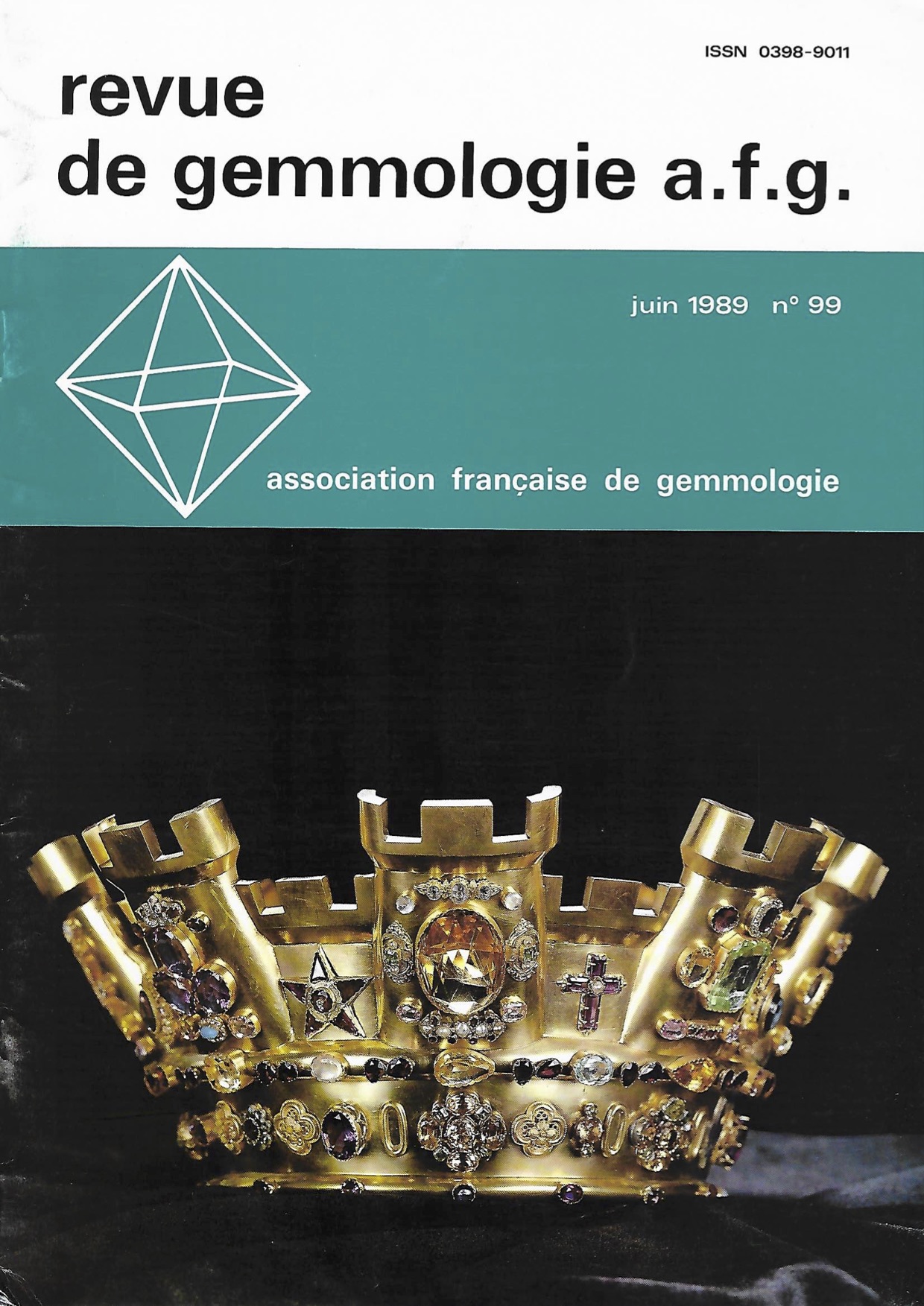
Les gisements de saphirs et rubis associés aux basaltes alcalins de Madagascar: Caractéristiques géologiques et minéralogiques 1ère partie: caractéristiques géologiques des gisements

Les gisements de saphirs et rubis associés aux basaltes alcalins de Madagascar: Caractéristiques géologiques et minéralogiques 1ère partie: caractéristiques géologiques des gisements

The sapphire and ruby deposits associated with alkaline basalts of Madagascar: Geological and mineralogical characteristics. Part 1: Geological characteristics of the deposits

Rakotosamizanany, S., Giuliani, G., Ohnenstetter, D., Rakotondrazafy, A.F.M. and Fallick, A.E. (2009)

Journal Article · Source: Revue de Gemmologie A.F.G. · Volume: No. 169 · Pages: pp. 13–21 · Language: in French

Abstract
Madagascar is one of the principal producers of gem corundums recovered from continental basaltic fields. The main deposits are the secondary deposits of Ambondromifehy from the Antsiranana Province in the northern part of the country (sapphire-bearing palaeoplacer and placer), Soamiakatra–Mandrosohasina from the Antananarivo Province in the central part (primary ruby deposit, and ruby and/or sapphire-bearing placer and palaeoplacer), and Vatomandry from the Toamasina Province in the eastern part of the island (ruby- and sapphire-bearing paleoplacer). Soamiakatra is the only known primary deposit where ruby is found in metagabbro and pyroxenite xenoliths, which were entrained and brought up to the upper crust by the Ankaratra volcanic event. Petrographic studies have demonstrated the existence of two different conditions of ruby formation at the boundary of the eclogite domain (HT ~1100 °C, HP ~20 kbar) and granulite facies (HT ~1100 °C, BP
Keywords
corundum, Geology.11, Madagascar.12, gems

New geological origin: Ruby from Mozambique

Kawano, J., Kitawaki, H., Abduriyim, A. and Okano, M. (2009)

Journal Article · Source: Gemmology · Volume: Vol. 40 · Issue: No. 483 · Pages: pp. 13–15 · Language: in Japanese with English translation

Abstract
Rubies have recently been discovered in northern Mozambique, specifically in Niassa Province (M’sawize village, Lichinga district) and Cabo Delgado Province (Montepuez area). These rubies display internal features such as twin planes, fluid-film inclusions, negative crystals, and crystalline inclusions. Many of the crystalline inclusions are colorless to green amphibole (possibly pargasite), along with confirmed apatite and fine needles producing “silk.” Some fractures contain material resembling hematite. Infrared spectra of unheated Mozambique rubies show a broad absorption band at 3309 and 3081 cm⁻¹, which disappears after heating; weak bands at 2074 and 1980 cm⁻¹, likely from diaspore, may also be present. EDXRF analysis reveals Cr contents of 0.3–0.8 wt.% and Fe contents of 0.2–0.5 wt.%, higher than typical non-basalt-related rubies but lower than basaltic rubies. Most Mozambique rubies have been heat-treated, often leaving flux residues in fissures.
Keywords
corundum, Mozambique.12, gems
The structure and chemical composition of trapiche blue sapphire from southern Vietnam and Cambodia

The structure and chemical composition of trapiche blue sapphire from southern Vietnam and Cambodia

Khotchanin, K., Thanasuthipitak, P. and Thanasuthipitak, T. (2009)

Journal Article · Source: Journal of the Gemmological Association of Hong Kong · Volume: Vol. 30 · Pages: pp. 25–35

Abstract
While trapiche emerald is well known, trapiche corundum (especially blue sapphire) is considerably rarer. The authors examined 33 blue sapphires from Vietnam and 27 from Cambodia. The majority showed trapiche structure, but non-trapiche specimens were included for comparison. The trapiche sapphires typically featured a brown core and brown to yellowish brown arms separating the sections of blue crystal; dotted and needle-like inclusions were also seen. Iron and titanium were both present in the samples, but the iron was concentrated in the trapiche core while the titanium was evenly distributed for the most part. The authors also compared the visual characteristics of trapiche rubies and sapphires, as well as trapiche vs. star phenomena. The trapiche structure could point to a multi-stage growth process that starts at the core, with the arms and blue crystal segments growing concurrently but at different rates.
Keywords
corundum, Cambodia.12, Vietnam.12, gems
The oxygen isotopic composition as an indicator of the genesis of “basaltic” corundum

The oxygen isotopic composition as an indicator of the genesis of “basaltic” corundum

Vysotsky, S., Yakovenko, V., Ignat'ev, A. and Karabtsov, A. (2009)

Journal Article · Source: Russian Journal of Pacific Geology · Volume: Vol. 3 · Issue: No. 1, February · Pages: pp. 64–68

Abstract
Abstract This paper reports an oxygen isotopic study of corundums and associated minerals from the Yogo lamprophyres (Montana, US), plagioclase-corundum inclusions in alkali basalt (Tunkin depression, Russia), and from modern alluvium of Podgelbanochnyi alkaline basaltic volcano (Primorye, Russia). It is shown that all sapphires genetically related to mafic magmatic rocks have a similar oxygen isotopic composition (the variations of δ18O are within 2.5‰) with most values plotting between +4.5 and +7.0‰ SMOW. The oxygen isotopic ratios in the associated minerals (olivines, pyroxenes, mica, and others) and host rocks are plotted in the same interval. This indicates that the sapphire crystallized during evolution of the parental mafic magma. However, there are xenogenic corundums, which were only transported by basaltic magma to the Earth’s surface. They have a sharply distinct oxygen isotopic composition, which suggests their disequilibrium with the host lavas, and, correspondingly, a different genetic nature.
Keywords
corundum, USA.12, Montana, Russia.12, oxygen isotopes - corundum - sapphire - Yogo-Gulch - Tunkin depression - Podgelbanochnyi volcano - Russia - United States, gems
Inside rubies

Inside rubies

Smith, C.P., Beesley, C.R., Darenius, E.Q. and Mayerson, W.M. (2008)

Journal Article · Source: Rapaport Diamond Report · Volume: Vol. 31 · Issue: No. 47, December 5 · Pages: pp. 140–149

Keywords
corundum, inclusions.5, gems
Emeralds from the Panjshir Valley (Afghanistan)

Emeralds from the Panjshir Valley (Afghanistan)

Fijal, J., Heflik, W., Natkaniec-Nowak, L. and Szczepaniak, A. (2004)

Journal Article · Source: Gemmologie: Zeitschrift der Deutschen Gemmologischen Gesellschaft · Volume: Vol. 53 · Issue: No. 4 · Pages: pp. 127–142

Keywords
gems, bery, beryl, emerald, inclusions, Afghanistan, Panjshir
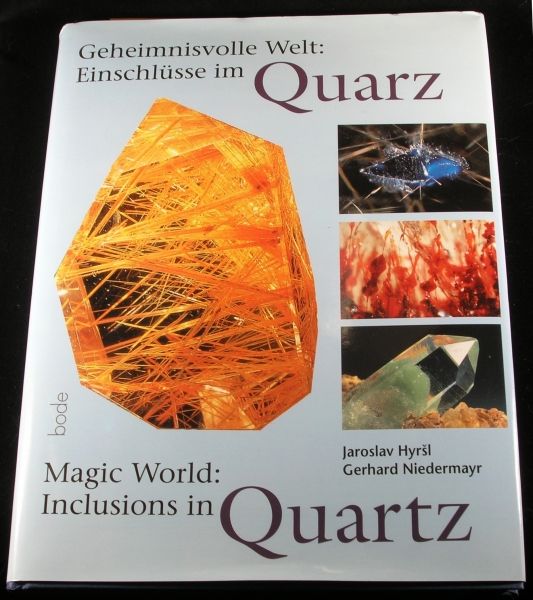
Magic World: Inclusions in Quartz

Magic World: Inclusions in Quartz

Hyršl, J. and Niedermayr, G. (2003)

Book · Publisher: Bode Verlag GmbH · Pages: 240 pp. · Language: in English and German

Abstract
Photomicrographs of inclusions in quartz. The every day mineral quartz can be found all over the world. It takes a long time to form. Over millions of years, a growing quartz crystal sometimes incorporates other minerals that develop simultaneously, thus forming so called inclusions. This book presents photos of fascinating inclusions in quartz, often beautiful like a dream. It wants to give you an idea of the fantastic inner life of quartz crystals and might also be an animation for your own engagement with this phenomenon. The every day mineral quartz so gets a whole new perspective.
Keywords
gems, inclusions, quartz
Study on large-sized ruby grown by temperature gradient technique

Study on large-sized ruby grown by temperature gradient technique

Song, C., Zhou, S., Si, J., Li, H., Zhou, G., Hang, Y. and Xu, J. (2003)

Journal Article · Source: Journal of Synthetic Crystals · Volume: Vol. 32 · Issue: No. 5 · Pages: pp. 423–426

Abstract
Large crystals of synthetic ruby (not of gem quality) were grown by the temperature gradient technique from seed plates using Al₂O₃ powders mixed with 0.5–3% Cr₂O₃. Crystallization started at 2,050 °C; cooling rates were 0.5–2.5 °C/hour. The largest crystal measured 75 mm in diameter, 45 mm long, and weighed 1,076 g. This crystal was dark red in the center and even darker red (almost black) at its edges and bottom. Wave-like growth bands were observed in the top portion, while clouds of minute inclusions were concentrated near the seed plate. The concentration of the inclusions decreased from edge to center and from bottom to top, resulting in a “trumpet”-shaped distribution along the growth direction similar to that found in synthetic Ti-doped sapphire crystals grown by the same technique. Electron-microprobe analysis showed that the inclusions were mainly uncrystallized Al₂O₃ powder. Gas bubbles or voids also were observed. Microprobe and spectroscopic (visible range) data showed that the Cr³⁺ concentration increased in two directions (i.e., from center to edge and from bottom to top), corresponding to the growth progression. The authors propose that the quality of synthetic ruby crystals produced by this method could be improved by optimizing the cooling rate, purifying the raw materials, and controlling the temperature during growth.
Keywords
corundum, synthetic corundum.7, gems

Exploring the Literature of Gemstone Inclusions

The literature of gemstone inclusions covers identification, origin determination, treatments, synthesis, mineral inclusions, fluid inclusions and other internal features of natural and synthetic gems.

For a curated selection of important sources, read Inclusions in Gemstones — Hyperion Literature Sources.

About Four Treasures

Four Treasures is Lotus Gemology's freely accessible gemological reference database. Use the full database to search by author, title or keyword and explore literature on gemology, mineralogy, jewelry and related fields. Where available, hyperlinks on titles may lead directly to the full publication.

Search the Complete Four Treasures Database