Gemstone Inclusions Bibliography

Gemstone Inclusions Bibliography

Explore books, articles and historical sources on inclusions in gemstones in Four Treasures, the Lotus Gemology reference database. This bibliography brings together matching records from the collection, with publication details, abstracts and cover images where available.

Gemstone Inclusion References

The list below matches the terms inclusion or inclusions in the database's searchable fields. Some references discuss inclusions as part of a broader subject.

941–960 of 1,111 matching references
Inclusions in gemstones

Inclusions in gemstones

Gübelin, E.J. (1972)

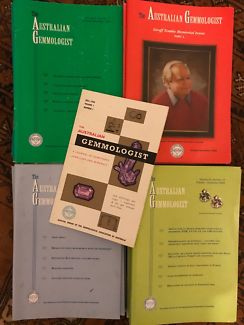
Journal Article · Source: Australian Gemmologist · Volume: Vol. 11 · Issue: No. 8, November · Pages: pp. 3–14

Keywords
corundum, ruby, sapphire, inclusions.5, gems
Mafic and ultramafic inclusions associated with undersaturated basalt on Kod Ali Island, Southern Red Sea

Mafic and ultramafic inclusions associated with undersaturated basalt on Kod Ali Island, Southern Red Sea

Hutchison, R. and Gass, I.G. (1971)

Journal Article · Source: Contributions to Mineralogy and Petrology · Volume: Vol. 31 · Issue: No. 2 · Pages: pp. 94–101

Abstract
The island of Kod Ali is a small diatreme cone lying close to the Ethiopian coast at latitude 13° 57′ N, longitude 41° 49′ E. This volcanic structure, produced by geologically Recent volcanic activity, consists, almost entirely, of pyroclastic debris. Evidence of a liquid phase is confined to the thin veneers of markedly alkalic olivine basalt which coat many of the abundant gabbroic, pyroxenitic and lherzolitic fragments found on the island. As silicic inclusions are completely absent and as the alkalic liquid phase and the “tholeiitic” inclusions are seemingly genetically unrelated, it is proposed that the latter might have been derived from a tholeiitic plutonic layered sequence that underlies the tholeiitic basalts of an “oceanic” Red Sea floor.
Keywords
gems, ancient gems, glyptic, archaeology, archaeogemology, Ethiopia, Red Sea, Eritrea, olivine basalts, geology, analytical
Korundeinschlüsse im Korund

Korundeinschlüsse im Korund

Corundum inclusions in corundum

Eppler, W.F., Jagodzinski, H. and Oppermann, J. (1971)

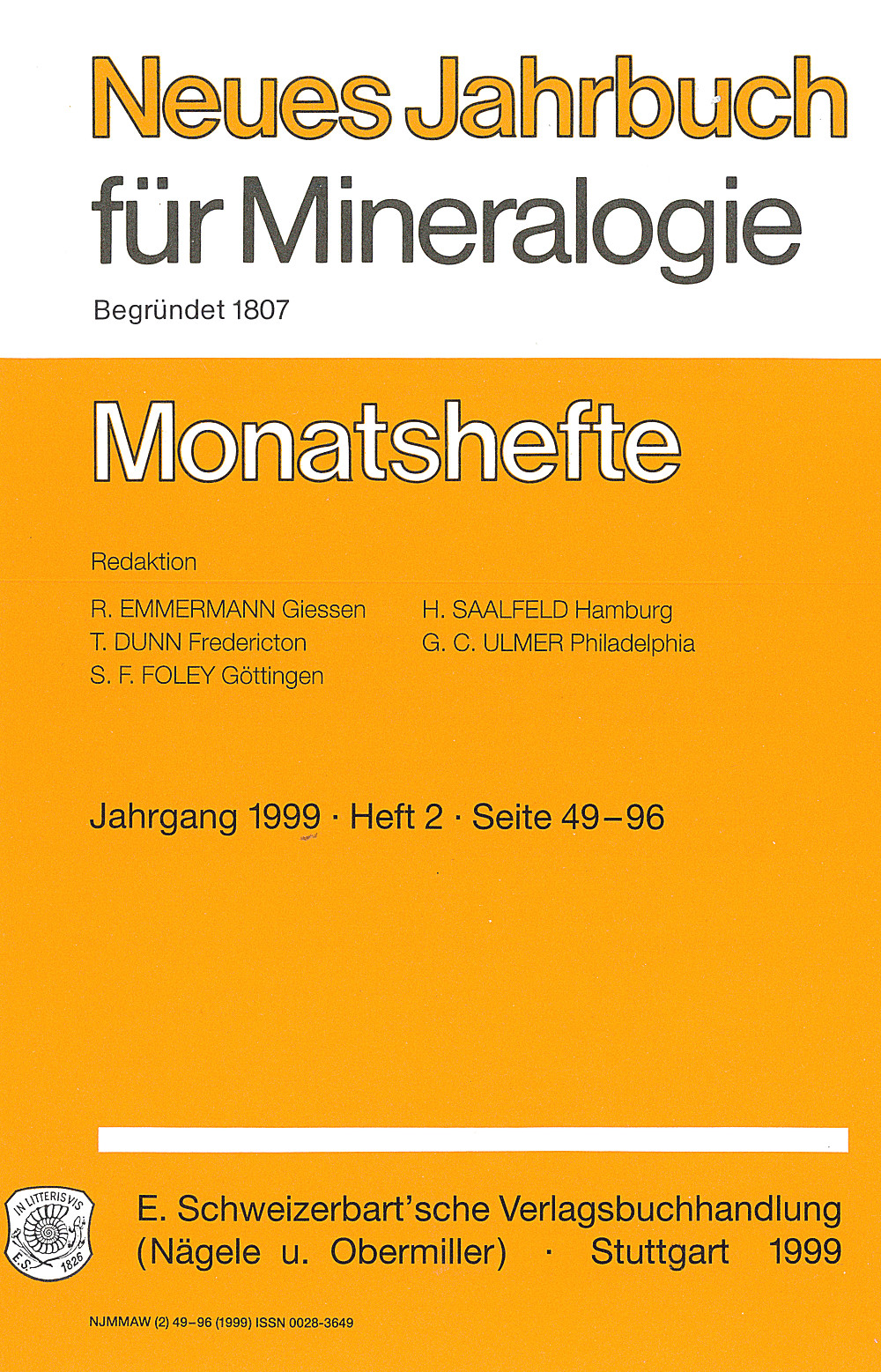
Journal Article · Source: Neues Jahrbuch für Mineralogie, Monatshefte · Issue: No. 10 · Pages: pp. 429–432 · Language: in German

Abstract
Eppler, Jagodzinski, and Oppermann describe microscopic inclusions of corundum occurring within corundum crystals and examine their crystallographic relationships with the host. The study investigates the orientation and structural relationship of the included corundum crystals, using crystallographic observations to determine the nature of their intergrowth with the surrounding host. The authors discuss the significance of these inclusions for understanding corundum growth and crystallization, showing that inclusions of the same mineral species as the host can preserve evidence of distinct stages or conditions of crystal development.
Keywords
corundum, ruby, sapphire, inclusions.5, gems
Indian Gemmology

Indian Gemmology

Tank, R.R. (1971)

Book · Publisher: Dulichand Tank · Pages: 171 pp.

Abstract
Sinkankas: Gemstones as viewed by an Indian author steeped in traditional lore presents a perspective deeply rooted in India’s enduring cultural relationship with gems, much of which remains seriously regarded today. As noted in a review in Gems & Gemology (Vol. 14, No. 2, 1972, pp. 61–63), the work is a unique combination of Indian culture and gemology." The lengthy and valuable introduction offers insights into Indian gem lore, tracing its origins to ancient texts as well as to more recent sources, many of which are cited by the author, Tank, along with the names of their authors. Topics discussed include the critical importance of imperfections in gems, distinctions between synthetics and naturals, and traditional Indian classifications, listing 84 gemstones in total. At the heart of the book is a focus on the nine traditional gems—emerald, diamond, pearl, coral, zircon, blue sapphire, sapphire, ruby, and cat’s-eye—shown on the color plate preceding the text. These are described using both traditional beliefs and modern scientific knowledge, with an emphasis on the qualities a gem must possess to be considered protective or influential. Tank also explores various gem varieties, their sources, and recommendations for when and where they should be worn for their protective powers. For instance, in the case of pearls, shape is crucial, and over 20 forms are illustrated with their Indian names. The book also includes synonyms for gems in different Indian languages and covers additional stones such as garnet, feldspar, quartz, opal, topaz, tourmaline, and beryl. It concludes with short notes on lapidary treatments and birthstones. Monochrome plates primarily depict cutting styles and one plate on inclusions. Unfortunately, and typically of much modern bookbinding in India, the physical binding is very poor—the spine is unrounded and the inner hinges tend to break upon opening. As noted in Rev/Gemm (Vol. 13, No. 6, 1973, p. 239), the book is not a scientific treatise."
Keywords
corundum, India.12, ruby, sapphire, history.1, gems, Indian lapidary
Über einige Edelsteine aus Tansania und ihre Vorkommen

Über einige Edelsteine aus Tansania und ihre Vorkommen

On some gemstones from Tanzania and their occurrences

Bank, H. (1971)

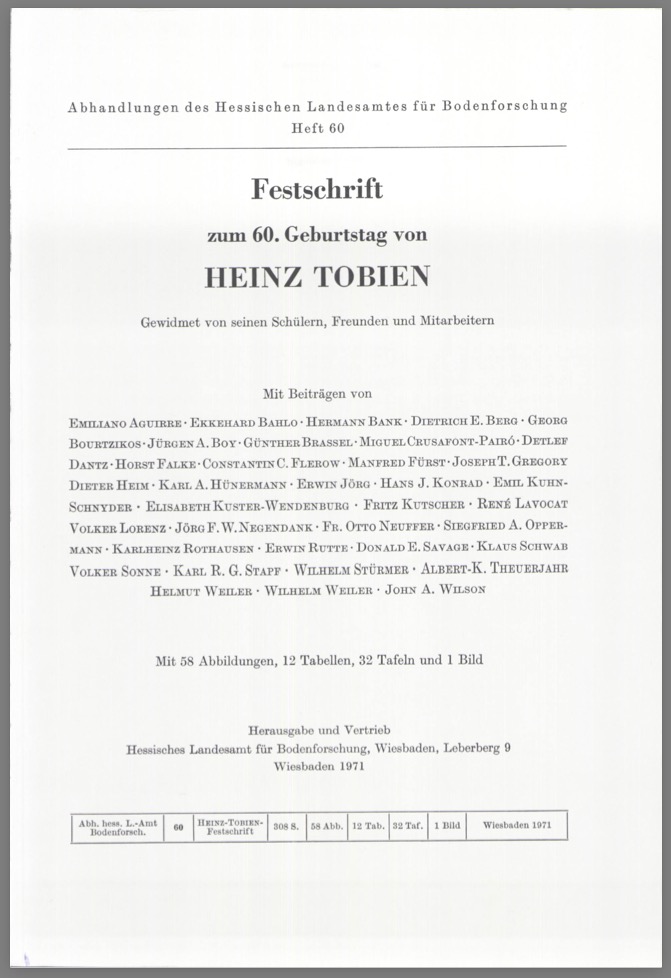
Journal Article · Source: Hessisches-Landesamt für Bodenforschung, Abhandlungen · Volume: Vol. 60 · Pages: pp. 203–215 · Language: in German

Abstract
Bank surveys the principal gemstones then known from Tanzania and relates them to their geological occurrences and mineralogical properties. Following an outline of Tanzanian geology, he treats diamond, garnet, corundum, zoisite, prase opal, diopside, and chromium-bearing tourmaline. Garnets include pyrope–almandine “rhodolite,” hessonite, yellow-green and colorless grossular, and rare emerald-green Cr-bearing grossular from the Mirarani Hills. Corundum is described from the Longido zoisite-amphibolite, where large ruby porphyroblasts show pronounced zoning, parting, rutile needles, and other inclusions; additional Tanzanian deposits yield ruby, sapphire, padparadscha, and fancy-colored corundum. Particular attention is given to transparent blue zoisite from the Mirarani Hills, discovered in 1967, including its pleochroism, optical properties, trace elements, heat-induced color modification, color change, and occasional chatoyancy; its occurrence is described in pegmatitic-hydrothermal veins or fracture fillings with quartz, feldspar, grossular, and diopside. The paper also records nickel-colored green prase opal from Hanety Hill, yellowish-green gem diopside, and emerald-green Cr-tourmaline from the Lelatema Hills, providing refractive indices, densities, lattice constants, trace-element data, and other mineralogical properties for many of the materials.
Keywords
corundum, ruby, sapphire, Tanzania.12, East Africa, inclusions, gems
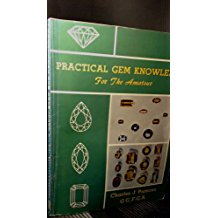
Practical Gem Knowledge for the Amateur

Practical Gem Knowledge for the Amateur

Parsons, C.J. (1969)

Book · Publisher: Lapidary Journal, Inc. · Pages: 140 pp.

Abstract
Sinkankas: Typically written in simple, clear language and compiling articles originally published in Lapidary Journal, Oct. 1964–July 1968, with revisions. First 15 chapters on nomenclature, properties, crystallography, optical phenomena, color, inclusions, synthetics & imitations, testing procedures and instruments used, after which appear the remaining chapters on descriptions of gemstones, with organic materials treated in the last two chapters. The strong interest of the author in inclusions is apparent with much text devoted to same and hundreds of inclusion photographs; these form a most valuable part of the work. Rev. G & G, 13, 3, 1969, 103. Reprinted several times commencing in 1970.
Keywords
corundum, inclusions.5, synthetic corundum.7, gems
On the nature of mineral inclusions in gemstones, parts I–II

On the nature of mineral inclusions in gemstones, parts I–II

Gübelin, E.J. (1969)

Journal Article · Source: Gems & Gemology · Volume: Vol. 13 · Pages: No. 2, Summer, pp. 42–56, color plates A–D; No. 3, Fall, pp. 74–88, color plates E–H

Abstract
Gübelin examines the nature and gemological significance of mineral inclusions in gemstones, emphasizing that inclusions are integral records of the conditions under which their host crystals formed. The two-part article discusses the identification, morphology, and genetic relationships of included minerals and explains how their crystal form, orientation, alteration, and association with other internal features can provide evidence concerning the origin and geological history of a gemstone. Numerous photomicrographs, including color plates, illustrate characteristic mineral inclusions in important gem species. Particular attention is given to the value of inclusions in distinguishing natural gemstones and in determining geographic or geological origin where sufficiently diagnostic inclusion assemblages occur. The study demonstrates the importance of systematic inclusion microscopy both as a practical gemological tool and as a means of investigating gemstone genesis.
Keywords
corundum, inclusions.5, Burma.12, Sri Lanka.12, gems
Kashan flux grown rubies

Kashan flux grown rubies

Anonymous (1969)

Journal Article · Source: Gems & Gemology · Volume: Vol. 13 · Issue: No. 1, Spring · Pages: pp. 30–34

Abstract
Describes the Kashan synthetic rubies produced by the flux-growth process and examines the features by which they may be distinguished from natural ruby. The material shows the color and general appearance of fine natural ruby, making recognition potentially difficult without careful examination. Particular attention is given to characteristic internal features associated with flux growth, including residual flux and distinctive growth structures, and to their value in separating the synthetic stones from natural corundum. The article emphasizes the gemological importance of recognizing these diagnostic inclusions as flux-grown synthetic rubies became commercially available. One of the first references to Kashan synthetic rubies
Keywords
corundum, synthetic corundum.7, Kashan, gems
Comparative characteristics of jadeite and associated rocks from Polar Ural and Prebalkhash region

Comparative characteristics of jadeite and associated rocks from Polar Ural and Prebalkhash region

Dobretsov, N.L. and Ponomareva, L.G. (1968)

Journal Article · Source: International Geology Review · Publisher: Taylor & Francis · Volume: Vol. 10 · Issue: No. 2 · Pages: pp. 221–242

Abstract
New additional data on petrography and mineralogy of jadeite and associated rocks from the Polar Urals and Prebalkhash region are given. Some questions of the jadeite rock genesis in hyperbasites are also considered. In the Pay-Yer massif, Polar Urals, the jadeite rocks are associated with a gabbro–pyroxenite complex, garnet-bearing gabbro–amphibolite, metamorphic schists, and glaucophane rocks. Jadeitite and albitite form a chain of lens-shaped bodies in hyperbasites and represent metasomatic metagabbro rocks, altered under conditions of high pressure and high soda potential. Secondary processes of diaphthoresis are strongly revealed. In the Kantegir hyperbasite massif, northern Prebalkhash region, jadeitites form drop-like bodies together with numerous inclusions of unaltered granitoids and other metasomatic rocks. Jadeitite and hornblende are the earliest (high-temperature) metasomatic rocks. Chemical, optical, and X-ray data of jadeitite and accessory and other minerals of jadeite rocks are given. The authors conclude that jadeite rocks of the Polar Urals formed at a temperature close to 700 °C and at a general pressure not less than 14,000 bars; the Prebalkhash jadeite, at a temperature close to 600 °C and pressure not less than 12,000 bars. High pressure is caused by stress produced in deep fault zones. The Na₂O potential and partial pressure of H₂O are of great importance, a question discussed in the light of the most recent data. The prevailing type of formation process (mechanism) of jadeite rocks in hyperbasites is bimetasomatos, which is not always accompanied by desilication. Composition and genesis of original rocks is not of decisive significance. Appropriate model and genetic features of the mentioned deposits are considered in this paper.
Keywords
jadeite, fei cui, Russia, Polar Urals, gems
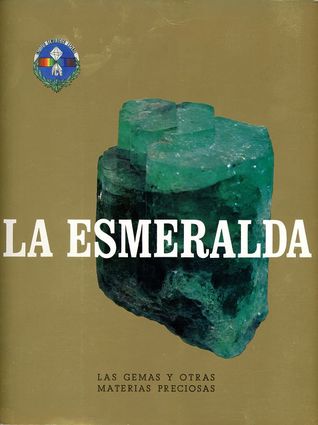
La Esmeralda: Las Gemas Y Otras Materias Preciosas

La Esmeralda: Las Gemas Y Otras Materias Preciosas

The Emerald: Gems And Other Precious Materials

Santos Munsuri, A. (1968)

Book · Publisher: Instituto Gemológico Español · Pages: 123 pp. · Language: in Spanish

Abstract
Sinkankas: Very handsome, imaginatively designed book, with the unusual feature of the title being spread over three pages. Apparently this work was meant to be the first of a series of monographs on gemstone families but up to date (1988) no others have appeared. The first part treats emerald history, in the East, as known to Pliny, origin of the name, curious lore surrounding, famous emeralds, and the color and causes. The second part describes world emerald deposits with most space naturally devoted to the Colombian mines, type crystals, and a discussion of trapiche crystals. The third part provides property data, considerable detail on inclusions in emerald, doublets & imitations, and the methods of gemological investigation . Next appear four tables of constants of natural & synthetic emeralds, comparisons of emerald to other similarly-colored stones or imitations, and fluorescence of emeralds from various deposits. The bibliography, unfortunately, is replete with errors in contrast to the text which is relatively free of defects. The mostly high quality illustrations show natural specimens, minerals that could be mistaken for emerald, cut stones, a Russian postage stamp depicting Siberian emerald, jewelry set with emeralds, absorption spectra, and many photographs of inclusions but these last lack the quality of the other illustrations. Rev R K Mitchell, J Gemm, 11, 7, 1969, 272–3, notes errors in biblio & elsewhere.
Keywords
gems, beryl, emerald, Brazil, Colombia, China, Zimbabwe, Pakistan, Zambia, Madagascar, Mozambique, inclusions
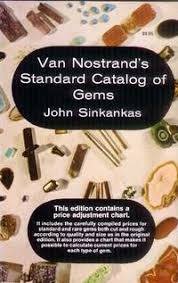
Van Nostrand’s Standard Catalog of Gems

Van Nostrand’s Standard Catalog of Gems

Sinkankas, J. (1968)

Book · Publisher: Van Nostrand · Pages: 286 pp.

Abstract
Sinkankas provides a comprehensive reference catalogue of gemstones intended for gemologists, jewelers, collectors, and mineral enthusiasts. The entries are arranged systematically and describe natural gem materials in terms of their mineralogical and gemological properties, including chemical composition, crystal system, hardness, specific gravity, refractive indices, optical character, color, cleavage, inclusions, and other diagnostic features. Discussions also cover important localities, occurrence, varieties, nomenclature, cutting and use, and methods of identification, with attention to materials that may be confused with one another. Synthetic stones, imitations, and less familiar ornamental materials are also considered where relevant. Designed for practical consultation rather than continuous reading, the volume brings together a large body of mineralogical and gemological data in a compact reference work for identifying and studying gem materials.
Keywords
corundum, quality.10, fashioning.9, cutting, gems
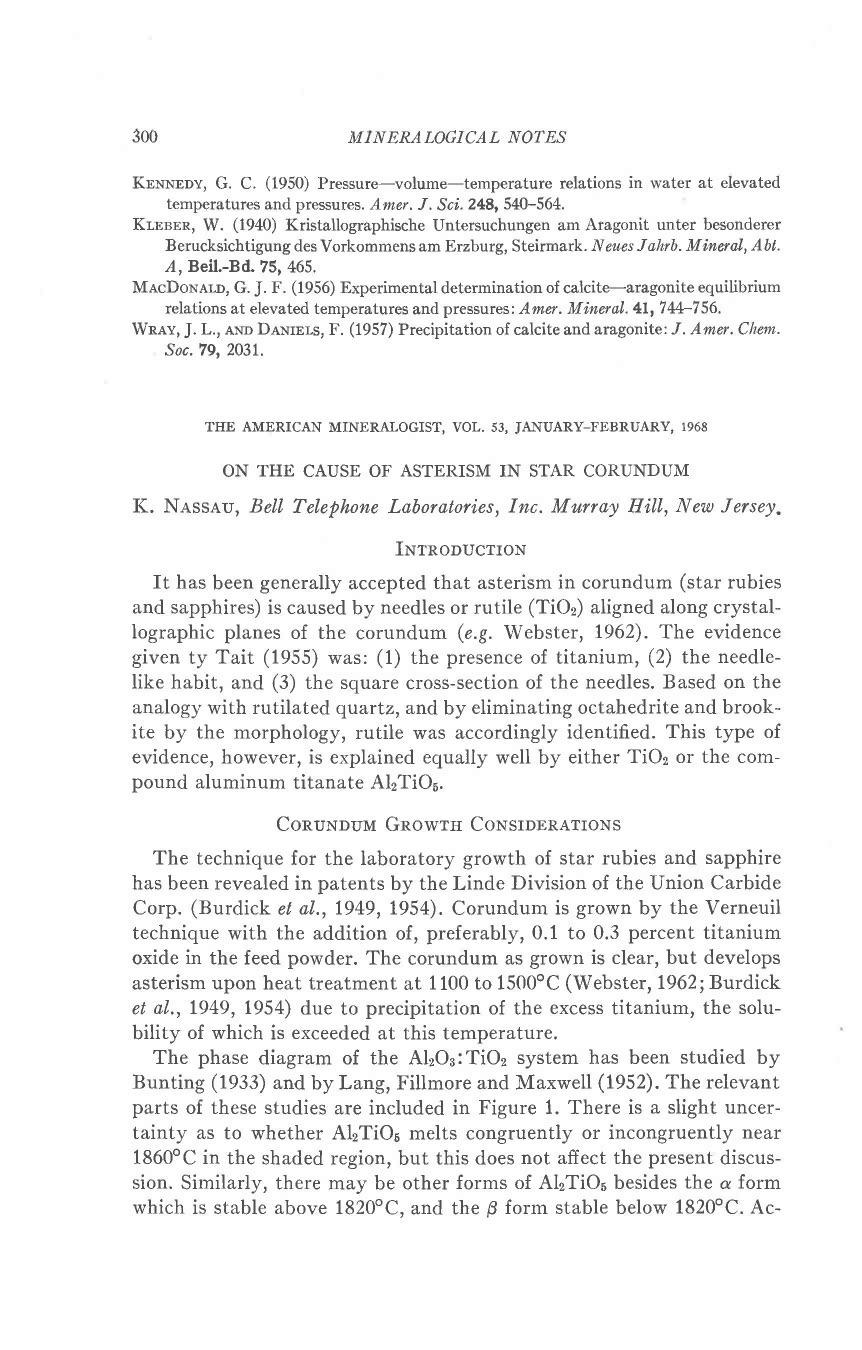
On the cause of asterism in star corundum

On the cause of asterism in star corundum

Nassau, K. (1968)

Journal Article · Source: American Mineralogist · Volume: Vol. 53 · Issue: January–February · Pages: pp. 300–305

Abstract
It has been generally accepted that asterism in corundum (star rubies and sapphires) is caused by needles of rutile (TiO₂) aligned along crystallographic planes of the corundum (e.g. Webster, 1962). The evidence given by Tait (1955) was: (1) the presence of titanium, (2) the needle-like habit, and (3) the square cross-section of the needles. Based on the analogy with rutilated quartz, and by eliminating octahedrite and brookite by the morphology, rutile was accordingly identified. This type of evidence, however, is explained equally well by either TiO₂ or the compound aluminum titanate Al₂TiO₆.
Keywords
corundum, properties.3, synthetic corundum.7, inclusions.5, gems
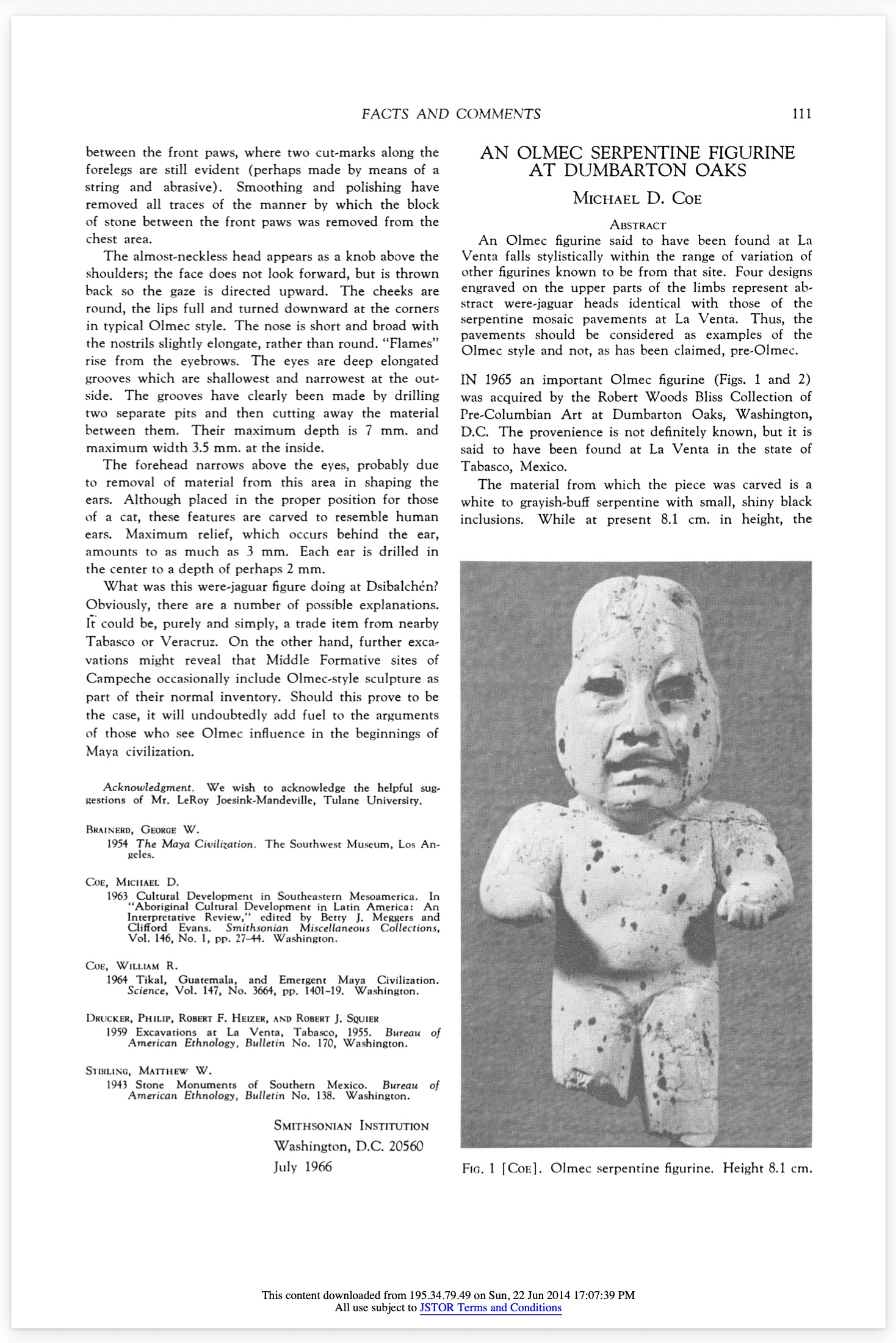
An Olmec serpentine figure at Dumbarton Oaks

An Olmec serpentine figure at Dumbarton Oaks

Coe, M.D. (1967)

Journal Article · Source: American Antiquity · Volume: Vol. 32 · Issue: No. 1 · Pages: pp. 11–113

Abstract
An Olmec figurine said to have been found at La Venta falls stylistically within the range of variation of other figurines known to be from that site. Four designs engraved on the upper parts of the limbs represent abstract were-jaguar heads identical with those of the serpentine mosaic pavements at La Venta. Thus, the pavements should be considered examples of the Olmec style and not, as has been claimed, pre-Olmec. In 1965 an important Olmec figurine (Figs. 1 and 2) was acquired by the Robert Woods Bliss Collection of Pre-Columbian Art at Dumbarton Oaks, Washington, D.C. The provenience is not definitely known, but it is said to have been found at La Venta in the state of Tabasco, Mexico. The material from which the piece was carved is a white to greyish-buff serpentine with small, shiny black inclusions. While presently 8.1 cm in height, the figurine had been broken in ancient times, so that one foot is missing, as well as the lower part of the other leg. There has been no restoration, although a recent break across the left shoulder and the chin has been repaired. The material, workmanship, and patination all testify to its authenticity.
Keywords
gems, jade, jadeite, fei cui, Mesoamerica, Mexico, Guatemala, Costa Rica, Mayans, Olmecs, Aztecs, archaeology, history, archaeogemology, Sahagun, codices, codex, serpentine
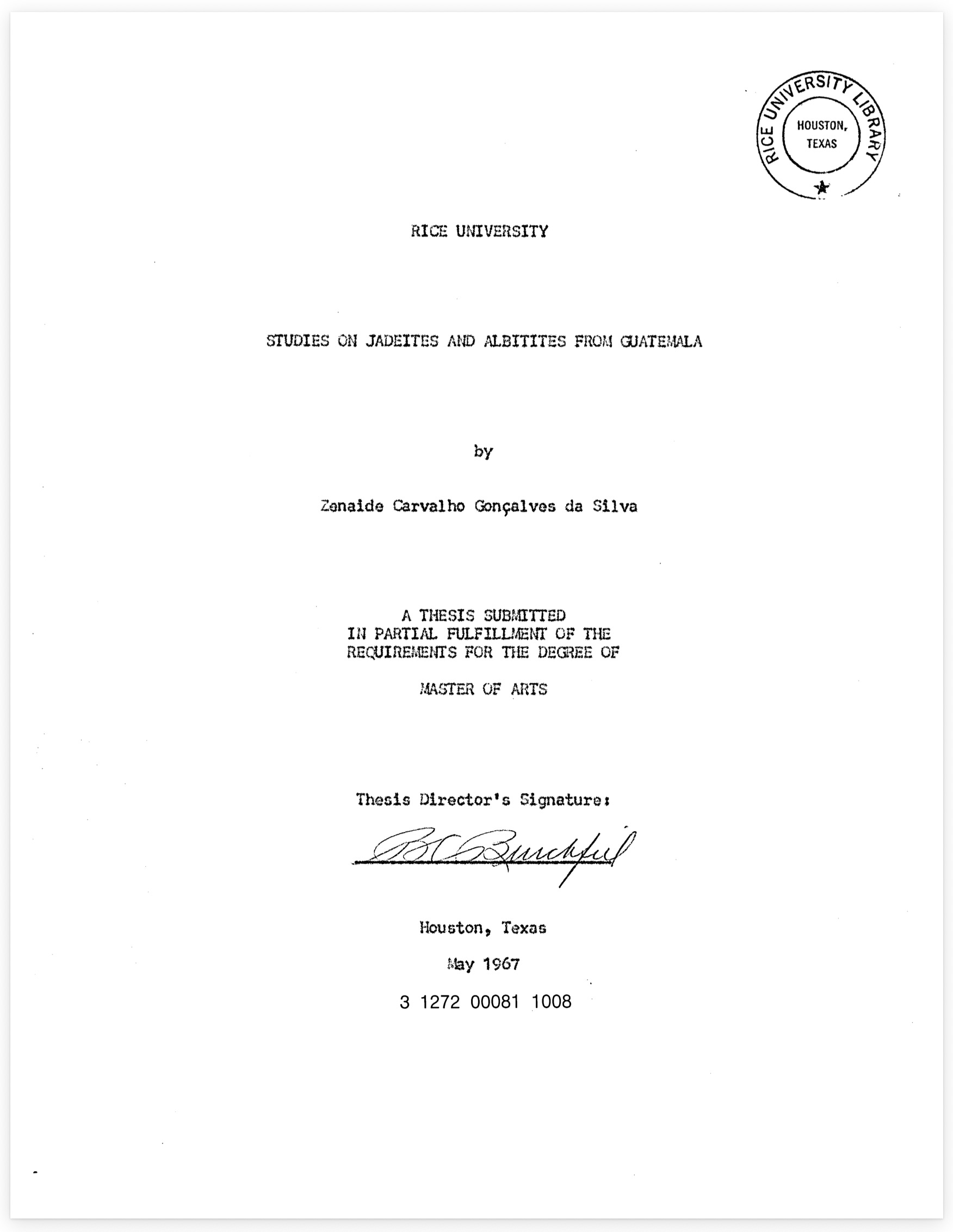
Studies on Jadeites and Albitites from Guatemala

Studies on Jadeites and Albitites from Guatemala

da Silva, Z.C.G. (1967)

Thesis · Source: Earth Science · Publisher: Rice University · Volume: M.S. thesis

Abstract
In the central part of the San Augustin Acasaguastlan Quadrangle north of the Metagua River Valley, Guatemala, jadeite-rich rocks occur as inclusions in serpentine. The associated minerals are albite and in minor amounts, muscovite, actinolite and zoisite. The country rock is generally highly sheared serpentine, although massive serpentine is also present in lesser amounts. Most of the jadalte in the area is white or slightly greenish, having only small amounts of diopside, acmite and hedenbergite molecules. The green variety has a higher content of these pyroxene molecules and the variation in optical properties of the different specimens of jadeite analyzed is related to the impurities present. Jadeite seems to have formed before serpentinization of the ultrabasic body and later reacted with silica-bearing aqueous solutions forming secondary albite. Albitites are quite abundant in the area, occurring as large included bodies in the serpentine. From field relationship, chemical and mineral composition, they seem to have originated from a pegmatite which underwent desilication.
Keywords
gems, jade, pyroxene jade, fei cui, jadeite, omphacite, kosmochlor, Guatemala, Costa Rica, Mexico, Maya, Olmec, Aztec, serpentine
Eclogites and jadeite from the Motagua Fault Zone, Guatemala

Eclogites and jadeite from the Motagua Fault Zone, Guatemala

McBirney, A., Aoki, K.-i. and Bass, M.N. (1967)

Journal Article · Source: American Mineralogist · Volume: Vol. 52 · Issue: No. 5–6, May–June · Pages: pp. 908–918

Abstract
Jadeite occurs as inclusions in serpentinite in the Motagua fault zone. A boulder of remarkable size and purity was found near Manzanal, Guatemala, and chemical, optical, and X-ray studies have been made of a separated sample of the jadeite. Elsewhere in the Motagua fault zone, omphacite-garnet eclogites and glaucophane-lawsonite-omphacite-garnet rocks have been found in similar environments. Only at the Manzanal locality, however, have sodic pyroxenes been found in rocks which are nearly monomineralic.
Keywords
gems, jade, pyroxene jade, jadeite, fei cui, omphacite, kosmochlor, Guatemala, geology
Sapphire from Rio Coxim, Mato Grosso, Brazil

Sapphire from Rio Coxim, Mato Grosso, Brazil

Eppler, W.F. (1964)

Journal Article · Source: Journal of Gemmology · Volume: Vol. 9 · Issue: No. 6, April · Pages: pp. 199–204

Abstract
About four years ago, Professor J. E. de Souza Campos of the University of São Paulo, Brazil, reported on a new sapphire from Brazil. He mentioned strange inclusions, unknown until now in sapphire and resembling rounded gas bubbles so typical of synthetic corundum. At the author’s request, Professor de Souza Campos very kindly made available two cut stones of this sapphire and later some raw material, which could be tested more easily. The locality of these sapphires is quoted by de Souza Campos as Jauré and Quilombo, Rio Coxim, Mato Grosso. He found the refraction for sodium light to be nₒ = 1.770, nₑ = 1.762, and the birefringence 0.008. The dichroism for blue-coloured stones is o = blue to violet blue, e = green; for greenish-coloured stones o = green, e = yellow-green. With the hydrostatic balance he determined the specific gravity at 3.952 to 4.052. The stones exhibit a dark blue colour but, regrettably, the transparency is considerably reduced by many inclusions. At a first sight through the microscope, many of them indeed resembled rounded gas bubbles. But when using a higher magnification, it is seen that two kinds of inclusions are present: liquid and gas-filled discs, and negative crystals, many of them exhibiting rounded forms.
Keywords
corundum, sapphire, Brazil.12, geology.11, gems

Exploring the Literature of Gemstone Inclusions

The literature of gemstone inclusions covers identification, origin determination, treatments, synthesis, mineral inclusions, fluid inclusions and other internal features of natural and synthetic gems.

For a curated selection of important sources, read Inclusions in Gemstones — Hyperion Literature Sources.

About Four Treasures

Four Treasures is Lotus Gemology's freely accessible gemological reference database. Use the full database to search by author, title or keyword and explore literature on gemology, mineralogy, jewelry and related fields. Where available, hyperlinks on titles may lead directly to the full publication.

Search the Complete Four Treasures Database